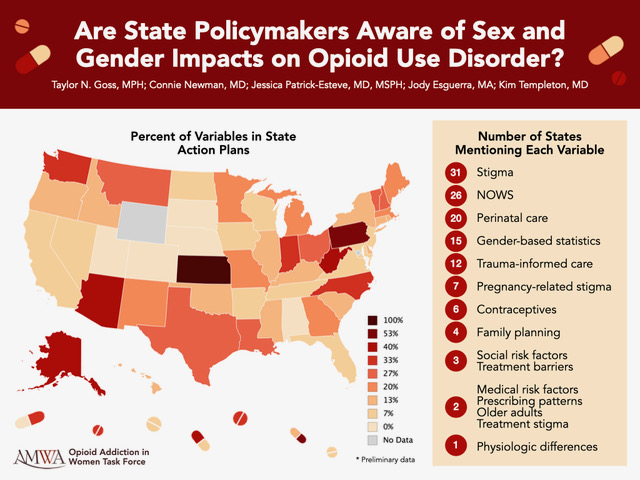
AMWA has long recognized opioid addiction as a critical women’s health issue. Through its former Opioid Addiction in Women Task Force, AMWA advanced national awareness about the unique ways opioid use, pain, treatment barriers, and addiction patterns affect women.
The Task Force focused on educating clinicians and the public about sex and gender differences in pain and opioid response, contributing to evidence-based prescribing and pain-management guidelines, supporting the work of the National Academy of Medicine on this issue, informing policymakers about the impact of opioid addiction on women, and identifying research gaps related to women’s specific needs.
Educational Efforts Included:
Equity & Advocacy:
AMWA also spotlighted racial inequities in opioid prescribing, treatment access, and overdose death trends—particularly affecting Black women—and contributed comments on federal guidelines as part of broader national efforts to counter the opioid epidemic.
AMWA remains committed to advancing gender-responsive, equitable approaches to pain management, addiction prevention, and care for women nationwide.