Published on KevinMD and reprinted with permission.
by Dr. Laurel Waters
History has a way of repeating itself.
In the years leading up to the Supreme Court’s 2022 Dobbs decision, many women in their seventies, eighties, and nineties still remembered what life was like before Roe v. Wade. They remembered the hidden abortions, the whispered conversations, and the unspoken secrets. A handful of films (including If These Walls Could Talk, A Private Matter, Call Jane, and Ask for Jane) capture pieces of that history. But countless personal stories remain untold.
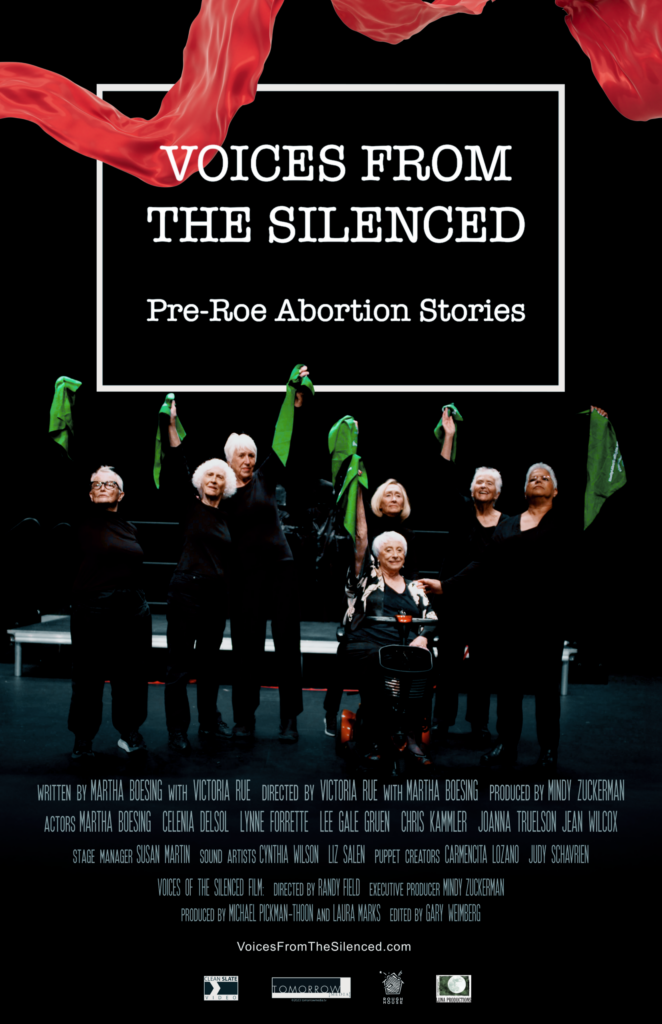
In the aftermath of Dobbs, two of my friends, playwrights Victoria Rue and Martha Boesing, recognized that these stories needed to be told. They reached out to women in our community and asked them to share their experiences of seeking abortions before Roe. The response was overwhelming. Women entrusted them with deeply personal stories, many of which had never been shared with anyone before.
Those accounts became Voices from the Silenced: Pre-Roe Abortion Stories, a powerful play that wove together diverse voices into a narrative that was at times both poignant and tragic. Through a partnership with Luna Productions and the American Medical Women’s Association (AMWA), the play was transformed into a film and distributed so that these stories could reach audiences across the country and around the world.
Watching the film is a moving experience. The women describe fear, desperation, medical complications, impossible choices, and the lasting emotional impact of living in an era when accessing reproductive health care often meant secrecy, danger, or both.
Two stories, in particular, have stayed with me. One woman recalled being blindfolded and taken across the border into Mexico, barely able to communicate with the person who was to perform the procedure. She remembered the fear, isolation, and not knowing whether she would return home safely.
Another woman described how the individual performing her abortion sexually assaulted her after the procedure, compounding an already traumatic experience with yet another one. These are difficult stories to hear. They are also essential.
Regardless of where one stands on abortion policy, these women lived through a chapter of American history that should not be forgotten. Their experiences remind us that health care decisions do not occur in the abstract. They affect real people navigating complex circumstances, sometimes with few good options.
In the years following Roe v. Wade, access to abortion was protected nationwide. Freedom to choose became standard of care. Dobbs has put us back into that earlier time, where access has once again become dependent on geography. In some states, women must travel hundreds of miles, navigate complicated legal requirements, or leave their home state altogether to obtain care, even normal pregnancy care, like miscarriage management. For some, those barriers echo challenges that older generations believed had been left behind. Physicians, too, are navigating impossible situations, unable to care for patients according to evidence-based guidelines for fear of criminal conviction or loss of licensure. Now, in the age of technology, even whispering doesn’t feel safe.
That is why preserving these stories matters. They are not only part of the history of reproductive health care; they are part of the history of American medicine. They remind us what patients experienced, what physicians witnessed, and what can happen when health care becomes inaccessible.
Laurel Waters, MD, is a pathologist and an expert witness.