
Authors: Rhea Manohar, MPH; Leah Liszak, Rhea Prag, Divya Krishnan, MD on behalf of AMWA Gender Equity Task Force

For decades, HIV/AIDS was framed through a narrow and stigmatizing lens: one that centered predominantly on homosexual men and overlooked the broader populations impacted by the epidemic. Although that narrative has long been debunked, its influence still shapes public perceptions, research priorities, and, at times, public health messaging. As we enter HIV/AIDS awareness month, we look at the effect of the mischaracterization of HIV/AIDS as a “disease for homosexual men” to a broader understanding of who HIV affects and how we can better reach these populations through reformed public health messaging.
Today, HIV/AIDS affects a diverse global population, and women comprise a significant proportion of individuals living with HIV both in the United States and worldwide. In the U.S., women account for roughly 19–24% of new HIV diagnoses, a number that has remained relatively stable over the past decade (CDC, 2021; Fauci et al., 2019). These figures translate to approximately 235,000 women living with HIV between 2016 and 2020 (CDC, 2021). HIV/AIDs disproportionately affects groups of varied ages, races, and geographic locations across the United States. Notably, 42% of new diagnoses and 41% of those living with HIV are Black individuals, and these disparities are more pronounced in Black women who account for 58% of new diagnoses but only 14% of the U.S. female population (Sullivan et al., 2021). Regionally, the South carries the heaviest burden with 50–56% of women living with HIV reside in Southern states, where structural inequities, limited access to care, and persistent poverty intersect to shape women’s health outcomes (CDC, 2021; Kates et al., 2020).
Most new infections among women in the U.S. occur through heterosexual transmission, underscoring the deeply gendered dynamics of risk, which are often tied to power imbalances, intimate partner violence, and reduced autonomy in sexual health decision-making. These factors rarely surface in mainstream narratives, which continue to rely on outdated images that situate HIV risk outside of women’s lives and communities. The literature is beginning to correct this imbalance. Recent public health scholarship acknowledges the underrepresentation of women, especially Black and Hispanic women, in prevention research, clinical trials, and implementation efforts (Fauci et al., 2019; Adimora et al., 2021). There is also a growing recognition that messaging historically fails to address women’s unique vulnerabilities, from socioeconomic marginalization to lack of access to gender-affirming HIV prevention tools (Kates et al., 2020).
As a result, even though the epidemiology has shifted significantly, public awareness and institutional messaging have not always kept pace. The persistence of outdated narratives can obscure the realities faced by women, particularly women of color and those living in the South; thereby limiting the effectiveness of public health interventions.
Correcting the misinformation regarding populations impacted by HIV/AIDS as well as addressing the disease burden on these populations requires a multifaceted approach. Southern states carry the largest disease burden, but continue to suffer from not only higher rates of Black populations carrying the disease but also unequal access to prevention and care (Khabbaz et al., 2014; Sullivan et al., 2021). These care gaps are compounded by the lack of Medicaid expansion in many of these states (Beyrer et al., 2021).
When looking at the effectiveness of HIV/AIDS prevention and treatment, specifically in the use of pre-exposure prophylaxis (PrEP), these lapses in care have greater consequences. In these communities and overall for women, HIV/AIDS screening is less likely to occur and awareness of PrEP is limited leaving many behind without a diagnosis and effective prophylaxis (Adimora et al., 2021). Furthermore, clinicians also have low awareness of PrEP affecting implementation of the treatment for patients. Barriers to treatment include cost, stigma, and concern of side effects (Adimora et al., 2021). Even for those populations with known increased risk factors, such as Black and Hispanic/Latinx men who have sex with men (MSM), lower PrEP uptake has been noted due to structural barriers, provider biases, and lack of culturally appropriate services. Addressing the diagnostic and prophylactic gap requires adequate provider training, prescription cost reduction, and community-based support navigating PrEP administration (Bonacci et al., 2021; Hamilton et al., 2021; Mayer et al., 2021).
While efforts have been made to address the impact of HIV-related stigma and data gaps over the past few decades, these stigmas, racism, and homophobia persist and undermine prevention and care for those affected (Beyrer et al., 2021). To tackle these stigmas, peer navigation programs have become an effective strategy for Black and Hispanic/Latinx MSM living with HIV/AIDS (Saldana et al., 2025). Pilot studies and stepwise expansion and modification of these programs may prove effective in other communities, such as Black women who are living with HIV/AIDS. Within the clinic, providers can utilize storytelling and work with trusted peer and community leaders to destigmatize messaging related to HIV/AIDs and increase care-seeking and adherence behaviors (Carter Jr. et al., 2021).
HIV/AIDS is no longer a story about one community. It is a story about inequity, gender, race, and geography. It is a story about women who continue to bear a disproportionate burden while receiving disproportionate attention. And it is a story still being rewritten, as researchers, clinicians, and advocates push for interventions that are responsive to women’s lives, reflective of their risks, and rooted in equity. The data are clear: HIV affects everyone, but not equally. Recognizing this complexity is the first step toward ensuring that prevention, research, and care are designed not just statistically, but also structurally with women in mind.
How to Take Action:
To protect and promote your sexual health
- Protecting yourself from HIV by using condoms every time you have sex, limiting your number of sexual partners, refusing to inject drugs (if you do ensure sterile needles are being used), using HIV pre-exposure prophylaxis if you believe you are likely to be exposed, or use post-exposure prophylaxis if you’ve been exposed.
- Protecting others if you have HIV by ART treatment and the use of condoms, discussing pre-exposure prophylaxis with your partner, and refusing to share needles or drug injecting equipment.
- Prevent perinatal transmission by taking ART throughout pregnancy, childbirth, and breastfeeding. If you plan to get pregnant with an individual who is HIV positive consider taking pre-exposure prophylaxis.
References:
- Adimora, A. A., Ramirez, C., Poteat, T., Archin, N. M., Averitt, D., Auerbach, J. D., Agwu, A. L., Currier, J., & Gandhi, M. (2021). HIV and women in the USA: what we know and where to go from here. Lancet (London, England), 397(10279), 1107–1115. https://doi.org/10.1016/S0140-6736(21)00396-2
- Beyrer, C., Adimora, A. A., Hodder, S. L., Hopkins, E., Millett, G., Mon, S. H. H., Sullivan, P. S., Walensky, R. P., Pozniak, A., Warren, M., Richman, B., Copeland, R., & Mayer, K. H. (2021). Call to action: how can the US Ending the HIV Epidemic initiative succeed?. Lancet (London, England), 397(10279), 1151–1156. https://doi.org/10.1016/S0140-6736(21)00390-1
- Bonacci, R. A., Smith, D. K., & Ojikutu, B. O. (2021). Toward Greater Pre-exposure Prophylaxis Equity: Increasing Provision and Uptake for Black and Hispanic/Latino Individuals in the U.S. American journal of preventive medicine, 61(5 Suppl 1), S60–S72. https://doi.org/10.1016/j.amepre.2021.05.027
- Carter, J. W., Jr, Salabarría-Peña, Y., Fields, E. L., & Robinson, W. T. (2022). Evaluating for health equity among a cluster of health departments implementing PrEP services. Evaluation and program planning, 90, 101981. https://doi.org/10.1016/j.evalprogplan.2021.101981
- Centers for Disease Control and Prevention. (2021). HIV Surveillance Report: Diagnoses of HIV Infection in the United States and Dependent Areas, 2021. U.S. Department of Health and Human Services. https://stacks.cdc.gov/view/cdc/149071
- Fauci, A. S., Redfield, R. R., Sigounas, G., Weahkee, M. D., & Giroir, B. P. (2019). Ending the HIV epidemic: A plan for the United States. JAMA, 321(9), 844–845. https://jamanetwork.com/journals/jama/fullarticle/2724455
- Hamilton, D. T., Hoover, K. W., Smith, D. K., Delaney, K. P., Wang, L. Y., Li, J., Hoyte, T., Jenness, S. M., & Goodreau, S. M. (2023). Achieving the “Ending the HIV Epidemic in the U.S.” incidence reduction goals among at-risk populations in the South. BMC public health, 23(1), 716. https://doi.org/10.1186/s12889-023-15563-5
- Kates, J., Dawson, L., Horn, T., & Boccchetti, M. (2020). The HIV epidemic in the United States: The basics. Kaiser Family Foundation. https://www.kff.org/hiv-aids/the-hiv-aids-epidemic-in-the-united-states-the-basics/
- Khabbaz, R. F., Moseley, R. R., Steiner, R. J., Levitt, A. M., & Bell, B. P. (2014). Challenges of infectious diseases in the USA. Lancet (London, England), 384(9937), 53–63. https://doi.org/10.1016/S0140-6736(14)60890-4
- Mayer, K. H., Nelson, L., Hightow-Weidman, L., Mimiaga, M. J., Mena, L., Reisner, S., Daskalakis, D., Safren, S. A., Beyrer, C., & Sullivan, P. S. (2021). The persistent and evolving HIV epidemic in American men who have sex with men. Lancet (London, England), 397(10279), 1116–1126. https://doi.org/10.1016/S0140-6736(21)00321-4
- Saldana, C. S., Perez, R., Bonadonna, L., Scott, J. Y., Gonzalez, K. I., Sales, J. M., Jabbarzadeh, S., O’Neal, J., Holland, D. P., Rangel, E., Cooper, B., Mwaura, P., Sulka, A., Freeman, D., Reed, K., Clark, P., Silva, Y., Gonzalez, S., Zuluaga, M., Gonzalez, C., … Cantos, V. D. (2025). Culturally Responsive Outreach and Peer Navigation to Improve HIV Prevention and Care for Latino Gay and Bisexual Men in Atlanta. Archives of sexual behavior, 10.1007/s10508-025-03231-1. Advance online publication. https://doi.org/10.1007/s10508-025-03231-1
- Sullivan, P. S., Satcher Johnson, A., Pembleton, E. S., Stephenson, R., Justice, A. C., Althoff, K. N., Bradley, H., Castel, A. D., Oster, A. M., Rosenberg, E. S., Mayer, K. H., & Beyrer, C. (2021). Epidemiology of HIV in the USA: epidemic burden, inequities, contexts, and responses. Lancet (London, England), 397(10279), 1095–1106. https://doi.org/10.1016/S0140-6736(21)00395-0
About the Authors
Rhea Manohar, MPH, MS3

Rhea Manohar is a third year medical student from St. George’s University. She has a Masters in Public Health with a concentration in Maternal and Child Health from George Washington University Milken Institute of Public Health and a Bachelors of Science in Microbiology, Immunology, and Public Health from the University of Miami. She served as Co-VP of OB/GYN Education for St. George’s University’s Women in Medicine chapter in St. George, Grenada where she developed and implemented hands-on workshops to further reproductive health issues and bolstered medical students abilities to navigate physician-patient communication. Prior to medical school, she was a Research Associate for Fors Marsh Group, where she led qualitative and quantitative public health research and campaign development for federal agencies (e.g., CDC, NIH, DHHS, CPSC). She is also a member of the Gender Equity Task Force and Reproductive Health Coalition within the American Medical Women’s Association. When she is not pursuing medicine, you can find her reading, exploring artistic passions, and spending time connecting with friends and family.
Leah Liszak, MS3

Leah Liszak is a third year medical student from St. George’s University. She has a Bachelors of Science in Biomedical Science from Oakland University in Auburn Hills, Michigan. She served as the SMILEs Orphanage Home Coordinator of the St. George’s University Humanism Service Organization in St. George, Grenada where she fostered impactful relationships with at-risk female youth and developed seminars to educate, encourage, and engage their personal growth. She is also a member of the Gender Equity Task Force with the American Medical Women’s Association. When she is not pursuing medicine, you can find her enjoying time with friends and family, working towards athletic pursuits in the gym, and testing new pastry recipes.
Rhea Prag, MS3
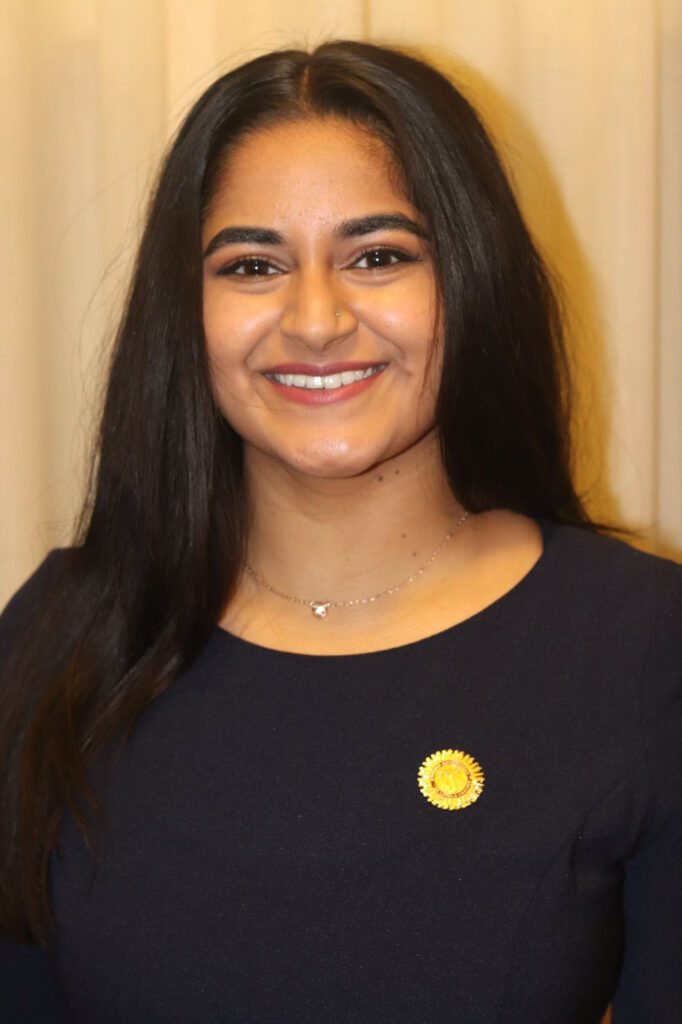
Rhea Prag is a third year medical student from St. George’s University. She has a Bachelors of Science in Bioinformatics from Loyola University Chicago. She has worked with multiple organizations including Humanism Service Organization and Neurodiversity Allies Society where she worked closely with local youth and helped build supportive, inclusive communities. She is committed to serving underserved populations in her local area, focusing on strengthening relationships and fostering meaningful connections within the community. She is also a member of the Gender Equity Task Force with the American Medical Women’s Association. Outside of medicine, she enjoys discovering new books, experimenting with new recipes, and spending time with her family and friends.

Dr. Divya Krishnan obtained a medical degree with honours at the University of Medicine and Health Sciences, St. Kitts. She is passionate about preventative medicine and community medicine. She believes that we can only begin to move towards good health for all patients, with health equity and consistent community education led by healthcare workers. When not working in the medical world, she spends her spare time thriving outdoors (hiking, rock climbing, gardening), learning indoors through reading books (from fiction to social science), and brainstorming creative ideas for how to improve her practice as a whole – for her patients and for her co-workers.