
Authors: Meghan Etsey, Leah Liszak, and Kiana Wells
“Our Voices, Our Future” is a podcast by the Gender Equity Task Force of the American Medical Women’s Association that explores the challenges, stories, and successes of those working to advance gender equity in medicine. Through candid conversations with changemakers, advocates, and leaders, each episode dives into issues like pay gaps, leadership disparities, and inclusive workplace culture. Tune in to be inspired, informed, and empowered to take action. Full episode listening links are available below the transcription.
Meghan Etsey: Welcome to Our Voices, Our Future, the podcast where we amplify the voices driving change and equity within medicine and beyond. Brought to you by the Gender Equity Task Force, a committee of the American Medical Women’s Association. We’re here to challenge norms, break barriers, and ignite conversations that matter. I’m Meghan Etsey, and in each episode we’ll bring you candid discussions with leaders, changemakers, and advocates working to create a more inclusive and just world. No more silence, no more waiting. You’re listening to Our Voices, Our Future. Let’s get into it.
Meghan Etsey: Today, we are welcoming Kiana Wells, a friend I’ve had the pleasure of meeting within medical school. Kiana is a self-published author and a dedicated future physician whose journey reflects resilience, compassion, and purpose. She studied pre-medical studies at Berea College and continued her education in medical sciences at Ponce Health Sciences University, and she now studies doctor of medicine at St. George’s University. Kiana holds an independent neuroscience bachelor’s degree with a pre-med concentration and a biology minor, blending her love for science with a deep passion for patient care. Her work as a courtesy clerk and her role in the Interventional Radiology Center at UT Medical Center have strengthened her community and empathy skills, allowing her to help patients feel comfortable and supported before surgery. She’s particularly interested in the causality and effects of neurodegenerative diseases, especially Alzheimer’s disease, as well as understanding cognitive ability and processing. Beyond her academic and clinical achievements, Kiana is committed to empowering patients of color to feel valued and informed within healthcare settings. She’s also learning Spanish and sign language to communicate more effectively and inclusively with all patients. Thanks for being here today, Kiana.
Kiana Wells: Yeah, of course. Thank you for having me.
Meghan Etsey: Can you start by telling us what has shaped your journey into medicine? What inspired you to pursue this path, and how your experiences have shaped your why?
Kiana Wells: Yes, I love this question because for me, I didn’t always want to be a doctor. So for me, there’s no one singular thing that drew me to medicine. But it’s a combination of things that happened in my life. In particular, I don’t know if I was a preterm baby, but I was a tiny baby. And so with that, I had a lot of air infections and a lot of issues. So I was always at the doctor’s office back when they used paper for your medical forms. And so they would joke about carrying it around. And the doctor just couldn’t figure out how to help me. And so another doctor said, I want to meet this Kiana. Everybody in this office is talking about this girl. I need to meet this baby. She met me and was the only doctor who figured out how to get me. They were like, if she likes butter, put it in everything. They fattened me up for real. Dr. Prezano, shout out to her. She was my pediatrician, and she is the one person that I could say drew me to medicine because she made me feel heard, valued, and understood. And she’s just like an awesome woman.
Meghan Etsey: That’s awesome. So now you’ve made it all the way to third year medical school. Can you talk to us about what moments so far during your clinical rotations have most affirmed this decision that, yeah, I made the right decision. I really want to be a doctor
Kiana Wells: That’s real. It would be in particular when I see black patients in particular, because I’m in Arizona, where the population is kind of low. So when they see me, some of them will be like, what are you doing here? Are you the.., and I’m like, yeah, I’m one of the medical students. They’re like, ” Oh my gosh, I’m so glad you’re here”. Just seeing their face light up, even if they don’t say anything, and seeing little girls, because I wear my hair in my puffs, I wear my natural hair out because I want them to see themselves in me, and seeing them whisper and be like, oh my gosh, you guys have the same hair, like, look, she has the same hair as you. That, oh my gosh, in peds, I was melting on the floor. I was like, yeah, I have the same hair as you, yeah. They see themselves in me, and so that like really affirmed it for me. One patient in particular in surgery told my surgery preceptor, she was like, honestly, she made me feel so comfortable, and I loved it because like, he’s a colorectal surgeon, so nobody wants to go talk about their butt. She said, “She made me feel so comfortable. I was able to talk to her, and I never felt like I felt heard”. When patients say things like that to me, it affirms that I picked the right thing and that I’m doing the right thing.
Meghan Etsey: That’s so cool. I think, yeah, we talk a lot about how it’s so important to see people that look like you in these positions, right? And maybe for one of those little girls, you’re that person that the doctor was for you, right? Like maybe that sparks something in them, which is so cool to think about. Like, we are going to be talking about Kiana, the med student in a podcast in 20 years, you know?
Kiana Wells: I would love that.
Meghan Etsey: So, how has your identity as a Black woman influenced your experience in medical school, both in the classroom and now in the clinical environment?
Kiana Wells: Because I always grew up being the only Black girl in a lot of environments, it didn’t feel different being one of the only Black people and like having to find my tribe and like uplift each other and be like, listen, we got to be Black in medicine, like Melanin in medicine, we got to uplift, like we need more because a lot of us never had doctors who looked like us. And so there are certain things that certain doctors don’t understand, cultural rise that plays into our care. So for me, it does come with its challenges, but I think more so like being a woman, I got a lot of like, you don’t want to be a nurse? What about when you have kids? And you know, it’s just the assumption one that I’m going to have kids, and two, just like always, assuming I’m like, wanting to be something else, love the nurses, shout out to them. They always help me in the hospital, but it’s just the assumption that I can’t be a doctor. If I’m going to be a doctor, then I can’t be a mom. And then on top of that, it’s like, oh, but you’re black. So like, it’s like, well, black people can be doctors too. For me, this whole journey has basically just been proving people wrong because in high school, a lot of people were like, oh, you’re going out of state. That’s crazy. Oh, you want to be a doctor? That’s crazy. So for me, it’s just like proving them wrong because, first of all, it’s my passion. I love it. I love medicine. I love the human body. But also just the fact that like, there’s going to be so many naysayers, and it’s just part of my testimony. Like, I can teach that to other black little girls. Like so many people are going to tell you, you can’t, but you can. Yeah, that’s so cool.
Meghan Etsey: Like, I’ll show you crazy. Like, look at me now. Look at me now. I’m a hero. I’m a year away.
Kiana Wells: Definitely my Elwood’s bag. Like definitely.
Meghan Etsey: So being a first-generation student adds another layer to this resilience and determination that you have to have to get through this. How has that part of your story kind of impacted the way that you have navigated your education up until now?
Kiana Wells: It’s been kind of hard because I’m the first to get a bachelor’s, first to get a master’s, and now first to get a doctorate. So some people have their parents that can rely on for advice, or being like, this is how you do it, this is who you connect with, this is how this process is going to look. But I don’t really have anybody like that, so I had to seek out mentors, which can be a little challenging when it comes to finding the right one. But being first gen just means like, you’re going to feel like a smooth chicken breast brain baby, but it adds an extra layer of grit because you’re like, no, I had to pull it out the mud, like I sought out this mentor, I did this, I did this. It does suck sometimes because I can’t ask my family, I’m like, what would you do in this situation? Because they’re going to be like, well, I just wouldn’t stress about it, and I would do this and that. I’m like, oh my God. That’s not what I want to hear. Even when I was getting my master’s, they were like, and how much longer do you have? I was like, well, four years in medical school and then depending on residency, and then I’m definitely doing a fellowship, and they’re like, so you don’t want to stop now. They don’t understand the longevity and why I’m still pushing. Just having to push, like, Berea College is big on teaching its students resilience. They have a whole resilience module they made us do in our health class. So just teach us to keep pushing even if you have to seek out advice. It taught me how to be resourceful. I will say that. Looking out, looking for resources. That’s why I always had little practice questions and drives, and people were looking for stuff. I have it because I learned to be resourceful, since I don’t have anybody to teach me how to network, how to find this, and how to do that. Right.
Meghan Etsey: You really said first-generation, I’m going all the way. You went straight for the doctorate. That’s impressive. That’s so cool. That’s exciting.
Kiana Wells: I did. It is exciting.
Meghan Etsey: You made it. You’re so close.
Kiana Wells: I know.
Meghan Etsey: You’ve hit on this a bit, but can you just speak a little more on how mentorship and your community have played a role in supporting you through all these challenges but also successes that you’ve had along your journey?
Kiana Wells: Yeah. My academic advisor in college said, you got to C in Botany. Maybe you want to be a nurse or maybe a professor. I don’t know if you want to go to med school. I was like, first of all, this is Botany. Second of all, that was crazy work. I switched because I’ve always been like, if somebody is going to tell me no, I’m just going to find someone that’s going to tell me yes with love, of course, but they’re still going to tell me yes. So I created my own major. Neuroscience is not a major at Berea College. I created it, chose my advisors, she would uplift me. Of course, they were both women. That played a big part because one of them was like, she’s a neurologist, and I said, I wanted to do this, I want to do this, I want to do that, and it really helped me navigate it because it was such a new territory. My family, my husband, of course, always big support for me having that familiar people that I can lean on and then just this community, because so many people back at home will message me on Facebook or whatever and be like, I remember when you were in high school and you said that you wanted to be a doctor, and now I see you doing this and that, and I’m so proud of you. I saw my guidance counselor because my sister is still in high school. I saw them and they’re like, you’re still doing what you said you’re going to do. I remember when we told you not to go out of state and you did it, and I’m actually so proud of you. I’m like, it’s so good to just feel so good. I also got to go mentor myself back with the senior transitioning classes in some high schools back in my county. It’s like pouring in and then getting poured into is just so important for me. It really helped me because without mentors, without community, I don’t think I would have made it this far. My husband just listened to me crash out on Facebook, on FaceTime, on Messenger, on Discord.
Shout out to him, me crying in pillows all the time because I don’t think I would have made it through without people being like, yeah, it’s hard now. Keep going. Or yeah, this is what it looked like for me. Keep going. My surgery preceptor, one of my mentors, he’s amazing. He’s a black man from Zimbabwe and he studied in the UK. He has this English accent. Amazing. He was like, you need to have confidence. You know what you’re talking about, you need to have confidence. Having mentors be like, no, you can’t say I don’t know. No, you can’t say you can’t do this. You need to like, you can do it. Just do it. That’s so important, especially in med school, because people will beat it out of you.
Meghan Etsey: I can’t tell you how many times when we were on the island, I called home and I was complaining to mom. I was like, “Mom, I want to come home”. And she was like, “Meghan, do you want to come home as much as you want to be a doctor?” And I was like, mm-hmm. And I feel like just having those people in your corner, like, I feel like your husband does that for you. Just having those people to be like, all right, Kiana, like, no, you’re not serious. Like, we’re going to get over this hill. It is going to be okay. It’s so important. Because sometimes it feels like the end of the world. Like, I was watching this TikTok the other day where this girl was like, you know, I tell people that medical school is the best four years of my life. And it’s not really for, like, what you think it is, but it’s because no time ever are you going to be like, am I going to take this exam and pass or am I going to die? Am I going to study tonight or am I going to die? Like, that weight that you feel is so big and it’s just so good to have those people to just, like, take a deep breath and, like, even if you do fail this exam, like, you’re not going to die. It’s going to be okay, you know?
Kiana Wells: You were one of those people for me because every day I’d be like, guys, I’m dropping out. Girl, I don’t. And you’d be like, no, you’re not. I’m that student. I’m so sorry. I’d be like, I’m dropping out, y’all. Sorry. It’s been real. And even now, I’ll be like
Meghan Etsey: For everybody listening, she didn’t fail any of them. She did it.
Kiana Wells: That’s actually crazy work. Yeah. And my husband will be like, failure is not a failure. It’s just a setback where you learn lessons. It’s not a true failure if you tried. So I was like, yeah, that’s logical. But my med student brain is like, no, actually it’s going to be down. Like I’m going to crash out.
Meghan Etsey: At that moment, it’s so hard. So you need that perspective from other people.
Kiana Wells: For sure.
Meghan Etsey: So have there been times when you felt the need to advocate for yourself or for others that have these similar barriers? I know you talked about going back to high school and kind of giving back there, but how have you kind of approached these moments where you get to not only advocate for yourself, but for other people?
Kiana Wells: Oh, man. Honestly, I feel like I faced the most times where I needed to face that now in clinicals when I’m in like the real world and I’m seeing patients from all walks of life. Actually, I faced a lot of challenges like those with nurses and a certain preceptor actually had. And it was, I don’t know, like I’m shy. I know you’re going to laugh at that. And a lot of people say I’m not shy. But in certain settings, I do kind of like shut down. And so, because I’m like a med student and we’re kind of like the bottom of the totem pole in clinical sometimes, it was really hard for me to navigate when to speak up and when to not. I feel like I mostly speak up when it comes to patients. And I approach it with education. For example, a patient had some things on her head like her scalp, but she also had twist in. And they’re like, do you think it’s from her hair? Blah, blah, blah, blah. And I was like, no, because that would look like this. So this has to be something else. Like you can’t just dismiss it and think it’s just because she has her hair done. Yeah. So that was one time. But in terms of me, we’re like, they’ll totally ignore me when I’m talking or act like I’m not there or kind of be a little more condescending or like favor students who don’t look like me over me or just kind of talk to me like I’m whatever. It was really hard for me to navigate. I’m still trying to find my voice in that. I’m really big at teaching people to find their voice, but it’s really hard when it’s in the moment. I’m like, I don’t know. I don’t know what I’m supposed to say right now.
Unfortunately for me, with the doctor, I was removed from that situation. But with the nurse, I kind of just grinned and bared it a little bit until I got out of that rotation. But I think it’s like finding the balance of knowing when to hold them and you know, knowing when to hold them and fold them and knowing when to say something. Just picking your battles because sometimes some people don’t want to learn. Some people don’t want to change. And so you’re kind of just wasting your breath in those moments.
Meghan Etsey: I had an attending just not too long ago that was giving me feedback. And I had a senior who didn’t really like to let me speak like a resident. She would always just interrupt me after like three words out of my mouth. That’s something that he noticed. And he’s like, just know that I understand that you may have been with residents who didn’t let you fully show what you’re capable of. And I was like, thank you for seeing that because it’s so hard. I told him, I was like, listen, this is not a battle that I was willing to fight. Like I didn’t like, what do you do in that situation? Because the resident is like your boss, you know? And then it’s the attending who’s the resident’s boss. And the resident’s actually at work, you know? Like I’m at school, and it’s hard to navigate in those settings. I totally get it. I think last year, during third year, I spoke up more. But this year I’m just like, I don’t know, just part of me is like, I’m almost to the end of it. I don’t think this is a battle worth fighting. I think I’ll probably learn the same things and I can ask questions later if I still need to. But yeah, it still sucks that it’s like that. It’s so weird. Yeah.
So, for your journey, how have you balanced maintaining your authenticity and cultural identity while navigating spaces in medicine that are not always inclusive and representative? I know you speak a lot about code switching. We’ve talked about that a lot. Let’s talk about it.
Kiana Wells: Let’s talk about it. Because I was definitely about to talk about it. I was going to say, for a long time, I hid my Southern accent, and it’s still kind of hard for me to tap back into it because people assume that because I’m not only Black and a woman, I’m also Appalachian. I’m from the South, and sometimes there’s a little, there’s the redneck hillbilly associations that go with that, and people who would talk down to me and be like, ” Oh, honey, that’s not.” I’d be like, first of all, we’re in the same master’s program, so that’s crazy. I just stopped using my Southern accent, but I was like, no, if they don’t want me, authentically me, then I’m not even supposed to be there. Even when I was choosing pictures to apply to med schools, I was like, should I have my hair up? Should I have my hair down? Should I have my hair braided? Should I have my hair straight? Then I was like, if they don’t want me in my curly afro, then I’m not supposed to be there, because that’s my God-given hair that grew out of my head. For me, it’s very important to have my braids, have my curls, have my buns, have my bows, have my little clips. Also, I don’t code-switch as much anymore. I will finger-clap, I will be like, period. Or there’s certain things where I’m like, there’s a way to be professional and still maintain using African-American vernacular. There’s a way to do both of those. I feel like that’s why patients, a lot of them feel more comfortable with me because I come in and I’m not like, hello, how are you? What’s going on? I’m like, girl, what is going on with you? I heard you hurt your knee. I saw you last week and you’re here again. What’s the tea? What’s going on? I feel like the more I’m authentically myself, the more I connect with my patients and the better I do. I think it’s just important, especially seeing little girls see themselves because I have the same hair. Or people being like, wow, she’s got her little slang going on and just seeing themselves not being like, even people who aren’t black and don’t use AAVE, just using my Southern accent and just being like, wow, she’s in here saying, hey, y’all, I will start an email with, hey, y’all. I don’t know what to tell you. It’s professional to me. Then being like, wow, she’s doing it, I can do it, which is why it was important for me to go back and speak in my county to students who are transitioning to college and be like, listen, don’t lose your Southern charm. That’s part of you, that’s home. I’m over here in Arizona, but home is where the heart is and I will bring my Southern with me. I just think it’s important to find that balance of being professional but also just being true to who you are, because if they didn’t want me with my Southern accent and my code switching and my hair and my loud shoes and my flashy speakers, I guess you don’t want me for real. I don’t know. I don’t know what to tell them. It’s just so important to me.
Meghan Etsey: What advice could you give to other Black women or first-generation students who are just beginning their journey and need a little pick me up?
Kiana Wells: I would say, don’t let anyone tell you what you can and can’t do. There’s so many people on this journey that tell you what you can and can’t do, and they’re not you, and so it’s not going to be easy, and you’re going to have to learn how to pick and choose your battles. But don’t let someone tell you what you can and can’t do. The path is very narrow and it’s a little rocky, but it’s so rewarding when you get to the end and you see a patient be like, oh my gosh, thank you, I’m so glad you’re here. I’m so glad you’re here. I’m so glad you did this for me. You saved my mom. You did this. You did that. It’s so rewarding. And so it’s just like, don’t let people tell you what you can and can’t do. It goes for me, I turn to the Lord, and he tells me who I am and not other people. So it’s like, you can’t tell me that I can’t be a doctor, and you can’t tell me that I can’t do this or that. And there’s going to be somebody at every stop who’s going to tell you that. Just turn your Elwoods on, get your laptop out, get your notebook out.
Meghan Etsey: Get it done, because you can, right?
Kiana Wells: Yes
Meghan Etsey: Well, thanks for talking today. This has been really fun.
Kiana Wells: Yes, actually, time is flying. I actually really enjoyed it.
Meghan Etsey: Yeah yeah, a nice little conversation. That’s a wrap on this episode of Our Voices, Our Future. We hope today’s conversation inspired you, challenged you, and reminded you of the power of raising your voice. Subscribe wherever you get your podcasts, and if you loved this episode, share it with someone who needs to hear it. Until next time, stay bold, stay vocal, and keep the conversation going.
Links to our podcast:
RSS https://rss.com/podcasts/our-voices-our-future/
Apple Podcast https://podcasts.apple.com/podcast/id1805991643
Spotify https://open.spotify.com/show/5E59jvuFQOjSXfLrjQiy0P
Podcast Index https://podcastindex.org/podcast/7278557
Fountain https://fountain.fm/show/7278557
True Fans https://truefans.fm/82727577-2b37-5929-aa2e-1574d478b177
About the Authors
Meghan Etsey, MD
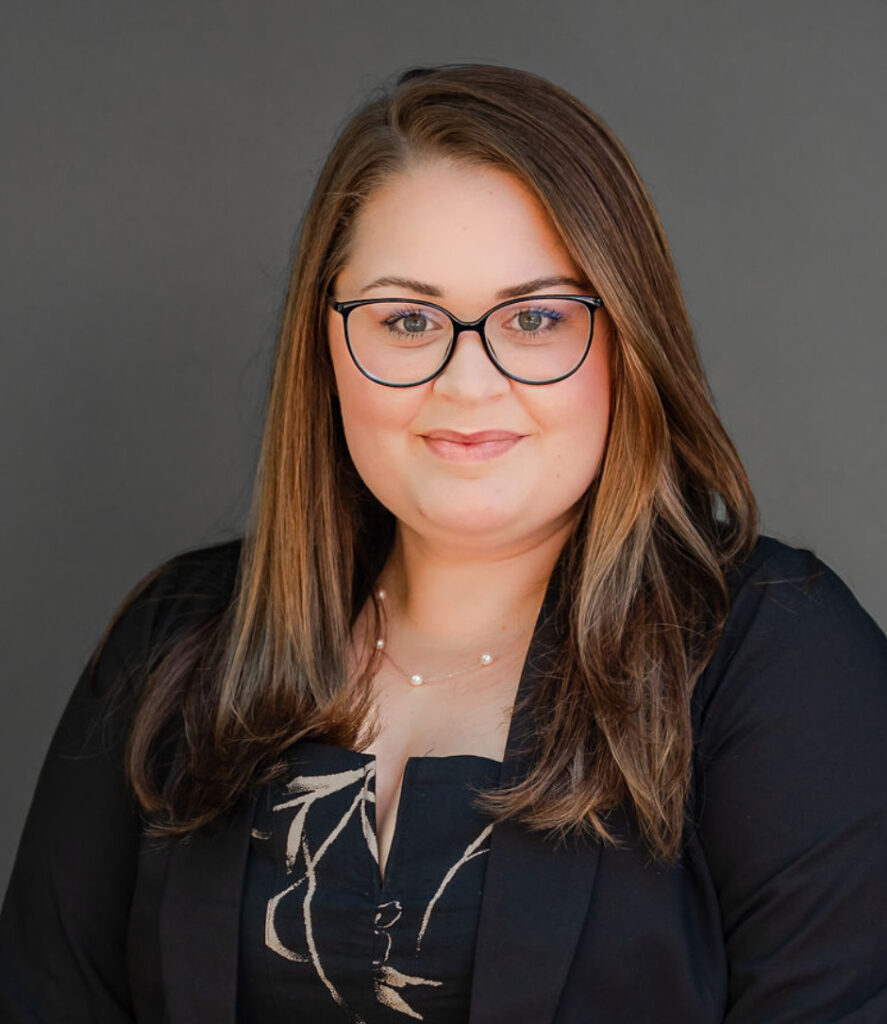
Meghan Etsey is a PGY1 resident in Internal Medicine who earned her medical degree from St. George’s University. She holds a Bachelor of Arts in Biology and a Bachelor of Arts in Nutrition and Dietetics from Bluffton University in Bluffton, Ohio. During medical school, she served as President of the St. George’s University Women in Medicine chapter in St. George, Grenada, where she expanded community partnerships and worked to educate and empower women and youth. She also contributed as a member of the Gender Equity Task Force and the Sex and Gender Health Collaborative Committees within the American Medical Women’s Association. Outside of medicine, Meghan enjoys spending time with friends and family, often going on road trips and exploring new places.
Leah Liszak, MS3
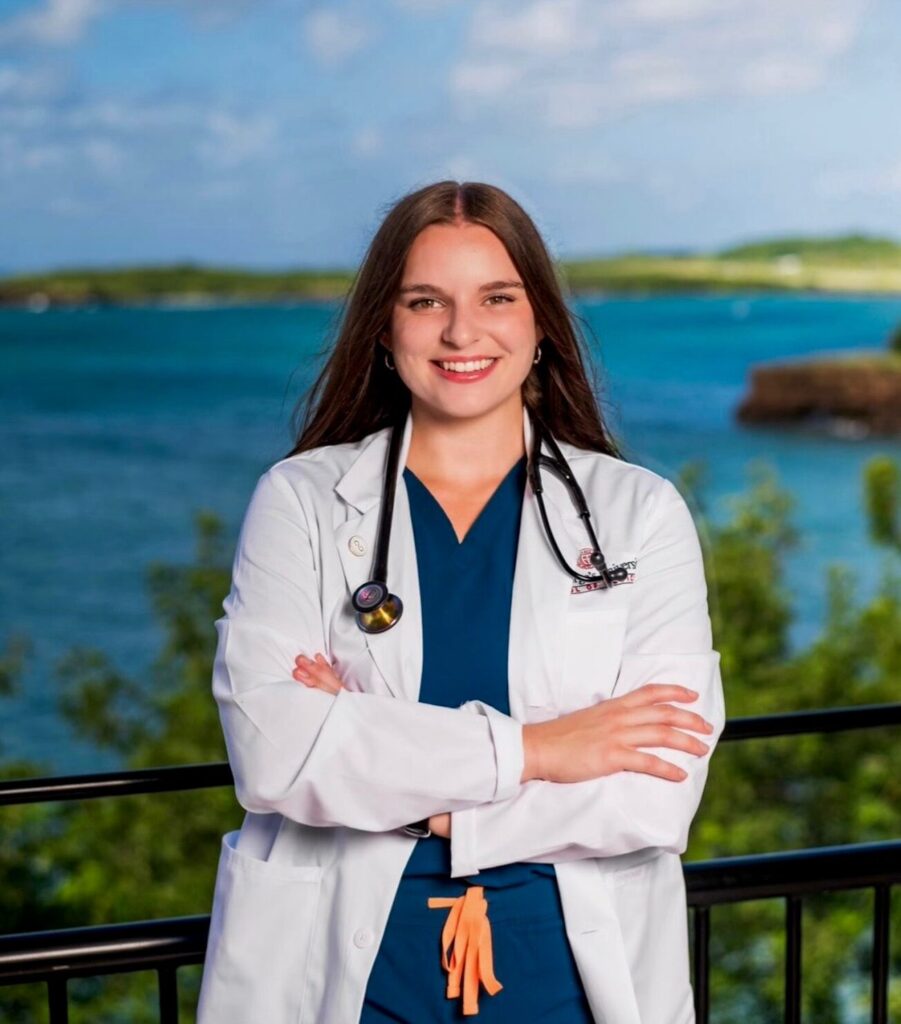
Leah Liszak is a third-year M.D. candidate at St. George’s University. Originally from the northern suburbs of Detroit, she graduated cum laude from Oakland University in 2022, where she studied Biomedical Sciences. She served as the SMILEs Orphanage Home Coordinator for the St. George’s University Humanism Service Organization in St. George, Grenada, where she fostered impactful relationships with at-risk female youth and developed seminars to support their personal growth. She is also a member of the Gender Equity Task Force with the American Medical Women’s Association. Through both her extracurricular involvement and academic pursuits, she is passionate about building a career in Obstetrics and Gynecology that advances equitable reproductive health care.
Kiana Wells, MS, MS3
Kiana Wells is a third-year medical student from St. George’s University. She holds a Bachelor of Arts in Independent Studies with a focus on Neuroscience from Berea College in Berea, Kentucky. As well as a Master of Science in Medical Sciences from Ponce Health Sciences University in St. Louis, Missouri. She served as the Vice President of Pink Run in the St. George’s University Women in Medicine chapter in St. George, Grenada, where she expanded relationships with the community and worked towards fundraising money for women to receive screenings and treatment for breast cancer. She was also a member of the St. George’s University Cheerleading team, supporting fellow colleagues in their love for movement and teamwork. Beyond medicine, she is passionate about providing resources for underserved communities, with projects like Lasagna Love. She also enjoys taking a Pilates class, weightlifting, or watching a comfort show for the 100th time.