
Authors: Rhea Manohar, Vashti Price, Meghan Etsey, Dr. Sophia Yen

“Our Voices, Our Future” is a podcast by the Gender Equity Task Force of the American Medical Women’s Association that explores the challenges, stories, and successes of those working to advance gender equity in medicine. Through candid conversations with changemakers, advocates, and leaders, each episode dives into issues like pay gaps, leadership disparities, and inclusive workplace culture. Tune in to be inspired, informed, and empowered to take action. Full episode listening links are available below the transcription.
Rhea Manohar: Welcome to Our Voices, Our Future, a podcast where we amplify the voices driving change in equity within medicine and beyond. Brought to you by the Gender Equity Task Force, a committee of the American Medical Women’s Association. We’re here to challenge norms, break barriers, and ignite conversations that matter.
I’m Rhea Manohar, and in each episode, we bring you candid conversations with leaders, change-makers, and advocates working to create a more inclusive and just world. No more silence, no more waiting. It’s time to get Our Voices, Our Future. Let’s get into it.
Rhea Manohar: Today, we are welcoming Dr. Sophia Yen, a physician, scientist, CEO, and co-founder of Pandia Health, as well as an activist, feminist, and mom. Dr. Yen is a leading voice in reproductive health and gender equity, known for her advocacy to make #PeriodsOptional through education on the science and safety of saving periods. She has also pioneered an algorithm for personalized birth control, achieving remarkable success in patient satisfaction, and continues to champion research that reflects diversity, equity, and inclusion. Through her work, Dr. Yen is reshaping conversations about women’s health, representation in research, and innovation led by women physicians. Thank you so much for being here with us today.
Dr. Sophia Yen: Thank you so much for having me.
Journey to Innovation in Reproductive Health
Rhea Manohar:
You wear many hats: physician, scientist, entrepreneur, activist, feminist, and mom. Can you share a little bit about your journey and what inspired you to combine medicine, advocacy, and innovation into your career?
Dr. Sophia Yen: I would say once you’ve chosen medicine, I won’t give you the story of how I chose medicine, but short story, I like stickers.
How I got to the early start of my passion for reproductive health and adolescent health was that I was a pregnancy test counselor at Planned Parenthood. I was pre-med, in high school, 15 years old, volunteering, and I got to run pregnancy tests, which felt like serious chemistry to me. Unfortunately, I ran a pregnancy test and it turned positive for a 13-year-old, and I was like, ooh.
We always ask people before the results come in, because we want them to answer before they start freaking out and panicking. We ask, if this were to turn positive, would you continue the pregnancy, continue and give the baby up for adoption, or terminate the pregnancy? What would you do? I knew, walking in and running that test, that this young woman was going to continue the pregnancy. After getting that result, I handed her off to a professional counselor.
Just knowing where the roads would fork stayed with me. I would go on to MIT, UCSF, Children’s Oakland, back to UCSF to specialize in adolescents—what we call sex, drugs, and rock and roll—then earn an MPH at Berkeley, specializing in maternal and child health and focusing on childhood obesity. After that, I went to Stanford, where I’m a clinical associate professor in the Department of Pediatrics and the Division of Adolescent Medicine, and then finally to Pandia Health, where I’m the CEO and co-founder. I kept thinking, where would this young woman end up?
It would be a lot harder as a 13-year-old. That’s eighth grade, right? An eighth grader who’s pregnant, are you going to finish high school? Finish college? Even get to college? Graduate school? We’ve certainly seen it done, but it’s very, very hard. And while we’ve seen the person with the penis stick by their side, we’ve also seen many of them walk away.
So I was like, this is so preventable. If we had given her comprehensive sex education, if we had given her birth control, and that’s my thing, you can have sex, but don’t get pregnant and don’t get sexually transmitted infections. Also, in heterosexual interactions, only about 30% of people with a uterus get off. If you’re not getting off, why are you risking pregnancy and sexually transmitted infections? Either mutual masturbation, or make sure you get yours, you know?
If we had also given her something to aspire to, because I was pre-med, I knew that if I were sexually active, I could not afford to get pregnant. It would have made it very difficult to get through high school, college, medical school, residency, fellowship, and everything I needed to do to get where I needed to go.
Where that comes in is when my sorority sister dragged me into co-founding SheHeroes.org. SheHeroes is free online videos targeting third graders and up, before young people trim their tree of possibilities, showing them that women can be whatever we want to be as long as we work hard toward that goal and get some help from allies. It really focuses on the idea that we can do whatever we want to do, but there will be obstacles to overcome. That’s where SheHeroes came from.
For Pandia Health, I was giving a talk to a bunch of doctors about why women don’t take their birth control. One of the top reasons was that they didn’t have it in their hand. My friend and I were like, we can solve that. We’ll just ship them birth control and keep shipping it until they tell us to stop. Then we ran ads saying “free birth control delivery,” and 60% of the people who responded didn’t have a prescription. I was like, ugh, do you not know you need a prescription? Thank goodness I’m a physician. I was like, fine, I will write your prescription. That’s how Pandia Health was born.
I did not want to do telemedicine, but it was what needed to happen. It was kind of a perfect storm of laws. They had just passed a law in California allowing pharmacists to prescribe. We took the protocol that allowed pharmacists to prescribe and threw a layer of doctor on top of that. That is our asynchronous telemedicine.
Then lastly, I hit menopause. All my friends were like menopause. I was like, yes, I will find the best treatment for me because I want the best treatment for me, and then I will share it with all of you. In building our 100% physician team, we picked up two OB-GYNs, each with 20 years’ experience in menopause. I was like, you, you are leading the team. You are developing the protocol. If any of us have any questions, we’ll consult you.
For Pandia Health, we see birth control patients in one business day. For menopause, it’s three to five business days. If our doctors have any questions, they can consult the super menopause experts. Because we are an asynchronous telemedicine, if I lose my license, the whole company goes down. We can’t do anything off-label. We can only do the four indications for HRT, which unfortunately are limited, and you’d be surprised at the one that isn’t on there.
HRT was originally developed because they noticed that women had heart attacks later than men. They actually started with HRT by giving estrogen to men to prevent heart attacks. That didn’t work so well. The four indications are hot flashes, night sweats, genitourinary syndrome of menopause, which is painful sex and dry sex. I call it sandpaper vagina, or the urinary feeling like you have to pee when you don’t have much pee going on, or feeling like you have a urinary tract infection when you don’t, or having recurrent urinary tract infections. When estrogen goes away, the vagina dries up, and the urethra is right above it, and that dries up too. That increases your risk for urinary tract infections.
Lastly, as women of color, I’m always like, we don’t get a leg up on anything. All of medicine is based on a Caucasian white male. Women of color are the exact opposite of that. Because we’re people of color and a lot of us are lactose intolerant, we automatically qualify as at risk for osteoporosis. If you are lactose intolerant and don’t get enough calcium, or if you’re a small-framed person, you’re immediately at risk for osteoporosis. Certainly, if you have an immediate family member who has osteoporosis, that qualifies you as well.
The Periods Optional Movement
Rhea Manohar: Well, thank you for sharing so much about what has kind of brought you to where you are now and how that journey has changed over time. I think a lot of us think that we need to follow this singular path from point A to point B, and recognize that that journey really changes as the opportunities and experiences around us modify that. So with that
What I really want to talk about is that you’ve been a leading voice in the period’s optional movement. For listeners who may not be familiar, can you explain the science and safety behind saving periods and why you believe that this is an important option for people who menstruate?
Dr. Sophia Yen:
Thank you so much for asking, because this is really like my one gift to the world before I die. If I could get this out to everybody, anyone with a uterus who is bleeding every single month, that is #PeriodsOptional. You do not have to do that.
I realized this while trying to get pregnant with my first child. I had been on the birth control pill for so long that I had forgotten what it was like to have a period. In order to have babies, you have to come off the birth control pill. I want people to picture a uterus, which is like a vase. Every single month, it builds to a level ten thickness with blood and nutrients, waiting to catch an embryo. Then, oh, no embryo. It sloughs. All that lining falls out of the hole, and that’s the cramps and the blood that come out every single month.
Every time you build that lining, it could mutate and turn into endometrial or uterine cancer. Every month, you also pop an egg out of your ovary. When you pop an egg, we do not know if it is the popping, the healing, or something to do with the tubes, but it increases your risk of ovarian cancer.
As your uterus goes up and down every single month trying to catch an embryo, the colon is around the uterus. I like to think it’s sympathetic. It’s like, “Oh, I’m sad for you.” It either runs faster, diarrhea, or it runs slower, constipation, in about thirty percent of people.
You are not alone. That’s my whole thing. You are not alone. You are not crazy. It is not all in your head. It is not, quote, hysteria. It’s real. We all suffer through it. We, as women and uterine-bearing people, should hashtag stop sucking it up.
My point is that from age twelve and a half to fifty-two, that’s forty years of up and down, up and down every single month, popping an egg, popping an egg, when on average now we only try to catch an embryo maybe two times, maybe four times if we’re very aspirational.
Why are we doing this every single month from twelve and a half to fifty-two if we only need to catch an embryo twice?
Then, I thought I had come up with this brilliant idea of #PeriodsOptional, but Dr. Kun Tin Ho and Dr. Seagal had actually written a book back in 1999 with all of the medical evidence cited. Then Malcolm Gladwell, who writes for The New Yorker, published an article called John Rock’s Error.
John Rock was one of the three original founders of the birth control pill. He was a devout Catholic who went to church every single morning at 7 a.m. His two co-founders were like, “Why are you making women bleed every month? We could make them bleed every three months, every six months, whatever.” He said, “No. I’m going to make periods regular, regular, regular so we can get it through the Catholic Church.”
He got it through the nuns. Nuns are very liberal. He got it through the priests. I don’t know how he did that. Then it reached the pope, and the pope was like, “Eh.” He died a sad Catholic. Because of him, and also because of the fear that women couldn’t handle it if they didn’t bleed every month, every single birth control method has included this artificial bleed once every four weeks, when it could have been every three months, every six months, or never.
People always say, “Oh, that’s unnatural.” Actually, bleeding every single month from age twelve and a half to fifty-two is unnatural. We bleed 350 to 400 times in our lives. Dr. Beverly Strassmann, an anthropologist, studied the Dogon tribe in Mali, Africa. They live about as long as we do, but they only have around 100 periods in their lifetimes. They have no ovarian cancer. They have no endometrial cancer because they’re pregnant with about eight babies.
How many periods do you have when you’re pregnant with eight babies? Zero. Then they breastfeed every two to three hours for twelve to eighteen months. Multiply that by eight babies. They have about 100 periods in their lives. We have 350 to 400, enough for two or three other people.
Bleeding also causes hormones to go up and down, up and down, every single month. Many medical conditions do better with stable hormones, including diabetes, seizures, headaches, migraines, and anything involving periods. PMS, heavy periods, painful periods, the number one cause of missed school and work for people with a uterus under the age of twenty-five is heavy, painful periods.
More people could go to work and school. In some cultures and religions, people are excluded during their periods. I have a South Asian friend who couldn’t visit her in-laws because, if she visited them in India while on her period, they would force her to stay in the kitchen for three days and not go out anywhere. If she had known about #PeriodsOptional, or at least the option to move her period, she could have shifted it before visiting so she wouldn’t be confined. Now she’s in menopause, so she can go, but earlier, this could have changed her relationship with her in-laws.
There’s also a large body of work on period poverty. I absolutely agree that people who bleed should have access to free period products. If they don’t, that’s completely sexist. But if we make #PeriodsOptional, there would be far less need and demand for those products, while also decreasing ovarian, endometrial, and colorectal cancer, as well as anemia.
Personalized Birth Control: A Data-Driven Approach
Rhea Manohar: Well, thank you so much for sharing and for talking through that. I think a lot of people aren’t necessarily up to date with, or don’t fully understand, the science behind this. The public discourse also isn’t really there yet. It can be hard to fathom and wrap your mind around something when you haven’t been exposed to the education behind it.
Dr. Sophia Yen: Yeah, and I’m so glad that we’re able to talk about this on the AMWA podcast.
Rhea Manohar: So with that, I want to shift gears a little bit.
You developed an algorithm to help match patients with the best birth control pill, achieving impressive satisfaction and adherence rates. What inspired this innovation, and how does your approach differ from traditional prescribing practices?
Dr. Sophia Yen:
I was the original prescriber for Pandia Health. I wrote about 3,000 birth control prescriptions in two years, which is more than most physicians would write, because we had 50 to 100 people coming to our platform every day. I couldn’t just write prescriptions and watch women suffer.
I realized that everything in medicine is based on a 70-kilo white male as the standard, for anyone non-medicine listening to this. For birth control specifically, all of the research and data we had were based on Caucasian females. The pill we’re taught at major academic institutions, Harvard, UCSF, Stanford, is a pill that works great if you’re a Caucasian female who wants to bleed every month.
The way most people are taught is: here’s a pill your professor likes. If it doesn’t work, good luck with that. Most lay people, and doctors know there are different pills, but most people don’t realize there are about 40 different formulations and eight different progestins. The progestins are the main thing that varies between pills, and they have different side effects.
I started with the pill we were prescribing and noticed specific side effects in people of Asian, Black, and Latina descent, and I fixed that. Then we added modifiers. If you have polycystic ovarian syndrome, if you have acne, or if you’re a cash versus insurance patient, we’ll offer you two options—maybe one is cheaper but might have more side effects, though most people don’t notice. It’s up to you.
With Dr. Yen’s algorithm, which we’ve trained all the physicians at Pandia Health to use—we’re a 100% physician platform—we see that 93% of our patients are happy with the first pill prescribed at the 10-week follow-up. We ask about breakthrough bleeding, acne, munchies, anything they want to change, or whether they want to stay. Ninety-three percent say, “Let’s go.”
More importantly, the gold standard is at one year. Among new pill users, how many are still on it after a year? In general research studies, only about 33% who started the pill a year ago are still on it, likely because of side effects or they couldn’t get to the pharmacy to get their drug. With our company, which delivers the medication and operates under the motto “no one runs out of birth control on our watch,” and by picking a pill that has no side effects, ideally, we achieve 82%. That’s a huge jump.
We’ve seen competitors hit around 55% with delivery alone, but we combine delivery with choosing the right pill. That leads to much better adherence. Also, I think education around #PeriodsOptional plays a role as well.
Rhea Manohar: Well, that’s super interesting to kind of hear about and see how you’ve used this algorithm to perfect, in a certain way, patient care in ways that a lot of people aren’t necessarily aware that you can have these options.
Dr. Sophia Yen: Right now, we have about 150 people who have shared their genetic data. We need around 300 to 500 to reach a point where we can reliably predict the best birth control. As a side note, and this ties into ADHD, menopause, and everything else, when it comes to AI, if you put crap data in, you get crap data out.
We have good data going in, and hopefully we get good data out. That’s reflected in the fact that 92 to 93% of our patients are happy with the first pill, and 82% are still on it at one year.
I once had a group of bright-eyed, bushy-tailed undergraduate students who said, “We ran this on two million humans and came up with the best treatment for PCOS.” I was like, we’ll see. They came back, and the first pill was okay. The second pill was something that, if you went to UCSF, Stanford, Harvard, or followed World Health Organization guidelines, you would not prescribe.
One way to check whether your doctor is up to date is to look at your birth control pill. If it has the three letters T-R-I, “tri,” that means it’s a triphasic pill, with three different hormone doses and then a placebo. That’s no longer recommended. It was designed to mimic the natural cycle, but it’s actually overly physiologic. It’s a farce. It’s much better to have smooth, stable hormones rather than constant cycling.
So because they put in 2 million random people, not restricting it to academic centers,
not restricting it to the last 10 years practice or whatever of the best and the brightest, they got crap data out. So beware.
Funding Equity in Women-Led Health Innovations
Rhea Manohar: Well, that’s something I actually want to talk about.
You’ve been really outspoken about the need for more funding in women-founded and women-led companies, especially in health tech. What systemic barriers have you encountered, and what changes do you think could help close that funding gap?
Dr. Sophia Yen:
I think it’s really important for people to realize that companies exist when they get funded. Companies also exist when you choose to use them. I beg you, please ask: who is the founder? Who is benefiting from your shopping at this company? No offense, but is it a bro or is it not a bro? Would your health be best taken care of by somebody who’s taken an oath to do no harm, or by somebody who went to Harvard Business School whose goal is to make the most money possible?
We see pushes by venture capitalists to do things that are not standard of care. People are pushing and say, why don’t you just dispense two emergency contraceptives at a time? I was like, that would double the healthcare cost for the entire nation. No. Why don’t you use this pill or this patch? That’s not cost-effective. These pressures come from investors, and you’re often pushed to do what your funders want.
Only, I believe, about 3% of venture capital goes to women. We need more women in venture capital, and we also need to recognize that very few women-founded, women-led companies succeed not because we’re incompetent, but because we need the funding.
What I saw was two dudes getting funded for birth control companies over me. I am a woman. I am a doctor. I am a 50-year-old. They were like, well, you’re old. I’m like, look at my LinkedIn. My LinkedIn crushes your LinkedIn. My friends are the heads of everything. You just graduated from college, which is cool for you, but give some of us older people a chance.
I’ve always wondered if my husband went to go pitch, Asian, MIT, Apple, and money would fall from the sky. Asian mom doctor? A lot harder to get. Please encourage anyone you know in venture capital to invest in women-founded, women-led companies. Patronize women-founded, women-led businesses, and know that there are a lot of good organizations out there.
One, I have to give a shout-out to StartX, which is Stanford’s accelerator. They are very pro-DEI, or really, getting to equality. I’m not asking for more. I’m just asking for level footing, level funding.
Then there’s Springboard Enterprises, which is focused on women entrepreneurs. It’s a nonprofit. Coreless is another great effort, started by Vicki Saunders out of Canada, but she does it in any country. You get 500 investor-donor women to put in $1,100 a year. One hundred goes to overhead, and $1,000 is bundled together. Then you all vote on five women-founded, women-led companies that you want to give a $100,000 interest-free loan. They pay it back over four or five years. If you do well, who can’t pay back $100,000 over four or five years? Hopefully, you should and can. Those are some good people.
Another group I have to shout out is Precursor Ventures, led by Charles Hudson, who is amazing, along with his team. He funds all kinds of companies, but with an emphasis on people who are underrepresented by race, ethnicity, and gender.
Then there’s Arlan Hamilton with Backstage Crowd. Accredited investors can invest small amounts of money, bundle them together into one check, and use that to help founders. Know that these kinds of vehicles exist.
Check out the website catacap.org. They allow people to invest as little as $250, tax-deductible. It’s getting to the end of the year, so if anyone needs a tax deduction, or honestly, anytime you want one, you can invest a minimum of $250 and choose which company you want to support. It has to do good. They bundle the checks together and help fund a company.
Cata Cap will also be launching a promotion specifically to promote women-founded, women-led companies that you can invest in in a tax-advantaged way.
Advice for Future Leaders in Healthcare
Rhea Manohar: Well, thank you so much for everything you’ve shared. As we are kind of moving towards the end of our podcast and our time here.
As someone who’s bridged medicine, entrepreneurship, and advocacy, what advice would you give to young women and future physicians who want to challenge norms, innovate, and lead with purpose in healthcare?
Dr. Sophia Yen: I think it’s important to do something that you enjoy, because whatever it’s going to be, if it’s medicine or a startup, it’s going to be 24/7 at some point. I mean, Pandia Health is 24/7 for me. I work one half day a week at Stanford in their weight clinic, but the rest of the time, it’s 24/7, always being closed.
If you choose a specialty, you also don’t want to be doing something that makes you sad or bored. You want something that excites you. I think anyone who’s willing to go into medicine, because I’ve scared all of my relatives and my siblings, and my own children from going into medicine, it is a hard haul.
You come out, and my joke is my husband makes ten times what I make, and I went to twelve more years of school. People are Googling stuff and coming in saying, “Dr. Yen, you’re trying to give my kid autism.” And I’m like, “I’m a pediatrician. Do you think I want to give anybody autism?” No. I’m just trying to prevent measles, mumps, and rubella.
If your son gets mumps or orchitis and becomes sterile, then he can sue you because you didn’t give him the vaccine. That is not to say the vaccine has anything to do with autism. Research has shown that those who get the vaccine and those who don’t have the same rate of autism. It just happens that measles, mumps, and rubella are given at age two. Two is when some people notice that their kid has autism. I say, if you had paid attention, you would have noticed your kid had autism before two, but that’s just me.
It’s a hard haul, but it is absolutely rewarding to help people. I want to leave the world better than I came in.
Rhea Manohar: Well, thank you so much.
That’s a wrap on this episode of Our Voices Our Future. We hope today’s conversation inspired, challenged, and reminded you of the power of raising your voice. The fight for equity doesn’t stop here. Join us in the movement. Subscribe wherever you get your podcast. If you love this episode, share it with someone who needs to hear it. Until next time, stay bold, vocal, and keep the conversation going. This is Our Voices, Our Future.
Links to our podcast:
RSS https://rss.com/podcasts/our-voices-our-future/
Apple Podcast https://podcasts.apple.com/podcast/id1805991643
Spotify https://open.spotify.com/show/5E59jvuFQOjSXfLrjQiy0P
Podcast Index https://podcastindex.org/podcast/7278557
Fountain https://fountain.fm/show/7278557
True Fans https://truefans.fm/82727577-2b37-5929-aa2e-1574d478b177
About the Authors
Rhea Manohar, MPH, MS3
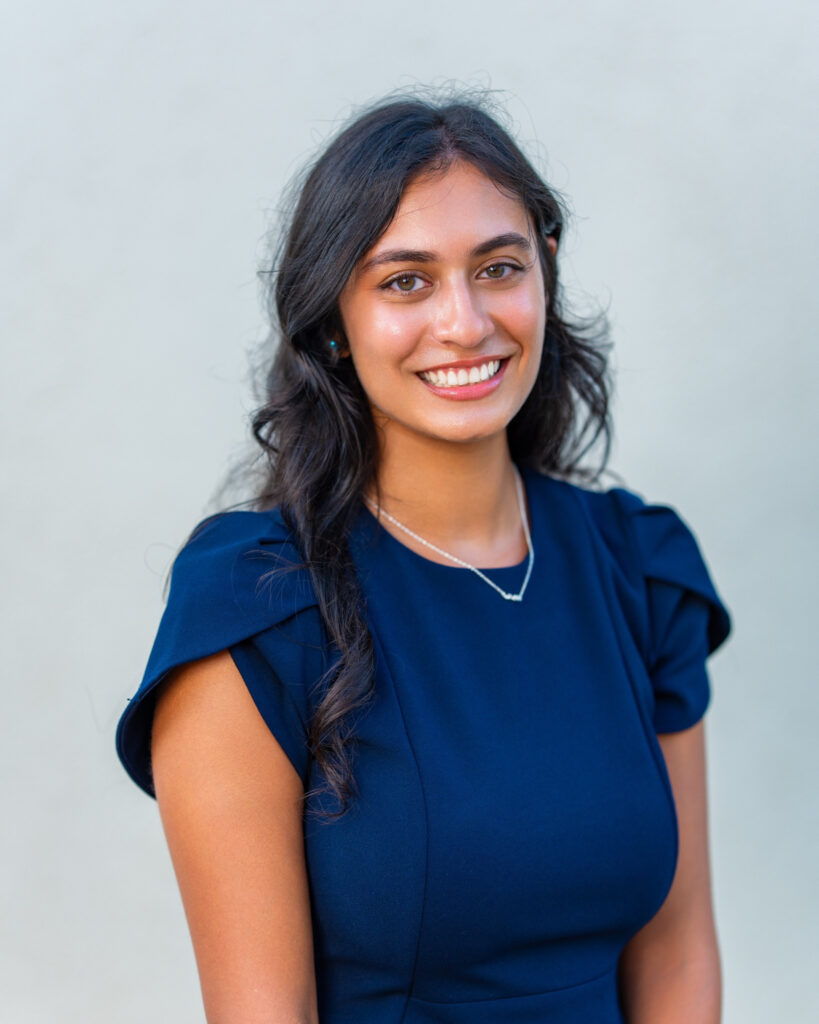
Rhea Manohar is a third year medical student from St. George’s University. She has a Masters in Public Health with a concentration in Maternal and Child Health from George Washington University Milken Institute of Public Health and a Bachelors of Science in Microbiology & Immunology, and Public Health from the University of Miami. She served as Co-VP of OB/GYN Education for St. George’s University’s Women in Medicine chapter in St. George, Grenada where she developed hands-on workshops to further reproductive health issues and navigating challenging physician-patient communication scenarios. Prior to medical school, she was a Research Associate for Fors Marsh Group, where she led qualitative and quantitative public health research and campaign development for federal agencies (e.g., CDC, NIH, DHHS, CPSC). She is also a member of the Gender Equity Task Force of the American Medical Women’s Association. When she is not pursuing medicine, you can find her reading, exploring artistic passions, and spending time connecting with friends and family.
Vashti Price, MS, MHS, MS4
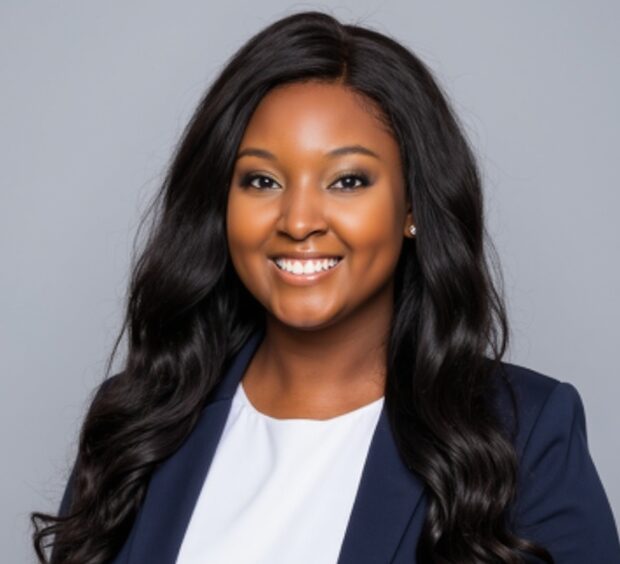
Vashti Price is a fourth-year medical student at St. George’s University. She holds a Bachelor of Science in Biology from the University of Louisiana at Lafayette, a Master’s in Biological Sciences from Alcorn State University, and a Master’s in Health Sciences from Meharry Medical College. With a strong passion for public health and health equity, Vashti has dedicated much of her time over the years to volunteering with underserved populations, including individuals experiencing homelessness and children in need. Her commitment to service continues through her involvement with the American Medical Women’s Association, where she serves on the Gender Equity Task Force and the Sex & Gender Health Collaborative Committees. Vashti is particularly interested in the intersection of medicine, public health, and community outreach. Outside of her academic and clinical pursuits, she enjoys spending time with friends and family, attending festivals, exploring new cities, and winding down with a good Netflix series.
Meghan Etsey, MS4
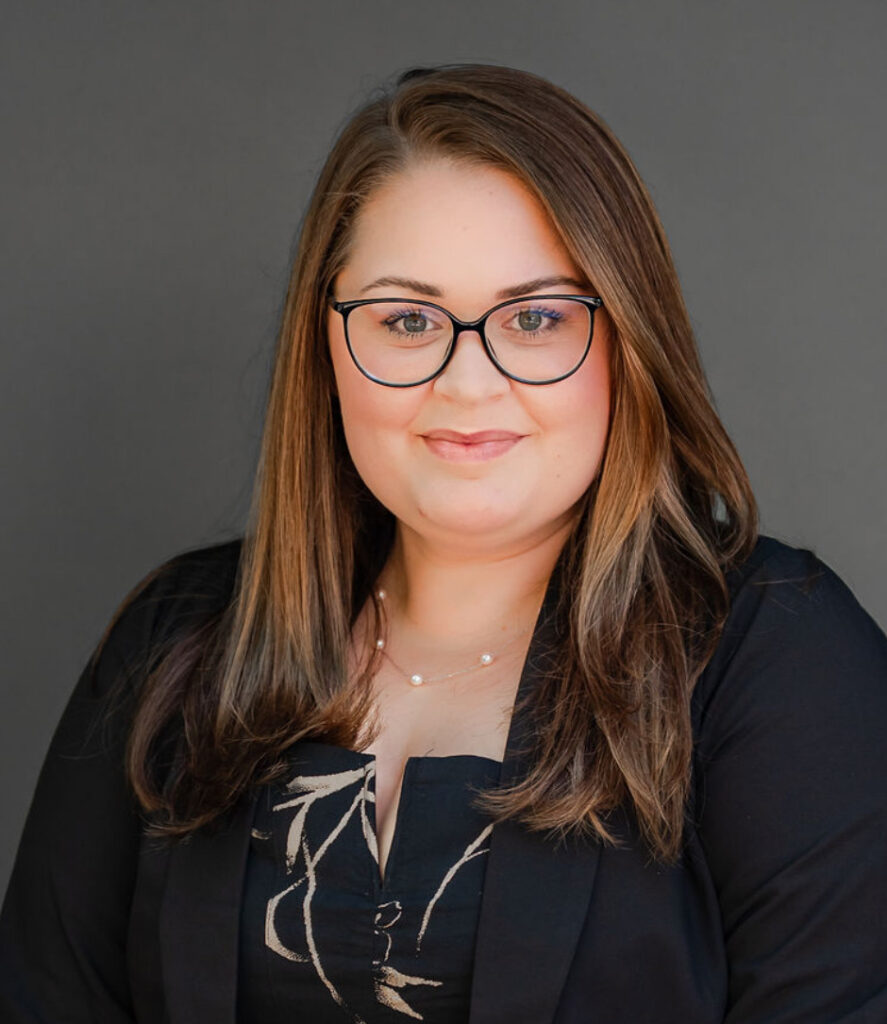
Meghan Etsey is a fourth year medical student from St. George’s University. She has a Bachelors of Arts in Biology and a Bachelors of Arts in Nutrition and Dietetics from Bluffton University in Bluffton, Ohio. She served as the President of the St. George’s University’s Women in Medicine chapter in St. George, Grenada where she expanded relationships with the community and worked towards educating women and helping the youth. She is also a member of the Gender Equity Task Force and Sex and Gender Health Collaborative Committees within the American Medical Women’s Association. When she is not pursuing medicine, you can find her with her friends and family on different road trips and adventures exploring the world.