
Authors: Rhea Manohar, MPH; Leah Liszak, Meghan Etsey, Dr. Diane Ukwuoma, Dr. Dayna Ukwuom
“Our Voices, Our Future” is a podcast by the Gender Equity Task Force of the American Medical Women’s Association that explores the challenges, stories, and successes of those working to advance gender equity in medicine. Through candid conversations with changemakers, advocates, and leaders, each episode dives into issues like pay gaps, leadership disparities, and inclusive workplace culture. Tune in to be inspired, informed, and empowered to take action. Full episode listening links are available below the transcription.
Rhea Manohar: Welcome to Our Voices, Our Future, the podcast where we amplify the voices driving change and equity within medicine and beyond. Brought to you by the Gender Equity Task Force, a committee of the American Medical Women’s Association. We’re here to challenge norms, break barriers, and ignite conversations that matter. I’m Rhea Manohar, and each episode will bring you candid discussions with leaders, change makers, and advocates working to create a more inclusive and just world. No more silence, no more waiting. You’re listening to Our Voices, Our Future. Let’s get into it.
Rhea Manohar: Today, we are welcoming Dr. Diane Ukwuoma and Dr. Dayna Ukwuoma, two inspiring sisters who have each made remarkable contributions to the field of medicine. Dr. Diane Ukwuoma completed her medical degree at the American University of Antigua College of Medicine, followed by an adult psychiatry residency at Sunny Upstate and a fellowship in child psychiatry at John Hopkins in Baltimore, Maryland. She now serves as an adult and child psychiatrist with a medical group. Her sister, Dr. Dayna Ukwuoma, also graduated from the American University of Antigua College of Medicine and completed her pediatrics residency at Sunny Upstate. She is now a dedicated general pediatrician with a medical group. Together, they represent the power of perseverance, compassion, and sisterhood in medicine.
Rhea Manohar: Well, thank you all for being here today. To start, can you please share a bit about your individual journeys in medicine? What inspired each of you to pursue your specialties and how have these paths intersected along the way?
Dr. Dayna Ukwuoma: Definitely. So I feel like, for me I always had some idea that I wanted to help people, and that’s just such a general thing. A lot of people say that, but I had to really think about which avenue I wanted to help people in. When I got a little older I kind of got exposed to medicine in different ways. I had ended up having surgery on my back, which made me think of one day becoming a surgeon, and then I felt a close relation to my pediatrician growing up as well so I was tied between the two. So I knew I liked the critical thinking aspect of medicine and I kind of got driven towards being a doctor. And then when I was in medical school and I did my pediatrics rotation, I just fell in love and I knew it was for me.
Dr. Diane Ukwuoma: For me, I think choosing psychiatry, one of the reasons I came to it was it was just really the most fascinating subject for me in medical school. So I thought that this was something that I would be not only interested in, but I knew I could make an impact. And I figured that out pretty early on. I ended up transitioning to child psychiatry later on because I just enjoyed working with kids so much. So I wanted to keep that kind of in my day to day. So it came together pretty nicely.
Rhea Manohar: You both are kind of working in pediatrics in different ways. So how have your careers and professions kind of intersected over time?
Dr. Diane Ukwuoma: Yeah. That’s a really good question. So I’d say there’s definitely more to speak about between the both of us because when I went to fellowship instead of working with kids and Dayna obviously already had that background, there’s a lot of intersection between psychiatry and pediatrics in general. Like one of the main things I learned about in training was ADHD and autism and that demographic Dayna is very familiar with. So there is definitely a lot of overlap. So we were able to speak more about that, which is nice.
Dr. Dayna Ukwuoma: And another part about that is not only does ADHD and autism, which are huge, I feel like I can come to Diane about because she is a psychiatrist, but she has the neurology aspect as well. So talking about childhood seizures, talking about tic disorders, it just comes into play. And it’s just so funny how close we really are kind of in specialties that I can kind of pick her brain a little bit, especially when it comes to autism, which is like the biggest thing we talk about because it’s something huge we have in common between our fields.
Rhea Manohar: That’s so interesting that you guys have this combined professional and personal interests that have really intersected. So with that, as sisters who both trained at the American University of Antigua and completed residency at Sunny Upstate, how did those experiences shape your perspectives on representation and belonging in medicine?
Dr. Dayna Ukwuoma: Yeah, so I feel like I mean, we’re underrepresented in medicine. It’s not a secret to Nigerian Americans in medicine. It’s common to see Nigerians, but not common to see people who look like us, to be honest. And so going to Antigua, I was scared of what it was going to be like, how I was going to be perceived. It made it much easier to have my sister there because we kind of leaned on each other when we needed help. I would say the biggest thing for us between AUA and also SUNY Upstate was finding that sense of mentorship between each location, finding someone that kind of represents who we were in medicine and not only just wanted to practice the same way we did, but kind of thought the same way we did, because it helped guide our steps moving towards medical school and also residency.
Dr. Diane Ukwuoma: Yeah, yeah. I think to piggyback off of that, I’ll just say that I think going to school in the Caribbean, going to American University of Antigua, it kind of made a situation or circumstance that would have already been isolating just a bit more isolating being on the island. I think it was hard to get past some of the. Just like Dayna said, not having people around you that may look like you or identify the same way as you do. So it was kind of like a red flag to me and that inspired me more to focus on mentorship not just for me but other people coming up in medicine. So if anything it just taught me like this is not something that you want to go through alone. That kinda stuck in my mind.
Dr. Dayna Ukwuoma: And it’s also about community as well. I feel like that was huge. So not just finding a group of people, because just like you were saying, medicine can be isolating. You go to classes for a few hours, you study, you go to your room, and it just becomes this routine every day. If you don’t have people coming in to visit you, people texting you, people calling you from home, you will lose yourself in medicine. And that can be scary, but it can also be avoidable.
Rhea Manohar: Of course. So with that, I did kind of have a follow up question. What recommendations do you have for students in your position who are underrepresented in trying to find mentors or peers that are going through the same things that they are?
Dr. Diane Ukwuoma: Yeah, I would say from day one, try to align yourself with someone who comes from maybe the same background as you, but not just that, has done something that you’re looking to do. For me in day one whether I was in residency or fellowship or even in medical school, I would look at attendings or staff that they were a psychiatrist or would teach a course that I really need to do well in. Something that aligned with you or a personal goal. You find that helpful. Like Dayna said, finding community, whether it’s a group of two people or a group of ten, making that a priority will be really helpful.
Dr. Dayna Ukwuoma: And also just don’t let fear stop you, which is easier said than done. In this profession, like I said, you’re going to be like the 1 percent, the 3 percent of people that look just like you. You may be in a position where you go to medical school and you might be the only one, again, that looks like you. You can be in a residency and be one of 15 in that class. You’re going to have thoughts that poke into your head like, well, what do these, again, am I being perceived? How much better do I have to be? Or do they think I’m as good as them? You’re going to have those feelings, but that’s when you dig into your faith as well. Dig into your faith, dig into your community, and don’t let fear stop you from being the best that you can be.
Dr. Diane Ukwuom: Yeah. And I’ll just say one more thing. I’m sorry. Just to piggyback off that last thought, I think it’s important to know as well that when we speak about isolating experiences, it’s not just about race. There is sexism, disability, socioeconomic status. There’s so many things that could set you apart from the majority outside of race. I always say when I say find someone that identifies or maybe it comes from a similar background, I’m considering all those factors as well.
Dr. Dayna Ukwuom: And also just remembering that you were picked for a reason. You were picked in the cohort that you were selected with are just as good as you are. So you shouldn’t ever look at someone else and say, oh, they’re better or I’m not enough. You always have to remember I’m here because I’m just as or sometimes even better than the people around me.
Rhea Manohar: Of course. And that intersection between different identities is really something that we talk about a lot here, not just on the podcast, but throughout AMWA and especially in the Gender Equity Task Force. Just because they are such intersecting, but also distinct experiences in many ways.
Rhea Manohar: So we kind of already started talking about this, but what challenges did you face as an underrepresented minority physicians during your training or early career? And how did those experiences influence the way you now approach mentorship and diversity in your workplaces?
Dr. Dayna Ukwuom : I think for me, it was just, I always wanted to be a perfectionist or I felt like I had to be perfect. I felt like I couldn’t mess up. I felt like I could, there was no room for failure and there isn’t a lot of room for failure in medicine, but it was such an amplified feeling, you know, as being an underrepresented student or medical student resident within the field. It’s like, you feel like there’s a certain light that’s shining on you at all times. And if you step out of line, if you don’t do as well, if you miss a question while rounding, it’s like, there you go, I blew it. Like I blew it. I kind of showed everyone my hand, like there. But I feel like it was just, again, just knowing that whether I had to study harder, whether I had to push myself, whether I had to lean on my community, there was always a place for me and if there wasn’t, I was going to make room for myself. There was no way I was turning around from what I knew I could do. And it was always there.
Dr. Diane Ukwuom: Yeah. And I struggled, I would say, with imposter syndrome a lot. Even when I was in fellowship, I trained at a really incredible institution. My experience there was great. I had a really good experience there, but I put a lot of pressure on myself just because I was under a big name and wasn’t seeing, you know, I asked myself every day, like, like, how did I get here? Do I deserve to be here? There’s a lot of things you just put in your head, even if someone doesn’t directly make you feel that way, just sometimes an environment can trigger those thoughts. So I struggled with that a lot. And one of the things I tell people I mentor is that you have to get rid of that. Like, you have to get rid of that. That’s the first thing that you should do day one of medical school, because it can really eat you alive if you don’t conquer that beast, that monster. So there’s a learning curve, but if people can master that, I feel like it makes you more successful in the end.
Dr. Dayna Ukwuom: And also knowing that we’re just so needed in this field in medicine in general. Like, underrepresented physicians are needed in medicine. I can’t even begin to count the amount of time people have come into my clinic and looked at me and or looked towards me to be their PCP because of how I look, because I knew there were certain things that I would identify with, that they also identified with, and maybe I wouldn’t overlook them when they came to me with a certain complaint or concern. That’s why it’s so important to have us in medicine, because a lot of people are looking for us, looking towards us for a lot of hope.
Rhea Manohar: Definitely, so you’ve talked a lot about mentorship and feeling isolated. So what strategies or initiatives have you seen work effectively to address this, like recruit and retain underrepresented minorities in medicine, especially within your fields?
Dr. Dayna Ukwuom : I mean, in residency, I think that was the biggest time we got to do a lot of work with the admissions committee to try to pull more people in that were underrepresented into our program. We started like a second look, which was like during the residency season and interview season, we’d invite underrepresented minorities or underrepresented, and just that whole group of people back for a second look into our university, meaning they would come and they would speak to residents that identified that as well. We told them why our institution would be like a great fit for them or why they wouldn’t be overlooked at our program as well. Besides all of that, of course, we had committees there in residency where we would work to put in place certain practices like if you felt like you were being judged, if you felt like you had a poor outcome because the way you looked, then of course we would figure out what that reporting process would be like. So that was really important as well. It was a great sense of community again.
Dr. Diane Ukwuom: Yeah, I think institutions, I would say they should all do a better job. We can all do a better job of educating themselves on the issues that people who maybe are not as well represented as other major groups face an experience. Because one of the things I find is that once we recruit people, who maybe don’t look like the majority, it’s like, okay, you’re on your own. Whatever problems you face during these three or four, whatever years of residency or training or even medical school, it’s on you. But learning about the issues that people face and also how you can help and that’s asking questions, making sure that you’re a safe place where people can vent and speak about their experiences and just being transparent. The more institutions do this, the safer the environment is. I think recruitment will be an easier, not an easier process, but a process that maybe doesn’t face so many obstacles when it comes to diversity.
Rhea Manohar: Go for it.
Dr. Dayna Ukwuom: I was going to say, just even as an attending, there are certain groups that you can join as well. It doesn’t just stop in residency either. Even with the group, medical group I work for, there’s a Nigerian and American committee, there’s African American committee. There’s so many things that you can get involved in, again, find community.
Rhea Manohar: I’m sensing that community and mentorship are large aspects of the work that you’ve done, both within and outside of specifically medicine. Now that you’ve worked to help recruit people that look like you and are from these underrepresented minorities, how do you take the next step? How do you help them advance into these leadership sessions?
Dr. Diane Ukwuom: Yeah, I think that’s a really good question. I think it just goes back to making people feel comfortable because I think it would be easy or it’s not a hard task for people who are underrepresented to progress in leadership if they feel like they’re able to do so, or I wouldn’t even use the word allowed to do so. There’s so many things in an environment that can limit not only someone’s mindset but how they perform. A lot of times I feel like higher ups may put a magnifying glass on people who maybe don’t look the same or behave the same or worship the same or whatever the case is, but eliminate those things. Just like I said, making a safer environment for people to thrive will push them into leadership positions naturally. That’s what I think. I don’t know, Dayna, what would you say?
Dr. Dayna Ukwuom: I think it’s along the same lines. When you make people feel safe at the institution that they’re practicing medicine in, you’re going to retain them at the university, and you’re going to get more people to see that this is a safe place. This is a safe place. Then other years will come and see who’s there at the program, see who they’ve kept at the program. They’ll want to apply as well. But again, that process can’t start until they know that they have policies in place to represent their underrepresented minorities.
Rhea Manohar: You’ve talked a lot about your training. Representation can have a profound impact on patient trust and outcomes. So how do you see diversity among health care providers influencing the quality of care within your respective fields?
Dr. Diane Ukwuom: I think it improves tenfold. I honestly do. And I’ve seen that from start to finish. I mean, I’m not finished now, but from start to current, I guess I’ll say, yeah, when you can identify with the person who’s providing care for you, it just creates the safe space that we’re speaking about. And I don’t get offended if I have a patient who says, like, I figured out that this physician works here too, and they worship the same way I do. They do this the same. Like, I open the door for them to transfer care if it makes them feel more comfortable. So I think that it only improves, not to say that you can’t have a physician or a provider that doesn’t look the same way. But when you do, I think that it’s an extra layer of protection.
Dr. Dayna Ukwuom: And just like along with all of that too, I feel like especially like in pediatrics, it’s kind of cut in half because with pediatrics, you deal with the parent and the child. So especially from newborn on, you’re seeing a mother who just delivered and she has been through a lot of trauma, maybe on the OB side, where maybe she felt like she wasn’t her, so her pain wasn’t dealt with well, you know, nobody was listening to her. Now, she’s trying to find a provider for her child and she wants that provider to be someone who not only looks like her but will hear them as well because maybe she didn’t get that experience from her OB. And when they come in to me, I think it’s important because they want to hear that because we might have went through the same things or we could have went through the same thing and they’re further going to understand me when I tell them, you know, I need this albuterol inhaler or they’ve been hospitalized for asthma in the past and I need someone who will know when can I get steroids and when can I give this medication. So it’s all very important. So I think that, and I’ve heard it several times, like I went on the Medical Group’s website. I went on the Medical Group’s website and I picked you out specifically because I knew that we would have a connection just based off of that, whether it’s where they saw where I was from or the color of my skin, whichever one.
Rhea Manohar: Well, thank you so much for sharing all of that. So finally, what advice would you give to medical students or early career physicians from underrepresented backgrounds who may be navigating these feelings of isolation or uncertainty about their place in medicine?
Dr. Dayna Ukwuom: Again, I would say find a community, find faith if that’s what you believe in, and then find an outlet. I know I touched on the first two already, but it’s so important to have an outlet in medicine. As much as you go into medicine because you want to help people, you want to care for people, you like the critical thinking aspect, you need something outside of all of that to lean on to when you can’t, when you’ve had enough, essentially. When you’re going to have stressful days, you’re going to have weeks of studying.What do you do after that? Do you have family that you can talk to, friends that you can talk to? Do you play a sport? Do you go to church? Something. Along with that, those are places where you can find community in medicine. Again those are places where you can find a mentor and you need all three. I feel like it would be very difficult to make it through one year without finding those things. Try early and when you can you’ll be happy that you did.
Dr. Diane Ukwuom: Yeah. For me, I would say, I think the first part of it is just validation, because it is an isolating experience. I think one thing that people should know, especially trainees, is that you would be surprised how many people go through the exact same thing, but we’re just not speaking to each other about it. Finding community, as Dayna said, but also don’t be upset if you don’t have to find your community in medicine. It could be very difficult depending on where someone does residency or fellowship or medical school. Finding something outside of medicine that sets your soul on fire, something that makes you happy outside of medicine, something that makes you smile, like it doesn’t have to be your only motivating factor. I would actually say having some more things outside of medicine makes you a healthier human being with a balanced mindset. I would say look for connection to the community outside of medicine and inside if you’re lucky enough.
Dr. Dayna Ukwuom: Then one more thing I would say is that no one makes it through medicine scotch-free, and you have to tell yourself that all the time. It’s not going to just be this easy, perfect yellow brick road that everyone travels down. You’re going to have your little roadblocks along the way, so anticipate and expect them. But don’t think that medicine is not for you because you met a roadblock, because everyone will, not everyone will maybe share that with you, but we all go through it and everyone will overcome it. Even if it takes longer than you expect, you’ll get there.
Rhea Manohar: Thank you both for being here. That’s a wrap on this episode of Our Voices, Our Future. We hope today’s conversation inspired you, challenged you, and reminded you of the power of raising your voice. The fight for equity doesn’t stop here. Join us in the movement, subscribe wherever you get your podcasts, and until next time, stay bold, stay vocal, and keep the conversation going. This is Our Voices, Our Future.
Links to our podcast:
RSS https://rss.com/podcasts/our-voices-our-future/
Apple Podcast https://podcasts.apple.com/podcast/id1805991643
Spotify https://open.spotify.com/show/5E59jvuFQOjSXfLrjQiy0P
Podcast Index https://podcastindex.org/podcast/7278557
Fountain https://fountain.fm/show/7278557
True Fans https://truefans.fm/82727577-2b37-5929-aa2e-1574d478b177
About the Authors
Rhea Manohar, MPH, MS3
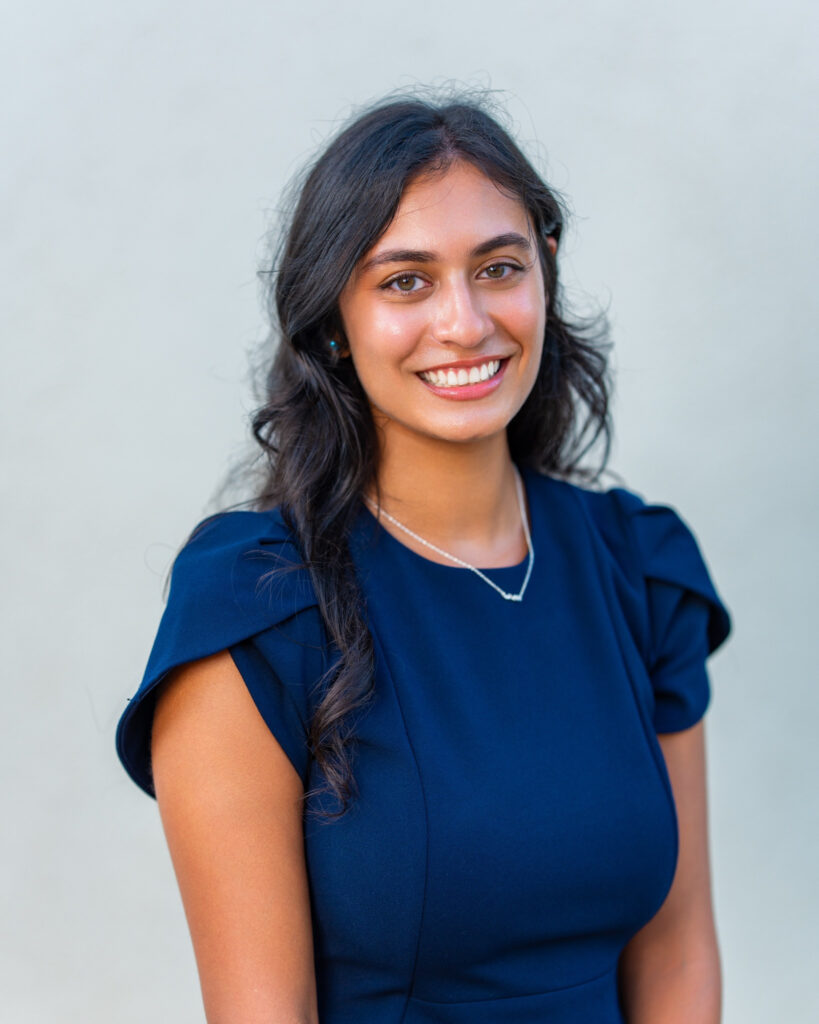
Rhea Manohar is a third year medical student from St. George’s University. She has a Masters in Public Health with a concentration in Maternal and Child Health from George Washington University Milken Institute of Public Health and a Bachelors of Science in Microbiology & Immunology, and Public Health from the University of Miami. She served as Co-VP of OB/GYN Education for St. George’s University’s Women in Medicine chapter in St. George, Grenada where she developed hands-on workshops to further reproductive health issues and navigating challenging physician-patient communication scenarios. Prior to medical school, she was a Research Associate for Fors Marsh Group, where she led qualitative and quantitative public health research and campaign development for federal agencies (e.g., CDC, NIH, DHHS, CPSC). She is also a member of the Gender Equity Task Force of the American Medical Women’s Association. When she is not pursuing medicine, you can find her reading, exploring artistic passions, and spending time connecting with friends and family.
Leah Liszak, MS3
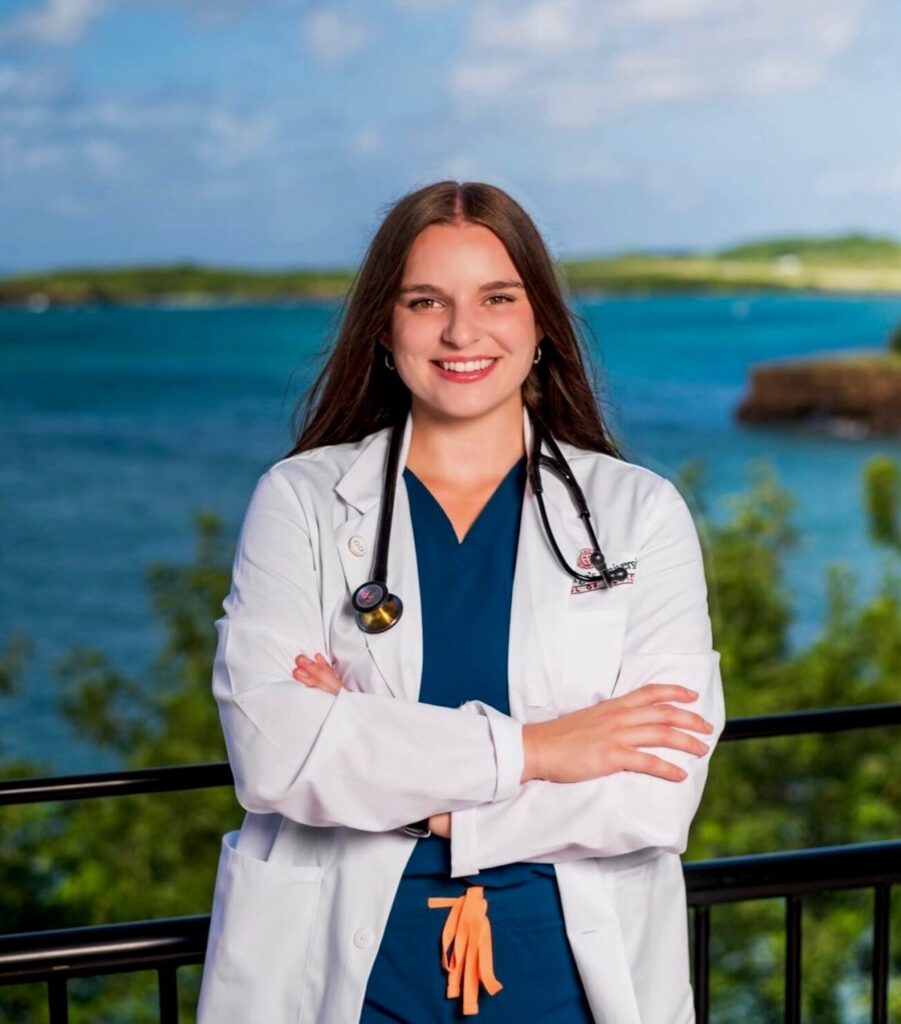
Leah Liszak is a third-year M.D. candidate at St. George’s University. Having roots in the northern suburbs of Detroit, she graduated cum laude from Oakland University in 2023, where she studied Biomedical Sciences. She served as the SMILEs Orphanage Home Coordinator for the St. George’s University Humanism Service Organization in St. George, Grenada, where she fostered impactful relationships with at-risk female youth and developed seminars to support their personal growth. She is also a member of the Gender Equity Task Force with the American Medical Women’s Association. Through both her extracurricular involvement and academic pursuits, she is passionate about building a career in Obstetrics and Gynecology that advances equitable reproductive health care.
Meghan Etsey, MS4
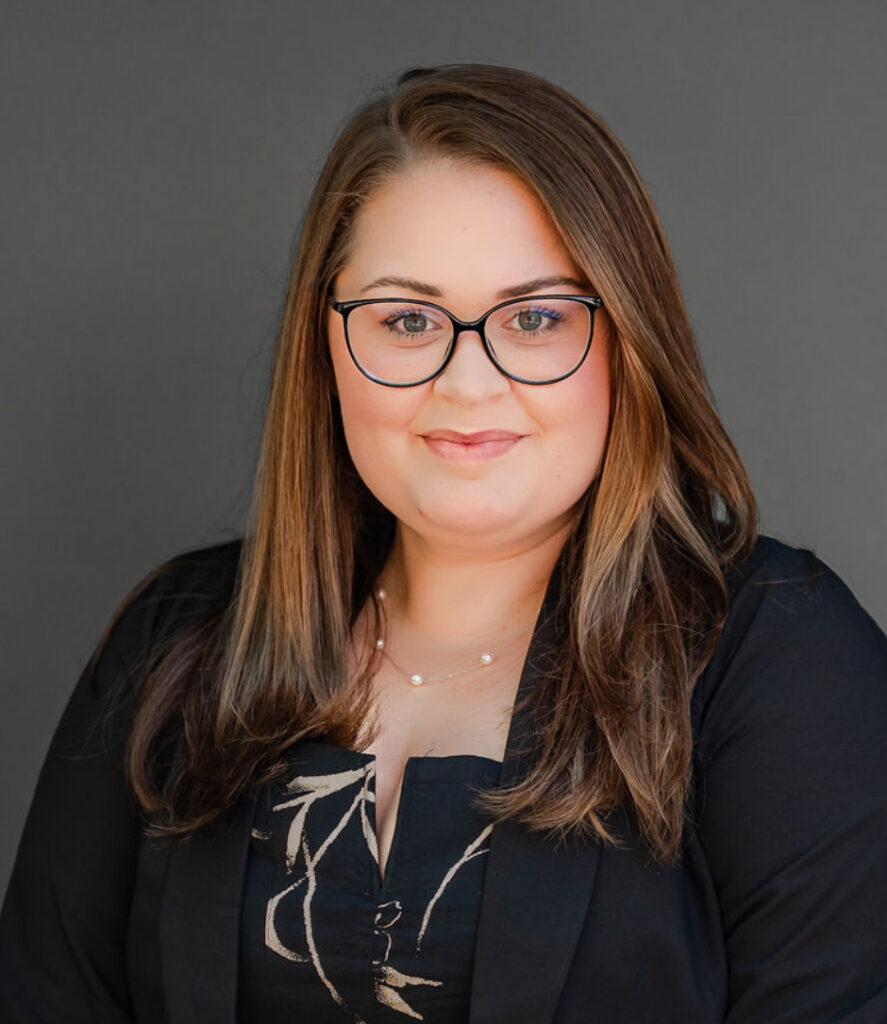
Meghan Etsey is a fourth year medical student from St. George’s University. She has a Bachelors of Arts in Biology and a Bachelors of Arts in Nutrition and Dietetics from Bluffton University in Bluffton, Ohio. She served as the President of the St. George’s University’s Women in Medicine chapter in St. George, Grenada where she expanded relationships with the community and worked towards educating women and helping the youth. She is also a member of the Gender Equity Task Force and Sex and Gender Health Collaborative Committees within the American Medical Women’s Association. When she is not pursuing medicine, you can find her with her friends and family on different road trips and adventures exploring the world.