
Authors: Meenu Immaneni; Vashti Price; Shivani Shah; Meghan Etsey; Mary Dunn, JD

“Our Voices, Our Future” is a podcast by the Gender Equity Task Force of the American Medical Women’s Association that explores the challenges, stories, and successes of those working to advance gender equity in medicine. Through candid conversations with changemakers, advocates, and leaders, each episode dives into issues like pay gaps, leadership disparities, and inclusive workplace culture. Tune in to be inspired, informed, and empowered to take action. Full episode listening links are available below the transcription.
Meenu Immaneni: Welcome to Our Voices, Our Future, a podcast where we amplify the voices driving change in equity within medicine and beyond. Brought to you by the Gender Equity Task Force, a committee of the American Medical Women’s Association. We’re here to challenge norms, break barriers, and ignite conversations that matter.
I’m Meenu Immaneni, and in each episode, we bring you candid conversations with leaders, change-makers, and advocates working to create a more inclusive and just world. No more silence, no more waiting. It’s time to get Our Voices, Our Future. Let’s get into it.
Meenu Immaneni: Today, we’re welcoming Mary Dunn, an attorney, practice manager at Jagannathan Neurosurgery, and social media manager for Dr. Jagannathan as well. Thank you for being here, Mary.
Mary Dunn: Thank you for having me. I’m excited to share with you all.
Contract Negotiations
Meenu Immaneni: Can you get us started by telling us a little bit about your background and what motivated you to specialize in contract negotiations for physicians?
Mary Dunn: Sure. My background actually started out in real estate law. During undergrad, I worked for a local law firm that handled residential default services, which is basically loan modification, foreclosures, and bankruptcies representing banks. I clerked for them during law school, and then, when I finished law school and passed the bar, I was hired as an associate attorney.
This was a really great opportunity for me because it put me in a courtroom almost every day. A lot of attorneys who just do contracts never step foot in a courtroom. I knew that this was the time to get that experience, because otherwise I might not ever get that experience in my career.
As for my transition to healthcare, I kind of grew into it organically. I married a neurosurgeon, and I also have a brother and a sister-in-law who are physicians. One of them is a hand surgeon, and the other is an internist. Before my husband and I were even married, I started reviewing his contracts.
The thing about surgeons is that they are in high demand. Hospitals are always looking to poach them, and you receive offers for employment not infrequently. He was getting quite a number of contracts, and I started reviewing all of them.
Then we also started my husband’s practice around the same time, and I really developed a passion for it. What started as helping out family and friends occasionally grew into a full-time job as my husband started his practice, and it continues to grow.
Meenu Immaneni: Lovely. I love that it’s so organic, like it kind of just came to be.
My next question is kind of about why contracts are particularly important for female physicians entering the medical field today.
Mary Dunn: My biggest message to all of you is to negotiate your contract with an attorney upfront. You’ll never have more bargaining power than you do at the time of your initial contract negotiation. It not only dictates your current position, but also your future positions.
For example, if you live in an area where non-competes are enforceable, your current contract can dictate how far away your next job has to be. If you have a collections-based compensation model, it can dictate the collections you’ll continue to receive for work performed at your next job.
I saw one contract somebody had, and it was collections-based. They got a percentage of their collections for their surgeries, but once they left the employment, they were no longer eligible to receive collections. Your collections usually take between 15 and 45 days to come in after you do the case. If you were to leave, all of your collections for the last 45 days of work, you would never see.
You want to have a good negotiation and a good contract lawyer reviewing your contract upfront, so that when you leave, you have a favorable ending and you don’t have to hire an attorney to fight it at that point. It’s easier to hire somebody upfront and negotiate it on the front end.
Meenu Immaneni:
So, collections, for people who might not know what that term means, it is services paid for that you’ve already done the work for, but you’re getting it later, the payment is later than the service?
Mary Dunn: That’s correct. Sometimes it’s confused with an RVU-based compensation model. RVU-based is for how much work you do, irrespective of how much is collected for that. Maybe you did the surgery, but the patient didn’t have insurance. You would still be paid under an RVU-based model.
Meenu Immaneni: Okay.
Mary Dunn: On the other hand, collections-based is how much you actually collect. Maybe you’re only doing elective cases. Maybe everybody has insurance. You’re obviously going to be paid more for patients with better insurance than if they have worse insurance.
That’s a collections-based model. It takes anywhere between 15 and 45 days, on average, to start getting the money in. Some cases are litigated. Some claims have to be appealed. Maybe somebody didn’t get an authorization, and they have to submit additional paperwork. Some insurance companies conduct audits before they will pay.
There is a lag in time if you’re collections-based. You might not get money right away when you’re starting, because you have to wait for collections to come in. But when you leave, you already have collections, so that money should continue for a little while.
Meenu Immaneni: Okay, that’s good to know. I had no idea that there was a different contract term that existed.
You previously mentioned getting a lawyer to help you negotiate that initial contract.
So, for women who are just coming out of residency, how far in advance should they seek out that counsel? Is it once they have an interview and are ready, in the negotiation stage? What does that kind of look like, if you have any advice on that?
Mary Dunn: You do not need a lawyer until you have a contract in your hand. The lawyer will review the contract for you, and you want to make sure that the lawyer specializes in healthcare law specifically. That way, they have probably already worked with this hospital.
Hospital CEOs turn over quickly. Maybe they worked with them at another hospital. Maybe they worked with them at this hospital. They already have those relationships. They already know what this hospital is giving to other similar providers in your area, and they know what other competing hospitals are giving to other similar physicians.
Maybe they know, just in the larger network of healthcare systems, what is being offered. It is a huge advantage to have an attorney who has negotiated contracts like this before, who knows what you are worth and how much money there is in the budget.
I can say, for us as an employer of different providers of different types, I know what my margins are. I know what I can afford to pay somebody. I know what my max is. A good healthcare attorney will also have a lot of that same information. They know what they can get for you better than you do.
Key Contract Provisions
Meenu Immaneni: What are some common pitfalls that you see female physicians encounter during contract negotiations, and how can they avoid them?
Mary Dunn: Things that I see in contracts that you want to make sure you have your lawyer work on for you—one is call. How many physicians share the call responsibility, and how is the call split?
This also gets into hospital bylaws, because sometimes the hospital bylaws will say it gets shared among however many neurosurgeons, let’s say, for example, have privileges there. If there are three neurosurgeons, it has to be split three ways. Sometimes you split it pro rata, where you each take ten days. Sometimes it does not have to be shared equally.
One thing that I see is if it is shared pro rata, who decides, and are the weekends and holidays also split equally? Otherwise, what you run into is that the new person or the younger person gets all the weekends and holidays.
You want to make sure it is split in a way that is fair, and you also want to know who decides. Is it a competitor who is deciding? Is it somebody within your group who makes the call schedule? You want to know who is making the schedule, who is making these decisions, and whether you can work with them.
Another thing I see is that hospitals will often pay more for holiday calls, sometimes for weekend calls, but typically for holiday calls. If you are taking holidays, weekends, or an extra call, how much do you get paid? The amount you get paid extra for a call and a specialty call like this varies, and it is negotiable. You want to negotiate that in your contract.
Also in your contract, bonuses. You want to make sure you get the bonuses you are entitled to and that hospitals typically pay. The amounts of bonuses are also negotiable.
Have your lawyer negotiate whatever they offer. There is probably some wiggle room. Typically, you will have a signing bonus, and you should expect that. You can also look for productivity bonuses, maybe a year-end bonus. Sometimes, if you stay for a certain amount of time, you will get a retention bonus. Sometimes, if you complete your charting in a timely manner, you will get a bonus for that.
If you are relocating to work there, you should look for a relocation bonus. If the amount is not enough, ask for more. Not only are the bonuses negotiable, but the amounts are negotiable, and the terms of the bonuses are negotiable.
Sometimes, if they offer you a relocation bonus but you do not stay the term of your contract, they might want you to pay that back. They might also want you to pay back your signing bonus. You want to make sure the terms of the bonuses are favorable to you. If you think you are moving to a new place and it might not work out, make sure you are not going to be on the hook to repay a large amount when you leave.
Another area you need to watch out for is malpractice insurance. The contract will state the amount of malpractice insurance they provide for you. This amount is negotiable. This again gets back to the importance of having a good healthcare attorney, because they will know how much insurance you need for your specialty and in your geographic area, for example.
Meenu Immaneni: It varies.
Mary Dunn: It varies. For example, I live in Detroit. You need more malpractice insurance in Detroit than you do in a more rural area, where people are less litigious and claim amounts may be smaller. Your healthcare attorney can make sure the amount of insurance they are providing is sufficient for where you are practicing and for your specialty.
It will also state whether it is claims-based or occurrence-based malpractice, which are two totally different types of malpractice.
Occurrence-based coverage provides lasting protection for your past acts. While you are working at Hospital A, something may happen, and then you later leave and work for Hospital B. If the insurance from Hospital A is canceled, you would still be covered for all the work you did there if you have an occurrence-based policy.
If you have a claims-based policy, it is a cheaper policy, but it only covers you while the policy is active. If you leave and someone files a claim afterward, you no longer have that insurance. If your contract has claims-based coverage, you need to purchase a tail, which will cover that gap. If the contract includes claims-based insurance, it should also state that they will pay for your tail.
If, for some reason, you already have your contract and it does not require them to pay for a tail, then when you go to your next job, you ask that employer to pick up a nose. The nose would then cover those past acts from the old job.
This is another area where it is really important to have a healthcare attorney work this out for you, because you do not want to be in a situation where you leave a job and have no coverage for a claim that is filed from your previous position.
Meenu Immaneni: No, that makes sense. That’s a lot of little details.
Mary Dunn: It’s a lot.
Meenu Immaneni: Yeah. I really see the importance of having someone to look through it. Even if you have a little bit of experience or knowledge, I think having a second set of eyes who does this on a daily basis. I can see how useful that will be.
Mary Dunn:
It’s much more nuanced than people realize. One other thing I’m seeing is background checks. I’ve seen contracts where an employer wants to perform a background check, and the actual language, this is from a real contract, states that they can consult with any third party who may have information on you, including otherwise privileged or confidential information.
This would allow the hospital to go to anyone, your neighbor, your Facebook friend, your doctor, and obtain any information, even if it is privileged or confidential. You want your attorney to negotiate a background check that does not include them speaking to anyone you have ever met about anything, no matter how private or unrelated to your work it may be.
Maybe they can query the database. Maybe they can check the references that you provide. But it should not be an unlimited phishing expedition. Again, be careful about what you sign, and have someone review it to make sure you are not signing your life away.
Negotiating Physician Value
Meenu Immaneni:
In your experience, how can women in medicine effectively communicate their worth and value during negotiations, especially during first-time contract negotiations? Because of residency interviews and residency itself, we do not get as much say. For the first job we go out to, what advice do you have?
Mary Dunn: I know I’ve already said this, and I don’t want to keep repeating it, but hire a good attorney.
In Michigan, there are two lawsuits. One was brought by a group of NPs—who are mainly women—against the University of Michigan, stating that PAs, or physician assistants, were making more than they were. The NPs argued that they were mostly women and that the PAs were mostly men. The PAs and the NPs did largely the same work, and their reimbursements were the same. There should not have been such a disparity between their incomes. They were actually successful.
This past April, female PAs at the University of Michigan brought an action stating that male PAs were making, on average, $9,000 more than female PAs. That case is still pending. It was just filed.
This goes back to the importance of having an attorney review your contract because they will know how much men are making. They will have worked on contracts for both men and women. They will have worked on other mid-level contracts for the university. They will know what other people are getting.
Your biggest bargaining power is before you start, during contract negotiations. Once you have a contract and you are earning less, they are not going to simply say, “Sure, I’ll pay you more.” You would have to hire a lawyer and sue them. That takes years. Even if it is successful, maybe, maybe not, you would still have to pay attorney’s fees. It is not very helpful at that point. It becomes more about making a statement.
That is why it is so important to hire a good healthcare attorney upfront and have them work this out for you so you do not have to worry about it later.
Meenu Immaneni: I think it’s about information and being preemptive rather than reactionary.
What legal protections exist for female physicians regarding pay equity, discrimination, and contract negotiations?
Mary Dunn: In Michigan, many of the claims that mid-level providers at the University of Michigan are filing fall under Michigan state law. The legal protections available will depend on the state you are in and what protections that state offers. Again, if you are already at the point of having to hire an attorney and sue, it is not technically too late, but the best time to address these issues is when you are first offered the contract.
Meenu Immaneni: I think if we should take one thing away from our conversation, it is to hire a lawyer at the start of the contract.
Mary Dunn: An experienced healthcare attorney is going to be your best friend.
Meenu Immaneni: I think that is important, especially for people starting out, because if you do not hear this advice, you would not necessarily know how to do it.
Mary Dunn: A lot of people try to read the contract themselves, but you do not know what you do not know. You do not know what other people are being offered, and you may not realize how unfavorable your contract actually is.
Meenu Immaneni: Next question is going to be more about support networks.
How important do you think support networks are, such as mentorship or professional organizations, in negotiating contracts? What resources would you recommend for these groups and for anyone in general?
Mary Dunn: I think this cannot be emphasized enough. Having a strong support network helps you understand what others are being offered for similar services, how many calls they are taking, how many weekends and holidays they work, what types of bonuses they are receiving, and all the important contract terms you may want to negotiate.
Having an attorney who also has access to this information is important, but speaking with other providers gives you additional insight into what others are receiving in their contracts. It is helpful to know what the same hospital systems are offering to other physicians.
If you have mentorship available at your program, utilize it. If you are on social media, connect with other doctors, both within your specialty and across other specialties. We have been active on social media for a little over a year now, and our network has grown significantly. Before, we primarily knew people within our own state or region, but now we have connected with physicians all over the country and around the world.
So it’s helpful not just in terms of connection, but also job opportunities, seeing what other people are getting in other areas. It helps in so many bigger ways to connect with other people. You may need a job one day, or someone in your network may need a job. You may even become an employer yourself one day if you go into private practice. The larger your network is, the more people you have to talk to.
Meenu Immaneni: I think social media has helped in a lot of ways to increase community, conversations, and connection-building. I think that is a positive of social media today. It is really great to hear that perspective, and I love your advice about expanding your network. It may not always need to be in person, but you can still grow your network.
If female physicians face discrimination, as we discussed in the Michigan cases, during the negotiation process, what steps would you recommend someone take to address it?
Mary Dunn: You can go to the hospital or the employer, but frankly, if you’ve signed a contract, you don’t have a lot of bargaining power. You could have had an attorney review it for you. So your best time to avoid this and make sure that you’re not the victim of discrimination is right at the beginning, when they offer you the contract, before you sign it.
If you’ve already signed it, you can still hire an attorney. But in the cases I described, they had a group. In the first case, comparing NPs versus PAs, 30 NPs experienced the same thing. In the case that was just brought in April, with female PAs versus male PAs, there are 300 of them.
So yes, it happens. But if enough people hire attorneys, they’ll have better contracts. Your success really only depends on whether other people are experiencing the same thing. If maybe your contract is just a little bit worse, what attorney is going to take that case? Because this would be a contingent fee case. They’ll take a fee at the end when they’re successful. You’re not paying them on an hourly basis. So it’s going to be really hard to get an attorney to take your case on a contingent fee if maybe it’s not that egregious, or maybe you’re not making that much less than other people.
Your best bet is to hire an attorney from day one, the minute you get your contract, have them give you a good contract, and then at least you are protected.
Meenu Immaneni: That makes perfect sense. I think, especially, the whole conversation about being prepared. I think that’s the theme I’ve gotten from our conversation today, which is being prepared. When we go into these rooms, when we’re negotiating, it’s better to be prepared beforehand than to try to figure it out afterward.
My last question, which we’ve touched on throughout our conversation today, is what advice would you give to female physicians preparing for their first contract negotiation?
Mary Dunn: Being prepared and knowing what you want, and holding firm until you get it, obviously within reason. For example, if you know you may be getting married and want to have children, what does your maternity leave look like in your contract? Can you negotiate it? Maybe you’ll have a certain amount of PTO.
Maybe you have maternity leave, but you can negotiate that if you have a child within a year, you get an extra two weeks on top of whatever you would normally receive. All of that is negotiable. If you have a spouse who is also in medicine, maybe the non-compete is really important to you. If you choose to leave your job, your spouse shouldn’t have to leave their job as well just to ride out a non-compete or move so far away.
So maybe that non-compete’s really important to you. So if you choose to leave, he doesn’t have to leave. Then he’ll have in his contract, if he leaves, he doesn’t have to leave the area either. Knowing what is important to you and what your needs are from the outset is critical.
That way, you are prepared. You can let your attorney know your concerns and what matters most to you. Then they can structure the negotiations around that so you have what you need and are protected during your contract and after you leave.
Meenu Immaneni: Are there resources you would recommend for people to learn which terms are in a physician contract before speaking with an attorney, such as online resources or books? Anything you recommend physicians read about contracts?
Mary Dunn: In terms of contracts, aside from reading law books, I’m not really sure. I would say talk to other physicians and see what things were important to them and what they were able to get in their contract. You can do that before you even have a contract in your hand.
Once you have a contract, you can still talk to other competing groups or hospitals and maybe negotiate to get something a little better. Before you sign anything, make sure you have a healthcare contract attorney review it. Any changes you need, have them go to the administration and make those changes on your behalf.
Meenu Immaneni: How do you find a healthcare contract attorney? Is it just Googling, or is there more word of mouth? Or, for someone who has no idea, what would you recommend they do?
Mary Dunn: I think word of mouth is huge here. You can Google and get a bunch of options, but you don’t really know who’s good and who’s not. This is where you can lean on your mentors and your associations, and speak with your peers, your mentors, or maybe your professors, to see who they’ve used.
Generally, most people will use the same few healthcare attorneys in a given area. You want to make sure you’re working with someone who does a lot of these contracts, because they’ll know the people at the hospitals, they’ll know the contracts, and they’ll be familiar with the area. Salaries vary greatly depending on where you’re located.
So you want someone to know that kind of nuanced information about what you should be getting. Maybe if you move practice 50 miles away, your salary will look like this. You want all of that information. So I would say this is where word of mouth is huge, because you want someone who knows your industry, your location, and who’s done a lot of these.
Meenu Immaneni: Lovely. Thank you so much for that advice.
Mary Dunn: Thank you for having me.
Meenu Immaneni: So that’s a wrap on this episode of Our Voices Our Future. We hope today’s conversation inspired, challenged, and reminded you of the power of raising your voice. The fight for equity doesn’t stop here. Join us in the movement. Subscribe wherever you get your podcast. If you love this episode, share it with someone who needs to hear it. Until next time, stay bold, vocal, and keep the conversation going. This is Our Voices, Our Future.
Links to our podcast:
RSS https://rss.com/podcasts/our-voices-our-future/
Apple Podcast https://podcasts.apple.com/podcast/id1805991643
Spotify https://open.spotify.com/show/5E59jvuFQOjSXfLrjQiy0P
Podcast Index https://podcastindex.org/podcast/7278557
Fountain https://fountain.fm/show/7278557
True Fans https://truefans.fm/82727577-2b37-5929-aa2e-1574d478b177
About the Authors
Lakshmi Meenakshi Immaneni, OMS4
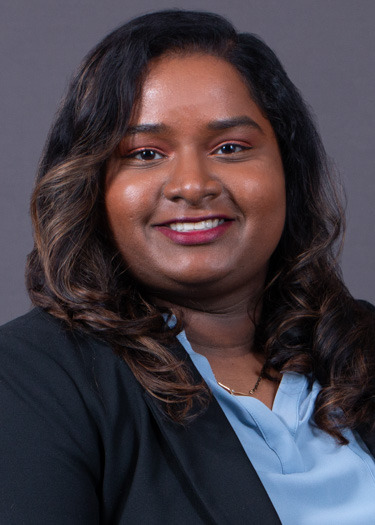
Meenu Immaneni is a fourth-year medical student at the Burrell College of Osteopathic Medicine. She has a Bachelor of Science in Public Health with a focus in Nutrition from the University of North Carolina at Chapel Hill. Passionate about patient advocacy and advancing equity in healthcare, Meenu is a dedicated member of the American Medical Women’s Association, where she serves on the Gender Equity Task Force. She is particularly interested in promoting mentorship, and championing women’s leadership in medicine. When she is not studying, Meenu enjoys spending time with her husband and their cat, playing board games, reading, and traveling to explore new places.
Vashti Price, MS, MHS, MS4

Vashti Price is a fourth-year medical student at St. George’s University. She holds a Bachelor of Science in Biology from the University of Louisiana at Lafayette, a Master’s in Biological Sciences from Alcorn State University, and a Master’s in Health Sciences from Meharry Medical College. With a strong passion for public health and health equity, Vashti has dedicated much of her time over the years to volunteering with underserved populations, including individuals experiencing homelessness and children in need. Her commitment to service continues through her involvement with the American Medical Women’s Association, where she serves on the Gender Equity Task Force and the Sex & Gender Health Collaborative Committees. Vashti is particularly interested in the intersection of medicine, public health, and community outreach. Outside of her academic and clinical pursuits, she enjoys spending time with friends and family, attending festivals, exploring new cities, and winding down with a good Netflix series.
Shivani Shah, MS3

Shivani Shah is a third-year medical student at Caribbean Medical University School of Medicine. Throughout medical school, Shivani has been actively involved in student leadership and community service. She served as a member of the Student Government Association (SGA)at her medical school, helping organize multiple fundraising and charity initiatives, volunteering at nursing homes. Shivani is currently a volunteer with the American Red Cross Community Preparedness Team and is an active member of the Gender Equity Task Force at AMWA, reflecting her passion for health equity, advocacy, and community engagement. Her interests center on medical research, helping others and supporting underserved populations. When she is not studying medicine Shivani enjoys staying active at the gym and spending time cooking.
Meghan Etsey, MS4

Meghan Etsey is a fourth year medical student from St. George’s University. She has a Bachelors of Arts in Biology and a Bachelors of Arts in Nutrition and Dietetics from Bluffton University in Bluffton, Ohio. She served as the President of the St. George’s University’s Women in Medicine chapter in St. George, Grenada where she expanded relationships with the community and worked towards educating women and helping the youth. She is also a member of the Gender Equity Task Force and Sex and Gender Health Collaborative Committees within the American Medical Women’s Association. When she is not pursuing medicine, you can find her with her friends and family on different road trips and adventures exploring the world.