
Authors: Meenu Immaneni, Jacqueline Ugwuneri, Shivani Shah, Meghan Etsey, Dr. Amber Shirley
“Our Voices, Our Future” is a podcast by the Gender Equity Task Force of the American Medical Women’s Association that explores the challenges, stories, and successes of those working to advance gender equity in medicine. Through candid conversations with changemakers, advocates, and leaders, each episode dives into issues like pay gaps, leadership disparities, and inclusive workplace culture. Tune in to be inspired, informed, and empowered to take action. Full episode listening links are available below the transcription.
Meenu Immaneni: Welcome to Our Voices, Our Future, the podcast where we amplify the voices driving change and equity within medicine and beyond. Brought to you by the Gender Equity Task Force, a committee of the American Medical Women’s Association. We’re here to challenge norms, break barriers, and ignite conversations that matter. I’m Meenu Immaneni, and in each episode, we will bring you candid discussions with leaders, change makers and advocates working to create a more inclusive and just world. No more silence, no more waiting. You’re listening to Our Voices, Our Future. Let’s get into it.
Meenu Immaneni: Today, we’re welcoming Dr. Amber Shirley, who is a PGY-1 transitional year resident at Baptist Memorial Hospital, DeSoto, and will be starting neurology residency at the University of Tennessee Health Science Center next year. She is looking forward to a career in neurology and interested in potentially subspecializing. Hi. Hi, Dr. Shirley. Before I get into it, I just wanted to kind of welcome you.
Dr. Amber Shirley: Hi. Thank you so much. I’m super excited to be here.
Meenu Immaneni: Dr. Shirley, during medical school at Lincoln Memorial University, the Bus College of Osteopathic Medicine, she realized her passions for healthcare policy and advocacy, which led her to leadership and involvement with Omega Beta Iota, the American Osteopathic Association, the American Medical Association, as well as the Tennessee Medical Association. She’s excited to continue this involvement as the inaugural Osteopathic Scholar Advocacy Certification Program resident coordinator for Omega Beta Iota, a healthcare advocacy fellowship for osteopathic medical students she co-founded, as she was inspired to create more opportunities for outstanding student advocates to develop their advocacy skills and build their careers.
She also serve as the vice chair for the American Medical Association Resident and Fellow Section Committee on Legislation and Advocacy, leading grassroots advocacy initiatives and reviewing healthcare policy. She also serve on the American Osteopathic Association’s Bureau of Emerging Leaders Collaborative Cohort and Communications Workgroup. Additionally, she has recently been named the HRSA Champion DO Health Policy Fellow through the American Osteopathic Association’s Training and Policy Studies, a fellowship for resident physicians to gain more experience in healthcare policy. And in addition to all of this, she’s also passionate about social media, where she herself finds a fun, creative way to share her experience in medicine, connect with other healthcare professionals, and advocate for healthcare policy priorities outside of traditional methods.
You can also find her active on TikTok, where she focuses on sharing your life outside the hospital and advice for medical students. And outside of medicine, Dr. Shirley is also passionate about the outdoors, hiking, crochet, and exploring the beautiful rich history of Memphis, Tennessee, especially the music and food. She’s a proud cat mom to a precious tuxedo and a mischievous orange cat. And last but not least, most importantly, she recently got engaged to her fiancé.
Meenu Immaneni: Can you tell us more about yourself and your journey into medicine and kind of what led you to a career in osteopathic medicine in particular?
Dr. Amber Shirley: Yeah, so thank you so much for having me today. So, I grew up in rural South Alabama, and one of the major things that affected my life through all of that and the lives of those around me was lack of access to healthcare. I mean, we had a small community hospital that didn’t even have, for example, an OB-GYN there to deliver children. So patients were having to travel hours for that, any sort of specialist outside of your basic family medicine doctor. We were having to travel for hours. I realized very early on that one way I could make a really big difference in the world and affect my life and the life of my family was to go into medicine and focus on healthcare policy and advocacy, especially in underserved areas, and work to address those healthcare disparities. So, when I got to college, I was talking to one of my professors about this, and he had been involved with several students over the years who had gone to osteopathic medical schools. He kind of got me started on interest in that. One of the main things that stood out to me about osteopathic medicine in particular was their focus on rural and underserved areas and additional avenues for advocacy through being a D.O. that are not available in other aspects of medicine. So I was very excited to be an incoming D.O. at LMUDECOM a few years ago. It was a great opportunity. It was a great experience that I had, and I absolutely loved it.
Meenu Immaneni: My next question for you is, what role do you think advocacy plays in addressing gender equity within the medical field? Can you share any experiences where you’ve engaged in advocacy efforts regarding that?
Dr. Amber Shirley: Yeah, so I think one of the biggest things that happens when you’re advocating and you’re someone who doesn’t look like the stereotypical physician, is just your presence and your perspective being there. So I’m kind of underrepresented in two different ways. As a D.O., and then as a female, I also come from a lower-middle-class family. So I think all of that, my gender experience, my socioeconomic experience, and my interesting experience and perspective I have in medicine as a D.O. all combine and create my perspective when I’m engaging in advocacy efforts, a lot different from those around me.
An example of this is when I’m lobbying. Yes, within those spaces, I’m surrounded by older, usually male, M.D. physicians and they have their one perspective, their one thought process. I bring my young female D.O. perspective and thought process, and not only am I sometimes able to coordinate and work with younger staffers in the congressional office, because when you lobby, you’re usually meeting with a younger staffer, but I can also help connect older generations of medicine to newer generations. Because we are in a space where I am this physician’s equal. Even as a medical student, we are in a space that kind of equalizes some of that hierarchy, and I was able to bring my perspective more and kind of change some minds and change some thought processes and perspectives there.
Meenu Immaneni: I love many things you said. I’m also a DO and a female in medicine, and I think the perspective you bring is really good to highlight. I feel like for other D.O. ‘s that are out there and other female physicians that are out there as well, I feel like your identity in those spaces is really important. And just showing up is really important. But I also like the thing you said about kind of connecting and bridging the gap and leveling the playing field and showing up in these advocacy spaces of lobbying and things and I think that’s a different perspective, so thank you for sharing that. I love how you summed that up and different aspects of how we can advocate.
In your opinion, what are effective strategies for engaging members in medical organizations to promote diversity and gender equity?
Dr. Amber Shirley: I think the first thing is just showing up. Just showing up as you and I. People like us showing up to organized medicine events, going to your local medical societies, networking events. I think that’s the main thing —just showing up and networking at these events. I know when I was especially involved in certain organizations in the past, I’ve been the youngest, different voice in the room. And maybe I didn’t need to walk in and say “Hey let’s address diversity, equity, and inclusion today” but I could walk in and say “Hi my name is Amber, I’m a medical student at LMUDECOM, I’m super interested in this particular topic that we’re discussing on diversity in medical school today at the house of delegates, can you tell me your perspective. That’s so awesome. This is how I view that, and my lived experience in that. And I think having those conversations and bringing yourself to the table is so important. One of my favorite sayings is: if you’re not at the table, you’re on the menu. So I really think just showing up and making sure you’re always at the table and your viewpoint is always at the table is a really good way to start having those conversations.
Meenu Immaneni: I love that saying. I’ve never heard that before. I’ve heard the first part about being at the table, but not the menu part. My follow-up question from all of this:
For someone who hasn’t done any advocacy work or is an early medical student who wants to get involved, did you ever have imposter syndrome? The doubt of showing up in some of these spaces? What advice did you implement in yourself to let yourself show up, but also something that someone needs to hear about showing up in these spaces? Because sometimes they tend to be scary, kind of in our brains at least.
Dr. Amber Shirley: Yeah, so my first experience with lobbying was the Tennessee Medical Association’s Doctor’s Day on the Hill in Nashville. So I recommend to all students, this is like the prime place to go. Our local medical society rented a bus, and they were bringing in physicians who have done this for years, who know every lawmaker, who have coffee with these lawmakers outside of this day. Like they are bringing in all of these people, and they offered a limited number of LMU students to go with them. The great thing about this particular setup was they had the physicians lobby, but they had the medical students there. We were there to learn, we were there to observe, and we were there to kind of figure out. So we got to go to the policy briefings, we got to sit in these rooms with all of these great physician leaders, and we got to hear how they approach things. And then, being on the bus, we were seated amongst all of these cool physicians. So we got to chat with them about their experience and how they got to where they are. And that was a wonderful first experience because I got to see everything first hand and to be there, but without the pressure of having to speak up and me having to speak to the politicians for the first time. Now I would, I would. Some of the politicians there were several who were physicians themselves, so they would see medical students, and they were so excited and wanted to talk to us, so we would chat. But, that was a really great first opportunity.
Another way to get involved and get your foot in the door is sometimes, I know AACOM send these out, and the AOA sends these out, especially the Osteopathic Advocacy Network. You can sign up and get emails, and you basically go into the dashboard, you put in your little personal story, you find your congressional leaders, and you hit send, and it sends an email for you. It’s a great way to do something substantial. You can also just pick up your phone and prepare a script. Like, go and figure out who your representatives are and figure out what’s a big policy issue with AAMC or AACOM, or AOA right now, and just write up a small script and call your representative, call your senator. Just read off your script. And one thing I say to a lot of people, you’re not going to be talking to the senator, you’re not going to be talking to the representative, you’re going to be talking to a staffer who is basically your peer. They’re going to take down your message, and I think that kind of removes that intimidation factor. It’s not going to be much different from a conversation between you and I when you call. Because they’re going to be talking to someone like you and I.
As far as imposter syndrome, I feel like it’s one of those things that gets better with time and experience. And I hate to say that you just need to trust the process, and trust that you’ll get there one day, but everyone starts somewhere. The fact that you’re just starting and getting yourself out there, you’re already doing so much more than anyone else. So yes it’s scary, yes you’re going to feel like I’m completely unqualified to be doing this, but the more you do, the more qualified you become. The more you learn, the more confidence you have in your ability to do that.
Practice confidence; fake it till you make it. You’ll gain more qualifications and confidence with every experience.
Meenu Immaneni: I love that. Like practice until you’re confident.
Dr. Amber Shirley: Yes, yes. And kind of fake it til you make it. You know the first few times are going to be shaky on the inside, but just breathe, and say you know what “I’m going to come here, I have a few facts up my sleeve I’m going to share with this lawmaker, I’m gonna come here, I’m gonna say it, I’m going to share my perspective and it’s gonna be scary but it’s okay we’re gonna do it.”
Meenu Immaneni: Yeah, it’s like when you show up for clinicals, I feel like sometimes that’s the same spiel we give ourselves. It might be scary but we’re gonna show up, we’re gonna do this, so.
Dr. Amber Shirley: Exactly, and we’re gonna get so much better every time. Nowadays, when I see a policy priority going off, I just pick up the phone, I don’t even write a script. I pick up the phone, I call a senator, representative, and say, “Hey, this is Dr. Shirley, a practicing resident physician in the Memphis Metro area. I’m very concerned about this bill coming forward for a vote in two days. I need to tell you how this affects me.” I don’t even think about it, it just rattles off now.
Meenu Immaneni: Lovely. And you said you gave some resources of where to keep current policies of the different policies. Is there anything within your state or region, or places you’d go or recommend people to go?
Dr. Amber Shirley: Yeah so local medical societies for me, I’m involved in the Memphis Medical Society they have their own political action committee,they send advocacy alerts. They have very involved physicians. State medical societies are a great place to get involved. For medical students, local AMA and SOMA chapters usually are very active and have a lot of resources for you. That’s where I would start. I know there are some other awesome organizations out there. The AOA of course, I’m a big fan of them obviously. The AMA as well are super involved. Many other organizations, Doctors for America and the American Medical Women’s Association. A lot of your speciality organizations have a lot of opportunities to do advocacy with them as well.
Meenu Immaneni: Can you talk about your experience matching into neurology and how you think gender disparities affected the process at all?
Dr. Amber Shirley: I didn’t decide to do neurology until my third year of medical school. I was somewhat interested in it, but I came in pretty set on wanting to do a primary care speciality based off of being raised in Alabama and wanting to serve the underserved. As I got into my clinical rotations I quickly realized that having a very broad scope and having twenty different things come at me every 15 minutes was not it for me. I felt so overwhelmed and I felt like I could never get a good grasp, and get ahead of what I needed to get ahead of. I realized very early on that I needed to go into a specialty where I had a little bit more of a limited scope, where I could almost – you never really perfect anything is the practice of medicine – but where I could perfect my craft a little bit more. And be a lot more comfortable and confident with it and what I knew . So while I was on my family medicine rotation, I had a lot of patients with neurological diseases and processes going on, and I found it fascinating. I loved every minute of those. Headaches, Parkinson’s, tremors, neuropaths, you name it – it was so fascinating. I really enjoyed it.
So I set up a neurology clerkship, so I don’t know, well I do know. This is kind of a D.O. thing. We don’t have neurology as a core clerkship. I think there are maybe one or two D.O. schools that do, but we don’t have the matching COMAT for it either. So, we just kind of lost that exposure there which is kind of sad. I can talk more about that any time. But um, so I set up a neurology clerkship, and it was an outpatient general neurology clinic. I love it. It was – my worst day on that rotation was better than any of my best days of any other rotation. I enjoyed it. I wanted to go back. So I decided then, I was gonna do neurology. And so, I went in from there kind of half way through third year pivoting everything to neuro from primary care. It was really interesting I was thankfully able to present one of my neurology cases from my family medicine rotation. I did a poster on that. It was a very interesting manifestation of an action tremor. So I was able to present that.
I got involved with the student section of the American Academy of Neurology. And I started making connections to get into neurology. And neurology – there’s a lot more women coming up in neurology than there used to be. Out of my intern class there’s seven of us and four of us are female. So I think that’s a really neat change in the tides that we’re seeing. I feel like most of my friends from LMU, at least half that went into neurology are also female. So, I feel like we’re seeing a really neat shift in the field lately. But additionally, being a D.O. only fourteen percent of neurology applicants are D.O.’s. So, that was really interesting– so I was an underdog in this. Because I was late into knowing what I wanted to do. I had not taken USMLE STEP 1, because I wanted to do primary care. So COMLEX Level 1.
I would still argue that COMLEX should still be sufficient, but in reality, but alot of your academic programs want to see USMLE. So I did not have neurology research. Going into a field where I am largely not what is representative of what a neurologist is. And so, I felt like I was playing catch up. But it ended up working out really, really well. I utilized a lot of connections that I had made through my advocacy work and organized medicine work, and was able to secure a couple audition rotations at some programs that I was very interested in. Ended up here, at Memphis on my audition. Fell in love with the program. I had a great time. One of the things that really drew me to the program was the diversity of the residents here. There were male, female, IMG, US M.D., US D.O., older, younger, first career, second career, it was so amazing to me to see all of these people in this neurology program and how they all offer their different perspective and different experiences to the field.
I also love the city. I’m a music person. A big music person. I grew up playing the piano. Memphis of course is home to so much rich music history. I live like five minutes from where Elvis lived at one point. That’s insane. I can just drive down past Elvis’ old house. Are you kidding me? I was walking past the theatre the other day, and then I later found out that’s the theatre that Elvis used to rent out on the weekend for him and his buddies to hang out in. Are you kidding me? I’m just standing there. I’m just standing there? I’m like eating a burger at Heely’s and I cross the street at a record studio that the Rolling stones, my favorite band of all time, recorded an album like ten years ago at.
Meenu Immaneni: I love your passion for both neurology and music.
Dr. Amber Shirley: Thank you. Thank you. But I really did fall in love with the city and the program. And um, I was absolutely stoked to end up matching here. I am so excited to see what the future holds. I’m definitely interested in sub-specializing. There’s a lot of different areas of neurology to go into. I love that I have a narrower scope of expertise, but still a broad variety of things that I can do. I can do an outpatient clinic, I can do inpatient, I can do neuro critical care, I can do interventional neurology, I can do telehealth, I can do all of these different things within this field. I think that it’s so awesome. I’m super excited to explore it over the next few years. Currently I’m more of an inpatient girl. I do enjoy the shift work. I enjoy going in, getting there, spending a few hours completely dedicated to my hospital patients, and then signing off and finishing up my stuff for the day and not having anything else. Like I really enjoy that separation. But we’ll see how things pan out, you know. I still have a lot to see, a lot to do, a lot to learn.
Meenu Immaneni: Yeah I think that’s the beauty of our journey in medicine is that we get to explore it, especially during our clinicals if we haven’t done before already and same in residency with sub-specialty of choice or anything. I love that we get to learn and explore.
Dr. Amber Shirley: Me too, me too. I’m so excited too. We’re doing a transitional year where we’re allowed to rotate through neurology three times. So they have us rotate with our program, cause it’s all within the same area and hospital system sort of kind of. But, so I’ve gotten to do general neurology and epilepsy already, inpatient. And that’s really exciting and I get to do it again in a couple of months. So it’s been so nice to have that early exposure and that early ability to get in there and do neurology. And it’s like a little something to look forward to after months of inpatient wards.
Meenu Immaneni: Yeah that makes sense. I feel like – it’s what you want to do, and that’s what you’re passionate about too, so I think that’s a good thing to be able to look forward to.
Dr. Amber Shirley: Yes
Meenu Immaneni: We kind of talked about support a little bit. But what kind of resources or support systems have you found helpful while navigating medicine at different stages of your life?
Dr. Amber Shirley: So for me, one of my biggest support systems has been the friends and mentors I’ve made through organized medicine. I was so lucky to be able to represent our state and my school on levels outside on a bigger stage. I’ve served in the AMA, I’ve served as a delegate to the house of delegates. So I sat with the Tennessee medical association and I got to know a lot of those physicians incredibly well. And they have been so supportive of me throughout medical school, and getting into residency. They have just been wonderful. I mean some of them came to my graduation for medical school. Several of them are hopefully gonna be in attendance for my wedding. I lived– during all of my auditions, all within the state – I lived with them while I did my auditions. It was such a sweet, sweet relationship that I’ve been able to build with these physicians and that’s been one of my biggest sources of support.
Additionally, the American Osteopathic Association – being a D.O., in and of itself is like being in a big family, right. We’re still kind of a small profession, especially when you get involved in like SOMA, COSGP, or the AOA. You meet so many people, other osteopathic medical students, residents, physicians, even staff from around the nation that are very passionate, that are very excited about the osteopathic profession that are very excited to meet you. And some of my closest friends have come from that. I talk to my friends from OBI, especially, at least weekly. Some of them are daily. We’re besties. I love them so much. This goes to one of my biggest pieces of advice, for people who may be afraid to get involved in leadership, or advocacy or organized medicine outside of their school. Man when you do that, you meet some of the coolest people and you become friends with some of the coolest people.
And I share this experience because it’s so special to me. I’m recently engaged, and there’s this big conference called OMED every year. The osteopathic medical education conference. This year it was in Nashville, Tennessee and there’s so many of my friends that go to this. My school friends, my friends from Omega Beta Iota, I have friends that I’ve made through different organizations that all come to OMED. So my boyfriend at the time, when he was scheming his proposal, we were both going to attend OMED. He’s a pharmacist, so he’s very interested in that sort of stuff and they have an advocacy chat for spouses, and they have, like a um, different lectures and different medications and pharmaceuticals which he was interested in. So his thought process, which he was right on the money with, was if I was– if I figure out how to propose to her at OMED, she’ll be able to celebrate with all of her friends.
Meenu Immaneni: Yeah, that’s so sweet.
Dr. Amber Shirley: So, my best friend from medical school lives an hour right outside of Nashville, she’s finishing up her clinical rotations. And so he schemed with her, and got her to come over, and we went to the centennial park, right in front of the Taylor Swift bench, and we were just going to have a picnic. Him, and my best friend, and her family. Next thing I know, he was down on one knee.
Meenu Immaneni: Aw, that’s such a sweet memory.
Dr. Amber Shirley: And it was so great cause we got to celebrate with so many close friends that weekend. And it’s just so special.
Meenu Immaneni: He did good. He planned really well.
Dr. Amber Shirley: He did. Oh my gosh, he did so good. He planned it perfectly. I didn’t have a clue.Which is how I wanted it. I didn’t have a clue.
Meenu Immaneni: That’s all I want as well. When I get engaged I want to be surprised.
Dr. Amber Shirley: I was like I’m gonna be purposely oblivious and whenever we go out to do a date I’m going to have my hair and makeup done and in a cute outfit. So that way you don’t have to worry about it.
Meenu Immaneni: Planner you are, but those are important things to plan. I love that. I think my last question for you is– we kind of touched on it a little bit, but:
Advice you would love to give young women or underrepresented students in medicine especially in terms of leadership and advocacy roles?
Dr. Amber Shirley: I say show up. Show up as much as you can. Call people. Email people. Reach out to your local medical societies, reach out to – if you have a professor dean at your school who you know is involved in some aspect of leadership or advocacy, see if they’re willing to mentor you. See if they’re willing to sit down and have a thirty minute conversation about their experience in leadership and what it means to be a woman in medical leadership. I found so much advice and so much support just from being willing to reach out. One of my closest mentors now, Dr. Caparelli, he’s former president of the Tennessee Medical Association, we have that relationship because I had gotten his number from an event we had on campus, and I just called him one night and asked him if he would come speak to a group of medical students, and shared with him some of my interests in medicine. Then he came and spoke to us, and then I reached out again a couple of other times and we just got close through that and he’s been one of the closest mentors I’ve had through medical school and now in residency still. That was all because – well I did hesitate because I was scared. I was like who am I a second year medical student, picking up the phone to call the president of the Tennessee Medical Association. That’s horrifying. I did hesitate– but because I didn’t let the hesitation stop me, I reached out. I put myself out there. And now, I’ve built that relationship and now I have that support. That greater confidence built from that. So now my biggest advice is to show up. Reach out. It’s okay to hesitate but get over your hesitation and do it.
Meenu Immaneni: I love that advice. I think that’s great for someone to hear. I think showing up is really important. Like you said, I think that hesitation is natural, I think just don’t let the hesitation stop you.
Dr. Amber Shirley: Exactly. And I think hesitation is good because in a way it makes you think about what you’re doing. It makes you a little bit more prepared. Cause instead of being like “oh let me call this person” you’re like oh okay – I need to call this person, I feel like I should. I’m scared, what should I say to them, how should I go about this. In a good way. I think having a little bit of hesitation is okay. There’s a reason our body makes us hesitate sometimes and that’s okay. Just don’t it hold you back.
Meenu Immaneni: Well, it’s been lovely chatting with you, Dr. Shirley. I had a wonderful time. I hope you had a wonderful time as well.
Dr. Amber Shirley: Yes, this has been so great.
Meenu Immaneni: Lovely. And that’s a wrap on this episode of Our Voices, Our Future. We hope today’s conversation inspired you, challenged you, and reminded you of the power of raising your voice. The fight for equity doesn’t stop here. Join us in this movement. Subscribe wherever you get your podcast. If you love this episode, share it with someone who needs to hear it. Until next time, stay bold, stay vocal, and keep the conversation going. This is Our Voices, Our Future.
Links to our podcast:
RSS https://rss.com/podcasts/our-voices-our-future/
Apple Podcast https://podcasts.apple.com/podcast/id1805991643
Spotify https://open.spotify.com/show/5E59jvuFQOjSXfLrjQiy0P
Podcast Index https://podcastindex.org/podcast/7278557
Fountain https://fountain.fm/show/7278557
True Fans https://truefans.fm/82727577-2b37-5929-aa2e-1574d478b177
About the Authors
Lakshmi Meenakshi Immaneni, OMS4
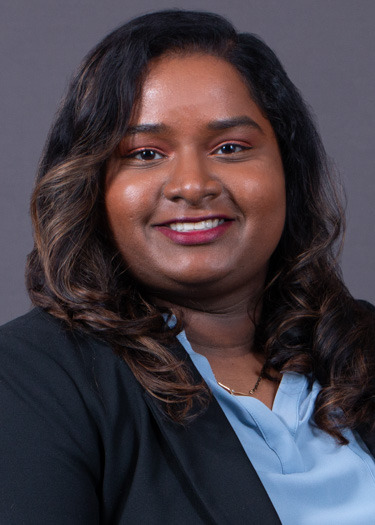
Meenu Immaneni is a fourth-year medical student at the Burrell College of Osteopathic Medicine. She has a Bachelor of Science in Public Health with a focus in Nutrition from the University of North Carolina at Chapel Hill. Passionate about patient advocacy and advancing equity in healthcare, Meenu is a dedicated member of the American Medical Women’s Association, where she serves on the Gender Equity Task Force. She is particularly interested in promoting mentorship, and championing women’s leadership in medicine. When she is not studying, Meenu enjoys spending time with her husband and their cat, playing board games, reading, and traveling to explore new places.
Jacqueline Ugwuneri, MS3

Jacqueline Ugwuneri is a third-year medical student at St. George’s University School of Medicine. She earned her Bachelor of Arts in Cognitive Science with a concentration in Cognitive Neuroscience from Rutgers University in New Brunswick, NJ. She served as President of the St. George’s University chapter of the Student National Medical Association (SNMA), where she organized mentorship programs, health fairs, and professional development events that fostered community engagement and empowered minority medical students to thrive both academically and personally. Before medical school, she worked as a medical assistant and care coordinator across several specialties, including Family Medicine, Minimally Invasive Gynecologic Surgery (MIGS OB/GYN), Infectious Disease, and Breast Surgical Oncology. When she isn’t caring for patients on the wards or studying, she enjoys vlogging her medical journey, working out, spending time with friends and family, and mentoring aspiring minorities in medicine. She hopes to continue inspiring others by bridging her passion for storytelling, leadership, and advocacy in the pursuit of a more equitable future in healthcare.
Shivani Shah, MS3
Shivani Shah is a third-year medical student at Caribbean Medical University School of Medicine. She majored in Kinesiology and Health Sciences at York University in Toronto, developing a strong foundation in human health, movement, and wellness. Throughout medical school, Shivani has been actively involved in student leadership and community service. She served as a member of the Student Government Association (SGA)at her medical school, helping organize multiple fundraising and charity initiatives. Her commitment included regularly volunteering at nursing homes and assisting individuals experiencing homelessness on the island. Shivani is currently a volunteer with the American Red Cross Community Preparedness Team and is an active member of the Gender Equity Task Force at the American Medical Women’s Association (AMWA), reflecting her passion for health equity, advocacy, and community engagement. Her interests center on medical research, helping others and supporting underserved populations. When she is not studying medicine Shivani enjoys staying active at the gym and spending time cooking.
Meghan Etsey, MS4

Meghan Etsey is a fourth year medical student from St. George’s University. She has a Bachelors of Arts in Biology and a Bachelors of Arts in Nutrition and Dietetics from Bluffton University in Bluffton, Ohio. She served as the President of the St. George’s University’s Women in Medicine chapter in St. George, Grenada where she expanded relationships with the community and worked towards educating women and helping the youth. She is also a member of the Gender Equity Task Force and Sex and Gender Health Collaborative Committees within the American Medical Women’s Association. When she is not pursuing medicine, you can find her with her friends and family on different road trips and adventures exploring the world.