
Authors: Meghan Etsey, Victoria Chebaibai, Dr. Daryl Traylor, Dr. Eboni Anderson on behalf of AMWA Gender Equity Task Force
“Our Voices, Our Future” is a podcast by the Gender Equity Task Force of the American Medical Women’s Association that explores the challenges, stories, and successes of those working to advance gender equity in medicine. Through candid conversations with changemakers, advocates, and leaders, each episode dives into issues like pay gaps, leadership disparities, and inclusive workplace culture. Tune in to be inspired, informed, and empowered to take action. Full episode listening links are available below the transcription.
Meghan Etsey: Welcome to Our Voices, Our Future, the podcast where we amplify the voices driving change and equity within medicine and beyond. Brought to you by the Gender Equity Task Force, a committee of the American Medical Women’s Association, we’re here to challenge norms, break barriers, and ignite conversations that matter. I’m Meghan Etsey, and in each episode, we bring you candid discussions with leaders, changemakers, and advocates working to create a more inclusive and just world. No more silence, no more waiting. You’re listening to Our Voices, Our Future. Let’s get into it.
Today, we’re welcoming husband and wife, Dr. Eboni Anderson and Dr. Daryl Traylor.
Meghan Etsey: Dr. Anderson serves as the Director of Community-Oriented Primary Care and an Associate Professor of Public Health at A.T. Still University School of Osteopathic Medicine in Arizona. A Detroit native who grew up in an underserved area with many odds against her, she brings more than two decades of experience as an educator, social worker, and public health leader. Her work bridges the classroom, clinics, and communities, all with a focus on equity, inclusion, and well-being.
She’s also a certified guidance counselor, researcher, author, and mentor, passionate about helping others thrive in both academic and healthcare spaces. Her research explores resilience among people living and aging with HIV and AIDS, the well-being of health professions educators and staff, and how we can dismantle structural inequities in medical education and workforce development.
She holds a bachelor’s degree in English and a master’s in counseling from Wayne State University, two additional master’s degrees in social work and post-secondary education from Arizona State University, and dual doctorates—one in health education from A.T. Still University and another in health professions education from Bellamereen University.
Through her teaching, scholarship, and mentorship, Dr. Anderson has become a powerful voice for creating systems that honor equity, compassion, and the lived experiences of those they serve. Please join me in welcoming Dr. Eboni Anderson.
Dr. Eboni Anderson: Thanks for having me.
Meghan Etsey: And her husband, another amazing guest whose story truly bridges science, service, and social impact, is Dr. Daryl Traylor.
Meghan Etsey: Dr. Traylor is a proud alumnus of the Summer Health Professions Education Program at the University of Alabama in Birmingham, and his academic journey is nothing short of inspiring. He holds dual bachelor’s degrees—one in microbiology from Arizona State University and another in community health promotion from Northern Arizona University—along with a master’s in pharmacology and an MPH from Michigan State University. He earned his PhD in nursing with a focus on community-based participatory research from the University of Missouri and is currently pursuing both an MD at Oceana University of Medicine and a doctor of philosophy at California Baptist University.
Before entering academia, Dr. Traylor served as a U.S. Army combat medic, an experience that continues to shape his commitment to equity, resilience, and compassionate healthcare. Having overcome periods of temporary homelessness and a vision impairment, he brings both lived and professional experience to his mission of advancing evidence-based, inclusive care. His research explores HIV prevention and PrEP implementation, health disparities, sexual misconduct and safety in medical education, and the health effects of climate change—all through community engagement and translational approaches designed to strengthen trust in healthcare systems.
Dr. Traylor currently serves as adjunct faculty in Life Sciences at Arizona State University and in Public Health at A.T. Still University. He’s also a founding faculty member for the new Bachelor of Science in Health Science program at Chamberlain University. Please join me in welcoming a scholar, educator, veteran, and changemaker, Dr. Daryl Traylor.
Dr. Daryl Traylor: Thanks for having me. Hey, y’all.
Meghan Etsey: So let’s get into it. Let’s start with your stories. Can you each share a bit about what inspired your paths into medicine and all of these degrees and accomplishments that shape how you show up, not only in healthcare but holistically as people who give back?
Dr. Daryl Traylor: Well, I’ll start. Medicine was something I always wanted to get into, but I don’t think I truly knew it until I was in my combat medic training. The first time I really felt that medicine was something I wanted to do was probably the summer of 1982. I was a kid, and my mom had a long-standing issue with substance abuse. One day, she was high on something and I thought she was dead because she wasn’t responsive. I remember sitting there at her side all day, feeling helpless because I didn’t know what to do. I told myself, “I wish I had the skills or knowledge to help Mom.”
Later, after being discharged from active duty, one of my best friends from the Army, Jeff Lucena, was HIV positive and had progressed to full-blown AIDS. His family wouldn’t let him go back to Guam to be buried because they were homophobic, so he spent the last six or seven months of his life living with me. Trying to care for him and seeing the barriers people with HIV and AIDS faced was very eye-opening. That was something that continued to contribute to this desire to get into medicine.
Then later as I met Eboni in 2006 and subsequently met her father, he unfortunately passed away, he was HIV positive. But HIV wasn’t what killed him, it was actually medical ignorance. The people at the hospital where he died were afraid to do a needed surgery because of his HIV status. They essentially let him die. All of these stories just come together for me and kind of inform, this desire to practice medicine.
All the degrees though? I just love learning. My grandmother always told me, “Son, get as much education as you can; people can’t take that from you.” So as long as I have goals to chase, it excites me and keeps me going.
Meghan Etsey: That’s awesome. Thank you. Eboni, what do you got?
Dr. Eboni Anderson: Yeah, Daryl covered pretty much everything I feel about this, but just to add to it. As someone who is not a physician, someone who has training in behavioral and social science. I, for one, feel it is a call of duty to do this work, particularly teaching students who are pursuing the health professions and more specifically medical education on the social determinants of health, because of the public health background. More than that, deeper than that as Daryl said, it’s a personal feeling for me, it’s a personal experience because I’ve lost not just my father, I lost my mom along this journey. I can’t stress enough that when a person decides to pursue a very important role such as a physician or a medical role, to have compassion. For me I love sharing personal stories with my students every day about why I feel it’s important to do this work. To add to that, Daryl is really the reason why I decided to pursue this as a profession.
When I met Daryl back in 2006, he told me, first and foremost. He said look Eboni I am broke, I dont have any money, I am a student who is pursuing medicine. My goal is to be a Doctor one day. First and foremost, I am not trying to date him for money. At the time I wasn’t rich, I have never been rich, but I have my own money, had my own occupation as an early career professional working in the state of Michigan at that time. All that to say, I was really intrigued by his story, and I really didn’t understand all that it took to pursue not only getting into medical school, but all the prerequisites that are required to do so, right?
As I am learning more about Daryl and his background, the fact that he was a career changer. He was an army Veteran, you know, all of these things. To me I just thought, A plus B equals C. I thought it was a linear path. I realized that it is not always linear. I do have respect for those students who do have the means to go straight through, you know, from undergraduate straight into medical school.
However, my deeper interest are in those that have lived experience. Much like Daryls or if not like Daryls, they have their own story to tell. Where they took a gap year, maybe took several gap years, were career changers, decided to start a family first, decided to backpack first, you know, and see the world. Came to that epiphany that medicine is where they belonged. Those are the students I gravitate towards the most and I really want to support those who feel they don’t have a chance in this space.
That’s why I do what I do, honestly. As Daryl said, life is about learning, it doesn’t always require that formal education. For me personally, I am a nerd. I love to learn, my dad left that legacy, he said no one can take away your education sugar. I don’t think he thought I would go this far. But I will say right before I lost him, I had just earned my first masters degree.
Daryl and my dad had dinner for the first time, they started life in a trajectory. You remember that? First time around, Daryl came to Detroit to see what it was about, actually he was interested in the University of Michigan’s MD- PHD program. But of course, he and I had talked long enough, a couple of months or so. I said I wanted him to meet my parents, and there was dad and Daryl talking about, I can see her going for that PHD.
I can see her doing something political and I am like, no, you can’t. I am just good with my masters in counseling, I am going to get my license to practice as a counselor and go into private practice, end of story. So when I lost my dad a couple of months later, I obviously was in a very dark space. I had never lost anybody that close to me before. I mean I lost my grandma, but I was like ten.
You know, after that, I had never lost anybody as close as my dad. My dad and I were really close, I was a daddy’s girl. I admired the work that he did in public health in social work, health policy. All those things I never thought I could do, because he spoke out unapologetically about living with HIV and being a gay man, the rights of women. So, he really was all about making equity fair for everybody across the table.
Meaning that there wasn’t one particular area that he targeted. He wanted to help all people in his short life. But because he had these intersections of identity it made sense for him to be an advocate, as well as an activist with HIV and LGBTQ+ rights. I could never fill his shoes, but I said you know what? Maybe the little bit of information I got from him, I want to continue that legacy someway, so here I am. Researching, staying on top of the latest information when it comes to HIV. You name it, I want to put my finger on a pole about some things that relate to helping patients and helping the community as a whole.
Meghan Etsey: So, I’m actually going to jump around a little bit with my questions I have prepared for you guys. Because I feel like this fits right into it, in talking about you guys’s resilience. You guys have done so much to get through so many degrees, just advocate for so many people. This takes a ton of resilience, can you kind of talk about how that has navigated in your professional roles? How have you guys gone about this?
Dr. Daryl Traylor: I learned at a very early age that life is not a linear path. There is lots of shades of grey, there’s lots of ups and downs. For example, when I decided to go back for my undergraduate studies, which started in 2005, I was visually impaired. There was a point in time I was unhoused. My grandmother always told me, in life you just got two choices.
You can stand and fight, or you can fold like cardboard. So my default has always been to stand and fight. If there is things that you want in life, you just have to push for them. So I will share with you and your listeners, I don’t think I have even shared with you, Megan, in all the time we have worked together. So I actually was a U.S. medical student at one point.
I was at a DO school in San Antonio, and my first term I had to take a leave of absence because I had to have a cornea transplant. I ran into GI anatomy and failed that portion of the final exam, so I was told to repeat the year. Repeat of the year, got to the GI anatomy final again, and failed and they said okay we are going to dismiss you. Me and Eboni talked about it, she said okay Daryl, whatever you have to do to right now to get that out of you, but then tomorrow we gotta make a decision about what to do. And so, I cried and then I said you know what? I am going to go ahead and take a withdrawal instead of letting them dismiss me.
And immediately enrolled in Oceana and now I’m doing fine. I say that to say that, if you want something in life, you have to push for it, you have to grind and you have to struggle. It’s not going to be easy and I think that is more important now given what we are facing politically. The last institution I taught at, I was teaching social determinants of health in MPH. There was a student in his performance evaluation of me said Dr. Traylor was fine, but he had too much emphasis on women and LGBT health. Not enough on white males, so he ended up reporting me to the U.S. Department of Education a few weeks after that.
The school got a letter saying we are going to be investigating the MPH and we are going to be investigating Dr. Traylor, we want all of his emails. That’s the kind of thing that could have scared me. As you know, we worked together on our gender studies project for the last almost year, that kind of pressure could scare somebody. But you have to have resilience and you have to be fearless in the face of that kind of stuff to keep doing the work you have to do.
I am not going to sit here and tell you I am not scared of things like that. I am not going to sit here and tell you that, you know, starting over in medical school was easy. But these are the things I am passionate about, this is what I am going to continue to do. Thank God I have a wonderful wife who is helping to push me forward. You just have to stay tough and stand on your belief.
Dr. Eboni Anderson: Well said Daryl, gosh! You always have the best answers. I don’t know how to follow up behind you. Resilience is grounded in community and purpose, right? For me, I have always questioned what is my purpose in life? What am I meant to do in life? Who am I? What am I? It always comes with a little bit of self defeating words, negative self-talk if it makes sense.
However, part of that is constantly asking my question why, right? I remember back in the day, when I was in Detroit and I was driving into work and I was listening to W. J. L.B FM 98 one of our r&b stations. They always had the comedians on and so, one of the comedians I credit for this, his name is foolish. Still around, still funny as I don’t know what. But he would say, God gave me another day, what are you going to do with it?
I still stick with that. Even on those hardest days of life when you just don’t want to face it, you just want to stay in bed. You think about, I’m awake, sometimes it’s okay to do nothing. I am really trying to lean into that as I get older. You do have to practice that pause, practice taking a break, you don’t have to constantly be on ten doing everything for everybody.
But it’s still a work in progress, right? And leaning into your community, leaning into your social systems to get things done. But going back to the whole filling of community, one of things I will never forget, was when I was completing my first dissertation. And it was on women living and aging with HIV in an urban area. I have some really good friends who were colleagues of my dad that I reached out to. They run a support group with these women who are living their lives, not easy, but they are in their 50’s, 60’s and 70’s. I needed participants to complete my research, I didn’t want to be one of those helicopter research type people.
I am truly embedded, I am here for the cause. I think that is why my friends know this. So they invited me to one of their support groups. I had flown from Phoenix to Detroit. One of the things that they did first was hug me and embrace me and said we are your mothers. That is community, hearing their stories of how they have had to overcome the challenges of stigma, overcome the challenges of resources. Having to continue going about your day to day lives. I mean dating, I even met women who were in the process of getting married or were newlyweds. It wasn’t all peachy king, they shared how they contracted HIV, were very sad.
Many times it had to do with betrayal or non-disclosure from their partner, someone they may have been committed to for a long time, for years and then that happened. All that to say is that resilience is something you just, not adapting, but you are adapting with intention, right? Your not going along in life, you are intentional about bouncing back, about making changes, about pivoting when you have to.
When it comes to this profession, as we know, anything dealing with medicine. From medical school to the profession itself. Evolves bias and burnout, constantly. So, you have to continue to reaffirm, why are you in it? Why do you do the work that you do? You really do have to take a moment to center yourself. And unfortunately some people are in it for the wrong reasons, we know that. But I also know how hard it is to get there, how hard it is to maintain and sustain on a day to day basis, it’s not just about the money. I think resilience in the medical profession, I can’t help but to think about the stories I hear everyday from our colleagues. From the students who have graduated, from those who are in residency now or those about to become attendings. It is a lot of work, just staying above the average. Reach that high bar is something you have to consider everyday.
Meghan Etsey: Can you guys tell me how you have seen mentorship and representation kind of influence you guys’ approach, to, you both teach, you both support many health professionals? How have you guys seen this play a role?
Dr. Daryl Traylor: For me, and this is something Eboni will be hearing for the first time, I didn’t have a lot of mentors academically. When me and Eboni first met, we use to exchange writings through email. She sent me a copy of her first masters thesis. At that time I just gone back to undergrad and I was taking a world literature class. I wasn’t doing terribly well because I wasn’t a good writer. So, to teach myself how to write, I actually studied Eboni’s dissertation.
Then later she sent me some writings of her father and he was a very elegant writer in his own right. So, I studied the writing. The two of them don’t know that they were mentors to me. As I went through my undergrad studies at Arizona State University. At that time the folks who ran the premed office, they wouldn’t talk to you if you were not coming in there with a 3.8 gpa.
And were not the perfect student, of course at ASU, a lot of faculty wouldn’t mentor you if you weren’t that perfect student on paper. So I really struggled with finding mentors through my undergrad career. One of the things I said when I started my masters degree was that if I was ever in a position to mentor other people. I wouldn’t turn them down because of a gpa. If someone is coming to me with a need, then I have a responsibility to help with that need and that’s what I have done. I think probably for me, the most transformative experience in terms of mentorship, actually happened during COVID.
Me and Eboni were working with our long time mentors and friends, Dr. Thompson Robinson and through her we got to meet Dr. Carolee Dodge Francis. For me, this was the first time I had ever worked on a totally woman-led research study, right? I was the only guy on the team, all female, all women. That was very powerful because I got to see the importance of mentorship for women in STEM. Because there are so many women that want to get into STEM, but can’t find adequate mentors. They can’t find mentors that will treat them fairly.
One of the things Dr. Thompson Robinson and Dr. Francis insisted upon, was everybody on a research team have the opportunity to have first authorship on at least one research product. That is incredibly important in the world of STEM. Particularly for those who are maybe going on for Phd’s or research careers themselves. So I have sort of adopted that on myself. If God lets me live long enough, I want to see you take what you have learned from me and Eboni and pay that forward. That’s how we get ourselves out of this.
Dr. Eboni Anderson: Just to add to it, you know, for me. It’s guidance and affirmation of course, it’s almost like kinship sometimes, right? I say this because, as Daryl said, Dr. Thompson Robinson and Dr. Dodge Francis and myself, had just written a chapter for a book that talked about academic aunties, but there is also academic uncles and whatnot. But the whole point of that is being able to pull someone out of those depths of feeling like they don’t belong. Those that feel unseen or unheard and giving them that voice. Giving them the attention, guiding them on that path, not just academically, right?
And obviously professionally, but also pouring into them, giving them the self-esteem to feel like they are worth something and that they truly belong in these spaces. I say it all the time, I say it at work, I say it anytime somebody wants to have this discussion about mentorship and equity and whatnot. I say representation matters, to me, in order to be represented you can’t be afraid to be in those spaces, right? Be unapologetic when you are sitting at the table, and if you are not able to get a seat at the table. Just knock on that door, whatever you gotta do, you know, to get in there. Or even create your own table.
People will eventually want to sit where you are, so to me, I think that when we talk about this in the context of medicine, again, my goal is not just an educator. I also feel like it’s important to be a faculty advisor or mentor. Somebody that students feel safe coming to, not just to talk about their struggles with an exam, but to talk about what life is all about. And how they see themselves in the future. If they can’t see it my goal is to gently guide them on that path, redirect and have them to be thinking, again about why is that I am pursuing this?
Through the years I have had plenty of students, some of who, unfortunately, didn’t make it. Whatever reason, they were dismissed, or they were told they couldn’t return or took a withdrawal. I still stay in touch with many of those students. I’m like okay, maybe medicine wasn’t your calling, right? I would have stuck with you and fought with you all the way through.
However, pivoting is okay sometimes too, right? So, writing those letters of recommendation, you know, being someone that they can come to with information about scholarships. Somebody you feel that you can approach when it comes to learning and growing your own life. Is what I value as a mentor and what I value as a mentee. So, that’s my two cents.
Meghan Etsey: If you had one solid piece of advice for students or early professionals, especially women and different marginalized voices aspiring to lead and create meaningful change in medicine, what would you have to say to them?
Dr. Daryl Traylor: The path isn’t always straight,but if you have the strength for the fight. And if you stand ten toes down on that, because that’s the biggest thing. Whatever you want in life, I don’t care how big or small it is, you have to stand ten toes down on your purpose. Period, point blank. If you do that, you will reach the goal, understand that you will get knocked down. But one of the things I have learned in life is that there is learning and value in every experience we go through, good or bad. Provided that you are willing to learn from that experience and apply the lessons. If you do that, you will absolutely reach your goals.
Dr. Eboni Anderson: For me, I would say lead with authenticity and courage. Don’t wait for permission to take up space. Advocate for equity don’t be afraid, I know that these are hard times but my thing is until somebody literally wants to silence me, put some tape over my mouth and tell me to shut up. I’m not shutting up, you know. I do what I do and do it well, you know, make my parents proud, right? Make my ancestors proud. Find your community, find your people is what I say. Nurture your voice, and just remember the impact doesn’t always start with a title. I don’t relish the fact that I’m a double Dr. to my friends, my family, you know. Even to some of my students I’m first name basis. So it’s not all about the titles or the degrees. You really should be leading with a level of conviction and consistency, right? So, that’s the advice I give, don’t let things go to your head always. Stay humble. What did Kendrick Lamar say? So, that’s my take-away from that.
Meghan Etsey: I love it. Thank you guys so much. This has been a great talk. We are going to have so many more episodes to talk about all of your work. It’s been awesome.
That’s a wrap on this episode of Our Voices, Our Future. We hope today’s conversation inspired you, challenged you, and reminded you of the power of raising your voice. The fight for equity doesn’t stop here. Join us in the movement. Subscribe wherever you get your podcasts. And if you love this episode, share it with someone who needs to hear it. Until next time, stay bold, stay vocal, and keep the conversation going. This is Our Voices, Our Future.
Links to our podcast:
RSS https://rss.com/podcasts/our-voices-our-future/
Apple Podcast https://podcasts.apple.com/podcast/id1805991643
Spotify https://open.spotify.com/show/5E59jvuFQOjSXfLrjQiy0P
Podcast Index https://podcastindex.org/podcast/7278557
Fountain https://fountain.fm/show/7278557
True Fans https://truefans.fm/82727577-2b37-5929-aa2e-1574d478b177
About the Authors
Meghan Etsey, MS4
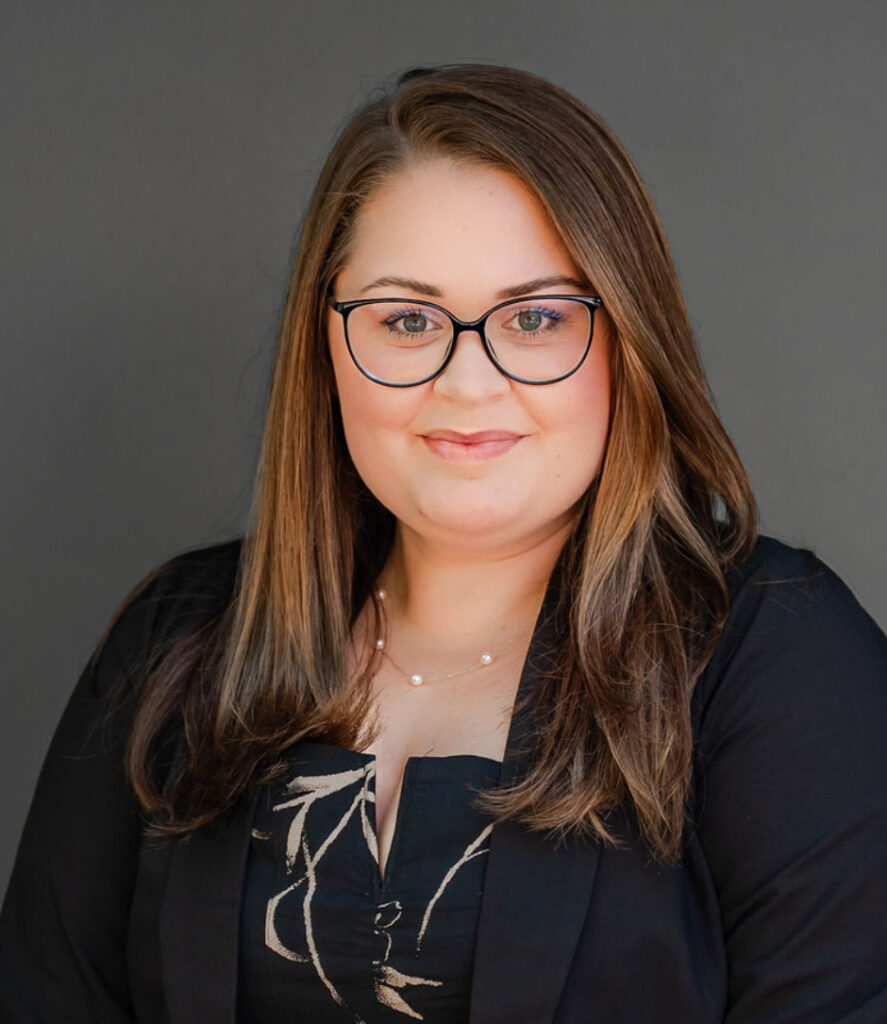
Meghan Etsey is a fourth year medical student from St. George’s University. She has a Bachelors of Arts in Biology and a Bachelors of Arts in Nutrition and Dietetics from Bluffton University in Bluffton, Ohio. She served as the President of the St. George’s University’s Women in Medicine chapter in St. George, Grenada where she expanded relationships with the community and worked towards educating women and helping the youth. She is also a member of the Gender Equity Task Force and Sex and Gender Health Collaborative Committees within the American Medical Women’s Association. When she is not pursuing medicine, you can find her with her friends and family on different road trips and adventures exploring the world.
Victoria Chebaibai, MS1
Victoria Chebaibai is a first-year medical student at St. George’s University. She earned her Bachelor of Science in Nursing from Oral Roberts University and completed a Medical Science certificate through Oklahoma State University Center for Health Sciences. Before starting medical school, Victoria worked as a Registered Nurse for 12 years, with experience across the NICU, postpartum, med-surg, and veterans care. She is involved in the American Medical Women’s Association, Women in Medicine, and the American Medical Student Association (Grenada chapter). At SGU, she has served in student leadership through the Student Government Association as a class representative and a member of the Student Affairs Committee, advocating for campus initiatives and student support. Outside of medicine, Victoria enjoys spending time with her husband and kids, staying active through Zumba, and hanging out with her cocker spaniel, Timmy.