
Authors: Meenu Immaneni, Meghan Etsey, Vashti Price, Jessica Nazzaro, MD on behalf of the AMWA Gender Equity Task Force
“Our Voices, Our Future” is a podcast by the Gender Equity Task Force of the American Medical Women’s Association that explores the challenges, stories, and successes of those working to advance gender equity in medicine. Through candid conversations with changemakers, advocates, and leaders, each episode dives into issues like pay gaps, leadership disparities, and inclusive workplace culture. Tune in to be inspired, informed, and empowered to take action. Full episode listening links are available below the transcription.
Meenu: Welcome to Our Voices Our Future, the podcast where we amplify the voices driving change and equity within medicine and beyond. Brought to you by the Gender Equity Task Force, a committee of the American Medical Women’s Association, we’re here to challenge norms, break barriers, and ignite conversations that matter.
I’m Meenu Immaneni, and in each episode, we bring you candid discussions with leaders, change-makers, and advocates working to create a more inclusive and just world. No more silence. No more waiting. You’re listening to Our Voices Our Future. Let’s get into it.
Today, we’re welcoming Dr. Jessica Nazzaro, a board-certified OB-GYN and certified menopause practitioner, with a focus on women’s health in midlife. She earned her medical degree from Edward Via College of Osteopathic Medicine and completed her residency at Altman Hospital.
In 2024, she became a nationally certified menopause practitioner through the Menopause Society. Passionate about informed choice, Dr. Nazzaro helps women cut through the noise of conflicting health advice by offering clear, evidence-based guidance. She also developed educational courses to address the lack of menopause training in OBGYN residencies. When she’s not seeing patients, she’s a wife, mom of two, and an alpaca owner.
Welcome, Dr. Nazzaro. You’ve become a trusted voice in midlife women’s health.
At a time when so many are still navigating confusion and stigma around this stage, what drew you to this focus on menopause and midlife care? Why do you think it’s been overlooked for so long?
Dr. Nazzaro: Thank you for having me. I actually began studying more about menopause and midlife care after completing my residency. As an OBGYN, I completed a four-year residency program, which is fully accredited, and subsequently received board certification. I had one lecture in those four years on hormone replacement therapy or menopause. One hour in four years, and that was it. I don’t recall writing any prescriptions for hormone replacement therapy in all of those four years.
That lecture was given by an attending physician whom I both like and respect. She actually delivered one of my kids. She likes this patient population, too. She was just telling us very informally what she does. It was very informal. It was helpful, but there was no rigorous curriculum or really any curriculum at that point. That, to me, was kind of shocking in retrospect.
Then, when I finished residency and went into practice, I initially thought I didn’t like the subject matter of midlife care and hormone therapy, and menopause. But it really wasn’t that I didn’t like it; it was that I wasn’t equipped to take care of people well. I confused that with, “Oh, I don’t like this.” I think in any job, you have things you like and things you don’t like as much. I mean, that’s true of any specialty or any job. You know, we always have preferences. So that’s what I thought it was. I thought, “I don’t really care for this. I don’t like to do this.”
But, when I actually dug a little bit deeper into that, it wasn’t a like or dislike. It was that I wasn’t prepared. I didn’t have the tools or the knowledge to care for these women correctly and appropriately. Once I realized that, everything changed. I had to do something about it.
So, I studied on my own time, which is still not that much. Even after medical school and residency, I didn’t have a ton of downtime, but I did. I studied on my own time to prepare for the Menopause Society exam and did my own research. I do a lot of reading from PubMed and other evidence-based sources. I’ve become really comfortable with this subject matter, and now people call to make appointments specifically to see me for that reason.
Your audience is probably at least partially early in their training, maybe still in school, like you. So just keep that in mind when you have things that you maybe like or don’t like, or that’s what you think is going on. Try to tap into that and see if it’s really just a gap in your knowledge that needs to be filled in. Because that can change a whole lot, both for you and how you approach your job, and also for the patients who can now receive more appropriate care that they couldn’t before.
Meenu: Always keep a curious mind too, like that critical thinking part of our brain. Like, is it just the gap, or is it something else? Just be curious about it.
Dr. Nazzaro: Absolutely. I think this is especially true for early learners, as well as for later learners. We adhere to very strict guidelines, and guidelines are important, but we always need to be questioning, curious, and critical thinkers. We need to continue to ask why and dig a little deeper. I think that’s very important at any point in this career.
Meenu: We’ve kind of discussed the guidelines and information. Sometimes, there tends to be an overwhelming amount of information, and sometimes conflicting information as well. Women have access to it because we now have the internet, and everything is readily available, thanks to Google being free for everyone.
How do you help your patients navigate decisions, especially around hysterectomy, statins, or hormone replacement therapy, with clarity and confidence?
I feel like that’s a lot, so we can break it apart if it’s easier to do so, or we can address it together.
Dr. Nazzaro: It’s a lot. Yeah, let’s try to go one by one. Just try to keep me in order. Hysterectomy was the first one, correct?
Meenu: Yes.
Dr. Nazzaro: It really is tough because the amount of information can be overwhelming, and patients are aware of that most of the time. People will come in and say, “Well, I saw this, but…” and they’ll discuss the conflicting information themselves, asking for my opinion on it. So I can weigh in on whatever topic they’re talking about.
With hysterectomy, this is something that even in my career, which I’d still consider early, has changed. I’ve been out of residency for five years, and when I was a resident, we did hysterectomies and tried to avoid removing ovaries until about age 50.
If the average age of menopause is around 51 or 52, 50 was kind of an arbitrary cutoff for prophylactically removing benign ovaries during hysterectomy. The thinking was, “Okay, we’re removing the uterus for some problem; yes, we can take your ovaries if you’re around 50 or older.”
Then I started to see that the age had increased a bit. Now, if you look at society guidelines, or really opinions, because I think they’re mostly opinion at this point, that cutoff gets pushed out to about 55, at least, not to remove ovaries prophylactically. The reason is that the ovaries are not completely senescent after menopause. They still produce some level of hormones, but it’s very low. I think that was not appreciated in the past.
The other thing is that hysterectomy alone, even if we don’t remove the ovaries, is not without risk, especially depending on the age at which it’s done. The earlier the hysterectomy, the higher the risk of all-cause mortality, even if we don’t remove those very important ovaries that make very important hormones for women’s longevity and overall health.
A younger hysterectomy, like under age 30, is associated with increased all-cause mortality. Removing ovaries before age 45, there’s an increased all-cause mortality as well. Even by the time I was a resident, I think some of that had fallen by the wayside, with more emphasis on trying conservative options and medical management before jumping to surgery because of those risks.
In decades past, the thinking was, “If you’re not using them, if you’re not having kids anymore, let’s take it out.” I’m glad we’ve moved away from that attitude. The idea that if we’re not using them for reproduction, we don’t need them at all is simply not true.
Meenu: The next part was statins, talking about hyperlipidemia and care for high cholesterol.
Dr. Nazzaro: Statins — this is a controversial one, and it really hasn’t been studied all that well, or all that much, in women specifically. Statins have been largely studied in men. Some of the studies that informed the guidelines were conducted only on men.
So if women aren’t included, but are still included in the resulting guidelines, the recommendations apply to all adults. It doesn’t separate men and women, which is unfortunate for women. I think women can have more side effects. There’s data suggesting that statins affect women differently, and lower cholesterol can actually have risks, especially for women.
When women were included in studies, it was typically in much smaller numbers than men. There’s a meta-analysis by Walsh, the primary author, who looked at 1,500 studies on statins. Only 21 of them included women, and only nine of those separated the results for men and women. Even in those studies, many of the outcomes were still lumped together.
Because of that, we really don’t know the specific effect of statins on women. Yet over 25% of women over 40 are on a statin, to the best of our knowledge. That’s a significant number of women taking these medications without great data backing it up.
As it relates to midlife and menopause, estrogen is very anti-inflammatory. It is heart-healthy, even though we’ve had about two and a half decades of women being discouraged from taking estrogen and hormone replacement therapy, which is very unfortunate. I think we’re finally starting to see that swing back in the other direction, which is a good thing.
The American Heart Association put out a document in 2020, a great one if you’re interested in this topic. It’s all about heart health, cholesterol, and hormones in women. If you get deep into it, they actually say that statins and lipid-lowering therapies for women, in terms of primary prevention of cardiovascular disease, lack strong data. The data is a little better for secondary prevention.
Primary prevention is preventing the disease from occurring. Secondary prevention is early detection. Tertiary prevention is preventing complications. Statins can help prevent heart attacks in women who already have heart disease, but they still don’t reduce all-cause mortality. Even the AHA document acknowledges that the data is lacking.
I think we’ve removed hormone replacement therapy from a lot of women for too long and have instead moved many women toward statins. I think the balance is really off. The data for hormone replacement therapy is actually very good. It can be heart-healthy and beneficial for overall mortality. That evidence is much stronger than what we currently have for statins in women specifically.
Meenu:
How do you help patients navigate that? Because it’s a lot of confusion. How do you approach that?
Dr. Nazzaro:
It’s a lot. Again, people are very aware of the conflicting evidence and the conflicting things that are said. People can be pretty discerning because we’re consumers of information, and so you take everything with a grain of salt. A lot of people are already privy to that. I think women are pretty savvy when it comes to that, but they may not know what to think or what to believe.
Some of this depends on patient autonomy — what they want and what they choose. I have a lot of women who are on statins. I have women who come to me and say, “I don’t want to take that.” They already know they don’t want it, and I’m not going to sit there and try to talk them into something.
I have very lengthy conversations about hormone replacement therapy, and a lot of that is walking back everything that has been published and publicized over the last two and a half decades. A lot of people still do not know the updates.
So I spend a lot of time saying, “Okay, yes, you heard this. I heard this too. I thought this.” We talked about the WHI study in residency. Here’s why that no longer really holds. Here’s what we didn’t hear about in the WHI.
The benefits of cholesterol for women on hormone replacement therapy are actually good. So we just have to sift through all of that, and it’s a lot. This is where it becomes really important to explain things in a way the layperson can understand. We’re not talking about confidence intervals and statistics with patients.
We’re saying, “Women on hormone replacement therapy have improved LDL, improved HDL,” and so on, things they can understand because they see these values on their labs. Their cholesterol looks better. Heart health is better. There is decreased mortality with hormone replacement therapy.
I think it’s about explaining the data to women and giving them the updates when they’re open to hearing them, and doing that in a way that’s relatable and understandable.
Meenu:
We briefly discussed the underrepresentation, particularly in studies on statins for cardiovascular disease. I think you’ve already touched on it. How do you address that with your patients? Can you expand a little more? Because there are gaps, we know that. I think women know that. How do we address that, especially?
Guidelines are updated occasionally, but this aspect has never been adequately addressed. It’s a systemic issue we can’t individually fix, but we can have the conversations.
Dr. Nazzaro: I think with guidelines, guidelines are going to lag; guidelines are going to take some time to change. I’m very honest with patients, and that’s just my general approach. I mean, I don’t always try to defend the medical community, the medical establishment, or medicine. People are very wary of medicine right now. That’s true across the country, maybe across the world.
So I don’t try to have some air of, “I know best, I know better, I’m better than Google, I’m better than so-and-so.” I’m really not trying to have that sort of approach. But I tell people that yes, the guidelines say this; however, this really hasn’t been studied well in women.
Here are the potential benefits; here are the potential risks. You’re always talking about risks, benefits, and alternatives with patients. Whether it’s something you agree with in the guidelines or not, I try to lay all of that out in a very honest way so they can know what the pros and cons are with each possible management option.
I don’t sugarcoat it, but I also don’t try to double down. I think people are very sensitive to that doubling down right now of, “We know best, we know better.” I don’t think that’s an attitude that generally works for people.
Now, if someone wants my opinion, people will say, “What would you do?” or “What would you do for your mom or your sister?” If they ask, I’ll tell them. Otherwise, I don’t typically mention myself in that way. I like to lay out the data and the facts for them.
Then they make an informed decision. I believe women make very good decisions when they are truly informed, when they have all the relevant information, when it’s accurate, and when it’s not presented with a hidden agenda or ulterior motive. Women can make very, very good decisions when everything is laid out for them.
Meenu: I agree. I think it’s about getting the information to people so they can make the decision. And some decisions vary per person. One decision works for some people when it doesn’t work for others. I think that’s very important.
Dr. Nazzaro: Yeah. I typically ask patients, and this is true not just in the office setting, when discussing medications or statins, but also in the hospital setting, what they think about something. Even just the other night, I was talking to a patient about having a C-section when she was there for an induction. We had gotten to the point where we were talking about a C-section. I said, “Well, I know this is Plan B. This isn’t what you came here for. But here we are. What do you think about this?”
I’m not here to say, “This is what we need to do, and I don’t care about your opinion.” So I think letting people just say their thoughts, kind of meeting them where they are, right? We did the C-section, so everyone agreed on that. But I wanted to hear her thoughts on that first.
And that’s true in any clinical setting. Some people want pharmaceuticals. Some people really want to avoid pharmaceuticals. So I ask their opinion: What do you think about this? What are you leaning toward before we make a decision? Shared decision-making, if you’ve seen that term, really means wanting their input so I can meet them where they are before moving forward, because it’s very individual.
Meenu: Yeah, that makes perfect sense, because from one room to another, there could be a different conversation you’re having, depending on where the person is.
So my next question is about hormone replacement therapy. We’ve talked about how it’s a little bit controversial, and over the years, it’s changed, how it’s viewed, when to take it, the risks, the benefits, in midlife or in different use cases.
How do you see the new evidence shaping how hormone replacement therapy can be discussed, used, and delivered in patient care?
Dr. Nazzaro: The more updated data compared to the WHI — and as a reminder, the WHI was published in 2002 — was trying to look at the heart benefits of hormone replacement therapy in women. They reported an increase in breast cancer, so the trial was stopped, it was widely publicized, and prescriptions absolutely tanked. That was 2002. Now it’s 2025, and we’re finally seeing an uptick again in people feeling safe and educated enough to take hormone replacement therapy.
The newer studies conducted after that actually showed a heart benefit. There were some studies, I think a Danish study. That showed decreased all-cause mortality with no increase in cancer or cancer-related deaths, as these were published, I think we learned more than what we had seen before with observational studies, because that’s where the WHI originated.
With observational studies, women were doing better on hormone replacement therapy. They had better heart health, and the WHI was the experimental version of that to confirm it. I think it was then that these other studies provided the experimental confirmation that this is truly beneficial for heart health, and it makes sense.
Estrogen is very anti-inflammatory, as we mentioned, but it also benefits our cholesterol panel by decreasing LDL and increasing HDL. Additionally, it helps regulate where we deposit fat, specifically visceral fat, and influences how our body composition changes. Estrogen is involved in this process, and metabolism helps keep us more insulin-sensitive. Again, all of these factors contribute to heart risk, so it makes sense that estrogen has a heart benefit.
Now, the other thing is that the types of hormones that were used in the WHI are not what are typically used now. There are probably some people who still do. That’s not what I prescribe. Those were synthetics. I only use bioidentical hormones, whether that comes in prescription form or compounded form.
That is a very patient-independent factor and conversation to have, whether it’s a prescription, which is typically covered by insurance and usually inexpensive, versus compounding. For some people with certain allergies, they might need compounding, but it isn’t always covered by insurance. That’s a very individual discussion. But bioidentical hormones, which are made to mimic what our body naturally produces, can be either compounded or prescribed. That’s what we’re using. They are very different from the synthetic hormones that were used in the WHI.
That is another conversation that I have with people. The data has been updated. Other studies have shown this benefit of hormone replacement therapy. And we’re giving you something that mimics what you used to make before, as opposed to the synthetics. I think people are pretty sensitive right now to pharmaceuticals, synthetics, chemicals, all of that. And that’s not without reason; that’s very valid. So having that conversation ensures she knows not only why she’s taking it, but also what is in the prescription, what we are giving her, and that these treatments have been updated over the last couple of decades, and for the better.
Meenu: Give all the pieces of information for them to be part of the shared decision-making, I feel like the term.
Dr. Nazzaro: You see it, it’s like in the textbooks and residency training, all the documents now, but it is true. I mean, it’s just kind of a two-way street, two-way conversation. I give all the information, get feedback, and it’s an exchange of information from both sides.
So, yeah, I think it usually works out for the better. And as we see the pendulum swinging back toward hormone replacement therapy being viewed favorably, I think that’s a good thing. I mean, when I get there, if I don’t have contraindications, I plan to take HRT.
Meenu: We talked a little bit about how, when you were going through residency, which wasn’t that long ago, you had very limited education on midlife and menopause care. Is that still the case? I know it hasn’t been that long.
What changes do you believe are most needed in medical education to make better providers?
Dr. Nazzaro: Sure. I think this is very dependent on the program. So it’s not to bash the program I went to, because it’s definitely not alone. I think it was something like 80% of OBGYN program directors who felt they needed more menopause education in their programs, and something similar with residents. Something like 20% of residents felt they had menopause education. So that’s a very low number for people feeling they were adequately trained.
So it wasn’t just my program, or something specific about it. But there are definitely some programs out there that probably have a more rigorous, developed educational structure for menopause and midlife. I think we’re going to see that change a lot now, given the increasing attention on women’s health, especially in midlife.
I work for a very large institution. I practice at a small community hospital within that system, so I don’t have residents or students directly. But as part of this larger organization, I actually wrote the CME course for midlife care for the whole organization. It hasn’t launched yet; it’s still with the people who make it look nice and do all the digital stuff. I did the writing. I did the content creation.
Meenu: I love that.
Dr. Nazzaro: It was comprehensive, but digestible. That’s for not just OBGYN residents, but anyone in the organization. So, physicians and nurse practitioners, in family medicine, it is not just left to OBGYNs, and it’s not just left to residents. So internal medicine. I mean, this just has so many applications and can be appropriate for so many different specialties and levels of care.
So that is hopefully going to come out pretty soon, and I did get CME accreditation for it. Hopefully, it’s a nice walkthrough instead of people having to read and digest everything online or flip through huge textbooks. Instead, they can move through the material with an active learning component. That’s my contribution right now to moving education forward on this topic.
Meenu: I love it. That was going to be the second part of the question: how you are helping lead the change. And I think this fits perfectly with the changes you want to see.
Dr. Nazzaro: I hope so. It really came from a place of, you know what, not everyone should have to do what I did when I was years out of residency, like reading a textbook in my bed at night before I was falling asleep and taking an exam, you know, looking things up on my own. There’s nothing wrong with that. But I think there should be a nice package and, you know, some content that other people can take in a structured way as opposed to what I did. So that’s where that came from.
It’s a double-sided problem, right? Like patients have been left in the dust when it comes to midlife care and hormone replacement therapy, so have providers. Because when that scare happened with the publicized WHI, people weren’t prescribing anymore.
So when people were scared of prescribing, we weren’t training people how to prescribe. So now we have a generation of physicians and providers who don’t know how to do this. So many still think that it’s dangerous and cancer-causing.
So, you know, there is a lot of work to be done, but there’s a two-sided problem there. That was really where that came from, when I thought, you know what, I’ll just take what I’ve done and what I’ve learned and package it up into this CME course so that someone else has a place to go to find it and not have to do what I did.
Meenu: You know, I really like that. I think it’s putting action and giving it, making it easier for the people coming after you as well to look at that information and not making it as hard as it is because you’ve laid a path forward. I feel like this is a great way to help others lead the path, too.
Dr. Nazzaro: Yeah, I hope so. And I don’t find it to be, I don’t know, academically challenging hormone replacement therapy, you know, and that’s just because I really like it and I’m passionate about it. But, you know, we tend to sort of excel in things that we like a lot of the time.
I think it’s very doable for the vast majority of people. It’s just that we were not included in our education, and it was just forgotten for two decades. I think it’s very doable for a lot of specialties, a lot of levels. Yeah, it’s not that; it’s out of reach for most people taking care of women.
Meenu:
You’ve talked a lot about your different roles with clinical work, education, and family life. Balancing all that is not a small feat. How do you juggle those roles, integrate them, and balance them? How does that influence the advice you give to midlife women who are managing multiple responsibilities, as most are?
Dr. Nazzaro: The vast majority are. I see this so much, and when I talk to people, or I’m coaching people, or talking to women in my office, it’s almost like I was her for a while. In a medical career, you know, even this early, you can expect to have chronic stress. I just let that go and thought it was normal. I even prided myself on it. It wasn’t just that it was normal; it was like the more you sacrifice, the better you are. It becomes almost a badge of honor. It really shouldn’t be.
I talk a lot about this on social media and my website, but I really had to unwind that mindset and then physically unwind too. Because there was a time when, even if I had the opportunity to nap, my husband is great, he would take one kid when we just had one or two, and I would go lie down, even if I wanted to lie down, had the perfect setting, and had the time to take a nap, I still wouldn’t be able to sleep because I could not stop my mind from running.
That is something I hear from women all the time. They can’t nap. They wake up in the middle of the night. Sometimes it’s hormonal, but often they wake up, and their mind is racing. They can’t fall asleep because their minds are racing. I feel this very deeply.
For me, it was probably a combination of the physical aspect. I had to almost teach myself how to sleep again. You get so sleep-deprived, and that’s so normalized in medical training that I had to teach myself to sleep better. Blackout curtains, black sleep mask. I started taking magnesium, which changed sleep for me after taking it for two weeks. I realized I hadn’t slept in years after I started taking magnesium. I thought, “Oh, is this what sleep is like?” because that’s not what I had been doing.
So that changed that for me. Then, screen time really needed to be adjusted. If I’m not on call, my phone is not even in the room with me. Reading a physical book before bed instead of looking at a screen made a big difference. Then there were deeper things, like tapping back into my religion and my faith. As great as all the physical changes were, that was unparalleled. Finding gratitude when you’re barreling toward burnout, finding purpose. That was really, really important for me.
I think women tend to think of stress as something catastrophic, and that’s it. But the daily stresses and the daily insults we have with the screens and the go-go-go, and especially midlife women who have aging parents and young kids and are working full-time and working multiple jobs.
Women are being pulled in every direction. And with technology, I think there’s not really a way to disconnect unless you are intentional about disconnecting. I’ve tried to help people: don’t let your phone be the last thing you look at before bed; go back to an old alarm clock; don’t let it be the first thing you look at when you wake up. Get away from these screens. Find a place for some sort of stillness, whether that’s meditation or prayer or exercise or something where you’re disconnected and can tune in and set your intentions for the day, or be thankful for the day, however that looks, in addition to the diet and exercise and cutting alcohol and all the other things I talk about.
That time for stillness is really, really important. Women are not taking that time for themselves. I think social media has done a great job at making that very superficial, like you need this 10-step skincare routine or you need this product. There are good products out there, and as I said, I take magnesium. I like supplements when they’re appropriate. But I think all of that is very superficial when a lot of women need something much deeper than that to help with the daily grind and the daily stresses that add up to chronic stress and lead to health problems.
Meenu: It’s making time for yourself to be grounded in the busyness of everything, I think. Because I feel that this is a conversation and a theme that has come up in many conversations I’ve had with women physicians. Especially avoiding burnout, having that grounding space for yourself, which, as you said, training makes it hard to have. I feel like my next question was going to be about, now looking back on it, you’re away from training.
What advice do you have for people going into training? There are many who’ve just started, who are in their first few months of residency, who are about to apply and go into residency. Anything to keep in mind to have that? I don’t know if there’s a balance in medical training.
Dr. Nazzaro: But there should be. I think that’s sort of a gripe I have with the medical culture. I was very much like I said; this has all been a journey for me over the last year or two after training. I was very much part of that medical culture, where it’s like the more you sacrifice, the better you are. If you’re not sacrificing, it seems like you’re not making an effort, when that’s really not true. So I actually hope some of that culture and that behavior change for people.
Meenu:
Any advice for people going into that space on what to remember? I know we can’t change it all. I think whoever’s listening, if they are in that space right now, what’s something that you would have wished you had heard?
Dr. Nazzaro: I think I would have wished to hear that you don’t have to take yourself so seriously. I think I took myself really, really seriously, and I was putting medicine above everything else because we worked so hard. Then once I had my family, I was like, oh, actually, family is the most important thing. The medicine is what I do. I’m passionate about it, but it’s what I do.
You can have two things be true at the same time. You can be a passionate medical provider and a woman of science and a woman of medicine, and also be a wife and a mom and someone of faith, if that’s your thing. All of that can be true at the same time. I think you have to learn in training to take care of yourself, not in a superficial way, but in a deep way of stillness and setting boundaries.
If you are not working, if you’re not on call, you do not need to be hearing from the hospital. You do not need to hear from your chief about work. I mean, if you’re friends, that’s cool. But if you’re going to get slack from your chief or your senior when you’re not there, emails or messages, turn it off. You should learn that now. Because I didn’t learn that until, I don’t know, not that long ago. If I’m not at work, I’m putting my phone on Do Not Disturb. Emails can wait, messages can wait.
I was consumed by medicine in residency and a little bit after residency, and it wasn’t until I realized this is going nowhere fast that I had to set boundaries and really learn how to take care of myself.
Part of that is exercise, and sleep when you can. I get it. It’s medical training, there’s not much, but try to do what you can. Eat healthy foods. There’s always pizza and donuts available; it makes no sense to me that we’re feeding our medical people some of the worst foods that there are. Alcohol was widely used in residency. It was very common to drink and to drink more than we should, so just be careful with that.
Other substances can come into play, too, so I would be careful with all that. Really, remember that to be a steward of health for our patients, we need to start with ourselves physically, emotionally, and mentally.
So set your boundaries, take as good care of yourself as you can physically, and don’t take yourself too seriously. But know that we have a weighty impact on patient lives. You can be more than just a doctor.
Meenu: I love that. I think that’s something probably someone needs to hear.
Dr. Nazzaro: I hope so.
Meenu: My last question for you.
Looking ahead, what excites you most about midlife women’s health research? What gaps are you hoping to be filled? What changes do you envision in how we approach care for this population?
Dr. Nazzaro: I think this is a very exciting time to be in medicine. I think it’s a very exciting time to be passionate about this field and advancing this subject matter because women are starting to learn more with all this information that they’re consuming.
They are learning. As I said, people will call my office to specifically see me for hormone replacement therapy. I think that’s a good thing. That’s a good sign in and of itself. So I think the more data we get about hormone replacement therapy when it comes to heart health, metabolism, and bone health, sexual health is very important. I think we’re going to just see more data and more data for the good, particularly for bioidentical hormones.
So I think it’s an exciting time. I’m happy for any woman going forward that will have the opportunity to have this treatment, that the last two and a half decades, women have really been denied and sort of dismissed, and just didn’t have the opportunity to take that. So I think it’s an exciting time both for us to bring this forward, but really for patients to have the opportunity to have healthier lives and potentially longer lives. Yeah, it’s just tough out there. It’s difficult to navigate. I do think overall it’s an exciting time to be moving.
Meenu: It’s getting better. I think that’s what’s important. I think we should focus on the growth and move forward.
Dr. Nazzaro: Yeah, absolutely.
Meenu: Thank you so much for being here today. I think this was a great conversation. I hope our listeners also really love it.
Meenu: That’s a wrap on this episode of Our Voices, Our Future. We hope today’s conversation inspired you, challenged you, and reminded you of the power of raising your voice. Midlife women deserve informed, compassionate care, and that starts with naming the gaps and demanding better. Conversations like this move us forward. The fight for equity doesn’t stop here.
Join us in the movement. Subscribe wherever you get your podcast. If you love this episode, share it with someone who needs to hear it. Until next time, stay bold, stay vocal, and keep the conversation going. This is Our Voices, Our Future.
Links to our podcast:
RSS https://rss.com/podcasts/our-voices-our-future/
Apple Podcast https://podcasts.apple.com/podcast/id1805991643
Spotify https://open.spotify.com/show/5E59jvuFQOjSXfLrjQiy0P
Podcast Index https://podcastindex.org/podcast/7278557
Fountain https://fountain.fm/show/7278557
True Fans https://truefans.fm/82727577-2b37-5929-aa2e-1574d478b177
About the Authors
Lakshmi Meenakshi Immaneni, OMS4
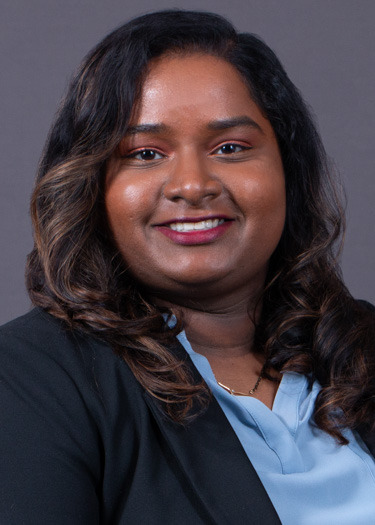
Meenu Immaneni is a fourth-year medical student at the Burrell College of Osteopathic Medicine. She has a Bachelor of Science in Public Health with a focus in Nutrition from the University of North Carolina at Chapel Hill. Passionate about patient advocacy and advancing equity in healthcare, Meenu is a dedicated member of the American Medical Women’s Association, where she serves on the Gender Equity Task Force. She is particularly interested in promoting mentorship and championing women’s leadership in medicine. When she is not studying, Meenu enjoys spending time with her husband and their cat, playing board games, reading, and traveling to explore new places.
Meghan Etsey, MS4

Meghan Etsey is a fourth-year medical student from St. George’s University. She has a Bachelor of Arts in Biology and a Bachelor of Arts in Nutrition and Dietetics from Bluffton University in Bluffton, Ohio. She served as the President of St. George’s University’s Women in Medicine chapter in St. George, Grenada, where she expanded relationships with the community and worked towards educating women and helping the youth. She is also a member of the Gender Equity Task Force and Sex and Gender Health Collaborative Committees within the American Medical Women’s Association. When she is not pursuing medicine, you can find her with her friends and family on different road trips and adventures exploring the world.
Vashti Price, MS4
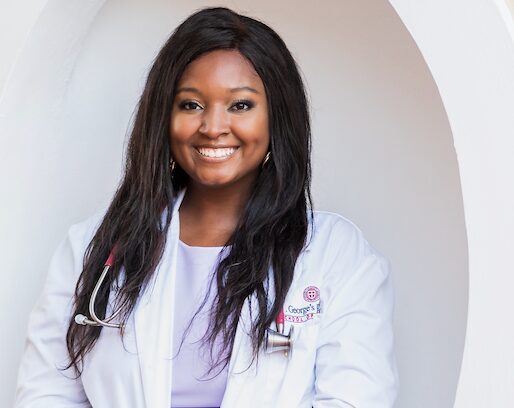
Vashti Price is a third-year medical student at St. George’s University. She holds a Bachelor of Science in Biology from the University of Louisiana at Lafayette, a Master’s in Biological Sciences from Alcorn State University, and a Master’s in Health Sciences from Meharry Medical College. With a strong passion for public health and health equity, Vashti has dedicated much of her time over the years to volunteering with underserved populations, including individuals experiencing homelessness and children in need. Her commitment to service continues through her involvement with the American Medical Women’s Association, where she serves on the Gender Equity Task Force and the Sex & Gender Health Collaborative Committees. Vashti is particularly interested in the intersection of medicine, public health, and community outreach. Outside her academic and clinical pursuits, she enjoys spending time with friends and family, attending festivals, exploring new cities, and winding down with a good Netflix series.
Formatting, publication management, and editorial support for the AMWA GETF Blog by Vaishnavi J. Patel, DO