
Authors: Laura Uricoechea, Meghan Etsey, Vashti Price, Dr. Laura Helfman
“Our Voices, Our Future” is a podcast by the Gender Equity Task Force of the American Medical Women’s Association that explores the challenges, stories, and successes of those working to advance gender equity in medicine. Through candid conversations with changemakers, advocates, and leaders, each episode dives into issues like pay gaps, leadership disparities, and inclusive workplace culture. Tune in to be inspired, informed, and empowered to take action. Full episode listening links are available below the transcription.
Laura: Welcome to Our Voices, Our Future, a podcast where we amplify the voices driving change in equity within medicine and beyond. Brought to you by the Gender Equity Task Force, a committee of the American Medical Women’s Association. We’re here to challenge norms, break barriers, and ignite conversations that matter.
I’m Laura Uricoechea, and in each episode, we bring you candid conversations with leaders, change makers, and advocates, working to create a more inclusive and just world. No more silence, no more waiting. It’s time to get Our Voices, Our Future. Let’s get into it.
Dr. Helfman is an Emergency Medicine physician in the Pediatric Emergency Department at Niswonger Children’s Hospital in Johnson City, Tennessee. In addition to her clinical work, she supervises Pediatrics and Family Medicine residents. She also serves as adjunct faculty at AB Tech in Woodfin, North Carolina, teaching advanced paramedic courses focused on pediatric EMS transport.
She is an AHA instructor in PALS, ACLS, and CPR, and currently serves as Co-chair of the American Women’s Hospitals Service (AWHS). Dr. Helfman earned her undergraduate degree from Barnard College and her medical degree from the Medical College of Pennsylvania. She completed her residency at Long Island Jewish Medical Center. She also trained in Wilderness Medicine as both a Wilderness First Responder and Wilderness Advanced Life Support Provider and is a Lead Instructor for Wilderness Medical Associates. On any given day, you might find her working a shift in the Emergency Department, teaching wilderness medicine, or guiding a whitewater rafting trip.
Welcome, Dr. Helfman. It’s so nice to have you here with us today.
Dr. Helfman: Well, thanks for inviting me.
Laura: So, as I mentioned during the introduction, you wear many hats, but I wanted to start with one that caught my attention.
You work as a whitewater raft guide. Can you tell us more about that?
Dr. Helfman: Sure, love to. Whitewater and paddling became a part of my life early on, when I was about 12, which is interesting because I grew up in New York City. My parents sent us to summer camp, and through a variety of coincidences, I took a river course in canoeing instead of a swimming course, which had to do with having had a concussion. We won’t get into that. So I just developed a love of moving water and rivers.
As my years of training went by, whenever I could take the opportunity to go down a river in a canoe—primarily at first—I would do it. During med school, I heard about a company in North Carolina that was a leader in whitewater. When I went down there to take a course, I found out that many instructors were lawyers, accountants, veterinarians, and other professionals who wanted to have whitewater and nature as part of their lives. So I decided to do that—that’s what drew me there.
It took a few more years to finish residency and get some loans paid off. Then I started doing that part-time and figured out I could do locum tenens—part-time, temporary work—and continue to do whitewater. So I continued to do whitewater as a fairly full part of my activities.
Laura: I think that’s such an interesting hobby and career. You’ve been doing it for so many years on the side, and I thought that was very cool. That’s why I wanted to start with that.
Dr. Helfman: Sure.
Laura: You’re still doing it, right?
Dr. Helfman: I am. I think this makes 33 years.
Laura: Oh, wow.
Dr. Helfman: This has been almost as long as I’ve been a doctor, but not quite as long.
Laura: That’s amazing.
You’re also involved in wilderness medicine. What inspired you to pursue that, and how did you get involved with Wilderness Medical Associates?
Dr. Helfman: I think it’s all part of that. I came to work as a guide, and the company was using Wilderness Medical Associates, which is based in Maine, to train their guides in first aid. Of course, the Red Cross and American Heart teach basic first aid, but when wilderness guides are out on rivers or hiking, they don’t necessarily have access to 911—back then, there were no cell phones.
They had no access to ask for help in any way, as they might be inaccessible. So companies like Wilderness Medical Associates came about to fill that void. It started when they were teaching Outward Bound instructors. The company I ultimately went to work for used Wilderness Medical Associates as its training facility.
So I met some of those instructors who were also river guides, and it seemed like a natural extension to become an instructor with them. Wilderness Medical Associates is distinct from the Wilderness Medical Society, a professional society I also belong to but am not very active in. WMA teaches laypeople wilderness skills, including the reduction of joint-like shoulder dislocations, a common outdoor problem, and clearing cervical spines. It’s sort of advanced training, but not yet paramedic. In fact, there are some things that wilderness first responders can do that paramedics can’t. So I got into teaching them.
Wilderness medicine is fascinating because it marries my interest in medicine and the outdoors, and it has come in handy. My husband has even been my rescuer during one of our expeditions in the Everglades when I got pretty sick, and he was able to use his training to figure out what was wrong and help treat it.
Laura: Wow, yeah, and that must be such a good skill to have as a whitewater raft guide and train other people.
Dr. Helfman: I tend to keep it sort of quiet because I don’t want people in the raft to be so interested in my other career that we stop focusing on what we’re doing there. And when the guides have a medical issue, I try to get them to solve it instead of automatically yelling, “Doctor! Doctor! We need you!” So, yes, it’s true—it’s good that I’m there—but I try to get the guides to do what they can and then ask for my help.
Laura: Yeah, that makes sense.
You’ve stayed connected to women’s institutions throughout your training and career, from attending the Medical College of Pennsylvania to joining AMWA, and you now serve as co-chair of AWHS. What drew you to these spaces, and how have they shaped your perspective as a physician and advocate?
Dr. Helfman: It actually started earlier, when I was at Barnard College. It was one of the colleges I interviewed at. It wasn’t my top choice because I wasn’t sure I wanted to attend a women’s college. This was back in the ‘70s, when things were starting to become more equal, and I just wasn’t sure that was my path.
My father’s union had very good scholarships to certain select schools. The other one on the list was Princeton, which I didn’t get into, and in retrospect, I would not have liked Princeton. Barnard turned out to be a really good choice because I was a shy, book-learning kind of person. I wasn’t very outgoing, and going to a women’s college brought me out of my shell. The feminist movement was going on at the time, and I got involved with some of the issues we thought we were solving—which we obviously haven’t, given what’s gone on recently in our country. We were the first generation to receive Roe v. Wade, and we were also working on other issues. So I think going to Barnard was good, even if it wasn’t a philosophical choice at first.
By then, the Medical College of Pennsylvania, formerly a women’s medical school, interested me. It was probably the best private college I got into, and back then, the economic disparity between private and public schools wasn’t as vast. For just a little more than going to Rutgers, I could attend a school with a women’s identity, and it turned out to be a great place for me.
AMWA was fairly prominent there, so I joined readily. I think it was my second year when the Alumni Association offered us money to attend a national meeting. I went with some friends, and I don’t know if it was the circumstances or the people, but I met many women who became my mentors. Then I became a student activist. I think the term wasn’t “student president” back then; they called it “student co-chair.” I ran, won, and did that for a year, then stayed on and served on a few committees.
Eventually, I settled on the American Women’s Hospitals Service (AWHS), the charitable arm of AMWA. I never intended to be in leadership, but the others are not here anymore. I mean, they were older and have since passed on. So, I became the natural choice to become co-chair. Here I am.
It’s nice to be involved in global health, but it’s tough because it’s voluntary. Every year when I say, “Yes, I’ll do it again,” I still think, “Oh, you know.” But it’s fun. You get to meet applicants, at least on paper, and see what they’re about to do when they travel.
We have two main clinics that we help support. I know the founder of one of them, in Nepal, quite well, and see him when he comes to the States. Our other co-chair knows the founder of the one in Uganda, Engay, quite well. So it’s a nice addition to a rounded life, I guess that’s the best way to put it.
Laura:
Can you tell us more about your role as co-chair of the AWHS?
Dr. Helfman: Sure. So, how much time do we have? Because AWHS could use a little further explanation if we have the time.
Do we have the time? Okay. So, AWHS was founded in 1917 by a group of women doctors. Women started going into medicine in the late 1800s as apprentices, and then, eventually, my school was founded in the 1850s or 1860s, along with about ten or twelve others. Around World War I, there was a decent number of women doctors, considering the times.
They had just formed AMWA, and a group of these doctors wanted to go to Europe to help with the war effort. The U.S. government said that the concept of a woman doctor didn’t exist. They said, “Well, you could come as a nurse, but we have no place for you as a commissioned doctor.” So, many decided to go to Europe independently and provide medical care. They opened hospitals, built clinics, and cared primarily for women and children.
Back in the day, those women doctors had rich American women patients who could give them endowments, and they actually raised quite a bit of money. That could be a whole podcast in itself about AWHS. It continued over the years, with American women doctors going to places, eventually China, and various other places in the world.
At this point, we’re more of a foundation. We fundraise, and we have a very small endowment that’s invested. Then we help the two main clinics – one in Magali, Nepal, and the other in Uganda. I forgot what its name is, but it’s in Uganda. Then we have grants from other clinics that we have done occasionally, but those two are the primary.
Then, somewhere in the ‘90s, the current chair said, “We should provide money for medical students and residents who are our members to get a global health experience.” So they developed a travel grant assistance program or an overseas assistance travel program. I ended up being the first recipient. I went up to La Paz, Bolivia, to work with a clinic they supported.
Now we administer the funds that go to the clinics, and students and residents can apply for an Overseas Assistance Grant. It’s not much—if they don’t have other funds, they probably couldn’t go on just our stipend—but it helps. We also have a community grant program that provides smaller grants for people developing projects that help women and children in the health field. They’ve done projects on menstrual health, general female health—so many things. It’s all on the website.
We administer all of that. We get the applications and then four times a year, we review them and decide who we can grant and, unfortunately, who we can’t. That’s the biggest part of what we do. We would like to do more, but fundraising is tough today, and as I said, it’s totally volunteer. AMWA picks up some of the small administration costs, but we like to say 100 % of our donations go to our work, which means we have no staff. So that’s what we do.
For anyone listening who is an AMWA member, you must complete your second year before being eligible for the travel grants. You can apply beforehand, but you can’t travel until then. There’s no restriction on community grants. Anyone can go to the AMWA website, navigate the AWHS subsection, and look at all that. We fix the website constantly. We’re constantly fixing the website—making it consistent with our rubric and vice versa. It’s a never-ending battle.
Laura: That’s really cool that you got involved with that, and I think you’re doing some amazing work with that, and also providing the opportunity for other medical students to get some of the additional funds that they need to be able to carry out projects that they’re interested in.
You’ve taken on many roles: physician, rafting guide, disaster responder, educator, and advocate. How do these parts of your life complement each other, and how do you find balance?
Dr. Helfman: Well, they complement each other because it’s easy to get burned out on anything you do all the time. I graduated from medical school in ‘85; I’m 40 years post-graduation. I can tell you that the fellow students I keep in touch with, which is not that many, because that’s how life goes, most of them are burned out. They’re retired, they couldn’t wait to leave, or they’re burnt out, or they don’t look back.
It’s easy to have some issues with the profession, especially because so many restrictions and changes have occurred. Really, the last 20 years have been so dramatically different than the first 20 years in terms of regulations and all kinds of things. I never really developed that significant burnout because as the winter would end, I knew I might be on the river either half or full time. For many summers, it was full-time. That balance made me not mind the ER as much.
And when the river season was winding down, I’d start to get tired of some of the silly questions tourists often ask—like, “Is the water wet?” or “Does a river go in a circle?” Then I was ready to go back to the ER.
We didn’t talk about the disaster response part because there’s the wilderness response, which I primarily do as an educator, but I also belong to the Disaster Management Assistance Team, which was once part of FEMA. It still exists, though I don’t think it’s under FEMA anymore. It’s made up of medical professionals who deploy as a team—my team is based in Tennessee—and we get called by the government to go where help is needed.
The last place I went, I joined the California team. I was basically in a MASH unit outside of the hospital, doing as much of the care as did not need a hospital. That just seemed like a natural response to doing wilderness medicine because it’s a blend of the two.
We were working right next to a hospital, so if someone had an injury to their extremity and we really wanted an X-ray, they had a portable machine, and we could get it done, which wouldn’t be the case if you went to a disaster like Hurricane Katrina, where there were no resources. My team actually went to assist during Katrina, way back when.
I think the wilderness part was not only born from a love of the river and the outdoors, but also, unfortunately, I lost my mother when I was 28 to cancer, and I just saw some doctors burning themselves out. I sought not to be so married to medicine that I had nothing else.
Luckily, the medical profession, the residents I teach, and the younger doctors I work with have developed that insight. It’s a thing now to have work-life balance. No one would have talked about work-life balance when I was in med school. It wasn’t a thing.
Laura: I really appreciate that we talked a little bit more about that, and I think the residents who get to work with you are really fortunate because one thing is saying that you need work-life balance. Still, you’re also like a living example of work-life balance, so it must be very inspiring for them.
Dr. Helfman: It’s very common for me to pick up my phone while we’re talking about it and find some pictures just to show them, and some have been river rafting, but whether they have or not, it’s nice to show them. I like it.
Laura: Yeah, and you’re also showing them that having multiple interests and not focusing just on medicine and your work also gives you purpose and, as you said, prevents burnout, and you can keep enjoying everything you do.
Dr. Helfman: This brings to mind part of my reason for going into clinical medicine, which was due to some of what happened with my mother, which occurred during college, medical school, and internship. From the standpoint of being a female patient with a female problem, she didn’t at first have physicians who were sensitive to that, which was how it was.
I had vowed, because I was still a junior in college when she was diagnosed and when some of the less pleasant things were witnessed. So, I vowed that I was going to save women from these male doctors who didn’t understand. I thought I would go into women’s health and not necessarily to be an OB-GYN, although that was a possibility.
Then, the circumstances of her illness, which dragged on for ten years, caused me to stop after the internship and just work in an urgent care, and whatnot, which is no longer possible. Back then, you could get an internship, a license, and work. So there was a four-year gap when I didn’t want to be in training, so I would have as much time to devote to her as needed, which was invaluable.
By the time those four years had passed, I had gotten into whitewater, and I’m like, “OB-GYN seems like it’s more commitment than I want to do, given these other interests.” So my choice of ER actually came about because of wanting to have that balance, which would have been harder in women’s health. Sometimes I regret that I didn’t get more involved in the women’s health space, other than AMWA, especially with what’s going on now. You know, we just need so much advocacy for women’s health as we’re dealing with the challenges of the current administration.
Laura: Yeah, I agree. But I also think that just you as a preceptor, for example, for your current residents, are also doing a lot of work just inspiring other women, which I think is also great work that we need to see more of.
Dr. Helfman: I hope so. I hope so.
Laura:
So, balancing a multidimensional life comes with challenges, especially for women in medicine. Have you encountered any particular obstacles, whether in the form of gender bias or expectations placed on you as a woman?
Dr. Helfman: I have to say, considering that I’m very attuned to it, I’ve experienced less than a lot of other women I’ve met. There were a couple of things that I spoke out about in med school and residency. Sometimes successful, sometimes not. There were a couple of times I spoke up because of a racial bias that I witnessed. I remember going to the neurosurgeon, making an appointment, and telling him how inappropriate I thought it was, but it didn’t go anywhere.
It didn’t go anywhere, but I didn’t get kicked out either. However, relative to many of the women I’ve met at AMWA over these 40 years, I’ve experienced relatively little. I don’t know if I just gave off some kind of aura—considering I’m only a five-foot-two woman—maybe something that said, “Don’t mess with me,” but very little.
Mostly, it was back when I was a student. That surgeon was inappropriate on gender issues, too. There were a couple of surgeons who had no problem in the ‘80s making sexual comments during the OR while you were sitting there with a retractor and couldn’t do anything. I have to say, knowing mentors from ten years prior, what they experienced was worse. That’s not to say it’s not still going on, and it probably depends on the part of the country. It might actually be disguised now, so sometimes it might not be as obvious for someone to even recognize or know how to complain. But I think I was fortunate.
Laura: Yeah. Sounds like you were very fortunate. And I mean, I would say that it still happens.
I’ve heard stories of classmates.
Dr. Helfman: Absolutely.
Laura:
Do you have any advice for women who experience or find themselves in those kinds of situations, and how they should go about it, and what they should do?
Dr. Helfman: In a couple of instances—like one dermatologist our medical students used for electives–I went to a mentor, and she helped me write a letter. Again, I don’t think it went anywhere. It was also a quote-unquote women’s medical college, although we were co-ed at that point.
Their solution was just to advise students not to take that elective, which was a shame because it was a two-week elective, and the only other dermatology elective was four weeks. If someone wanted to do dermatology but didn’t want to commit to a month, I would say there are more women mentors now.
For the student who doesn’t know one, they could probably contact AMWA and be directed to someone in their city or even in their institution. If there’s an AMWA chapter, I’d definitely join that and be, which would have at least one, I forget what they call them, like a physician sponsor.
Like most AMWA chapters have at least one woman doctor who’s their champion, I don’t know that for a fact.
We actually didn’t have one in my school; we did it on our own, but we had a lot of women faculty. There’s usually at least a nominal AMWA chapter or a regional governor in most cities. Reaching out is important because most likely, you’ll find more support than you even need.
Even if it doesn’t fix that incident, you at least don’t feel like you’re alone. If it’s really significant and needs further escalation, there may very well be someone who can help do it. There might be a woman dean who isn’t necessarily that obvious to anyone, but that would be recommended by AMWA, who would then be able to take some action, whatever that might be. But if you just keep it to yourself or tell your best friend, it’s definitely not going to go anywhere, and it’s probably going to affect how you feel about your choice of career.
Laura: Yeah, that’s true.
Dr. Helfman: We’ve had a lot of women show up in an AMWA meeting just for that reason, because they didn’t know where else to turn, and they got the support they needed.
Laura: Yeah, that’s some really valuable advice. I wouldn’t have thought of doing that if I ever found myself in a situation like that. Still, I think you’re very right in making that suggestion and advising our listeners to reach out to AMWA and find the support, just because sometimes, just having the support and direction to take the correct steps forward to speak up for yourself can make a difference. As you mentioned, it’s not the same as talking about it with your best friend.
Dr. Helfman: Right. And I mean, at times, AMWA has had workshops on such things. Sometimes it’s about being able to have the best answer the next time a comment is made. I mean, sometimes severe stuff happens in medical school. Life is in jeopardy, but often it’s just having to deal with comments, and having the best comeback can be empowering.
So, yeah, I’m definitely a fan of AMWA. I have lifelong friends with whom we sometimes go to meetings, and we just have fun. AMWA has a lot of good lectures, but sometimes we just take the afternoon off and have fun in whatever city we’re in.
And these are lifelong friends who came and supported me when I had cancer six years ago, and whatnot. So, I really can’t speak highly enough about AMWA.
Laura: My last question: We have touched on this already.
I just wanted to say again that I admire that, unlike many of us in medicine, you prioritized yourself alongside your work, and you haven’t made your career your entire life. What advice do you have for other women who want to follow in your footsteps?
Dr. Helfman: Well, first of all, figure out what your other passions are. A woman once opened a clinic at the base camp of Mount Everest. She said something about “finding your bliss”, which for her was mountain climbing. She went through residency, was also in emergency medicine, was working, and just realized she needed to climb more. She found a way to combine her interest in mountaineering and climbing with her medical talents, and it’s a major thing. I mean, it provides medical care for the climbers who are trying to summit, and along the way, it provides a lot of medical care to the Nepalese in the little villages and whatnot. It’s a foundation and all that good stuff.
Figuring out what other things might be your passion or your bliss, getting good at them, or at least getting very involved with them, and then figuring out how you can combine them. Now, my way of combining it is not; it’s becoming more common, but are you familiar with the concept of locum tenens?
Laura: Yeah, I am.
Dr. Helfman: Yeah. So, in Latin, locum tenens means “to hold a place”. So it’s basically temporary work. I started doing it early on, right after the internship, because, as I said, I wanted time with my mother. So I couldn’t necessarily just take a job in a clinic because then I would have the same 40-plus hours expectation.
So I just did serial part-time jobs so that at a moment’s notice, I could say, “I’m gone” and do whatever my mother needed, and then worked locally toward the end. That is one thing I have done for 80 percent of my career. Post-residency, I had a job for five years, and even that was a three-quarters job.
I will say that doing it right out of internship was gutsy, and it’s not possible now. Right out of residency, it’s still a little gutsy because you haven’t worked as an attending anywhere, but it’s doable. It’s certainly doable after a year or two of practice and very doable in certain specialties, such as hospitalists’ medicine, emergency medicine, and radiology. The subspecialists all use locums too.
It’s actually possible in any specialty. In emergency medicine, where no one’s expecting you per se, it’s easy to work someplace for a while and then say, “Okay, I need some time off”. If you still have needs six months from now, and I’m available, I’d love to come back or not. Maybe I didn’t like it. I would say I liked almost every place I went.
So, think about a less traditional work schedule, such as locum tenens, finding a hospital willing to hire you as a half-time assistant to another physician, or other options. Of course, then you don’t have benefits or health insurance. So that’s a whole other issue.
That’s a whole other podcast, actually, because toward the end of my COBRA insurance from residency—before I’d made arrangements for more insurance—I realized I had lupus. In the old days, if you had a diagnosis, you were uninsurable. So, that’s another podcast. But I was able to “cheat the system,” so to speak. I was never uninsured, and the lupus wound up being relatively mild.
Then, of course, you have to have a supportive spouse. We didn’t choose to have children because we were a little older, and he already had kids. With children, all this gets harder. For women, especially, traveling can be tough. My husband had been married before, and he had his own teaching career, so we were separated a lot more because of travel, but it worked. We’re still married. I have a husband who also has a lot of interests, one of which is whitewater kayaking and river guiding. That’s how we met. So, a more traditional marriage with children and all that that entails might have made what I did a little more difficult, but some variation of it could have happened.
Laura: Definitely, as you were saying, a supportive partner who is willing to support any of the choices that you want to make.
Dr. Helfman: Yeah, I should have said that supportive partner. I have to get with the lingo. Sometimes I revert to being an older person. It does even out after a while, though, and you can start making more priorities. There are definitely more jobs open to different arrangements now, whether part-time or three-quarters time.
I was also lucky that once I finally got insurance—not too many years later, when my husband and I got married—I got his insurance. So, doing the atypical work pattern didn’t impact me because I had good insurance. Even now, in semi-retirement and on Medicare, I still have good supplemental coverage through him. He used to joke that I had married a handsome man with a good retirement plan—or a good health insurance plan—or something like that.
Laura: Yeah. I was just going to say that, just kind of relating to what you were talking about, how when you’re in training, it kind of seems harder to have other interests and hobbies and other things other than medicine, because the time commitment during training makes it seem almost impossible to do that. I think I pretty much lost all my hobbies during the first two years of medical school, and I slowly had to start setting aside time for them.
Dr. Helfman: Yes.
Laura: Well, thank you so much for joining us today. Before we close, I would like to ask if you’d like to share anything else with our audience, and if not, that’s okay.
Dr. Helfman: I think I extemporaneously did that throughout the interview. So I think nothing comes to mind.
Laura: Well, thank you again for joining us. I really enjoyed our conversation.
So that’s a wrap on this episode of Our Voices Our Future. We hope today’s conversation inspired, challenged, and reminded you of the power of raising your voice. The fight for equity doesn’t stop here. Join us in the movement. Subscribe wherever you get your podcast. If you love this episode, share it with someone who needs to hear it. Until next time, stay bold, stay vocal, and keep the conversation going. This is Our Voices, Our Future.
Links to our podcast:
RSS https://rss.com/podcasts/our-voices-our-future/
Apple Podcast https://podcasts.apple.com/podcast/id1805991643
Spotify https://open.spotify.com/show/5E59jvuFQOjSXfLrjQiy0P
Podcast Index https://podcastindex.org/podcast/7278557
Fountain https://fountain.fm/show/7278557
True Fans https://truefans.fm/82727577-2b37-5929-aa2e-1574d478b177
About the Authors
Laura Uricoechea, MS4
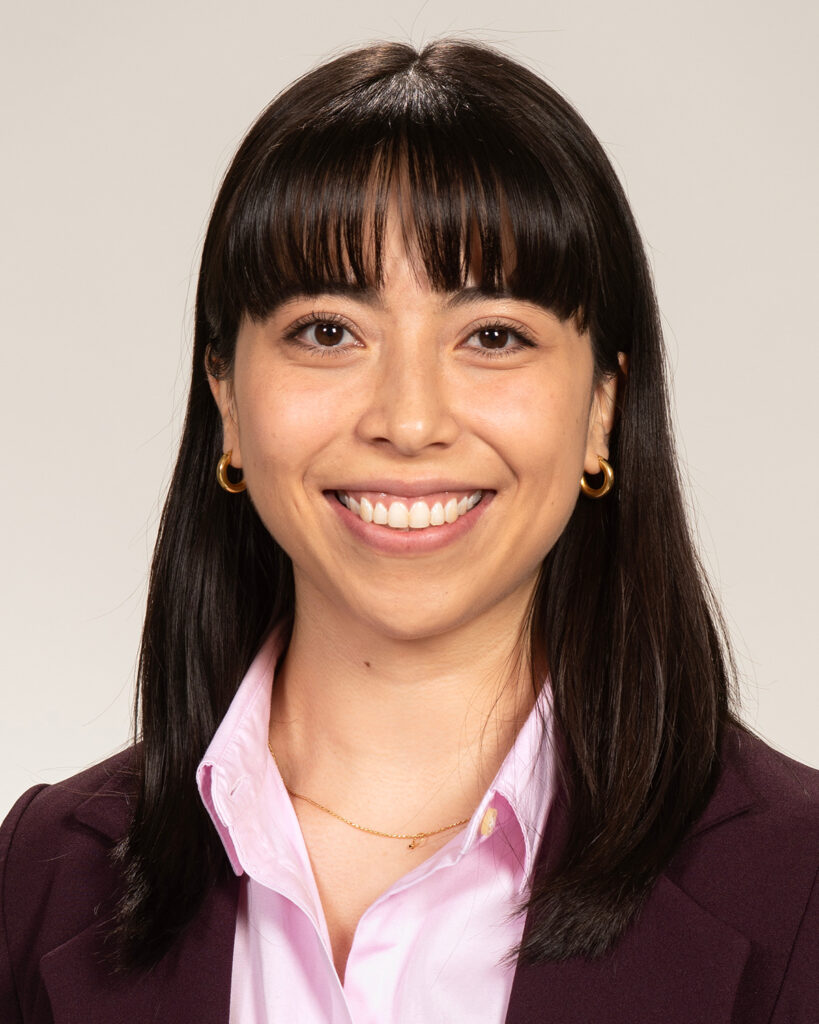
Laura Uricoechea is a fourth-year medical student at the Philadelphia College of Osteopathic Medicine. She is currently completing a Master of Public Health at Thomas Jefferson University between her third and fourth years of medical school. Laura is applying to OB/GYN residency and is passionate about women’s health, particularly reproductive healthcare. She is an active member of the Gender Equity Task Force within the American Medical Women’s Association. Outside of medicine, Laura enjoys spending time outdoors—she loves hiking, paddleboarding, swimming, and playing tennis.
Vashti Price, MS3
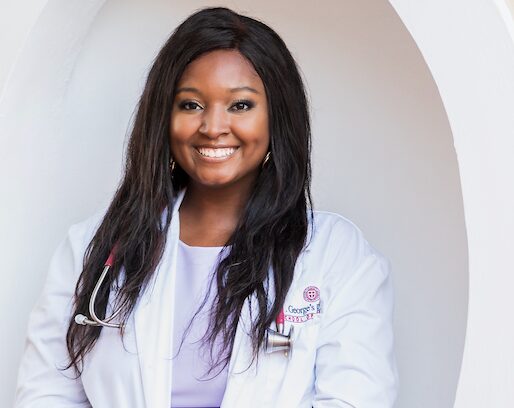
Vashti Price is a third-year medical student at St. George’s University. She holds a Bachelor of Science in Biology from the University of Louisiana at Lafayette, a Master’s in Biological Sciences from Alcorn State University, and a Master’s in Health Sciences from Meharry Medical College. With a strong passion for public health and health equity, Vashti has dedicated much of her time over the years to volunteering with underserved populations, including individuals experiencing homelessness and children in need. Her commitment to service continues through her involvement with the American Medical Women’s Association, where she serves on the Gender Equity Task Force and the Sex & Gender Health Collaborative Committees. Vashti is particularly interested in the intersection of medicine, public health, and community outreach. Outside of her academic and clinical pursuits, she enjoys spending time with friends and family, attending festivals, exploring new cities, and winding down with a good Netflix series.
Meghan Etsey, MS4
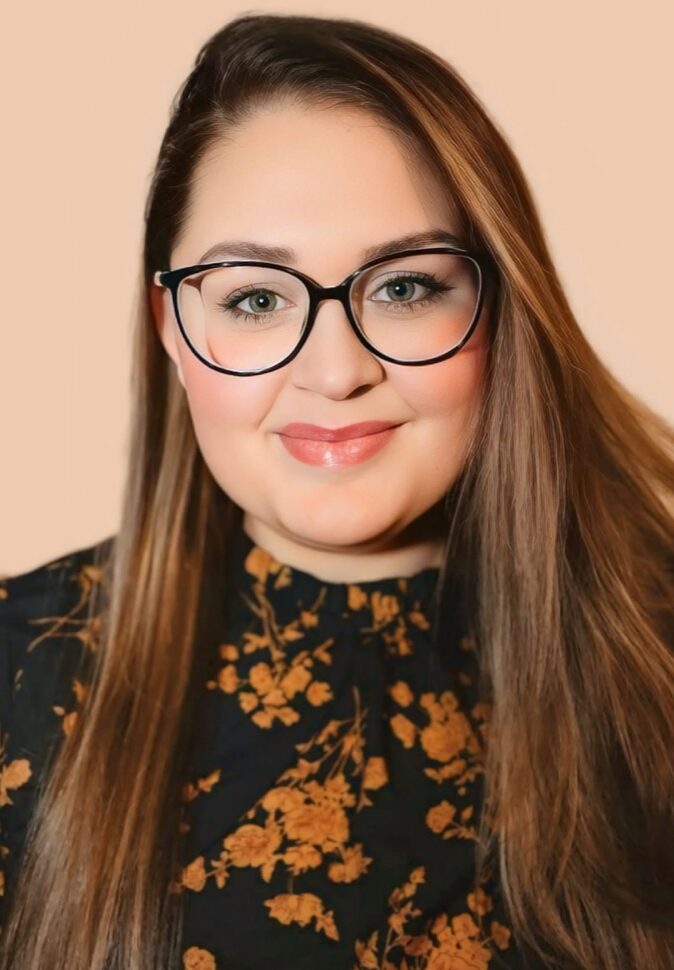
Meghan Etsey is a fourth year medical student from St. George’s University. She has a Bachelors of Arts in Biology and a Bachelors of Arts in Nutrition and Dietetics from Bluffton University in Bluffton, Ohio. She served as the President of the St. George’s University’s Women in Medicine chapter in St. George, Grenada where she expanded relationships with the community and worked towards educating women and helping the youth. She is also a member of the Gender Equity Task Force and Sex and Gender Health Collaborative Committees within the American Medical Women’s Association. When she is not pursuing medicine, you can find her with her friends and family on different road trips and adventures exploring the world.