
Authors: Laura Uricoechea, Vashti Price, Meghan Etsey, Caroline Tanis
“Our Voices, Our Future” is a podcast by the Gender Equity Task Force of the American Medical Women’s Association that explores the challenges, stories, and successes of those working to advance gender equity in medicine. Through candid conversations with changemakers, advocates, and leaders, each episode dives into issues like pay gaps, leadership disparities, and inclusive workplace culture. Tune in to be inspired, informed, and empowered to take action. Full episode listening links are available below the transcription.
Laura: Welcome to Our Voices, Our Future, a podcast where we amplify the voices driving change in equity within medicine and beyond. Brought to you by the Gender Equity Task Force, a committee of the American Medical Women’s Association. We’re here to challenge norms, break barriers, and ignite conversations that matter.
I’m Laura Uricoechea, and in each episode, we bring you candid conversations with leaders, change makers, and advocates, working to create a more inclusive and just world. No more silence, no more waiting. It’s time to get Our Voices, Our Future. Let’s get into it.
Let’s get into it. Today, we welcome Caroline Tanis, founder and lead financial advisor of Tanis Financial Group, strategist, and bestselling author. Caroline specializes in helping highly ambitious women and their families design financial plans that align with their goals and the lifestyle they want to build. Through estate, retirement, trust, and investment planning, she helps bridge the gap between where her clients are now and where they want to be. Welcome, Caroline. How are you?
Caroline: I’m good. Thank you so much for having me on. I’m excited for our conversation.
Laura: Yeah, I’m so excited too. I think this is going to be a great conversation. So I’m just going to jump right into it. My first question is:
Could you briefly educate our audience on the gender pay gap and the less commonly discussed gender wealth gap?
Caroline: Yeah, absolutely. It’s something I spend a lot of time talking about, researching, and really diving into, because we talk a bit, and it’s something more mainstream is talking about: the gender pay gap. For anybody who may not know what that is, the difference between men and women is paid in the workplace for the same amount of work. The number is starting to shrink, but we still have room to grow. You know, we want to be paid. If we’re doing the same work as the man sitting next to me and I have the same qualifications, I’d like to be paid the same amount of money. Unfortunately, too, as you continue to go down, you know, through the ladder, if you are a minority, a person of color, anything, you know, that kind of differentiates you as well, you continue to see that pay gap continue to widen, unfortunately, which then compounds into the lesser-known wealth gap. What happens here is that over a woman’s 40-year career, she will earn significantly less than a man because of the compounding of the gender pay gap and a variety of other factors, including investing, the way we hoard cash, and so many different things that, as women, we end up being behind in terms of our wealth. We live longer than men, statistically speaking, so we need more money during our lifetime.
So I’m very passionate about it and trying to help educate and close it.
Laura:
In your opinion, or either from the research out there, or both, what are some of the biggest contributors to the gender pay gap?
Caroline: Yeah, I mean, it stems from that age-old adage of typically, back in the day, we’ll call it, when a woman would enter the workforce for a small period of time, and then once she had children, she would leave. So many employers didn’t want to invest in female employees financially, didn’t see them as long-term contributors to the workplace, and that caused the big gap.
In contrast, a man would stay and provide for his family; they wanted to invest in those employees. However, the marketplace has shifted significantly. We see women staying in their careers longer and being driven by their careers. We also see more stay-at-home dads, which is pretty cool.
And so, no employer can sit down and say, “Okay, this is exactly what this person is going to do,” or, “Oh, this person is just going to have a baby and leave.” You never know. As women, we also end up being caregivers often by default, which has also led to the pay gap. So, as women, we typically have to step out of the workplace.
Once again, this is starting to shift as we see many generational differences and different services offered. So, this is no longer a good reason to pay differently. Not that it ever really was, but it is no longer a reason we should be paying people different salaries.
Laura: So you were saying, you just said that we’re getting better at this.
But how far are we from where we would like to be?
Caroline: So many of the numbers I’ve seen, and once again, it depends on other contributing factors, from race, ethnicity, everything under the sun. They will try to use as many different variants as possible to explain why you can’t be paid the same. We’re right around 80 cents on the dollar. So that means for every dollar a man earns, a woman earns around 80 cents. Like I said, it’s gotten better, but the best is when it’s dollar for dollar.
Laura: Right.
What are some of the most common misconceptions about the gender pay or wealth gap?
Caroline: Ooh, that’s a really good question. I will break it down into two parts if that’s okay.
Laura: Sure.
Caroline: The misconception about the gender pay gap is that people say, “Well, you can’t change biology. So, of course, women are going to leave for some period of time.” It is so interesting to see a shift in the marketplace of employers that actually want to hire mothers. So it’s interesting, as we’ve seen, the shift is that when women become mothers, they actually end up in many situations and scenarios becoming better employees. That’s not to say you need to have a child to be the best employee, but a lot of research has come out on it. Some places are significantly increasing hiring and helping women get back into the workplace because they see what a value add it can be. So that’s a big misconception. You know, you have a child, and it’s over, so forget it. That’s the very early 1900s way of thinking. The other one I’ll touch on is misconceptions around the wealth gap. When it comes to the wealth gap, everyone thinks it’s because, like, “Oh, women don’t know how to handle money,” right? We all saw the trend of GirlMath going online. It was one of those things that drove me crazy because the default is always that women are, you know, not good with money. Well, research has shown that women make better investors and have higher returns on their investments.
So it’s interesting. We just need to get more women investing and focusing a lot of that education and those resources in that area to give women the confidence, because when they do, incredible things happen.
Laura: Although I’m ashamed to admit it, I think I’m guilty of doing girl math—more in the sense that I don’t think much about planning my finances. Like, I think about my salary coming in, putting it in my savings account, and that’s as far as it goes. But my partner is really into investments and trying to make more of the money that comes in. I appreciate that he is including me in the conversation to plan our finances together. So that is just not him. So that I can also learn to do more with my money than just, like I said, putting it in a savings account.
Laura: Love that you’re doing it as a partnership. Like everyone thinks, you know, with so much of the content I put out and all the resources, like, “Well, you’re just speaking to him,” and I’m like, no, I want to speak to men and women equally because such amazing things happen when you work together, right? It’s not like man versus woman or, you know, whatever gender or race, ethnicity, you name it, that’s what we’re pinning each other against each other. I think it’s amazing. You see beautiful results happen when everyone comes together, even inside your own family and relationship. It’s so cool because now you’re being empowered and supported to take control of your finances and still enjoy GirlMath.
Laura: Yeah, for sure. I think I’m in a very good position, and I appreciate that my partner wants to include me and teach me, and we’re a partnership.
Measurable factors like education, occupational segregation, and work experience can explain a lot of the gender pay gap. However, we see disparities in medicine even within the same specialties, where training and credentials are identical. What are your thoughts on that?
Caroline: Yeah, and I think this goes back to the original. It’s two parts, right? Originally, we had the assumption in the old-age thinking of, “Well, you’ll have a child and leave.” Especially with medicine, it’s a workplace that demands a lot of hours and a lot of cognitive load. You need to be on your mark, and it’s a high-intensity, high-pressure job. So the default assumption is, “Well, if you’re just going to go be a mom,” which is not the right way of thinking. People default to that.
That’s where we see many of these pay discrepancies come into play. The other thing that I love to encourage women to do is advocate for themselves, higher pay, and equal pay. I think it’s great that we’re starting to see a lot more come out in terms of pay transparency because I remember when I was working in a larger corporation, before I started my own practice, we did find out that we were making different amounts of money, regardless of the fact that we all started at the same time, had similar educations, backgrounds, you name it. Alot of it boiled down to gender. So to see that happening, it’s just heartbreaking. My biggest piece of encouragement, especially to women, is to advocate for yourself, fight for the amount of money, and be willing to talk about it. I’m sure you’ve seen this in some of your friend circles. We’ll talk about everything with our friends and everything that’s going on with our lives. Once the topic of finances or money starts to open up, everybody’s like, “Ooh, no, no, can’t talk about that one.” But that’s where a lot of this education happens in these conversations. So I encourage both men and women, right, that whole partnership concept, to have these conversations with each other so you can advocate for yourselves and one another.
Laura: I love that you brought up advocating for yourself. I feel like, at least for me, it’s so hard to advocate for myself. I just thought about my mom. She works as an accountant; there’s not very good transparency regarding how much everybody is paid at her job. She found out that she gets significantly less than her male coworkers. She’s so good at advocating for herself.
She tells me what she says and is so open and direct. I’m like, “Mom, are you even a little bit scared?”
Caroline: I love it. And I love that she’s telling you and sharing it, because then you, like, it’s one of those things now where we have to sit with ourselves and think, “Okay, how do I then have the courage and the strength?” I also love studying with other people. I’m wondering what language you used, because you don’t want to go in there guns blazing and be like, “Give me my money right now.” Or there are constructive conversations that can be had and progress that can be made.
Laura: Yeah, I agree. Sometimes it’s just good to be direct and ask for what you deserve. I just think it’s kind of scary.
Caroline: It is. It’s like there’s always sometimes, especially in a workplace, it’s more than people are afraid of being rejected. There’s also the saying, “Okay, what if they fire me?” right? That’s like the worst-case scenario. I caution people, like, don’t let your mind go that far in that moment. Once again, it’s about how you’re asking and presenting. It stinks that this is something that, as women, especially, we have to go through, this level of advocacy. It is so worth it, because to then see the way it compounds and getting more money in our pockets that we can then invest, pour back into our families, our communities, whatever it might be, has such an incredible domino effect of results that we have to do it.
Laura: Right.
Have you ever found yourself in a position like that? Or do you have any stories from friends who have experienced that?
Caroline: Yeah, I get asked this question constantly, especially when working as a financial advisor. Like, I see everything on the inside of people’s finances. I also work a lot with individuals, especially those who are at private companies. So, like, seeing their full benefits package, there’s not as much transparency as if you’re at a Fortune 500 or a Fortune 100 company. So it’s interesting. I was working with a client one day, and we were on Zoom, and she actually, like, we had our full conversation. This was at the start of our working together. We had just made all of our discoveries. I’m like, “Are there any other questions? Anything else you want to touch on before I start working on your financial plan?” She physically leans into the camera, so close that I was like, “Yes. I had no idea what she was going to say.” She leans in and whispers to me. She’s all alone, I’m all alone. She goes, in a whispered tone, “Do you think I’m making enough money?” I was stunned that she had actually asked me this. She was like, “I figure you see everyone’s salaries and you know what people at other companies make. I feel like I’m being severely underpaid at my company. I don’t know who to ask, and I don’t know where to turn to.” The fact that she had to whisper, lean in, make herself so small to ask me this was heartbreaking. I was like, “No, you’re definitely being underpaid. Let’s talk you through how to advocate and ask for more.”
Laura: Wow. Yeah. Sorry, I’m just speechless.
Caroline: Yeah. That wasn’t, you know, 20 years ago; that was 2021, I think we had that conversation. Things are a little blurry during the pandemic, so if my exact year is off, it was heartbreaking because you knew how she felt inside,l ike you could feel it through Zoom, how she felt.
Laura: Yeah. I’m glad that she felt comfortable enough to ask you, though.
Caroline: Me too. I was like, finally, you’re asking someone.
Laura: Yeah. Do you know if she did something about it and if she had success?
Caroline: So she left her company and took a role at a different organization with higher pay, which was great.
Caroline: Good for her.
Laura: Exactly. And so, even when she was moving to the new company, I was like, “I want you to negotiate on your salary benefits.” The other thing, too, I’ll add, is that it’s okay in terms of salary and compensation. Look at your compensation as a full package. I say this to people all the time: if they’re like, “Well, I can’t ask for more money. I can’t ask for a bonus,” there are so many other things that you could ask for here, especially in the world of medicine. Maybe you want to learn a new type of procedure or a specialty, or go to a conference for continuing education. See if they’ll pay for those things as well.
Whether you stay at your organization, get a new accreditation, or move to a different organization, it will make you so much more valuable and marketable, and also better for your patients. That’s another way to get more money in the door. So it doesn’t always just have to be salary. I know things are especially tight right now, so you can negotiate for other things.
Laura: I think that’s really great advice and something I wouldn’t have thought of myself, but you have a good point. A really good point.
Caroline: Education is expensive. It will bring you to the buyer.
Laura: Yeah, and conferences are so expensive. I didn’t realize that. So yeah, thank you for that. I’m sure a lot of our audience is going to be grateful for that, too.
Caroline: Yeah, of course. Just make sure you understand, like disclaimer here, how it’s being paid to you, and if any of it can be considered taxable income, because sometimes it is and sometimes it’s not. So make sure you understand that.
Laura:
Outside of medicine, what other professions show significant pay gaps even when education and qualifications are nearly the same?
Caroline: I see it a lot. Unfortunately, I see you deal with many strong personalities, especially in such a male-dominated field, where I see so many underpaid women. Also, going back to our advocacy point, you see a lot of women who are afraid to advocate because they’re typically going to higher-ups who are men and are in positions of power. So, I see a lot of things happening in the financial world.
I also see it happening a lot in tech. Because once again, it’s a male-dominated field where women are solo. And the other thing I see happening a lot in tech is that I always have a lot of clients who work in tech, so I’m always kind of encouraging them to open up conversations again and say, “Are you guys talking about your salaries? Are you understanding what different benefits you have or benefits you’re not using at your company?”
These are great things to discuss and understand. How do you maximize everything you’re being given at your organization? But those are the two big ones that stand out. It’s a lot of times, like, in these male-dominated industries, because your higher-up is typically a man, you feel there’s a little bit of a power shift sometimes when you’re going into these conversations, which is hard.
Laura: Yeah, that can definitely be a barrier and make things a lot harder for you to ask for. Advocating for yourself, for sure.
Among women and men with similar education and job titles, what are the key contributors to persistent pay disparities?
Caroline: I hate to keep bringing it back to advocacy, but for me, it’s something I’ve seen across the board. Like, if for some reason, and this is not 100% of the time, but something I’ve just seen frequently happening is, if I tell a man, like, “Hey, I think you’re being underpaid,” he will literally jump up and run down the hallway and just advocate for it in this moment. Whereas sometimes it’s women, and we’re like, “Well, let me wait till my next review,” or, “Let me schedule time six months out on the calendar.” I don’t know if you’ve ever heard this statistic. I’m hoping I don’t butcher it, but when applying for jobs, if a man has five or six of the qualifications for a job, he’s like, “Oh, yeah, I’m just going to go for it and apply.” As women, we want to make sure we have nine out of ten or ten out of ten of the qualifications. Otherwise, we won’t apply for the jobs. So part of the pay discrepancy we’re seeing is that we’re not stepping into the next role because we want to make sure we are overqualified. So I encourage women as well: go for it, go for the ask, go for the next role, if that’s what you’re inclined to do in keeping your career moving in that trajectory, and be open and willing to do these things. I hope that answered it.
Laura: Yeah, it did.
Other than advocacy, what other ways of closing the gender pay gap would be, in your opinion?
Caroline: I think it’s going for those other roles and promotions. Also being willing to move and change. I think that is a great one as well, and being willing to make those jumps to other companies.
I have noticed that my male clients are much more inclined to jump and follow the next pay raise, whereas women are more like, “Well, I love the people I work with and we get super bonded.” So be willing to jump and go to the next company for that new role. Relationships are still endlessly important; you never want to burn a bridge. But be willing to take that risk and jump for the next promotion, especially when you see the biggest raises when people leave companies and go to another one. That’s where you’re seeing such high jumps in pay and benefits. That just compounds into everything on the wealth side.
Laura: Going back to the gender wealth gap and the gender pay gap.
Is closing the gender pay gap the only way to close the gender wealth gap, or are there any other paths forward?
Caroline: Yeah, I think it’s a piece of the puzzle, right? At the end of the day, it infuriates me that it’s 2025 and we’re still sitting here. I feel like this is a conversation I’ve had my entire life. I’m like, the fact that we’re still having it drives me insane. I’m like, we should be here by now. So that’s a piece of the puzzle, right?
There are so many other contributing factors. So the other things that make up the gender wealth gap are the fact that, as women, we’re the default caretakers. We are the ones who, if it’s shown as well, and I don’t have the statistic off the top of my head, so I apologize—but if there are, let’s say, mom and dad are both listed on an emergency contact form for a school, they are more inclined always to pick mom versus dad because they assume that either mom is at home or more available, or can leave, whereas dad can’t.
It’s the fact that if we have a lot of people, especially now, who are in the sandwich generation. The default is always, “Oh, my daughter will take care of me,” and with aging parents, that compounds on things because it always happens to a woman during her highest earning years of her career.
So if you have to take time and step away during those highest earning years of your career, you’re potentially putting your job or promotions on the line. You are not able to contribute and save as much, and build your wealth. So that really impacts things. It also has to do with the fact that as women, we hoard cash, which is so interesting. Women love to hoard cash. We need to be investing. We need to be in markets. We need to talk about private equity, additional stock bonuses, compensation, and broadening those horizons.
Because we’ve seen it now, right? If you have money right now and you’re checking your savings account, it’s earning maybe, at the best bank, 0.05%. Okay, that’s not getting you anywhere. That’s not keeping up with inflation. That’s not doing anything.
We need to move things forward and invest in markets, purchase real estate, whatever feels comfortable to you, build diversified portfolios to help build that wealth, and stop hoarding cash in the event of a doomsday. Yes, we need emergency funds, but there’s so much more than that.
Laura: As I mentioned, my partner is really into our finances and planning for the future. I don’t know if you’re familiar with The White Coat Investor, but he listens to his podcast, reads his book, and everything about investing for the future. It’s not just about putting it in a savings account. He talks about so many things that hadn’t even crossed my mind before, because it was just like, keep it in my savings account, and then it’s there and I have the cash and I’m good. But there’s so much more to it.
Caroline: Yeah. Part of it, too, is that educational piece, right? So that’s something I always try to do, especially through podcasts. I also run my own show, called The Wealth Cafe, which is free, and anyone can access it. There are books, social media, and many different sources now.
Yes, I think it’s gotten overwhelming, and there’s a lot of false information out there. So make sure you follow your gut, follow people you can trust, and have your best interest in mind. But part of it is also just going and seeking out many resources and information. So that way we can sit there and be like, okay, maybe I should stop scrolling this way. I guess that’s not a bad idea.
Caroline: I’m glad you’re putting it out there for others to learn more about it, because we really need it. I wouldn’t have ever crossed my mind if I hadn’t been introduced to those other aspects of building my own wealth, rather than just getting my paycheck and putting it in the bank account.
Great, that’s boring. You want to own something and build your little mini empire, or whatever speaks to you in building wealth.
Laura:
What additional steps do women have to take to build wealth comparable to men when they’re being paid less?
Caroline: I think it’s seeking out the information first. It’s first saying, I want something to change. Because I can sit here all day long, and we could record this podcast 24 hours a day, seven days a week, and keep saying the same thing: advocate for yourself, find ways to make yourself comparable in the sense that you can advocate for closing the wealth gap, and all these different things. But until we as women, this is our own individual journey as well, we must understand that we are worthy of having large amounts of money, higher-paid positions, and building wealth. There’s a lot of mindset stuff that goes with that. The first step is sitting down and saying, No, I’m allowed to have these things. I’m allowed to build wealth in whatever way, shape, or form I want to. It doesn’t make me greedy. It doesn’t make me a bad person. That’s the first step. Everything else we’ve talked about so far is secondary. If you sit here and think, “I want more money and I want to be able to do this,” but you don’t internalize and feel that you are worthy and deserving of all these things, it’ll never happen. People get so mad at me when I say that, but you need to deal with your mindset, and then you can build. I hope you can do that quickly and get through that work. Sometimes it happens at the same time, but if you don’t deal with what’s going on between your ears, you can’t do anything else.
Laura: Oh, I definitely agree, because it gives you the encouragement to go ahead and do what you need to do rather than just have the thought. But if you really don’t think you’re worthy of it, don’t deserve it, or shouldn’t do it, then it probably won’t happen, and it might just stay as a thought.
Caroline: Right. I’ve seen it happen firsthand. I also want to add that the reasons why you’re building wealth or what you’re saving for and investing in are going to change. I always tell people this, and they’re like, No, no, no, I really want X, Y, and Z, and I’m like, You may.
But odds are it’s going to change. The journey will change along the way. So just understand that it’s not always a straight shot. Things are going to change. Your dreams are going to change. Your life is going to change.
Look at the pandemic, that threw everybody off their rocker for how many years? So be willing, once you get through this mindset piece and you’re building wealth, to understand that it’s not always a linear journey, and things are going to change. They are meant to. That’s kind of the joy of life.
I say that to people who are ever doing a financial plan: every single year, when we come in for business, things will change, and you’ll cross things off or you won’t want to pursue certain goals. And they’re like, no, no, that’s not true. I’m like, okay, and then we come back and do it, and they’re like, well, actually. Yeah, I’ve done this for a couple of years. I’ve seen how it works.
Caroline: I feel like we already touched on this a little bit, but I wanted to ask:
If we want to start closing the gender wealth gap in medicine and beyond, what are the most impactful changes we need to see? Whether at the individual level, which I feel like we’ve covered already, or if you have anything else to share, I would love for you to do that, and at the institutional level.
Caroline: I love that many institutions are now focusing on sharing salaries, right? I work with a lot of HR teams as well. I have seen a lot of them now, focusing on, okay, how are we breaking down our pay, and what are some of the discrepancies we are seeing?
Because it’s coming to light, we saw salary transparency take over the world in 2023. I think that was a really big moment, especially as people were going back into the office and having these conversations again.
I think that’s something that people should be doing at an individual level. To touch on that again, people get mad when I say I love being in the office because conversations are being had that don’t happen over Zoom. I think salary and building wealth are among them.
Also, I encourage at the institutional level: how do you support employees in building wealth?
Interestingly, finances are the number one stressor for employees. So are you bringing somebody like me, or another financial person, to educate your staff and show that you care for them outside the workplace? They don’t. I always say this: people don’t want happy hours and pizza parties. They want to know that you care about their lives outside the workplace. They need to continue doing this, and it’s a great way, especially if budgets are tight and you can’t do a raise this year, to bring somebody in to talk about finances and budgeting and open up the conversation. It’s past time.
Laura: Oh, yeah, definitely past time. Then, to close us out.
What gives you hope about the future of financial equity for women?
Caroline: I love this. I see hope in small changes every day. And I know it’s interesting because I always take such a long-term view at things, but I think it’s every day: doing something small that I can build wealth in my own life, and I am actively helping build wealth for others.
To me, that’s where I have hope for the future. I hope it’s a domino effect. I hope that if somebody watches one of my videos, listens to this podcast, or just hears a quote from somebody else, they think, “I can do this. I can change these things.”
I don’t think it happens overnight, but it’s these small daily things that we do that I hope, in 10 years, you and I have this conversation, we’ll be like, “Ha, remember when we talked about that? That was so funny and outdated.” Maybe that’s even next year. In reality, progress can sometimes be slow. I do have hope for the future that things can change and that we continue to push forward.
Laura: Yeah. Well, thank you so much. I also hope more women start advocating for themselves and looking for ways to educate themselves about their financial well-being.
Caroline: Yes, please.
Laura: Before we go,
Do you have anything else you would like to share with the audience? Any other piece of advice, just anything else?
Caroline: I should have thought about this a little more. I’m glad we got to touch on everything from mindset to action. The one last thing I’ll leave everybody with is that I talked about what gives me hope for the future: micro changes every day.
And I just encourage you, hopefully you’re listening to this podcast, and it sparks something in you, like, “I really should go look at my finances. I should, whatever it might be.” I encourage you, actually, to do it.
That sounds silly, but whenever I do a workshop or a speaking engagement, I always tell people to write it down in their notes app, on their phone, on their calendar, and make it something small. Don’t sit here thinking, “I’m going to make a million dollars by Tuesday.” No. What is one thing you can do that is small that will start building that financial muscle and those financial habits?
And it’s amazing to see how they compound. Before you know it, you’ll be sitting there saying, “Wow, thank God I did that,” you’ll have taken those small steps. Once you take one step, you’ll keep moving forward.
So I encourage you to write something down as you’re listening. If you’re like, “I am going to find more financial resources. I am going to see what benefits are offered by my employer. I am going to see how my compensation stacks up,” do it. Write it down and take that first step into controlling and building incredible wealth.
Laura: Again, thank you so much for joining us. Actually, if you don’t mind sharing the name of your podcast once again, I’d love for our audience to hop on and listen to your episodes and find that educational portion many of us lack.
Caroline: Yeah, of course. We just officially launched as a podcast. We have a couple of episodes up, and we’ll have more continuing.
All future episodes will be on Apple, Spotify, and iHeartRadio, called The Wealth Cafe. If you want to see even more content, we launched about a year ago on YouTube. There’s a year’s worth of videos over there, but going forward, everything will be on those three podcast platforms.
We’d love for you to listen. It’s totally free. There’s so much stuff I put up there and share, and on social media as well. I’m @TanisFinGroup. You can find everything there, and I try to share all the time, including some cute photos of my dog.
Laura: I love that. Well, thank you again. It was so nice to meet you. So nice to speak with you about such an important subject.
So that’s a wrap on this episode of Our Voices Our Future. We hope today’s conversation inspired, challenged, and reminded you of the power of raising your voice. The fight for equity doesn’t stop here. Join us in the movement. Subscribe wherever you get your podcast. If you love this episode, share it with someone who needs to hear it. Until next time, stay bold, vocal, and keep the conversation going. This is Our Voices, Our Future.
Links to our podcast:
RSS https://rss.com/podcasts/our-voices-our-future/
Apple Podcast https://podcasts.apple.com/podcast/id1805991643
Spotify https://open.spotify.com/show/5E59jvuFQOjSXfLrjQiy0P
Podcast Index https://podcastindex.org/podcast/7278557
Fountain https://fountain.fm/show/7278557
True Fans https://truefans.fm/82727577-2b37-5929-aa2e-1574d478b177
About the Authors
Laura Uricoechea, MS4

Laura Uricoechea is a fourth-year medical student at the Philadelphia College of Osteopathic Medicine. She is currently completing a Master of Public Health at Thomas Jefferson University between her third and fourth years of medical school. Laura is applying to OB/GYN residency and is passionate about women’s health, particularly reproductive healthcare. She is an active member of the Gender Equity Task Force within the American Medical Women’s Association. Outside of medicine, Laura enjoys spending time outdoors—she loves hiking, paddleboarding, swimming, and playing tennis.
Vashti Price, MS3
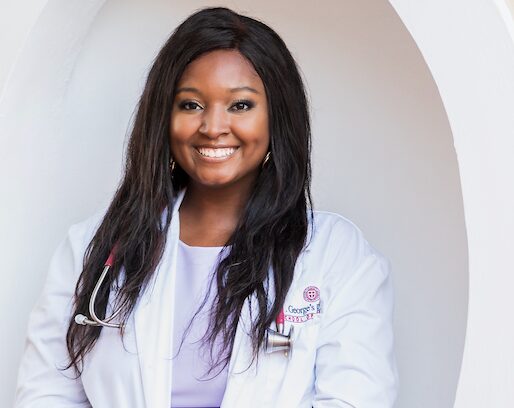
Vashti Price is a third-year medical student at St. George’s University. She holds a Bachelor of Science in Biology from the University of Louisiana at Lafayette, a Master’s in Biological Sciences from Alcorn State University, and a Master’s in Health Sciences from Meharry Medical College. With a strong passion for public health and health equity, Vashti has dedicated much of her time over the years to volunteering with underserved populations, including individuals experiencing homelessness and children in need. Her commitment to service continues through her involvement with the American Medical Women’s Association, where she serves on the Gender Equity Task Force and the Sex & Gender Health Collaborative Committees. Vashti is particularly interested in the intersection of medicine, public health, and community outreach. Outside of her academic and clinical pursuits, she enjoys spending time with friends and family, attending festivals, exploring new cities, and winding down with a good Netflix series.
Meghan Etsey, MS4
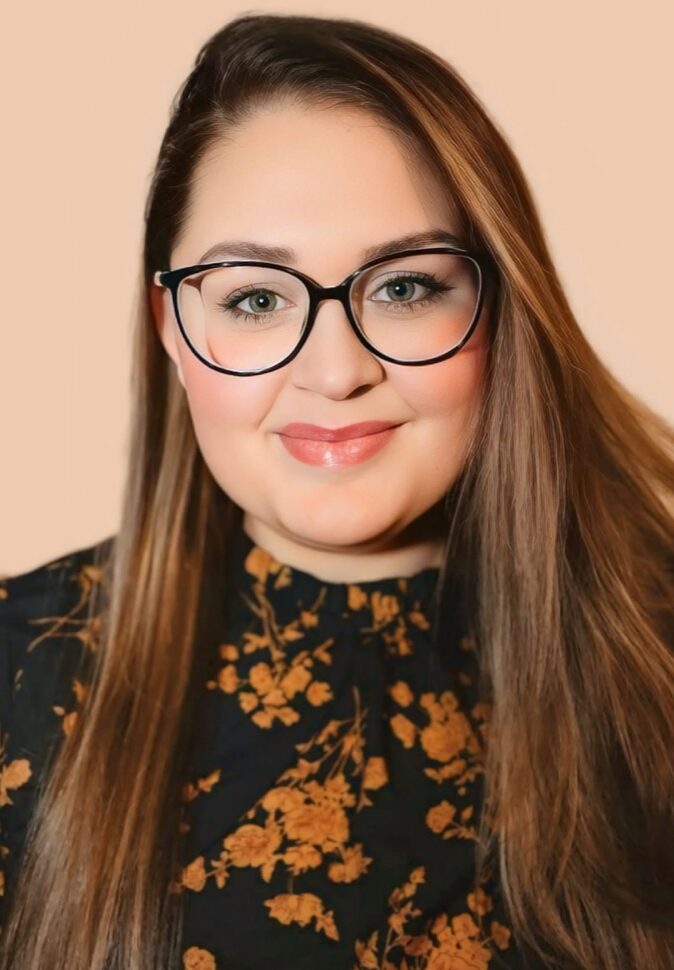
Meghan Etsey is a fourth year medical student from St. George’s University. She has a Bachelors of Arts in Biology and a Bachelors of Arts in Nutrition and Dietetics from Bluffton University in Bluffton, Ohio. She served as the President of the St. George’s University’s Women in Medicine chapter in St. George, Grenada where she expanded relationships with the community and worked towards educating women and helping the youth. She is also a member of the Gender Equity Task Force and Sex and Gender Health Collaborative Committees within the American Medical Women’s Association. When she is not pursuing medicine, you can find her with her friends and family on different road trips and adventures exploring the world.