
Authors: Dr. Joanna Georgakas, Vashti Price, Meghan Etsey, Dr. Stephanie Wellington
“Our Voices, Our Future” is a podcast by the Gender Equity Task Force of the American Medical Women’s Association that explores the challenges, stories, and successes of those working to advance gender equity in medicine. Through candid conversations with changemakers, advocates, and leaders, each episode dives into issues like pay gaps, leadership disparities, and inclusive workplace culture. Tune in to be inspired, informed, and empowered to take action. Full episode listening links are available below the transcription.
Dr. Georgakas:
Welcome back to Dr. Anne, Multidimensional Women in Medicine. I’m your host, Joanna Georgakas.
Today, we have Dr. Stephanie Wellington, also known as the “Nurturing MD.” Dr. Wellington is an award-winning Neonatal ICU physician, international keynote speaker, and certified professional coach. Dr. Wellington is known for her talk, “Five Steps to Restore Your Energy to Live and Lead.” She’s also been featured as a contributing author in Stat Magazine, KevinMD, and the Miracles and Moments of Grace Anthology. Dr. Wellington is also the founder of Nurturing MDs and a single mom to two amazing kids.
Dr. Wellington, thanks so much for chatting with us today.
Dr. Wellington: Thanks for inviting me. I’m so great to be here.
Dr. Georgakas: Of course. I first became familiar with your work through the AMWA Facebook group, actually. For those of you listeners who don’t know, Dr. Wellington posts pretty much daily in the group some inspirational quotes that personally have kept me going on harder days. So let me begin by saying thank you.
Although kind of a small daily post, I definitely come across your posts on harder days after clinic and feel empowered and a little less alone as a result.
I’ll read one of the more recent ones. Dr. Wellington writes:
“A physician is bombarded with patient symptoms, perspectives, pathology, disease, and dis-ease, all of which slowly influence and impact your energy. Without clear strategies to release the dis-ease, physician well-being remains a theory and a goal yearning to be achieved. Releasing the energy that does not serve your highest good brings you closer to ease and flow. Healing the emotional, mental, and spiritual wounds of the journey gets us closer to our desires. Shifting perspectives so that you look for lessons in each experience allows you to breathe life into the present moment.”
That was a powerful quote.
Can you talk more openly about why there’s a need to kind of talk more openly and support each other as women in medicine?
Dr. Wellington: Absolutely. As we see more and more women coming into medicine, I think it’s important for us to acknowledge that we’re coming into a field that historically has been male-dominated. And the structures and the climate of medicine that have been beneficial and allowed men to succeed don’t always support us as women, because we bring some different qualities, some more feminine qualities, an ability to be more in connection with our own emotions and feelings that we haven’t really seen in medicine in the past.
And why it’s so important for us to talk about it is that as we go through these challenges that we encounter in medicine, I heard you say the word isolation. You don’t feel so alone. One of the purposes of me posting these inspirational posts, both on my Facebook group as well as AMWA and some other groups, is so that we understand that we are not alone in this.
That was one of the powerful things I found, even at the AMWA conference this summer, is that as I listened to other women in medicine talk about their journeys, I saw myself. So we are all going through very similar experiences.
But when we go back to our clinical settings or our academic settings, where we’re fewer in number, we then have to keep up the persona that comes with putting on our white coat and our stethoscope and being that professional woman. We almost stuff ourselves down and deny ourselves the emotional journey that we have as we face challenges, whether it’s challenges as we move up the ladder in medicine, or challenges that we face as we encounter patients who have uncertain prognoses, or even just the daily interactions with one another and what that all means.
The more we’re able to reach out to one another and find that safe space to have those conversations, the more we see that our vulnerability is not a weakness. It’s really our opportunity to learn and grow, allowing it to develop even more into a strength.
Dr. Georgakas: Absolutely. I find that so powerful and definitely true. I think hearing so many women speak and kind of getting to hear other women’s stories, even for me as a medical student, still early on in my training, I found it really empowering. And it kind of made me realize that, you know, hey, I can do anything, because there are people who are like me who have done this before.
Dr. Wellington: Yes. I’m more senior than you, 25-plus years. This was not a conversation that we had when I was coming through medicine. So, you went through residency and fellowship, and then you took the next-level position, where you pretty much worked in that position as it was already pre-designed.
That almost has you not tapping into your natural gifts and talents. So, for me, I kept finding myself feeling out of place. I found myself not quite sure why it was that when I was looking at my mentors, and looking at the physicians around me and senior to me, they seemed to be able to tap into their own ease and flow. From the outside, looking at them, it seemed that way.
Then, for me, from the outside looking in, yes, everything looked great. But within myself, I kept feeling like there had to be something more. There was something that just wasn’t quite right.
As I went through my journey in medicine, I’ll just kind of segue and say that’s how I found coaching. It was acknowledging that place of there being something more than I was being called to do. There were questions that I had that medicine itself wasn’t necessarily answering.
Where I found myself constantly being nudged was when I was at a patient’s bedside at three AM in the morning, the patient not doing well, and I had to make that call to the family. In the throes of doing no harm and wanting to do the best for the patient, there was a part of me that felt like here I am delivering such bad news to a parent who had all their hopes and dreams on having a successful pregnancy and delivering a full-term baby.
And yet now they have this preterm baby, and they’re getting this call saying, “Come to the hospital. Your baby’s not doing well.”
The strategies that I had learned were to detach from it, compartmentalize it, and kind of just be very stoic about it. But that really wasn’t working for me. And as I found myself not connecting with those strategies, that’s when I found life coaching.
It really opened up the doors for me because it shifted how I perceived both myself and the experience of the parents in medicine. Rather than it being about how I can fix it for them, it really became about how we partner on this journey, and how we navigate the ups and downs. How do we not even make it okay for them, but allow them to go through the emotions that they’re going to go through, whether it be the disappointment, whether it be the anger that they redirect at the staff and at me, or whether it be just the pure sadness of it all.
Really, having to provide space for them to mourn so that they can then pick up the pieces and begin to rebuild their lives. So much of that process is a NICU mom or dad process, but it’s also a human process.
And that’s the same process that I see happening for us as clinicians, as we don’t acknowledge the impact that dealing with vulnerable patients has on us. As we don’t acknowledge that we have families who might be aging and maybe going through their own transitions, and we still have to stuff that away and push that down to be able to come to work and be at our best.
Through that process with families, and that’s really where my coaching first began, was working with families. It then evolved to support medical professionals, including physicians, nurse practitioners, and physician assistants.
Dr. Georgakas: Yeah, absolutely.
I know that you kind of founded the Nurturing MDs kind of out of that mission, out of the insight that you had. Can you tell us more about your company?
Dr. Wellington: Sure. So Nurturing MDs is my suite of coaching programs, which I offer primarily to physicians at any level in their career, as well as to other medical professionals. What I like about it is that it’s really a blend of some of the practical career-building skills with the connection to your calling, to your spirit, to your soul in terms of, you know, how do you navigate, how do you put all these pieces together, and navigate and create a life of ease and flow, and release some of the struggle that we go through.
I work with people at different stages in their careers, from the early-career physicians and physicians-to-be who are looking at, you know, what is it that I want to do in medicine?
We go through the different rotations and specialties, and everything seems really great. But can I narrow it down to find the one or two areas that I really want to work in? What are the type of patients that I want to work with? Where’s the environment that I want to work in?
So that instead of, you know, oftentimes what we do is when we finish medical school, we go directly to residency. Then, after residency, we look for that job because we have loans to pay, and that’s a natural progression. How do we begin to look at that next position as really the best match for us, rather than I’m going to take this position because it’s the best salary for us?
So, really teasing out how I’m going to find what I need so that I’m not just surviving in medicine, but I’m positioning myself to thrive in medicine.
Dr. Georgakas: Yeah, I think that’s incredible and something that I think often gets overlooked. I know, speaking from my experience as a medical student, that I have a lot of attendings and people around that I can kind of go to for advice. But I know from my work with AMWA and on the Gender Equity Task Force, it seems like the higher up you get in your training, and as we all become attendings, the amount of support and mentorship we have dwindles down.
That’s perhaps when we need it most, like you were talking about. The need for finding a position that works for you, helps you succeed, or how to become or apply for the chair of a department, or venture into another field related to medicine.
How are you able to fill this gap through your role as a professional coach, and kind of looking at not necessarily medical students, but those attendings and residents, and people in higher-up fields within medicine who are seeking help and don’t necessarily have that network that I have as a medical student?
Dr. Wellington: So one of the things that I think is so very important is to understand, and as you said, that as a medical student, you have a great network. And as you move through to that next level, that begins to fall away, as you mentioned.
And so it’s really critical at these early stages to begin to put in place, very strategically, the people and the places and the opportunities that you’re going to need to grow to your next level. It also depends sometimes on where you are geographically.
You might attend medical school in one area and then relocate to a totally different area of the country to train. Then you want to relocate to someplace else for your career, and where you’re going to finally settle. But there are opportunities all along the way for you to connect and network with the people where you ultimately want to be.
For example, conferences. For example, doing away rotations and really learning how to nurture those relationships and build those relationships. And not with the focus of, well, how are they going to help me later on, but really, how do we become a partnership or build a relationship so that we are truly colleagues.
So that you become the next right person that they think of when it’s time for an opening in a position.
So it’s the same thing as we’re moving up the ladder in terms of our academics. There are going to be people that you’re going to meet along the way that you get to foster relationships with. A lot of it really is relationship building and asking the key questions of them to help you position yourself for that next level, depending on where you want to go, whether it’s clinical or academic.
Oftentimes, we get so bogged down with just doing the work that we need to do at hand that we don’t realize that within it is the opportunity for what’s next for us.
Dr. Georgakas: Yeah, absolutely.
Can you tell us more about the talks you give on this and how that has molded into your own career and your own perspective on how you practice medicine?
Dr. Wellington: Sure. So it’s interesting because it’s taken me a while to blend the two. It wasn’t always the easiest thing to do because when you’re at work, especially the work that I do in the neonatal intensive care unit, my focus is clinical. My focus is on the babies. My focus is on making sure they have the best outcomes and that the families are updated and know what the plan is for the babies to go home.
What I didn’t really fully embrace and realize until I stopped, took a look back, and really reflected on it is that all along the way in that journey, I was incorporating the two. And because I was incorporating the two and working with the residents, they also benefited from seeing how the two worked in parallel.
So it wasn’t that I was just doing, you know, in my mind, “I’m doing the medical. I’m doing the procedure. I’m doing whatever is necessary to care for the patient during the day. I’m updating the parents.” But because I brought that other piece of life coaching, it became more than just giving the parent the update.
It became about figuring out, for them, what the information that I give you means. So if I’m telling you about changing your baby’s status, what does that mean for you? It’s okay that you understand the technical part, but what does it mean for them in terms of their life?
Does it mean that if my baby’s doing a little bit better now, maybe I can have a family member come and sit with the baby so that I can take care of other parts of my life? Or my baby’s not doing as well, and I want to be the one who’s here. So, who do I need to build out in my team to support my other children?
The same comes for us as well. What do we need to help build out and round out our experiences so that we have everything covered and we don’t feel like we’re leaving pieces behind as we pursue our medical careers?
Because now, especially as women in medicine, many medical students and residents have families very early on. When I trained, it was like you waited until you finished medical school. Maybe there were three medical students who had babies during medical school, and maybe two more during residency, and they had a baby in the third year.
But now we’re in a great place where we’re building our careers while having families. So, realizing that we need to put the other structures and pieces in place so that when we are in the clinical setting, that can be our focus, and we don’t have feelings of guilt or not being there for our kids because we’ve taken care of them as well.
Dr. Georgakas: It sounds like the work you do as a life coach has really lent its hand to your practice in medicine. Not only being able to have that perspective to think holistically about your patients and how they’re doing, but also to provide support for yourself and think about what you need to make sure that you get through all these cases.
Furthermore, even in your work with residents, you’re kind of building that pathway for the next generation to also feel that same support and pathway.
Dr. Wellington: I think that’s really important. I mean, when you look at the numbers and you look at the reports of the healthcare crisis and the physician shortage, it’s a little heartbreaking because it really is a phenomenal career and a phenomenal way to connect with people.
We’re an aging population. We need physicians to be able to take care of us and to meet us where we are. I think exactly what you said is right. It’s really important for the generations that are coming in to have that support and to know that this can be a career that will address all the areas of their life.
Dr. Georgakas: So I have another question tangent to your work with Nurturing MDs.
What are some of the challenges that you face along the way in building this professional coach role, in addition to working as a practicing physician in the neonatal ICU?
Dr. Wellington: So the biggest challenge that I had was myself. I say that to mean that throughout the first half of my career, it was about medicine. There was the perception of what I thought medicine was.
We know medicine is about the clinical aspect, and then there’s the research aspect. The words that come to my mind are very focused, very clinical, very mental, and erudite. Life coaching, to me, meant something more holistic, almost touchy-feely, more emotional, that type of thing. That was my interpretation of it.
When I’m at the table, and we’re talking about the evidence-based medicine and the latest research, and what’s the next best technology for improving survival rates for our early birth weight baby, how does life coaching fit into that? And how does life coaching fit into medicine as a whole?
I was comparing the two for a long time until I came to a place where I had to understand the value that it brings, both to myself, to the families, and to medicine as a whole.
Once I was able to bridge that gap, and once I was able to understand how they merged and worked in tandem, that’s when I was able to really overcome the challenge and move forward with it, and really move myself out of the place of judging it.
Dr. Georgakas: Yeah, absolutely. And it seems like, too, day to day, working in a clinic as a medical student, we see so much, and there’s so much to process there that it’s really hard to understand that vantage point without having experienced it.
I know that’s something a lot of us struggle with, which is talking to our friends outside the field of medicine, and the gap in understanding of what the day-to-day is like.
Do you feel like that kind of adds to your value as a life coach?
You know, you’ve been through this. You know what the vantage point is. So you’re better able to almost counsel these medical professionals who are in the heat of it, who are seeking guidance and advice.
Dr. Wellington: Yes, absolutely. Because I think exactly what you said is true. Oftentimes, once we’ve made that decision to become a physician, and then we put the pieces in place to have it come into realization within our family, our friends, and our support structures, we now get put on a different level.
I even think for myself; oftentimes, people will come to me for advice and counsel, but who do I go to? I remember I had a really good friend who once said to me, “But you have it all together. You’re a doctor. You have it all together.”
There is that perception that we’ve got it all together. We know what we’re doing because, after all, we see patients every day, and we’re counseling patients, and we’re giving patients direction. So the assumption is that as a physician, you’ve got it all together.
That is sometimes very far from reality. We may have our careers very much on target, but the other parts of our lives might need some support
Dr. Georgakas: Right. It’s so hard to kind of gauge that because you can be very put together and give advice when, you know, sometimes it’s more of a do as I say, not as I do.
Dr. Wellington: Right. I think that as physicians, there’s a persona that we embody when we put on our white coats and our stethoscopes. The public sees it, and they project it onto us. Then we also take it on, and we continue to personify it.
I remember once, very recently, I was reading on social media, and I saw an article that talked about how the physician can cry, and that we need to allow it and let it be okay that we cry. You may not cry in front of your patient, but can we have a conversation about what’s happened, whether it be a patient passing, a poor prognosis, or something that just emotionally impacts you, and be okay with an expression of emotion?
So when I train and when I practice, I’ll say to my team, “You know what, I need a minute. I’ll be right back.” And I may go into the call room and process my emotion privately, then bring it together and go back out.
Dr. Georgakas: Especially in the ICU setting, when you deal with death pretty frequently and really hard, challenging cases. However, the next patient is there and needs your attention. It’s almost a better value when you’re able to process your emotions more quickly and take that time for yourself in order to better provide care for the next person coming in.
Dr. Wellington: Right. That is true. The piece of it that we don’t bring back, however, is that the same way I needed to process my emotion, so did everyone else. So does the nurse. So does the social worker involved in the case. So do the residents. So do the medical students who are rounding. And even staff who may come into the unit once a week to do therapy and then come back the next week and don’t find the patient.
What happens is that we just move on. We never really get that opportunity to heal. The families have a phenomenal opportunity because they have their process, depending on their culture and their religious beliefs. They’ll have whatever ceremonies or funerals they’re going to have with their family, where they connect and have the opportunity to bring closure.
Whereas you, as the physician and as the medical team, just move ahead. So sooner or later, all of that does indeed add up because we’re not taking the time to process it.
For some people, and I’m going to raise my hand and say myself included, for me, it was comfort eating. So after we do all of this, let’s go out and eat. It got to a point where I said, “You know what, Stephanie, this is not really the most healthy response for you.” Let’s order food, let’s go out to eat. It’s stuffing down your feelings again. It’s not really allowing you to process it
So all of these things are just awareness. The more awareness you have, the more you can begin to say, “What do I need to do to make myself whole and allow myself to function in an even better place?”
One of the things I learned through coaching is that when we hear the concept of self-care, people often think of yoga classes, massages, or the vacation they’re planning. But I like to think of self-care as the things I do every day, consistently, to develop habits that really support me in my life and career.
Just incorporate a few things, maybe three or four, and have those in your back pocket. Those things that help you shift your energy and acknowledge that, right now, I’m not feeling great. I’m not in a good place. But in a few moments, if I do this, I can restore my energy so that I can go out, live, lead, and function in a great place.
Dr. Georgakas:
Do you get the opportunity to work one-on-one with people on how to develop these coping skills and reach that point where they have that sense of wholeness?
Dr. Wellington: I absolutely do.
Dr. Georgakas:
How often do you get to do that in a week?
Dr. Wellington: So, most clients I probably connect with at least twice a month. Every two weeks, we’ll connect, and we’ll put together strategies.
Because what’s important is this, you have to personalize that strategy. You have to make it yours. So we may discuss where you are, what your triggers are, and what things you need to put in place. Then, you go out and try them, and come back to give me some feedback.
Then let’s see what we need to tweak. What things do you need to identify about you and your process so that you can further refine it until it’s really just like a well-oiled machine?
Dr. Georgakas: That sounds fantastic.
How do people get in contact with you? Do you do these sessions in person, or do you offer Skype or FaceTime?
Dr. Wellington: So, usually I just use the phone. It works really well. And I think what’s nice about the phone is that when you’re speaking with clients, you can set things up in terms of timeframe and whatnot, but the phone is great because you can do it anywhere. You can do it in your office. You don’t need a whole lot of technology.
Some people do like to do it in person. So if you’re local, I’m in the New York area, and if you’re local to the New York area, I’ve definitely sat down and met with people in person. But the phone gives me a wider reach, and there are no geographical boundaries there.
I’m definitely flexible in terms of time because I think that there’s such value in getting to know yourself on this journey. We’re waiting for change to happen within the structure of medicine, and it is happening. It’s probably happening a little slower than what most people would like.
But when you can empower yourself in that very moment to shift and to access what I like to think of as your core values, and be able to use them to move through and create more ease and flow, that’s when you’re at your sweet spot in medicine. You’re operating in your genius zone.
Dr. Georgakas:
How do people usually contact you? Like after you give a talk, or are they able to connect with you through your website, nurturingmds.com?
Dr. Wellington: Both. They can do it through nurturingmds.com. They can email me at [email protected]. Or exactly as you said, when I do speaking engagements, I connect with people there as well.
Dr. Georgakas: That’s amazing. I’ll make sure that we have that contact information, if it’s okay with you, in the description of this episode.
Dr. Wellington: Sure.
Dr. Georgakas: I know in the beginning we started off chatting about all the hats that you wear, from keynote speaker, professional coach, neonatal ICU doc, founder of Nurturing MDs, and single mom.
How are you personally able to balance each of these roles?
A bigger scope question: What does balance mean to you personally now that you’ve had this experience?
Dr. Wellington: In complete transparency, balance was not in my vocabulary for the beginning part of my career. Interestingly enough, my son is now 20 years old. He’s in college. When I dropped him off two years ago as a freshman, one of his parting statements to me was, “You know, Mom, during my early childhood, you really were tired all the time.”
I really was. That really became my mantra: that I was really tired. Because I did shifts, 24-hour shifts, and 12-hour shifts, in an ICU setting. So I was emotionally tired, physically tired, and spiritually tired most of the time.
As I embraced more and more of the teachings and the lessons that I was learning through life coaching, that became less of an issue. What happened was that I integrated them in building out this process.
One of my very first speaking opportunities was in Dallas, Texas. It was during their school vacation, and the three of us went together. They got to see me present to a group of therapists. So throughout this part of the journey, they have been very much a part of it.
Now that they’re older, my son actually loves finance. He was able to write and be a guest blogger on my blog and write about finance.
Dr. Georgakas: That’s incredible.
Dr. Wellington: Yeah. My daughter is into theater, and she understands all of the iMovie and that technology. So she’s helped me with creating little mini videos. And when I have clips from some of my speaking opportunities, she’ll edit them.
So, incorporating them into it has really benefited me, I think, as well as them. It benefits me because I don’t feel like I’ve left them out. They’re part of it. It’s benefited them because they get to see the breadth of opportunities that exist in the world today. It’s so very different now than even when I was brought up. They get to see that there are so many different things that you can do.
Dr. Georgakas: Definitely amazing, and a great opportunity to kind of learn and see what you do as their mom.
Dr. Wellington: Right. And so for me, balance has become doing what really speaks to my soul. There are times when I might be working on a project for Nurturing MDs, and I might be up half the night, and it’s okay. The kids are older now, but also for me, it’s something that I’m passionate about. It’s something that I feel a purpose in.
I feel that it’s really meaningful and contributes to the medical community and the world at large. So if I’m putting in a little extra time now, it’s all right.
Similarly, I did take some time off from my clinical responsibilities. I’ll be going back shortly. But when I do that, it’s okay. I’m connecting and making a difference in families’ lives.
So that’s where I find my balance now. Not so much in terms of balancing time, but looking at how this really feels. Does this feel really good for me, and am I making a difference? When I’m in that space, then I define that as balance.
Dr. Georgakas: I think, too, the piece you said about staying up late, but it being okay because you’re so passionate about it, is huge. When we’re just focusing on our careers and on medicine and the clinic, we lose sight of that passion that originally jump-started our interest in the field of medicine.
Oftentimes, doing things you’re passionate about on the side, like for me, doing this podcast and getting to chat with different people, reinvigorates you and keeps you going. That passion for the project you’re working on bleeds into your clinical practice as well, giving you more life.
Dr. Wellington: Exactly. It really feeds your soul. The things that you’re going to learn in doing this podcast are going to be such a blessing to whatever you end up doing in medicine.
I think it’s important for us to really look for that holistic piece, to bring all of our pieces together. So often, I think we’ve given medicine almost 98% and feel like we have nothing left, or we compartmentalize it. Medicine is over here, and whatever else we do is separate.
But I think the skills and the talents that we have, when we merge them all together, medicine can only win, and we can win.
Dr. Georgakas: I think that’s so well said.
Just a note to end on, do you have any advice for those listening in on pursuing passions outside of medicine or maintaining a sense of wholeness?
Dr. Wellington: Yes. Probably the first step in doing that is getting really quiet. Because there’s so much noise today, and there are so many distractions. You can survey 20 of your colleagues and friends, and they’ll tell you 20 different things that you should do to find your peace and your passion.
I think when we sit quietly in our own space, we begin to see where we’re being nudged. We get to trust our intuition and allow it to guide us.
One of the exercises that I give clients is to really look at what things that you do not like. Because we always know what we don’t like. And then to look at what the things are that you do like to love.
Once you’re able to identify that, you can begin to figure out where you can build something. Is it that you love teaching residents? Is it that you love teaching families? Is it that you keep seeing the same questions come up over and over again in your clinics, and how can you address that?
Can you create videos and use what you love about the technology that exists to create videos that you can run in your office, so that families sitting in the waiting room get the information that they need?
So I think there’s such a wonderful opportunity for us to be creative, for us to be happy, and for us to, and I don’t want to sound Pollyanna-ish, but I really do think that we’re just beginning to scratch the surface of what’s possible in medicine. I truly feel that way. I think there’s a lot of opportunity for all of us to figure out how we fit in and what our contribution to medicine is.
Dr. Georgakas: Absolutely. Dr. Wellington, it’s been such a pleasure talking to you. And thank you again for sharing your posts online. I definitely find them helpful, and even talking to you today has been so inspiring to me as well.
I hope to all of you listening out there that you’ve learned a lot from Dr. Wellington. For those who want to hear more, I’ll provide links to Dr. Wellington’s website, nurturingmds.com, and her other contact information in the description of this episode.
I hope to all you listening out there, too, that you’ve learned a lot from Dr. Wellington. For people who want to hear more. I’ll provide links to Dr. Wellington’s website, nurturingmds.com, and her other contact information in the description of this episode.
Again, Dr. Wellington, thanks so much for chatting with us this morning.
Dr. Wellington: You are very welcome. Thank you for having me.
Dr. Georgakas: Absolutely. And thanks to all the listeners tuning in.
If you’re interested in learning more about the podcast or being featured on an upcoming episode, you can find our contact information in the show notes. For more ways to be engaged in the community and meet more incredible women in medicine, join the American Medical Women’s Association at amwa-doc.org.
Hope to see you at the next conference. And for now, have a great day, and don’t forget to light a spark of positivity in whatever you may do today.
Links to our podcast:
RSS https://rss.com/podcasts/our-voices-our-future/
Apple Podcast https://podcasts.apple.com/podcast/id1805991643
Spotify https://open.spotify.com/show/5E59jvuFQOjSXfLrjQiy0P
Podcast Index https://podcastindex.org/podcast/7278557
Fountain https://fountain.fm/show/7278557
True Fans https://truefans.fm/82727577-2b37-5929-aa2e-1574d478b177
About the Authors
Joanna Georgakas, MD
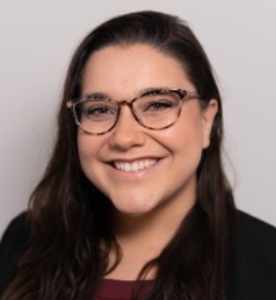
Joanna Georgakas, MD, is a psychiatrist and a Clinical Fellow in Geriatric Psychiatry at Mass General Brigham in Boston, MA. Dr. Georgakas received her BA from Middlebury College, where she majored in Neuroscience and Gender, Feminist and Sexuality Studies. She earned her medical degree from the Alpert Medical School of Brown University and subsequently completed her psychiatry residency training at Brown, serving as Chief Resident. Dr. Georgakas’s academic work has focused on the “leaky pipeline” phenomenon for women in STEM fields and feminist science studies. She has been an active member of the American Medical Women’s Association (AMWA) since 2018, where her contributions include co-founding the Brown University AMWA chapter and serving on the AMWA Gender Equity Task Force. She also created the podcast series “ Doctor and ____: Multidimensional Women in Medicine” (now run by incredible students and called “Our Voices, Our Future”) to elevate the narratives of women advancing gender equity in medicine. In recognition of her contributions, Dr. Georgakas was a recipient of the AMWA Eliza Chin Unsung Hero Award.
Vashti Price, MS, MHS, MS4
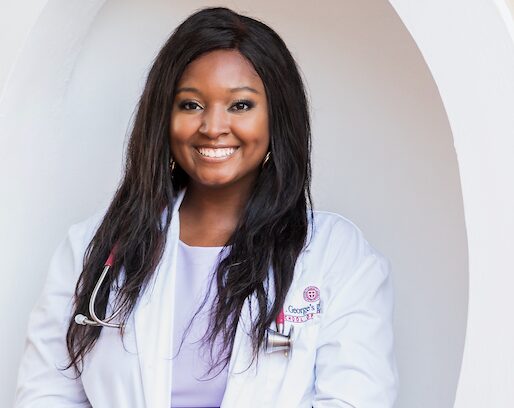
Vashti Price is a fourth-year medical student at St. George’s University. She holds a Bachelor of Science in Biology from the University of Louisiana at Lafayette, a Master’s in Biological Sciences from Alcorn State University, and a Master’s in Health Sciences from Meharry Medical College. With a strong passion for public health and health equity, Vashti has dedicated much of her time over the years to volunteering with underserved populations, including individuals experiencing homelessness and children in need. Her commitment to service continues through her involvement with the American Medical Women’s Association, where she serves on the Gender Equity Task Force and the Sex & Gender Health Collaborative Committees. Vashti is particularly interested in the intersection of medicine, public health, and community outreach. Outside of her academic and clinical pursuits, she enjoys spending time with friends and family, attending festivals, exploring new cities, and winding down with a good Netflix series.
Meghan Etsey, MS4
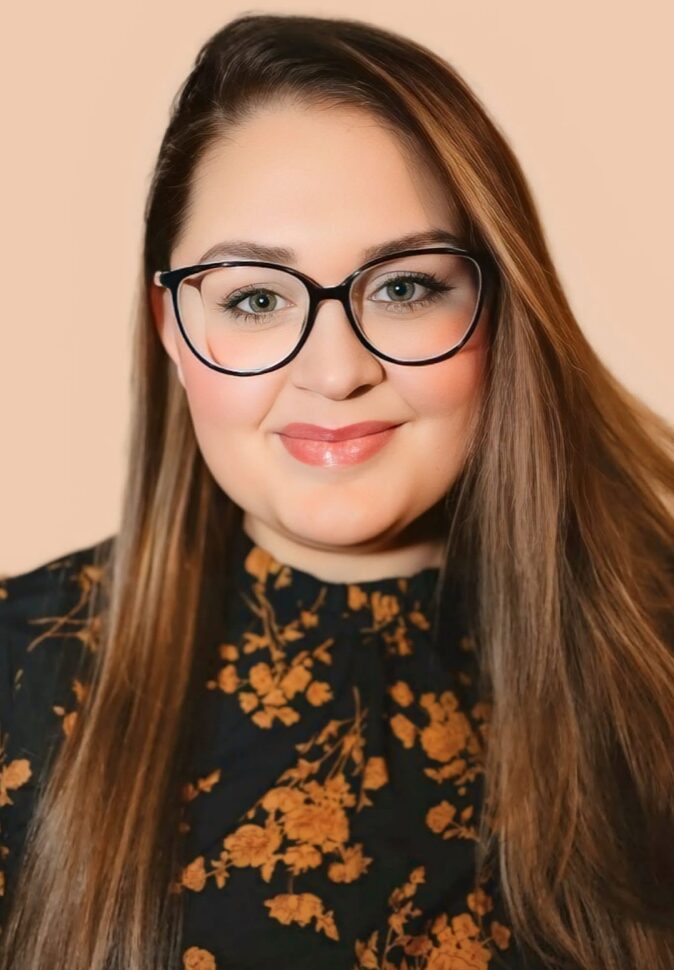
Meghan Etsey is a fourth year medical student from St. George’s University. She has a Bachelors of Arts in Biology and a Bachelors of Arts in Nutrition and Dietetics from Bluffton University in Bluffton, Ohio. She served as the President of the St. George’s University’s Women in Medicine chapter in St. George, Grenada where she expanded relationships with the community and worked towards educating women and helping the youth. She is also a member of the Gender Equity Task Force and Sex and Gender Health Collaborative Committees within the American Medical Women’s Association. When she is not pursuing medicine, you can find her with her friends and family on different road trips and adventures exploring the world.