
Authors: Dr. Joanna Georgakas, Vashti Price, Meghan Etsey, Dr. Laura Helfman on behalf of AMWA Gender Equity Task Force
“Our Voices, Our Future” is a podcast by the Gender Equity Task Force of the American Medical Women’s Association that explores the challenges, stories, and successes of those working to advance gender equity in medicine. Through candid conversations with changemakers, advocates, and leaders, each episode dives into issues like pay gaps, leadership disparities, and inclusive workplace culture. Tune in to be inspired, informed, and empowered to take action. Full episode listening links are available below the transcription.
Dr. Georgakas: Welcome back to Dr. Anne, Multidimensional Women in Medicine. I’m your host, Joanna Georgakas, and today we’ll be chatting with Dr. Laura Helfman. Dr. Helfman is an Emergency Medicine Physician, advocate, educator, and whitewater river guide. Dr. Helfman, welcome to the show.
Dr. Helfman: Thanks for having me.
Dr. Georgakas: You’ve divided this episode into two parts. During today’s episode, we’ll talk with you a little more in-depth about your role as a whitewater raft guide, as well as a wilderness medicine educator. In our next episode, we’ll focus more on your advocacy work.
Dr. Helfman, would you mind just telling our listeners a little bit about what it really means to be a whitewater raft guide?
Dr. Helfman: Well, thousands, probably hundreds of thousands of people enjoy getting out into the outdoors. One of the ways they do that is by taking whitewater river trips, which involve rapids ranging from very mild to very extreme. I’m one of the guides who sits in the back of the boat and makes sure that people, one, have a good time, and two, don’t get into any trouble or have any injuries.
Dr. Georgakas:
That’s pretty cool. How did you first get into that?
Dr. Helfman: Well, I started canoeing when I was about 12 or so, and that happened because I’d had a concussion from falling off a bicycle. When I went to summer camp, the doctor said that I could swim, but I couldn’t dive. Every time you take a swim course at a summer camp, there’s a dive involved. Since I would have been doomed to failure, they put me in a canoe course, and the canoe course didn’t involve a dive.
That got me interested in canoeing, and over the years, whenever I could, in any fashion, I would get on a river and take a canoe trip. Ultimately, that led me to discover whitewater rafting, which is essentially the same thing but in a rubber raft rather than a canoe.
I discovered a school in North Carolina that offered kayak and canoe instruction as well as river guiding. So I went down for a course. I met a lot of really interesting people who were not only in the whitewater industry but also in various professions, such as doctors, nurses, accountants, lawyers, you name it. Everyone was represented, and they were all having a good time, following their passions and not making their entire lives their profession, for which they were educated. So I thought maybe I would do the same.
Dr. Georgakas:
Was there a particular moment when you kind of decided, “I really want to pursue this and make this part of my career”?
Dr. Helfman: Well, so I actually didn’t get down to the center in North Carolina, where I really got my start in the professional world, until med school. It was during my last year of med school, actually, almost before graduation. Then, after my internship, I worked for a while before going to residency because of my mother’s illness.
I continued to visit the center with all these great people I talked about. So I didn’t actually start guiding until after I finished residency. I thought that I would guide on a part-time basis for a few years and then get a regular position and be full-time.
Then it turned out I really didn’t need to, because the field of locum tenens, where you go in and do temporary work, is so prominent and prevalent in emergency medicine that I didn’t really need to take one job and give up the rest of my life.
Dr. Georgakas:
So, how do you manage to be both a doc and a river guide?
Dr. Helfman: When I know it’s busier in June, July, and August on the river, then I flex down my ER shifts. It never seemed to be a problem to have work without having to sign a full-time contract. It was easy to go work in a place for a few months and then take a few months off, or sometimes just fly out, work at a place for a week, and then come back and be a river guide.
In the meantime, I made a lot of local contacts in the tri-state area where I live. And when you don’t sign a full-time contract, you can tell the emergency departments when you’re available and when you’re not. They either say, “Great, we want to put you on the schedule,” or “We don’t really need you then.” There’s such a shortage of emergency physicians that I never have any problems getting work when I want to. By not being full-time, I can determine when I work. That’s how I made it work.
Dr. Georgakas:
How did you get the idea to split your time between being a guide and being in the ED? Was there someone you saw before you, or was it, “Hey, this is something I’m really passionate about, and I want to make sure it can work”?
Dr. Helfman: Well, I started out with an unusual career to start with. My mother had breast cancer when I was in college and med school. I did a transitional internship out of med school with the intention of doing locum tenens work anyway and not finishing my residency right away, because I knew if I was in the middle of a difficult residency as she got sicker, I would not be able to get the time I needed for her.
I did locum tenens as an urgent care family doc, general practitioner. I was familiar with that. I was able to spend time with her over the next two to three years until she passed. At that point, I had the locum tenens thing all worked out.
Then I went back to residency in ER and knew that was an option, especially for ER, because the supply of emergency medicine physicians, especially back then in the 90s, was much less than the demand. So I just kept guiding on the side and working.
I think the first year, I did half and half. Then the following year, I said, “I just want to guide full-time over the summer, so I’m going to tell everyone I’m not available. Then in the fall, I’ll see what happens.”
It was never a problem to either go back to where I had been, or to go through an agency to find someplace else, or through word of mouth. So I just kept doing that. I guess I thought that eventually I would find a full-time position and go to that.
But I met my husband, who’s a teacher, so he never had conflicts guiding us all summer. I just kept doing it so that we were spending summers together.
Dr. Georgakas: That sounds pretty cool. I actually never knew that you could pursue different interests, and it was also great that this type of arrangement allowed you to spend some time with your mom.
Dr. Helfman: Exactly.
Dr. Georgakas:
What are some of the benefits that you saw in being able to do both, being an ED physician part-time, but also having time to spend on something you’re really passionate about, being out on the river serving as a guide?
Dr. Helfman: Well, of course, emergency department work is rewarding, but it’s one of the more demanding specialties in terms of crazy hours, potentially very significantly ill or dying people, and situations where you don’t have a lot of time. Everything is done on the fly. You often don’t have any previous knowledge about the patient. Someone may come in after a big motor vehicle accident, and it’s very adrenaline-based, but you’re also working without a lot of information. There can be a lot of tragedy, and people are generally not happy to be there, although they’re usually happy for your care.
That just opposes the river, where people are there to have a good time, and for the most part, everyone is really happy to see you. So I think it’s been nice to have one career that has profound benefits, healing, and hopefully easing suffering, with the opposite side, the benefits of just giving people some joy in life. I think because I had both, I didn’t burn out in either.
Dr. Georgakas: That sounds like a really nice balance.
Dr. Helfman: Exactly. I certainly have classmates, we graduated in ’85, who are really burned out. They can’t retire yet because of whatever lifestyle decisions they made, or possibly just multiple children they’re still helping through college or whatever, but they’re really not happy. And I certainly know river guides who would have been my age if they had kept going, but who stopped because they had issues that caused them not to enjoy it as much. I think by doing both, I didn’t burn out on either.
Dr. Georgakas:
What are some of the challenges that you found along the way of balancing both?
Dr. Helfman:
I think that there are some people in the medical profession over the years who have resented that I set my own time schedule. While I think they intellectually understand that if you don’t sign on full-time, you can’t be required to do various holidays or a certain number of weekends or nights a month, they still feel resentment because they have to do them.
Of course, they are also receiving other benefits that I don’t get, perhaps 401(k) plans, health insurance, or all those kinds of things you get when you work full-time.
I think there are times when I’m a guide when it’s thought, “Well, she has plenty of money, so if not all the people show up and someone has to be bumped, we’ll just bump Laura because she doesn’t really need the money.” But I set aside the time to show up at the river to go rafting, so I think there’s some of that on both ends, where people think I’m getting extra benefits or I’m subverting the system.
But on the other hand, I provide a lot of medical care to guides for free. I often know more about wilderness medicine than some of the other people in the hospital. So if we get someone who comes in with a snake bite or something like that, I’m usually the best person to be involved with that.
I think it has not been that difficult. The biggest difficulty is that, as I make my schedule month after month, year after year, it’s a little more complicated than the average person who puts in their requests for time off and their requests for vacation, and then it’s done for them. I’m constantly working with the calendar and also interacting with my husband, who is a schoolteacher. As long as I’m part-time, I might as well not work when he has school breaks, for instance.
Dr. Georgakas:
So you mentioned wilderness medicine. In addition to your role as a Whitewater River Guide, you also serve as a medical educator, teaching Wilderness First Responder courses. Could you tell us a little bit more about that as well?
Dr. Helfman: Well, I’ve been working as an instructor for Wilderness Medical Associates, which teaches, among other things, Wilderness First Responder courses for laypeople. The idea is that a lot of people go out into the wilderness with little to no medical training, and should they encounter a problem, they may or may not have cell reception, but even if they do, they may not have ready access to advanced care. So the course teaches them a more in-depth education — not just the what, but how to treat and how to improvise in a basically austere environment, which winds up being really good when we have austere environments after natural disasters.
So the wilderness course actually winds up being very helpful even to EMS folks and even physicians, because they may find themselves in the aftermath of a hurricane, tornado, what have you, and need to use their skills without the benefit of the hospital. So that’s what it is. The company is based in Maine, but the courses are held throughout the country.
Although mostly I have traveled just on the East Coast, I will often go to a college campus to teach the outdoor leaders for their outing club, or to a river company, or to a camp, or even sometimes to schools that decide to give this type of education to their students.
Dr. Georgakas: So these are planned courses throughout the country that you’re able to lead and go out and teach.
Dr. Helfman: Right. The outfit or the institution will contract with Wilderness Medical Associates, and then they hire us and provide the instructors, all the materials, and the certification at the end.
It’s a very unique course in that it involves a lot of interaction and simulations. So we’ll take a third of the class who will go out, set them up as patients, give them fake vital signs, fake situations, fake bruises, blood, what have you. Then, the rest of the class teams up in pairs of two and goes out to do the rescue. Often, depending on the length of the rescue, we’ll do videotaping and then review it later. So it’s meant to be a very interactive and experiential education versus a classroom education.
Dr. Georgakas: Yeah, it definitely sounds really hands-on.
What led you to focus on teaching wilderness medicine?
Dr. Helfman: Well, combining the fact that I was doing an outdoor activity that could benefit from such a course, and the fact that the rest of the raft guides needed such a course, it kind of made sense for me to start teaching, if for nothing else, as an in-house way of getting the course.
I also found that I really enjoyed interacting with other outdoor professionals, whether they be hikers, climbers, or whitewater people. And so it was a nice way to do something other than traditional medicine and meet some interesting people. And the more people out there who are trained in outdoor medicine or wilderness medicine, the safer I am, because if they happen to be around when I get injured, they’d be there for me, including my husband, who has been one of my students for a long time.
That has actually been important. It wasn’t a very serious incident, but I got some kind of GI bug and dehydration, and he was pretty right on it as far as nursing me back to health and recognizing what was going on.
Dr. Georgakas: Yeah, it’s definitely vitally important, especially when you’re thinking about going on a longer hike and being out where there’s no cell reception. So the more people who are able to get this training, the better and the safer these trails and outdoor activities can be.
Dr. Helfman: Right. I mean, the best example is when we went for 16 days down the Colorado River through the Grand Canyon, where there is no cell reception. I mean, there are backups. I think someone in our group did actually have a satellite phone, but he didn’t really bring it out. And you could climb up the walls, and maybe you’d be near someone but probably not. So yeah, it’s got a lot of utility for a lot of different types of people. But for medical people, we actually have an advanced course for those who already have basic medical skills.
Dr. Georgakas: I think that’s really cool. I know a lot of peers who are definitely interested in wilderness medicine and education. So it’s great that there is a spectrum of courses available.
For now, I just wanted to say, Dr. Helfman, thank you so much for coming in to chat with us. And thank you to all the listeners tuning in.
Be sure to stay tuned for our next episode, where we will continue our conversation with Dr. Helfman and discuss her role with the American Women’s Hospital Service and her activism work with the Single Payer Medicare for All movement.
If you’re interested in learning more about the podcast or being featured in an upcoming episode, you can find our contact information in the show notes. Thank you to the American Medical Women’s Association for supporting the series. For more ways to be engaged in the community and meet more incredible women in medicine, sign up to be a member today.
Hope to see you at the next conference. And for now, have a great day, and don’t forget to let a spark of positivity in whatever you may do today.
Links to our podcast:
RSS https://rss.com/podcasts/our-voices-our-future/
Apple Podcast https://podcasts.apple.com/podcast/id1805991643
Spotify https://open.spotify.com/show/5E59jvuFQOjSXfLrjQiy0P
Podcast Index https://podcastindex.org/podcast/7278557
Fountain https://fountain.fm/show/7278557
True Fans https://truefans.fm/82727577-2b37-5929-aa2e-1574d478b177
About the Authors
Joanna Georgakas, MD
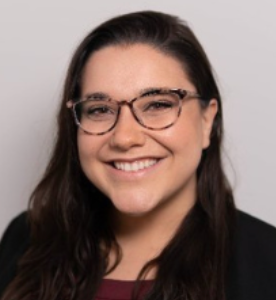
Joanna Georgakas, MD, is a psychiatrist and a Clinical Fellow in Geriatric Psychiatry at Mass General Brigham in Boston, MA. Dr. Georgakas received her BA from Middlebury College, where she majored in Neuroscience and Gender, Feminist and Sexuality Studies. She earned her medical degree from the Alpert Medical School of Brown University and subsequently completed her psychiatry residency training at Brown, serving as Chief Resident. Dr. Georgakas’s academic work has focused on the “leaky pipeline” phenomenon for women in STEM fields and feminist science studies. She has been an active member of the American Medical Women’s Association (AMWA) since 2018, where her contributions include co-founding the Brown University AMWA chapter and serving on the AMWA Gender Equity Task Force. She also created the podcast series “ Doctor and ____: Multidimensional Women in Medicine” (now run by incredible students and called “Our Voices, Our Future”) to elevate the narratives of women advancing gender equity in medicine. In recognition of her contributions, Dr. Georgakas was a recipient of the AMWA Eliza Chin Unsung Hero Award.
Vashti Price, MS, MHS, MS4
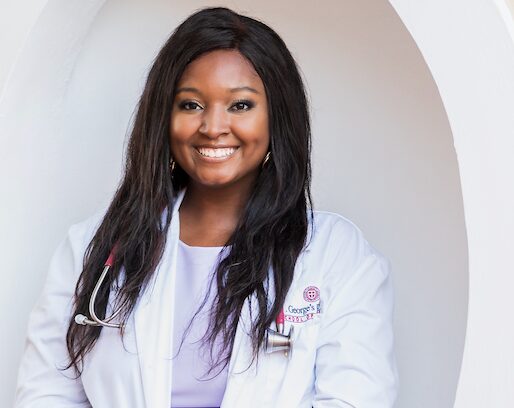
Vashti Price is a fourth-year medical student at St. George’s University. She holds a Bachelor of Science in Biology from the University of Louisiana at Lafayette, a Master’s in Biological Sciences from Alcorn State University, and a Master’s in Health Sciences from Meharry Medical College. With a strong passion for public health and health equity, Vashti has dedicated much of her time over the years to volunteering with underserved populations, including individuals experiencing homelessness and children in need. Her commitment to service continues through her involvement with the American Medical Women’s Association, where she serves on the Gender Equity Task Force and the Sex & Gender Health Collaborative Committees. Vashti is particularly interested in the intersection of medicine, public health, and community outreach. Outside of her academic and clinical pursuits, she enjoys spending time with friends and family, attending festivals, exploring new cities, and winding down with a good Netflix series.
Meghan Etsey, MS4
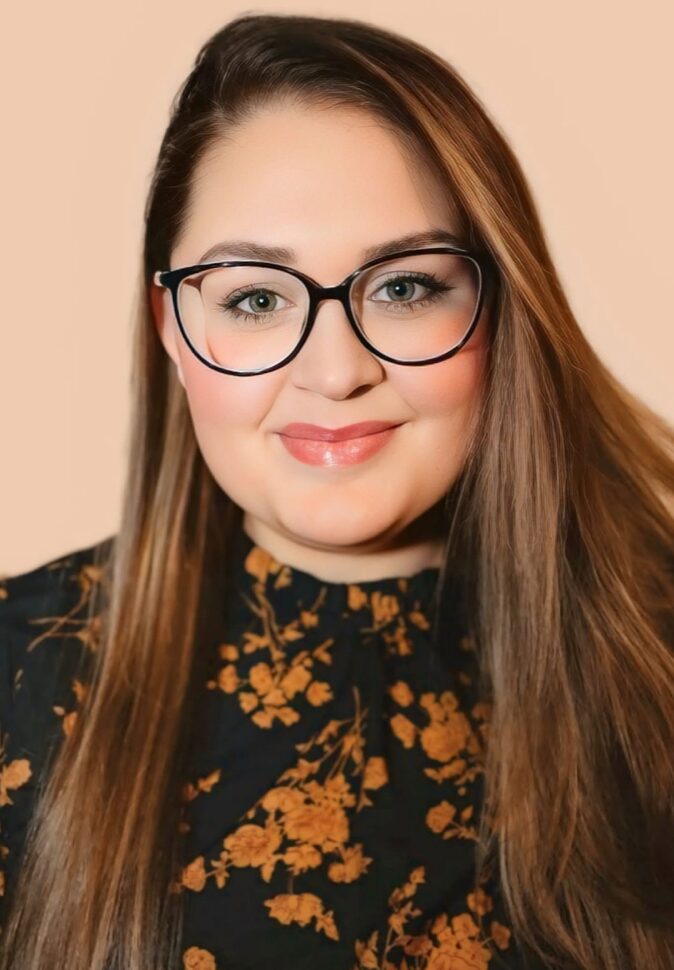
Meghan Etsey is a fourth year medical student from St. George’s University. She has a Bachelors of Arts in Biology and a Bachelors of Arts in Nutrition and Dietetics from Bluffton University in Bluffton, Ohio. She served as the President of the St. George’s University’s Women in Medicine chapter in St. George, Grenada where she expanded relationships with the community and worked towards educating women and helping the youth. She is also a member of the Gender Equity Task Force and Sex and Gender Health Collaborative Committees within the American Medical Women’s Association. When she is not pursuing medicine, you can find her with her friends and family on different road trips and adventures exploring the world.
Formatting, publication management, and editorial support for the AMWA GETF Blog by Vaishnavi J. Patel, DO