
Authors: Dr. Joanna Georgakas, Vashti Price, Meghan Etsey, Dr. Kristina McAteer on Behalf of AMWA Gender Equity Task Force

“Our Voices, Our Future” is a podcast by the Gender Equity Task Force of the American Medical Women’s Association that explores the challenges, stories, and successes of those working to advance gender equity in medicine. Through candid conversations with changemakers, advocates, and leaders, each episode dives into issues like pay gaps, leadership disparities, and inclusive workplace culture. Tune in to be inspired, informed, and empowered to take action. Full episode listening links are available below the transcription.
Dr. Georgakas: Welcome to the first episode of Dr. Anne, Multidimensional Women in Medicine. I’m your host, Joanna Georgakas. For our first episode, we’ll be chatting with the show’s co-producer, Dr. Kristina McAteer, about this series, podcasting in general, and her podcast, Money Minutes.
So tell us a little bit about yourself ?
Dr. McAteer: Well, Joanna, let me say what a pleasure it is to work with you. You are an inspiration, a powerhouse, and an energetic young lady, which inspires me. Thank you for making this happen.
As you know, I am an emergency room physician. I’ve been in practice for a little over ten years now and went to medical school with the idea of going into emergency medicine. I had done some EMT work back in the day and now have circled back, coming into the academic fold.
Admittedly, podcasting was a wonderful niche, as it allowed me to share some of my personal passions while also getting the message out about what we are doing in academic emergency medicine.
Dr. Georgakas: Well, thanks so much for doing this pilot episode with me. I know we’ve been chatting about making this podcast a reality for the past year or so, and I’m so excited that we get to record this episode together.
Dr. McAteer: Me too. I know that time is a limited quantity, and the fact that we got our schedules on the same chapter is amazing. So, highlights to you for being persistent and not letting go of your dream. That’s what it’s all about, being disciplined and keeping moving forward.
Dr. Georgakas: Thanks so much. I thought we’d start this episode by giving our listeners a little bit more information about the series. I mentioned this in the intro, so if you haven’t listened to that, take a listen.
The series is all about highlighting the incredible work women are doing outside of their clinical practice. In doing so, we’re hoping to give these women a platform to share their work while also inspiring the next generation of women in medicine.
The idea for the series came about when I was working with the American Medical Women’s Association on the Gender Equity Task Force Leaky Pipeline Initiative.
Dr. McAteer: Joanna, tell us a little bit more about that.
What is the Leaky Pipeline Initiative?
Dr. Georgakas: Well, I’m glad you asked. The Leaky Pipeline is a metaphor for the attrition of women, not just in medicine, but in all STEM fields. For instance, in medicine, while there are now more women entering medicine than men, the number of women in leadership positions has not risen in proportion.
Research on the Leaky Pipeline and the initiative that I worked with serves to identify reasons why this is and ways to help promote equity in medicine.
Dr. McAteer: Ah, all wonderful things. I know that when we are equals, we can accomplish more together. I love, love, love the idea of women helping each other out and making great things happen.
Tell me about the background of your ideas for this podcast.
Dr. Georgakas: So I worked in the medical student division of the Leaky Pipeline Initiative, and we were discussing reasons why women we knew were leaving medicine at our level in medical school.
The conversation quickly became focused on the perceived limitations that we have as women. Fears of applying to a male-dominated specialty, having a family, being able to take time off to have kids, balancing passion projects, or even being able to pursue hobbies outside of medicine, while trying to balance a clinical practice, family, and other things that may be going on in our lives.
As the medical students kept chatting, we started sharing stories about what kept us going and why we weren’t leaving medicine or planning to.
The common theme was our incredible female mentors and the conversations we’ve had with them. Hearing these women’s stories of success and how they helped combat these challenges was really empowering and showed that maybe these schemes aren’t real.
I began to think that maybe if more women in the early years of training heard these stories, maybe they wouldn’t feel trapped by the perceived notions of what we can or can’t do as women in medicine.
Dr. McAteer: Well, you are an inspiration to us as students. We all love your energy and the passion that you bring to medicine, and it gives us great hope for the future of medicine.
I certainly remember having many conversations with you about this, particularly on our overnight shifts in the ED. Fun times, weren’t they?
Dr. Georgakas: Of course.
Dr. McAteer: At that time, you had shared some of the stories from some of the amazing women that you had met at these AMWA conferences. We started to talk about it as a way to really highlight the work that they did and how they didn’t take “no” for an answer. They accomplished amazing things. So I was excited to hear what you were going to do with that passion and inspiration.
Dr. Georgakas: Yeah, and I was so lucky to have worked with you during that time, too, because I had this idea but no real idea of how to manage it or share these stories. Little did I know that you were a podcaster, and you suggested that we create this podcast together. At the time, I had no clue how to produce a podcast or how to do this on the back end.
You were willing to step up and co-produce the series with me and help guide me along the way. It’s definitely an example of when hard work meets luck. As we talked that night in the ED, this is where the podcast really began. I feel incredibly privileged to interview you for our very first episode.
Dr. McAteer: Well, the privilege is all mine. Please let me make that very clear. You are one exceptional young lady with a bright future ahead. It is my pleasure to be here and share this time with you.
Dr. Georgakas: Well, thank you. The series we’re working on is new, and I know you’re not new to podcasting.
Tell us a little bit more about the other podcast you’re working on, “Money Minutes for Doctors.”
Dr. McAteer: Yeah, I’d be happy to. Money Minutes for Doctors has actually been in process for a little over two years, which is kind of crazy to me to think that it’s been that long. It is a monthly podcast and really came out of the era of physician wellness.
When I was working with young residents, they would come to me and say that they were focused on the idea of physician wellness and knew that it had to be a part of their professional practice. But they were kind of sick of hearing about eating better and exercising more, and they stated that the stress they were dealing with really came from financial matters.
Specifically, what were they going to do with their three-, four-, or five-hundred-thousand dollars in school debt? As I thought about that, I realized that there weren’t a lot of resources for financial matters for young residents, medical students, or even attending faculty.
So I was able to team up with a financial expert, because admittedly, I am not a certified financial planner. Together, we were able to address many of these questions and concerns through Money Minutes for Doctors and hopefully provide information about financial matters that will benefit us all.
Dr. Georgakas: I think that work is so important. I know for me, as a medical student, there’s very little education on financial planning. The majority of us take out hundreds of thousands of dollars in loans, as you mentioned. Often along the way, we’re reassured by our financial aid offices that it’s okay, that we’re going to be doctors, and that we’ll be able to pay back this debt.
How true is that, or real? I know I’ve been rotating, and I work with a lot of attendings who are still managing the debt they took out as medical students.
Dr. McAteer: Well, the times have changed. I think of my mentors who went to school when tuition was a fraction of what it is now. I also realize that during that time, physicians made a lot more money.
Unfortunately, those factors have both changed. Quite simply, the cost of living has changed, and the entire climate of the practice of medicine has changed as well. There are a lot of factors at play.
If the question is whether you can pay back your debt, I would dare say that generally the answer is yes. Obviously, it depends on how much debt you have, where you want to practice, and what type of medicine you want to practice.
The truth is that you have to be very disciplined and diligent in your approach and pay those payments each month. The reality is that oftentimes, it takes an entire career. Ten, twenty, even thirty years is not uncommon when it comes to paying back student loans. It’s something that you really have to plan for and be prepared for.
Dr. Georgakas: Wow.
What advice might you have for me and our listeners who are still in their medical training on working to pay off medical school debt or even managing debt at an early stage in training?
Dr. McAteer: Well, I think it’s probably a lot of the advice that you got from your parents. Understand how good financial discipline will pay benefits long term.
Think about having a savings account. Think about having an emergency fund. Think about investing in a 401(k) or another retirement vehicle early on, because the total amount that you have invested will balloon to a much larger dollar amount versus waiting until you’re in your thirties or forties to start saving.
In terms of debt, again, it’s a very unique situation. Currently, the public student loan forgiveness options are quite wonderful and have really benefited many physicians. They’re starting to come into maturity now.
As you probably know, it’s a ten-year payoff, or you have to make 120 payments on your student loans before the remainder of your medical school loan debt is forgiven. We’re now seeing physicians reach that point of maturity, and oftentimes they’re having one hundred or even two hundred thousand dollars forgiven.
So if you can make that program work for you, it can be a wonderful benefit.
Dr. Georgakas: I think your podcast, Money Minutes, is definitely a needed resource for medical trainees across the board. There are so many different formats and ways to share that information.
How did you settle on using podcasting as a platform for Money Minutes?
Dr. McAteer: Well, I was fortunate enough to have a mentor myself. Podcasting was just coming into favor in the medical community at the time.
What I realized as a working mom is that everyone’s time is valuable. Information is often best digested in small bites and in an on-the-go format. Podcasting answered those issues for me.
The days of spending hours in the library, or putting the kids to bed and then having hours to study, I don’t think that’s the American life anymore. We all have to learn how to fit education into our lives on the go.
A podcast was an easy way to do that, whether you’re sitting waiting for a conference to start, sitting waiting for rounds, maybe even sitting waiting for your OR room to turn over, or commuting in the car. A podcast can be digested at any time during the day.
Dr. Georgakas: You know, as I’ve gone throughout my third year, I’ve really noticed how podcasts seem to be the new platform for medical education now as well. As I’ve been rotating, I’ve found a podcast in pretty much every single specialty.
Do you think this may be the new way we share information with one another across the board in medicine?
Dr. McAteer: Well, it certainly is for now. I think there’s a lot of information coming at you. There’s no doubt that we live in the information age. The tough part is going to be how you accept that information and how you use it.
I think the thing that probably has to happen is a little bit of vetting, in terms of which podcasts are in terms of what are the quality podcasts that you’re going to stay true to forevermore.. As I’m sure you can appreciate, they cover different topics and vary in quality.
The ones that really resonate with you and give you value will likely be the ones that you subscribe to. We just have to make sure that we do our job as producers in giving our listeners a quality experience with great information that they can benefit from.
Dr. Georgakas: I know throughout our journey of making this podcast, you’ve guided me on how to edit, record episodes, and what software to use.
For our listeners out there, what kind of general advice might you have for those thinking about getting started on creating their own podcast?
Dr. McAteer: That’s a great question. I think I would really encourage people to ask themselves, What is your passion? If you have a message that you really want to share, then that’s your podcast.
You have to be passionate about it in order to make it very engaging, exciting, and energizing. As you know, the more engaged the host is, the better the podcast is to listen to.
I also think you need to do a general survey of what resources are already out there. For example, if your passion is orthopedics and there are two hundred orthopedic podcasts available, it would be a big challenge to be successful.
However, if you have a topic that is different or less competitive, then it might be the right time to strike out on your own and start the podcasting process.
Dr. Georgakas:
Any ideas or tips on what formats or software people could use, or things that you use that you find helpful?
Dr. McAteer: Well, that’s a great question. I’m using the same software that my mentor shared with me, and it’s what we’re using today, as I’ve shared with you.
We use Zencastr to record the podcasts. I’ve been very happy with this software. It’s performed very well for me over the years. The updates are free, and the cost is very reasonable, certainly depending on which subscription service you get.
It’s a very reliable software and uniformly performs well. For editing, we use Hindenburg. I think that’s considered the gold standard for editing. It’s not specific to medical podcasting, but it’s used across a variety of platforms, including radio, etc.
It’s very dynamic and offers probably more options than I’m even aware of. I’m pretty sure that’s the case. However, I’m always able to accomplish what I need for this podcast. I always love the way that you can overlay different technologies and music and things like that that really make it a more pleasant experience for your listener.
Dr. Georgakas: I know that’s definitely true. Some advice that you gave me was to really pay attention to the music you pick at the beginning of your podcast, because that’s how it sets the tone.
Dr. McAteer: Absolutely. It’s going to stay with you forever, so you really have to love it.
Dr. Georgakas: I know, too, that you wear a lot of different hats. You’re an emergency physician, a mom, you also sail, and you’ve opened your own wellness medicine clinic.
How do you manage to balance everything?
Dr. McAteer: I’m not sure. It has been a bit of a crazy ride. I’m blessed to have a lot of support behind me, as well as many interests and resources.
As you know, life is really a series of opportunities, and you have to choose which ones you’re going to pursue. I also feel that if you see a need that’s unmet in our medical community, it’s up to you to step up and work for the betterment of others.
That’s one of the reasons I’m a big fan of the American Medical Women’s Association. I’m certainly thankful to them for supporting our series and helping to get the message out.
There are amazing women out there doing amazing things. Oftentimes, they’re shy to take credit for the work that they do. Joanna, this is your time to help bring them to the stage and give them the spotlight they deserve.
Dr. Georgakas: Thanks. I really hope we’re able to achieve that through the series.
Just a note to end on, any general advice for those listening in on pursuing their own passion projects?
Dr. McAteer: Well, I think it’s what we’ve said so far. If you see a need that’s unmet in the medical community, don’t sit back and wait for someone else to come up with the idea or wait for it. Don’t complain about what’s not there.
Look to yourself to give added value to the people that we serve, to our colleagues around us. I think we’re all better off when we work together, and we’re all better off when we support each other. That makes for a delightfully satisfying professional experience.
But I would dare to guess that at the end of the day, when it’s time to reflect, I would guess it also makes you proud of all that you’ve accomplished.
Dr. Georgakas: Well, thank you so much for chatting with us and for sharing your words of wisdom and a little bit about your own projects. Thank you to all the listeners who are tuning in.
If you’re interested in learning more about the podcast or being featured on an upcoming episode, you can find our contact information in the show notes. Be sure to check out the Brown Emergency Medicine blog and subscribe to Dr. McAteer’s podcast, Money Minutes.
Thank you to the American Medical Women’s Association for supporting the series. For more ways to be engaged in the community and meet more incredible women in medicine, sign up to be a member at amwa-doc.org. Hope to see you at the next conference.
For now, have a great day, and don’t forget to light a spark of positivity in whatever you may do today.
Links to our podcast:
RSS https://rss.com/podcasts/our-voices-our-future/
Apple Podcast https://podcasts.apple.com/podcast/id1805991643
Spotify https://open.spotify.com/show/5E59jvuFQOjSXfLrjQiy0P
Podcast Index https://podcastindex.org/podcast/7278557
Fountain https://fountain.fm/show/7278557
True Fans https://truefans.fm/82727577-2b37-5929-aa2e-1574d478b177
About the Authors
Joanna Georgakas, MD
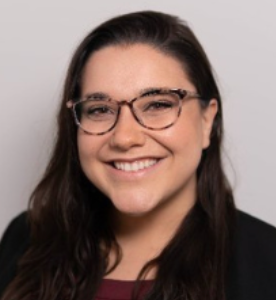
Joanna Georgakas, MD, is a psychiatrist and a Clinical Fellow in Geriatric Psychiatry at Mass General Brigham in Boston, MA. Dr. Georgakas received her BA from Middlebury College, where she majored in Neuroscience and Gender, Feminist and Sexuality Studies. She earned her medical degree from the Alpert Medical School of Brown University and subsequently completed her psychiatry residency training at Brown, serving as Chief Resident. Dr. Georgakas’s academic work has focused on the “leaky pipeline” phenomenon for women in STEM fields and feminist science studies. She has been an active member of the American Medical Women’s Association (AMWA) since 2018, where her contributions include co-founding the Brown University AMWA chapter and serving on the AMWA Gender Equity Task Force. She also created the podcast series “ Doctor and ____: Multidimensional Women in Medicine” (now run by incredible students and called “Our Voices, Our Future”) to elevate the narratives of women advancing gender equity in medicine. In recognition of her contributions, Dr. Georgakas was a recipient of the AMWA Eliza Chin Unsung Hero Award.
Vashti Price, MS, MHS, MS4
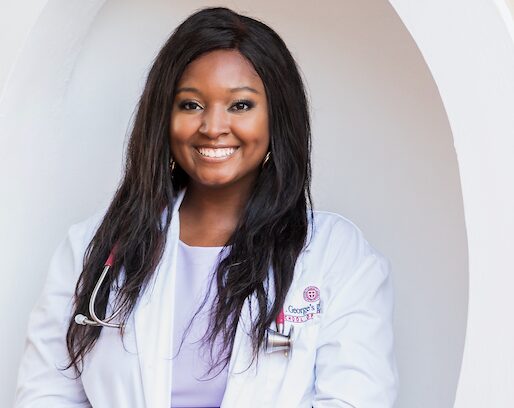
Vashti Price is a fourth-year medical student at St. George’s University. She holds a Bachelor of Science in Biology from the University of Louisiana at Lafayette, a Master’s in Biological Sciences from Alcorn State University, and a Master’s in Health Sciences from Meharry Medical College. With a strong passion for public health and health equity, Vashti has dedicated much of her time over the years to volunteering with underserved populations, including individuals experiencing homelessness and children in need. Her commitment to service continues through her involvement with the American Medical Women’s Association, where she serves on the Gender Equity Task Force and the Sex & Gender Health Collaborative Committees. Vashti is particularly interested in the intersection of medicine, public health, and community outreach. Outside of her academic and clinical pursuits, she enjoys spending time with friends and family, attending festivals, exploring new cities, and winding down with a good Netflix series.
Meghan Etsey, MS4
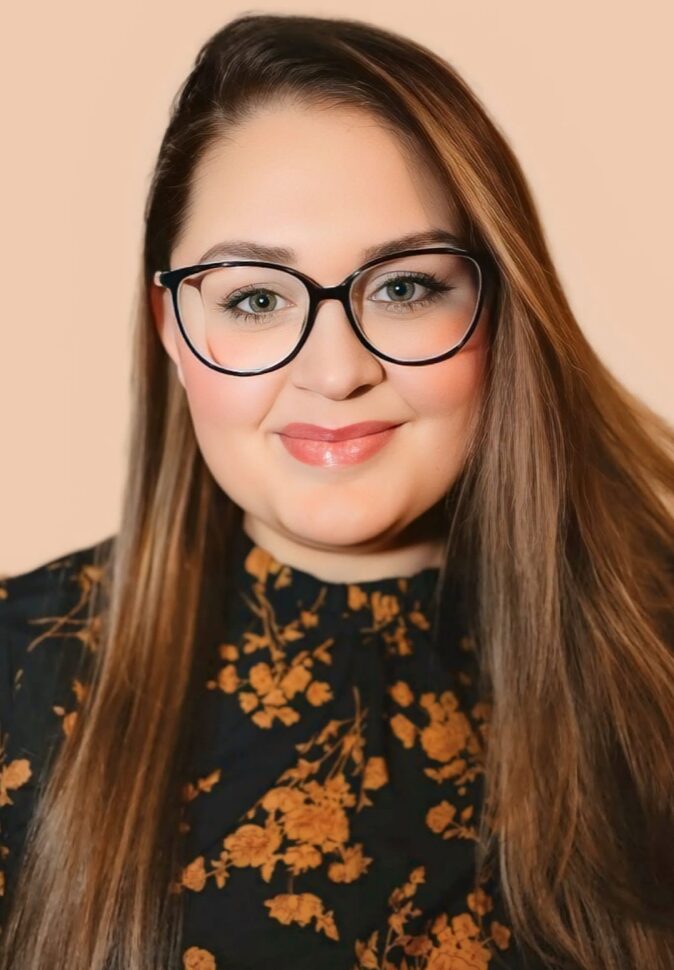
Meghan Etsey is a fourth year medical student from St. George’s University. She has a Bachelors of Arts in Biology and a Bachelors of Arts in Nutrition and Dietetics from Bluffton University in Bluffton, Ohio. She served as the President of the St. George’s University’s Women in Medicine chapter in St. George, Grenada where she expanded relationships with the community and worked towards educating women and helping the youth. She is also a member of the Gender Equity Task Force and Sex and Gender Health Collaborative Committees within the American Medical Women’s Association. When she is not pursuing medicine, you can find her with her friends and family on different road trips and adventures exploring the world.
Formatting, publication management, and editorial support for the AMWA GETF Blog by Vaishnavi J. Patel, DO