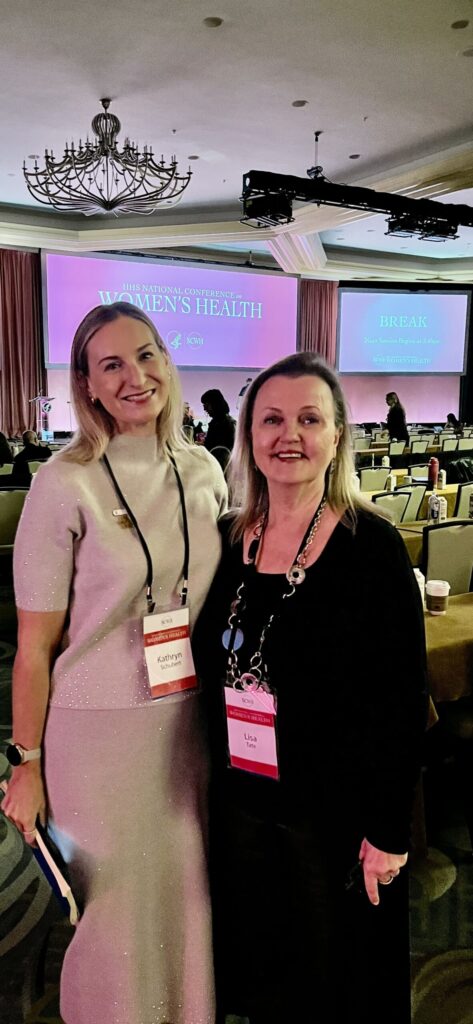
The American Medical Women’s Association (AMWA) joined more than 300 clinicians, advocates, policymakers, researchers, and community leaders from across the United States at the Inaugural National Conference on Women’s Health, convened by the U.S. Department of Health and Human Services (HHS).
The conference brought together voices from government, academia, advocacy organizations, and healthcare systems to address key issues shaping women’s health across the lifespan.
Over the course of the meeting, 16 sessions featuring more than 55 speakers explored critical topics including:
- Menopause and midlife health
- Cervical cancer screening guidelines
- Maternal and infant health
- Mental health
- Infertility
- Alzheimer’s disease
- Lyme disease
- Environmental exposures
- The human microbiome
Panels were moderated by leading clinicians and government representatives and emphasized the need for collaboration across sectors to improve health outcomes for women and families.
Federal Leadership Signals Growing National Focus on Women’s Health
- The conference featured remarks from several federal health leaders, underscoring the importance of women’s health within national policy discussions, including Dorothy Fink, MD, Director of the HHS Office on Women’s Health, Jay Bhattacharya, MD, PhD, Director of the National Institutes of Health, Admiral Brian Christine, Assistant Secretary for Health, HHS, Marty Makary, MD, Commissioner of the Food and Drug Administration, Robert F. Kennedy Jr., Secretary of Health and Human Services
- Mehmet Oz, MD, Director of the Centers for Medicare and Medicaid Services
A surprise introduction during the conference was delivered by Second Lady Usha Vance, highlighting growing visibility of women’s health within national conversations.
Policy Updates: Menopause Care and the Removal of Estrogen Black Box Warning
One of the most widely discussed policy developments highlighted during the meeting was the removal of the black box warning on estrogen therapies used to treat menopause symptoms.
For years, the warning created confusion among patients and clinicians and contributed to significant barriers to accessing effective treatment for menopausal symptoms. Conference speakers emphasized that revisiting this labeling reflects evolving scientific understanding of hormone therapy and may help clinicians more confidently address conditions including:
New National Maternal Health Initiative Announced
Another major announcement at the conference was the launch of the “Still at Risk” initiative, a new maternal health effort developed through a partnership between the Preeclampsia Foundation, the American Heart Association, and HHS.
The initiative will introduce a standardized postpartum wristband designed to help medical teams quickly identify women who remain at risk for complications from hypertensive disorders of pregnancy, including preeclampsia.
The program aims to improve recognition of warning signs and prevent delays in treatment during the critical postpartum period.
Public-private collaborations such as this initiative highlight growing efforts to strengthen maternal health safety systems nationwide.
A National Platform for Ongoing Dialogue
For AMWA members, the conference reinforced the importance of continuing national dialogue on women’s health policy, research, and clinical practice.
Across sessions, participants emphasized several shared priorities:
- Improving evidence-based care for women across the lifespan
- Expanding research on sex and gender differences in health
- Strengthening maternal health safety
- Addressing environmental and social determinants of health
- Ensuring access to care for conditions historically underrecognized in women
As one of the nation’s oldest organizations dedicated to advancing women physicians and improving women’s health, AMWA welcomed the opportunity to contribute to these discussions and connect with leaders from across the health ecosystem.
For AMWA and its partners, the conference represents a promising step toward sustained national attention on the health issues affecting women and the clinicians who care for them.