
Authors: Rhea Manohar, MPH; Meghan Etsey, Dr. Divya Krishnan on behalf of the AMWA Gender Equity Task Force
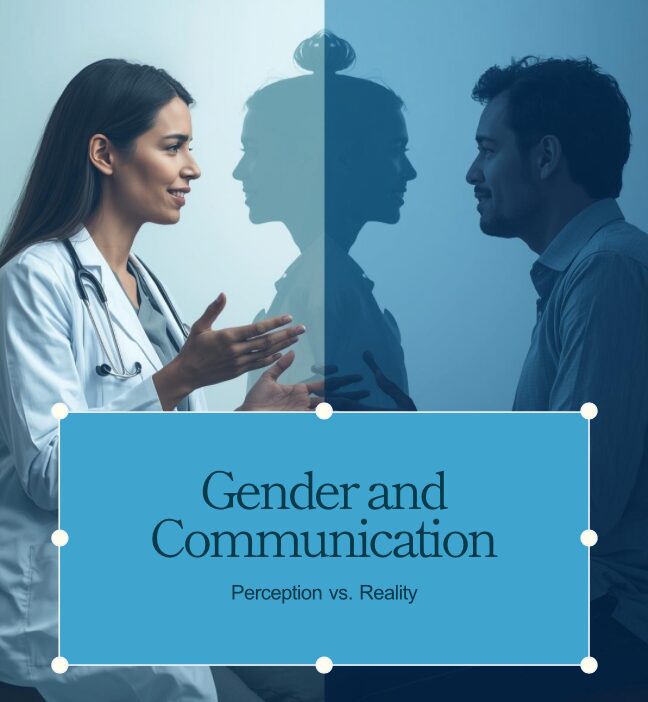
Medicine is a conversational craft. Diagnosis, counseling and shared decision-making all ride on the quality of the clinical encounter. Over the past decade a consistent pattern has emerged, female physicians more often use patient-centered communication, such as longer visits, more information sharing, more empathic language to connect with patients; and those behaviors are linked to better patient engagement and, in some contexts, better outcomes. Despite the qualitative and quantitative evidence indicating an appreciation for this style of meaningful physician-patient communication, commonly used patient-experience instruments and public reviews sometimes penalize women clinicians. This reflects a lack of measurement accuracy and social bias rather than a reality of lower quality of care. Reconciling perception and reality is essential if we want patient-experience metrics to serve quality improvement rather than reproduce workplace inequity.
Observational health-services work has also documented small but consistent associations between care by female physicians and improved clinical outcomes. For example, a multisite study in Canada found modestly lower in-hospital mortality among patients cared for by female hospitalists than male counterparts (Sergeant et al., 2021). While some may attribute this finding to matching of physician and patient gender, experimental evidence paints a different story. Two experimental studies found no detectable effect of simulated physician gender on participant ratings in an ED scenario (Solnick et al., 2020), suggesting that when clinical competence is held constant, gender alone does not drive satisfaction. When taking this into account, “communal” communication behaviors, including empathy, warmth, and collaborative language, that female physicians frequently adopt may be a key driving factor in patient satisfaction (Chen et al., 2021).
Beyond communal communication, other factors, such as setting, may play a role in patient satisfaction and care perceptions. In longitudinal outpatient relationships and primary care, patient-centered behaviors, including active listening, shared decision-making, and validating emotion are more visible. The beneficial effects of these behaviors on patient engagement and long-term outcomes are captured in observational data and in communication-focused studies (Çakmak, 2024). When gender is isolated as a modifying factor from behavior and competence, there are negligible gender effects (Solnick et al., 2020). This implies that the real driver of a satisfactory patient experience is not the female physicians themselves, but how communal communication and patient-centered behaviors are enhancing patient experiences.
Patient satisfaction surveys and web-based reviews are increasingly used for clinician performance assessment, compensation, and promotion. Here, however, the literature documents concerning gendered disparities. Several analyses in gynecology and outpatient settings have shown that women physicians are less likely to receive “top-box” patient satisfaction scores (Rogo-Gupta et al., 2018; Rogo-Gupta et al., 2023). Large analyses of online physician reviews similarly find that female physicians receive lower star ratings, even after controlling for clinic characteristics (Saifee et al., 2022). At the same time, text-analytic work shows that female clinicians are more often described with communal language. Interestingly, when communal-based language appears, ratings tend to be higher (Chen et al., 2021). This highlights an interesting paradox in which women may be performing more patient-centered work, but still receive lower numerical scores. This could be due to several factors including gendered patient expectations, survey instruments inadequately capture relational aspects of care, and online reviews amplifying biased narratives.
In order to improve our understanding of the effectiveness of patient communication techniques, it is important to measure the actual behavior. This can be done by revising patient-experience instruments to include validated items on concrete behaviors (e.g., “doctor asked about your goals,” “explained options clearly”), rather than global responses that are more susceptible to bias. Additionally, providing more opportunities for open comments in reporting tools can supplement numeric scales to capture nuance (Chen et al., 2021). When survey scores are used in compensation and appraisal, departments and hospitals can apply statistical adjustment for patient mix and empirically test for potential biases. By recognizing the potential for biases, physicians can avoid being subjected to decisions based on raw top-box scores (Rogo-Gupta et al., 2023).
A re-evaluation of clinician training, reward, and patient satisfaction data can help break down the systemic inequities faced in physician-patient communication. One strategy for doing this is making patient-centered communication a clearly valued competency in promotion and maintenance-of-certification frameworks. This can provide time-efficient communication training and protected time for longitudinal relationship-building, as well as reward physicians for employing these techniques (Çakmak, 2024). Additionally, a mixed measurement approach to clinician assessment can combine experience scores with objective process and outcome measures, thereby effectively reducing overreliance on any single biased metric (Sergeant et al., 2021). Institutions should take into the account the disparities between satisfaction scores and written ratings, to improve overall performance-based indicators which influence professional advancement.
Despite the lack of overall recognition, the overall evidence remains clear: patient-centered communication improves care and female physicians are more likely, on average, to use these patient-centered behaviors. When measurement systems and societal stereotypes get in the way, excellent relational care can be misread or punished. If academic medical centers and health systems want metrics that truly drive better care, they must redesign evaluation systems to reflect concrete communication behaviors, test and adjust for bias, and explicitly reward the communication and relationship-building techniques that sustain patient trust. Doing that will not only correct an injustice for women clinicians, but also reorient medicine toward the kinds of care that improve outcomes.
References:
- Çakmak, C., & Uğurluoğlu, Ö. (2024). The Effects of Patient-Centered Communication on Patient Engagement, Health-Related Quality of Life, Service Quality Perception and Patient Satisfaction in Patients with Cancer: A Cross-Sectional Study in Türkiye. Cancer control : journal of the Moffitt Cancer Center, 31, 10732748241236327. https://doi.org/10.1177/10732748241236327
- Chen, H., Pierson, E., Schmer-Galunder, S., Altamirano, J., Jurafsky, D., Leskovec, J., Fassiotto, M., & Kothary, N. (2021). Gender differences in patient perceptions of physicians’ communal traits and the impact on physician evaluations. Journal of Women’s Health, 30(4), 551–556. https://doi.org/10.1089/jwh.2019.8233
- Rogo-Gupta, L. J., Haunschild, C., Altamirano, J., Maldonado, Y. A., & Fassiotto, M. (2018). Physician gender is associated with Press Ganey patient satisfaction scores in outpatient gynecology. Women’s Health Issues, 28(3), 281–285. https://doi.org/10.1016/j.whi.2018.01.001
- Rogo-Gupta, L. J., Altamirano, J., Homewood, L. N., et al. (2023). Women physicians receive lower Press Ganey patient satisfaction scores in a multicenter study of outpatient gynecology care. American Journal of Obstetrics and Gynecology, 229(3), 304.e1–304.e9. https://doi.org/10.1016/j.ajog.2023.06.023
- Saifee, D. H., Hudnall, M., & Raja, U. (2022). Physician gender, patient risk, and web-based reviews: Longitudinal study of the relationship between physicians’ gender and their web-based reviews. Journal of Medical Internet Research, 24(4), e31659. https://doi.org/10.2196/31659
- Sergeant, A., Saha, S., Shin, S., Weinerman, A., Kwan, J. L., Lapointe-Shaw, L., Tang, T., Hawker, G., Rochon, P. A., Verma, A. A., & Razak, F. (2021). Variations in processes of care and outcomes for hospitalized general medicine patients treated by female vs male physicians. JAMA Health Forum, 2(7), e211615. https://doi.org/10.1001/jamahealthforum.2021.1615
- Solnick, R. E., Peyton, K., Kraft-Todd, G., & Safdar, B. (2020). Effect of physician gender and race on simulated patients’ ratings and confidence in their physicians: A randomized trial. JAMA Network Open, 3(2), e1920511. https://doi.org/10.1001/jamanetworkopen.2019.20511
About the Authors
Rhea Manohar, MPH, MS3

Rhea Manohar is a third year medical student from St. George’s University. She has a Masters in Public Health with a concentration in Maternal and Child Health from George Washington University Milken Institute of Public Health and a Bachelors of Science in Microbiology, Immunology, and Public Health from the University of Miami. She served as Co-VP of OB/GYN Education for St. George’s University’s Women in Medicine chapter in St. George, Grenada where she developed and implemented hands-on workshops to further reproductive health issues and bolstered medical students abilities to navigate physician-patient communication. Prior to medical school, she was a Research Associate for Fors Marsh Group, where she led qualitative and quantitative public health research and campaign development for federal agencies (e.g., CDC, NIH, DHHS, CPSC). She is also a member of the Gender Equity Task Force and Reproductive Health Coalition within the American Medical Women’s Association. When she is not pursuing medicine, you can find her reading, exploring artistic passions, and spending time connecting with friends and family.
Meghan Etsey, MS4

Meghan Etsey is a fourth year medical student from St. George’s University. She has a Bachelors of Arts in Biology and a Bachelors of Arts in Nutrition and Dietetics from Bluffton University in Bluffton, Ohio. She served as the President of the St. George’s University’s Women in Medicine chapter in St. George, Grenada where she expanded relationships with the community and worked towards educating women and helping the youth. She is also a member of the Gender Equity Task Force and Sex and Gender Health Collaborative Committees within the American Medical Women’s Association. When she is not pursuing medicine, you can find her with her friends and family on different road trips and adventures exploring the world.

Dr. Divya Krishnan obtained a medical degree with honours at the University of Medicine and Health Sciences, St. Kitts. She is passionate about preventative medicine and community medicine. She believes that we can only begin to move towards good health for all patients, with health equity and consistent community education led by healthcare workers. When not working in the medical world, she spends her spare time thriving outdoors (hiking, rock climbing, gardening), learning indoors through reading books (from fiction to social science), and brainstorming creative ideas for how to improve her practice as a whole – for her patients and for her co-workers.
Formatting, publication management, and editorial support for the AMWA GETF Blog by Vaishnavi J. Patel, DO