
Authors: Meghan Etsey, Rhea Manohar, MPH, Yun Weisholtz MD-PhD on behalf of the Gender Equity Task Force

We all like to think of medicine as evidence-based and objective. But when it comes to women, the evidence has often been incomplete, delayed, or ignored. Time and time again, new studies emerge showing that women’s pain is taken less seriously, their symptoms are dismissed more quickly, their diseases are diagnosed later, and their treatments are based on data that was never designed for their bodies in the first place. These are not historical oversights. They are current, ongoing failures that continue to shape outcomes in clinics, emergency rooms, and operating rooms every day. Each “new” discovery is less a revelation and more a reminder: women have never been the default patient in medicine.
Thiamine (B1) deficiency is a well-described medical condition with potentially devastating neurologic consequences, including Wernicke’s encephalopathy. Wernicke’s encephalopathy is an acute condition causing confusion, abnormal eye movements, and loss of muscle coordination. If left untreated, this condition can lead to irreversible memory loss known as Korsakoff Syndrome. However, despite its seriousness, the way thiamine deficiency is discussed in the medical literature reveals a persistent gender blind spot. In high-income countries, thiamine deficiency is most often framed as a disease of chronic alcoholism, a condition that disproportionately affects men (Cleveland Clinic, 2025). This framing has become so dominant that it effectively defines clinical suspicion: thiamine deficiency is something clinicians are taught to look for in malnourished men with alcohol use disorder. However, that framing is incomplete.
In women, thiamine deficiency often arises through an entirely different pathway, one rooted in reproductive physiology rather than substance use. Hyperemesis gravidarum, a severe pregnancy-related condition characterized by persistent vomiting, creates a unique vulnerability. Pregnancy increases thiamine requirements, and ongoing emesis can rapidly deplete maternal thiamine stores within six to seven weeks, most commonly between 10 and 15 weeks of gestation (Oudman et al., 2019; Fiorentini et al., 2023). This combination, along with increased metabolic demand, excessive nutrient losses, and limited oral intake, creates a predictable and preventable risk of deficiency. However, because this pathway does not fit the traditional “alcoholic patient” narrative, thiamine deficiency in pregnant women is often underrecognized or diagnosed late. The deficiency remains the same, but the cause differs.
When thiamine deficiency is conceptualized primarily as a complication of alcoholism, clinicians may be slower to recognize it in pregnant women without traditional risk factors. When pregnancy-specific causes are treated as a niche, diagnosis may be delayed until neurologic injury has already occurred. In conditions where early recognition and treatment are critical, such delays are not benign (Oudman et al., 2019; Fiorentini et al., 2023). Importantly, this is not a failure of individual clinicians, but a failure of the research framework itself. Women experience disease differently, not because they are “more complex,” but because medicine has historically failed to design studies that reflect their biology. It is the responsibility of research to explore these communities as a mandate, rather than as a niche population for study.
If the risk of Wernicke’s encephalopathy in pregnancy were hypothetical, the failure to research and recognize it might be understandable. However, it is not hypothetical. It is documented, repeated, and devastating. In 2025, Abouelbaqua and colleagues published a retrospective study of 12 cases of Wernicke’s encephalopathy complicating hyperemesis gravidarum at a single tertiary obstetric intensive care unit over 6 years (Abouelbaqua et al., 2025). These were not isolated anecdotes. Out of 76 admissions for hyperemesis gravidarum, nearly one in six patients developed Wernicke’s encephalopathy. That number alone should force a shift in how clinicians think about risk. These patients were not diagnosed because the condition is rare. They were diagnosed because it had progressed far enough to become unmistakable.
In every case, patients experienced weeks of persistent vomiting, with a median duration of 11 weeks, and had already lost more than 5% of their body weight, often far more, on average 17 kilograms (Abouelbaqua et al., 2025). Neurologic symptoms appeared around a median gestational age of 16 weeks, well into the second trimester, long after thiamine depletion had begun. Crucially, all patients had prodromal symptoms of Wernicke’s encephalopathy, fatigue, weakness, loss of appetite, and difficulty concentrating, before the classic triad appeared (Abouelbaqua et al., 2025). However, those symptoms were overlooked. Why? Because in pregnancy, these signs are dismissed as “just hyperemesis.” This is one of the most insidious aspects of gender bias in medicine: when disease-specific warning signs are written off because they overlap with “normal” female physiology. Symptoms that would trigger alarm in other patients are reframed as expected, tolerable, or unavoidable in pregnant women.
When Wernicke’s encephalopathy was finally recognized, 100% of patients had altered mental status, 91% had oculomotor abnormalities, and 83% had ataxia, the full neurologic picture of a medical emergency (Abouelbaqua et al., 2025). MRI confirmed characteristic brain lesions in two-thirds of cases, often involving the thalami, mammillary bodies, and periaqueductal region. Treatment required high-dose thiamine, often exceeding 500 mg per day, administered intravenously or orally for prolonged periods. Despite this, outcomes were grim:
- 45.5% of patients developed chronic neurologic sequelae
- One patient died
- Over 40% of fetuses did not survive.
- Additional pregnancies resulted in prematurity or neonatal compromise.
These are not subtle consequences. These are life-altering and often life-ending outcomes of a condition that is inexpensive, preventable, and treatable when recognized early (Abouelbaqua et al., 2025).
Wernicke’s encephalopathy is widely taught as a complication of alcoholism. Hyperemesis gravidarum is widely taught as an obstetric condition. What remains inadequately integrated is the reality that pregnancy itself creates a unique and predictable vulnerability to thiamine depletion. Abouelbaqua et al. explicitly note that Wernicke’s encephalopathy related to hyperemesis gravidarum remains frequently undiagnosed, not because the condition is unknown, but because clinicians do not expect to see it in pregnant women (Abouelbaqua et al., 2025).
This is the recurring pattern in women’s healthcare:
- The physiology is known
- The mechanism is understood.
- The treatment is straightforward.
However, the disease is still missed, because the research, training, and clinical reflexes were built around someone else. This study should not be interpreted as a report of a rare complication. It should be read as a warning. When nearly 16% of hospitalized hyperemesis gravidarum patients in a single center develop Wernicke’s encephalopathy, the problem is not rare. It is recognition. It is education. It is the failure to design clinical guidelines that fully account for women’s biology.
Women do not experience worse outcomes because their bodies are unpredictable. They experience worse outcomes because medicine continues to treat pregnancy-specific risk as peripheral rather than fundamental. Until women’s physiology is treated as core knowledge, not a subspecialty footnote, cases like these will continue to appear in the literature, framed as surprises instead of preventable tragedies.
References
- Abouelbaqua, K., Rebahi, H., Louhab, N., Kissani, N., & El Adib, A. R. (2025). Wernicke encephalopathy related to hyperemesis gravidarum: A retrospective study of 12 cases. Case Reports in Critical Care, 2025, Article 7607058. https://doi.org/10.1155/crcc/7607058
- Cleveland Clinic. (2025, October 24). Wernicke-Korsakoff Syndrome: Causes, symptoms & treatment. https://my.clevelandclinic.org/health/diseases/22687-wernicke-korsakoff-syndrome
- Fiorentini, M., Nedu, B., Dapoto, F., et al. (2023). When time is brain: A systematic review about Wernicke encephalopathy as a dramatic consequence of thiamine deficiency in hyperemesis gravidarum. Journal of Maternal-Fetal & Neonatal Medicine, 36(1), 1–9. https://doi.org/10.1080/14767058.2021.2009383
- Gomes, F., Bergeron, G., Bourassa, M. W., & Fischer, P. R. (2021). Thiamine deficiency unrelated to alcohol consumption in high-income countries: A literature review. Annals of the New York Academy of Sciences, 1498(1), 9–28. https://doi.org/10.1111/nyas.14541
- Oudman, E., Wijnia, J. W., Oey, M., et al. (2019). Wernicke’s encephalopathy in hyperemesis gravidarum: A systematic review. European Journal of Obstetrics & Gynecology and Reproductive Biology, 236, 84–93. https://doi.org/10.1016/j.ejogrb.2019.03.006
- Sinha, S., Kataria, A., Kolla, B. P., Thusius, N., & Loukianova, L. L. (2019). Wernicke encephalopathy—Clinical pearls. Mayo Clinic Proceedings, 94(6), 1065–1072. https://doi.org/10.1016/j.mayocp.2019.02.018
- Sliwa, K., Viljoen, C. A., Hasan, B., & Ntusi, N. A. B. (2022). Nutritional heart disease and cardiomyopathies: JACC focus seminar 4/4. Journal of the American College of Cardiology, 79(26), 2608–2621. https://doi.org/10.1016/j.jacc.2022.04.025
About the Authors
Meghan Etsey, MS4

Meghan Etsey is a fourth year medical student from St. George’s University. She has a Bachelors of Arts in Biology and a Bachelors of Arts in Nutrition and Dietetics from Bluffton University in Bluffton, Ohio. She served as the President of the St. George’s University’s Women in Medicine chapter in St. George, Grenada where she expanded relationships with the community and worked towards educating women and helping the youth. She is also a member of the Gender Equity Task Force and Sex and Gender Health Collaborative Committees within the American Medical Women’s Association. When she is not pursuing medicine, you can find her with her friends and family on different road trips and adventures exploring the world.
Rhea Manohar, MPH, MS3

Rhea Manohar is a third year medical student from St. George’s University. She has a Masters in Public Health with a concentration in Maternal and Child Health from George Washington University Milken Institute of Public Health and a Bachelors of Science in Microbiology & Immunology, and Public Health from the University of Miami. She served as Co-VP of OB/GYN Education for St. George’s University’s Women in Medicine chapter in St. George, Grenada where she developed hands-on workshops to further reproductive health issues and navigating challenging physician-patient communication scenarios. Prior to medical school, she was a Research Associate for Fors Marsh Group, where she led qualitative and quantitative public health research and campaign development for federal agencies (e.g., CDC, NIH, DHHS, CPSC). She is also a member of the Gender Equity Task Force of the American Medical Women’s Association. When she is not pursuing medicine, you can find her reading, exploring artistic passions, and spending time connecting with friends and family.
Yun Weisholtz, MD-PhD
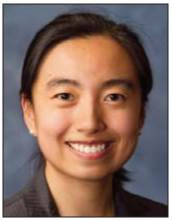
Dr. Yun Weisholtz is a physician-scientist and advisor with a deep commitment to mentorship and advancing equity in medicine. She completed her undergraduate studies at Stanford University, where she double-majored in Biological Sciences and Chemistry, and spent a year in Germany as a Fulbright Scholar. She went on to enter the MD-PhD program in Neuroscience at Harvard Medical School and MIT, where she developed her passion for research, teaching, and mentoring. Dr. Weisholtz is a Physician Advisor with MedSchoolCoach and the founder of MD-PhD Advising, a consulting practice dedicated to helping students navigate the medical school and residency application process. Outside of work, she enjoys collecting Delft pottery from the Netherlands and spending time with her family and pets.