
Authors: Rhea Manohar, MPH; Meghan Etsey; Ariela L. Marshall, MD on behalf of the AMWA Gender Equity Task Force

Her name is Rithika.
She is your next medical student.
Her name is Gaby.
She is your next resident physician.
Her name is Leah.
She is your next fellow.
Since Elizabeth Blackwell graduated from Geneva College with her MD in 1849, women have continued to make profound advances within the field of medicine. Over the past several decades, physician workforce demographics have shifted dramatically. Women now comprise 55.1% of matriculating medical students as of 2024, compared to just 24.4% in 1978 (AAMC, 2025; Morris et al., 2021). While increased exposure and opportunity have contributed to this change, the movement toward gender parity reflects a meaningful narrowing of the historically leaky pipeline from aspiration to admission.
This milestone represents the cumulative impact of decades of advocacy, mentorship, and structural reform. It reflects changing societal expectations, as well as the persistence of women who navigated entrenched barriers in medical school admissions, residency training, and professional advancement. Yet parity at entry does not equate to equity across the lifespan of a medical career. Persistent disparities remain in physician compensation, leadership representation, research funding, and promotion (Richter et al., 2020). Increasingly, financial barriers threaten to erode this progress.
Her name is Bethany.
She is your next physician.
Her name is Mallory.
She is your next surgeon.
Her name is MacKenzie.
She is your next pediatrician.
The cost of medical education has risen sharply over the past several decades, far outpacing inflation and wage growth. Today, the median medical student graduates with well over $200,000 in educational debt, a burden that disproportionately affects women physicians, who on average carry higher loan balances and experience slower income growth following training (Lo Sasso et al., 2011; AAMC, 2023). Proposed changes to Graduate PLUS loan caps introduce a new and consequential threat to physician training.
Grad PLUS loans have historically functioned as a critical financial backstop, enabling medical students, particularly those without generational wealth, to cover the full cost of attendance. Restricting access to these loans raises a fundamental question. Who will be able to afford to become a physician?
Her name is Kiana.
She is your next family medicine physician.
Her name is Tamara.
She is your next psychiatrist.
Her name is Allison.
She is your next anesthesiologist.
Her name is Nicole.
She is your next gastroenterologist.
For women in medicine, financial constraints do not exist in isolation. They intersect with gendered expectations around caregiving, delayed earning potential due to prolonged training pathways, and the reality that women physicians remain overrepresented in lower paying specialties such as primary care and pediatrics (Lo Sasso et al., 2016; Catenaccio et al., 2022). Despite comparable training and clinical productivity, women physicians earn substantially less than their male counterparts across nearly all specialties, a gap that persists even after adjustment for hours worked, practice setting, and experience (Rotenstein et al., 2018). In academic medicine, women are promoted more slowly and remain underrepresented in senior leadership roles, further constraining lifetime earnings and wealth accumulation (Richter et al., 2020). These structural inequities mean that women physicians enter training with fewer financial buffers and experience reduced financial flexibility throughout their careers, rendering them more vulnerable to shifts in educational financing.
Loan cap changes therefore risk reinforcing a stratified physician workforce, one in which access to medical careers becomes increasingly contingent on personal or familial financial resources. Women already hold a disproportionate share of educational debt and, on average, take longer to repay it due to lower post-training earnings and higher likelihood of career interruptions related to caregiving (AAUW, 2021; Miller, 2022). Reductions in federal loan availability or forgiveness mechanisms would likely push women borrowers toward higher-interest private loans or deter them from pursuing longer or lower-paying training pathways altogether; thereby disproportionately increasing the cost of medical training and viability for women. Given existing gender-based pay gaps, higher monthly repayment burdens consume a greater proportion of women physicians’ income, amplifying financial stress early in practice and narrowing feasible career options, particularly in academic medicine, primary care, and public service roles.
Over time, these financial pressures are likely to exacerbate existing gender inequities in promotion, compensation, and retention. Increased debt burden incentivizes revenue-generating clinical work at the expense of research, teaching, and leadership activities that drive advancement, reinforcing slower promotion trajectories already observed among women physicians (Richter et al., 2020). When coupled with persistent maternal bias and inadequate institutional support for caregiving, restrictive loan policies risk accelerating the attrition of women from academic and lower-paying specialties, undermining workforce diversity and exacerbating physician shortages in high-need fields (Catenaccio et al., 2022). In this context, changes to graduate loan policy are not gender-neutral fiscal reforms; they function as structural amplifiers of inequity, compounding long-standing disparities that shape who enters medicine, who advances, and who remains.
Her name is Nureen.
She is your next cardiologist.
Her name is .
She is your next oncologist.
Her name is Blake.
She is your next neurologist.
Taken together, rising educational debt and restrictions on federal loan access represent policy decisions with far reaching consequences for the physician pipeline. While often framed as fiscal or administrative reforms, their impact is felt most acutely by those already navigating systemic barriers. At a moment when medicine has reached gender parity at the gates of training, it is imperative that financial policy does not quietly rebuild the walls.
The diversity women bring to medicine is essential. Women physicians contribute perspectives shaped by varied lived experiences, strengthening clinical decision making, patient trust, and innovation. Preserving access to medical education is not merely a matter of equity. It is fundamental to sustaining a physician workforce capable of meeting the needs of an increasingly complex and diverse patient population.
Her name is Elizabeth.
She is your next internist.
Her name is Chelsea.
She is your next obstetrician/gynecologist.
Her name is Audrey.
She is your next emergency medicine physician.
Her name is Olivia.
She is your next physical medicine and rehabilitation physician.
And she will see you now.
A special thank you to the women whose names are included as a representative of their field. We appreciate and honor your continued passion, service, and commitment.
References:
- AAMC. (2023). Medical student education: Debt, costs, and loan repayment. Association of American Medical Colleges. https://students-residents.aamc.org/media/12846/download
- AAMC. (2025, January 9). New AAMC data on medical school applicants and enrollment in 2024. https://www.aamc.org/news/press-releases/new-aamc-data-medical-school-applicants-and-enrollment-2024
- American Association of University Women. (2021). Deeper in debt: Women and student loans. AAUW. https://www.aauw.org/issues/education/student-debt/
- Catenaccio, E., Rochlin, J. M., & Simon, H. K. (2022, February 18). Addressing gender-based disparities in earning potential in academic medicine. JAMA Network. https://jamanetwork.com/journals/jamanetworkopen/fullarticle/2789168
- Lo Sasso, A. T., Richards, M. R., Chou, C. F., & Gerber, S. E. (2011). The $16,819 pay gap for newly trained physicians: The unexplained trend of men earning more than women. Health Affairs, 30(2), 193–201. https://doi.org/10.1377/hlthaff.2010.0597
- Lo Sasso, A. T., Armstrong, D., Forte, G., & Gerber, S. E. (2020). Differences In Starting Pay For Male And Female Physicians Persist; Explanations For The Gender Gap Remain Elusive. Health affairs (Project Hope), 39(2), 256–263. https://doi.org/10.1377/hlthaff.2019.00664
- Miller, K. (2022). Student debt and gender disparities in wealth accumulation. Sociology of Education, 95(3), 235–252. https://doi.org/10.1177/00380407221087364
- Morris, D. B., Gruppuso, P. A., McGee, H. A., Murillo, A., Grover, A., & Adashi, E. Y. (2021, April 28). Diversity of the National Medical Student Body — Four Decades of Inequities. The New England Journal of Medicine. https://www.nejm.org/doi/full/10.1056/NEJMsr2028487?
- Richter, K. P., Clark, L., Wick, J. A., Cruvinel, E., Durham, D., Shaw, P., Shih, G. H., Befort, C. A., & Simari, R. D. (2020). Women Physicians and Promotion in Academic Medicine. The New England journal of medicine, 383(22), 2148–2157. https://doi.org/10.1056/NEJMsa1916935
- Rotenstein, L. S., Dudley, J. C., Jena, A. B., et al. (2018). Differences in earnings between male and female physicians. JAMA Internal Medicine, 178(8), 1098–1105. https://doi.org/10.1001/jamainternmed.2018.2471
About the Authors
Rhea Manohar, MPH, MS3

Rhea Manohar is a third year medical student from St. George’s University. She has a Masters in Public Health with a concentration in Maternal and Child Health from George Washington University Milken Institute of Public Health and a Bachelors of Science in Microbiology, Immunology, and Public Health from the University of Miami. She served as Co-VP of OB/GYN Education for St. George’s University’s Women in Medicine chapter in St. George, Grenada where she developed and implemented hands-on workshops to further reproductive health issues and bolstered medical students abilities to navigate physician-patient communication. Prior to medical school, she was a Research Associate for Fors Marsh Group, where she led qualitative and quantitative public health research and campaign development for federal agencies (e.g., CDC, NIH, DHHS, CPSC). She is also a member of the Gender Equity Task Force and Reproductive Health Coalition within the American Medical Women’s Association. When she is not pursuing medicine, you can find her reading, exploring artistic passions, and spending time connecting with friends and family.
Meghan Etsey, MS4

Meghan Etsey is a fourth year medical student from St. George’s University. She has a Bachelors of Arts in Biology and a Bachelors of Arts in Nutrition and Dietetics from Bluffton University in Bluffton, Ohio. She served as the President of the St. George’s University’s Women in Medicine chapter in St. George, Grenada where she expanded relationships with the community and worked towards educating women and helping the youth. She is also a member of the Gender Equity Task Force and Sex and Gender Health Collaborative Committees within the American Medical Women’s Association. When she is not pursuing medicine, you can find her with her friends and family on different road trips and adventures exploring the world.
Dr. Ariela Marshall, MD
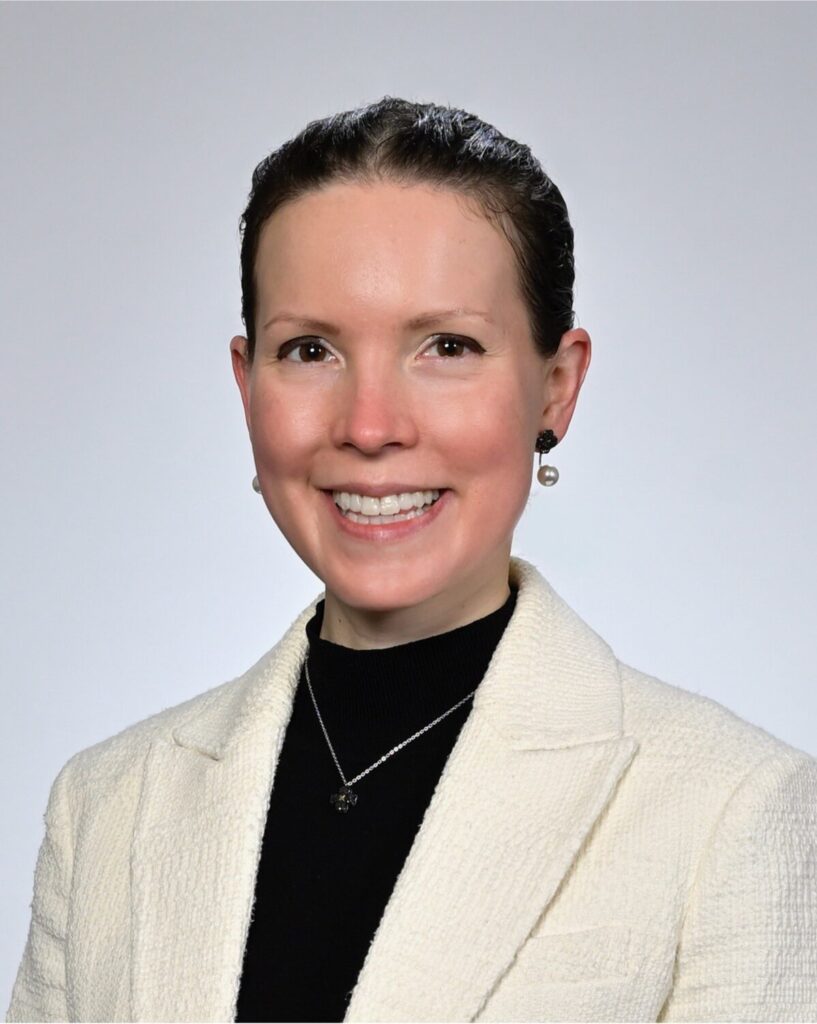
Dr. Ariela Marshall is a Harvard-trained physician and an internationally renowned advocate, career development advisor, and mentor. Dr. Marshall specializes in bleeding and clotting disorders, especially as they relate to women’s health. She has worked at Mayo Clinic and the University of Pennsylvania and currently practices part-time as a consultative hematologist at the University of Minnesota. In addition to her clinical work, Dr. Marshall is a highly respected leader, mentor, and speaker. She is an active leader with the American Society of Hematology (where she led efforts to found the Women in Hematology Working Group and currently holds seats on the Women in Heme Working Group, Committee on Communications and Media Experts Subcommittee) and American Medical Women’s Association (leading the Infertility Working Group and holding seats on the Gender Equity Task Force). She is the Chief Innovation Officer at Women in Medicine and the Curriculum Chair at IGNITEMed, which are both 501(c)(3) nonprofit organizations dedicated to promoting career development for women in medicine. She speaks regularly on a national and international scope to discuss her efforts to advance career development and mentorship for physicians, gender equity, fertility/infertility awareness, parental health and wellbeing, reproductive health and rights, and work-life integration.
Formatting, publication management, and editorial support for the AMWA GETF Blog by Vaishnavi J. Patel, DO