
Lyndsay Hoy, MD, Anesthesiology
Adjunct Assistant Professor; Perelman School of Medicine, University of Pennsylvania
Tell us about your career in medicine.
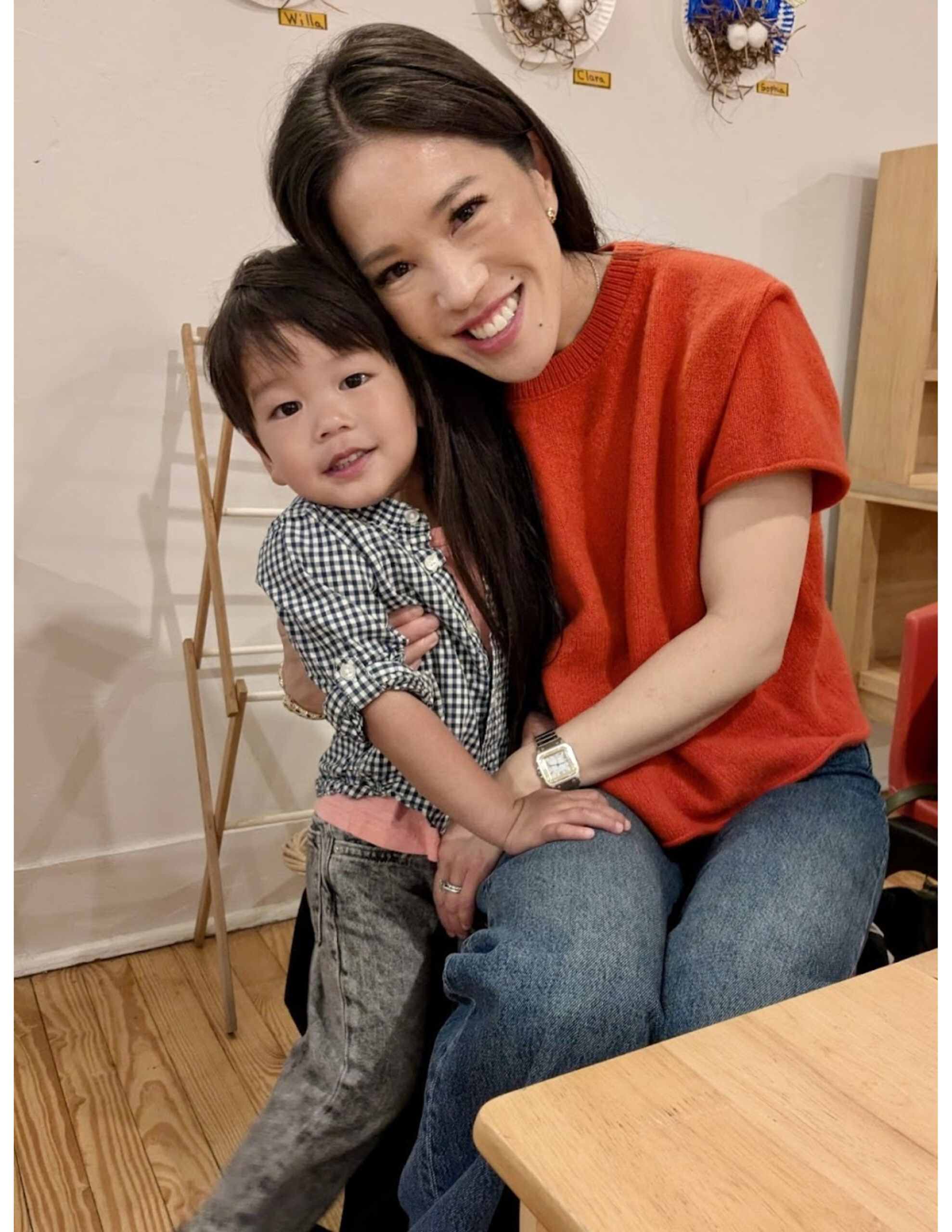
I trained as an anesthesiologist at the University of Pennsylvania, drawn to the specialty for its precision, acuity, and demand for total presence. In the OR, presence is not a virtue—it’s a requirement. But just as I began residency, I was diagnosed with lymphangioleiomyomatosis (LAM), a rare, progressive lung disease that primarily affects women.
I didn’t step away. I pushed forward—draining liters of chyle from my chest between cases, hiding bandages beneath scrubs, clinging to routine as a form of resistance. At the time, I believed control equaled survival.
During the COVID-19 pandemic, I co-directed Rx/Museum, an art-and-medicine initiative that supported clinician well-being through weekly encounters with visual art. That work reshaped my understanding of presence—not just as clinical vigilance, but as radical empathy: for ourselves, for each other, for the invisible burdens we carry.
I now serve as Chief Mission Officer at The LAM Foundation, where I lead initiatives at the intersection of rare diseases, women’s health, and strategic philanthropy. My work is rooted in the hard-earned wisdom of living with the very disease I advocate for.
My path has been anything but linear. But moving through medicine as both physician and patient has given me a different lens and a deeper purpose. Presence, once a clinical necessity, has become a personal ethic guiding my efforts to amplify LAM patients’ voices and reimagine what it truly means to care.
What challenges have you faced in your medical career?
How do you keep showing up when your body feels like it’s falling apart?
That was the question I had to answer every day of residency. I was 28, newly diagnosed with an incurable lung disease. I had a catheter in my chest, hidden beneath layers of sterile tape and routine. I pushed gurneys while short of breath and held hands with fearful patients while quietly grieving my own uncertain future.
Living as both patient and provider forced me to confront the deep gaps in how medicine handles vulnerability—our patients’ and our own. It taught me that we don’t need to conquer fear; we can learn to carry it. That shift changed everything: how I show up in operating rooms, how I care for others, and how I advocate for LAM patients.
How can others connect with you?
@thelamfoundation
Are you active in any AMWA initiatives or leadership roles? How has this shaped your career path?
I recently joined AMWA after meeting Dr. Eliza Chin and immediately felt a sense of alignment between AMWA’s mission and my own work at The LAM Foundation. Her KevinMD essay, The Hidden Struggle of Women with Rare Diseases, crystallized what I’ve long believed: that LAM and other underrecognized conditions affecting women deserve a much larger platform within medicine.
AMWA’s commitment to reproductive health and rare disease advocacy deeply resonates with my lived and professional experience. LAM brings complex questions about pregnancy and family planning into sharp relief. I’m excited to contribute to AMWA’s Women and Rare Disease initiatives and to help shape a more inclusive, informed future for LAM patients and physicians alike.
Have you had an “ah-ha” moment that changed your trajectory?
Six months after I was diagnosed with LAM, I was still deep in denial, juggling residency and disease, clinging to routine as a shield. Then I was assigned to care for a patient whose LAM had progressed to the point of life support. I never told her that we shared the same diagnosis. Instead, I ran to the call room and locked the door. I sat in the dark until an ICU attending found me. She didn’t try to fix it. She simply sat beside me and cried. She gave me her presence.
A few weeks later, that patient died. I still wonder what kind of conversation we might have had—what it would have meant for her to know she wasn’t alone.
Years later, another patient—also a physician with LAM—wrote to me: “I feel blessed to have found in you a kindred spirit—not just because we both happened to hit the rare disease jackpot, but because you made me feel seen and understood before I even knew I was going to need to be seen and understood.”
That, to me, is the quiet power of medicine: to recognize someone’s grief before they name it. To give them your presence. And to say, sometimes without words, You are not alone.
That moment in the call room was a rupture but also a beginning. It taught me that medicine doesn’t always mean saving. Sometimes, it means witnessing. That understanding now lives at the heart of my work at The LAM Foundation. What I do today—shaping strategy, listening to patients, changing systems—is simply presence, practiced at scale.
What advice would you give other women in medicine?
Let fear come with you. You can be uncertain and still courageous. Ill, and still profoundly impactful.