
Member Spotlight: Dr. Natasha Driver — Evidence, Empathy, Action
Specialty: Obstetrics & Gynecology
Current Position: Resident
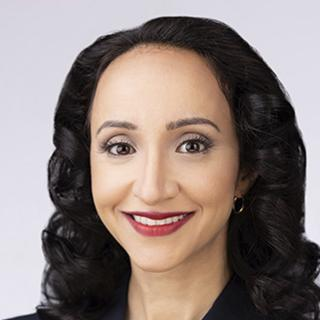
AMWA is pleased to spotlight Dr. Natasha Driver, an obstetrics and gynecology resident whose path to medicine has been anything but linear—and who sees that as one of its greatest strengths.
Before becoming an OB-GYN resident, Dr. Driver trained in epidemiology at the University of Toronto, worked in health research and consulting, and served at the World Health Organization. Those experiences taught her to view health not only through the lens of individual patients, but also through populations, systems, equity, and access.
Her early work in research ignited a deep intellectual curiosity. She loved asking questions, analyzing data, and seeking evidence-based solutions to complex problems. Yet she also came to appreciate the practical limitations of research. Too often, important findings remained confined to academic journals and failed to translate into meaningful changes in people’s daily lives. She learned that evidence alone is not always enough; change also requires advocacy, collaboration, and a willingness to engage with the systems and policies that shape health outcomes.
Those experiences reinforced her belief that behind every dataset is a human story. When she eventually pursued medicine, she carried that perspective with her. She wanted to become the kind of physician who could care for patients at the bedside while also working to improve the broader structures that influence their health and well-being. For her, medicine offered the opportunity to unite compassionate clinical care, rigorous scholarship, and meaningful advocacy.
During residency at Howard University Hospital, Dr. Driver found her professional home in reproductive health and, ultimately, in reproductive endocrinology and infertility. Fertility intersects with identity, family, culture, hope, and loss in deeply personal ways. Walking alongside patients through some of the most vulnerable and transformative moments of their lives has been both a privilege and a profound source of purpose. It has strengthened her commitment to expanding access to care, advancing education, and advocating for evidence-based policies that support individuals and families in their reproductive journeys.
One of the greatest challenges she has encountered in medicine is learning that excellence and self-compassion must coexist. Women physicians often feel pressure to excel in every role simultaneously: clinician, researcher, mentor, advocate, family member, and leader. Early in her career, she sometimes viewed asking for support as a weakness. Over time, she has learned that community is one of our greatest strengths and that none of us are meant to navigate this profession alone.
Her own journey included returning to medicine after an established career in research and public health. That path taught her resilience, humility, and patience. It also reminded her that there is no single timeline for success. The experiences we accumulate along the way—whether inside or outside of medicine—enrich our perspectives and ultimately make us better physicians, colleagues, and advocates.
Another challenge has been witnessing the reproductive sacrifices many physicians make during training. Conversations about fertility, pregnancy loss, family building, and work-life integration have historically remained in the background, despite touching so many members of the profession. Through both research and advocacy, Dr. Driver has sought to bring these issues into the open because physicians deserve the same compassionate, evidence-based care and support that they strive to provide for their patients.
In the hallway of Howard University Hospital, there is a Maya Angelou quote that has stayed with her and, in many ways, has become a guiding principle for how she moves through medicine: “People will forget what you said, people will forget what you did, but people will never forget how you made them feel.”
She returns to those words often. No matter what challenges she may be facing personally or professionally, or how demanding the day has been, she believes physicians have an obligation to make people feel seen, respected, and valued. Patients may not remember every clinical detail, and colleagues may not recall every conversation, but they will remember kindness, encouragement, and the feeling that someone genuinely cared.
That philosophy has shaped how she approaches leadership, mentorship, and patient care. She strives to create spaces where people feel supported and empowered, because she believes compassion is not separate from excellence—it is an essential part of it.
Dr. Driver’s advice to women in medicine is to embrace the fullness of who they are. Experiences, interests, and identities are not distractions from professional life; they are sources of wisdom and strength. She encourages women to seek mentors, cultivate deep relationships with peers, celebrate one another’s successes, advocate for one another, and never underestimate the power of lifting as they climb.
She also encourages women to pursue leadership without waiting for perfect readiness. Leadership is not about having all the answers. It is about listening, serving, building community, and creating opportunities for others. Medicine needs more women at decision-making tables.
Finally, she urges women in medicine to remain curious. Curiosity has guided every chapter of her career, from epidemiology and public health to obstetrics and gynecology and now reproductive endocrinology and infertility. It is often the willingness to ask questions, challenge assumptions, and imagine better possibilities that leads to the most meaningful work.
One of the defining “Ah-Ha” moments of her career occurred outside the hospital, when she delivered testimony at a Medicare for All event to Senator Bernie Sanders. She had prepared carefully and understood the importance of the issues being discussed, but nothing prepared her for what she felt when she stepped onto that stage.
As the lights came on and the cameras turned toward her, something shifted. Rather than feeling intimidated, she felt an almost inexplicable sense of excitement and clarity. Standing before policymakers, physicians, patients, and advocates, she realized that she was exactly where she was meant to be. In that moment, she understood that her voice, as a reflection of her patients’ experiences, had the potential to reach far beyond the clinical setting.
That experience reinforced what she had already begun to learn through research and clinical practice: evidence matters, but evidence alone is not enough. To create meaningful change, someone must be willing to bring those findings into public conversations, advocate for patients and physicians, and help translate data into action.
Since then, Dr. Driver has embraced advocacy as an integral part of her identity as a physician. Whether caring for a patient, conducting research, or speaking on behalf of physicians navigating fertility and family building during training, she has come to understand that medicine extends beyond clinic walls. It includes the policies we shape, the systems we challenge, and the voices we choose to amplify.
That moment on stage did not change who she was—it helped her recognize a part of herself that had been there all along.
Connect with Dr. Driver on LinkedIn: linkedin.com/in/natasha-d-47184367