
Authors: Jacqueline Ugwuneri, Meghan Etsey, Dr. Teresa Lazar on behalf of AMWA’s Gender Equity Task Force
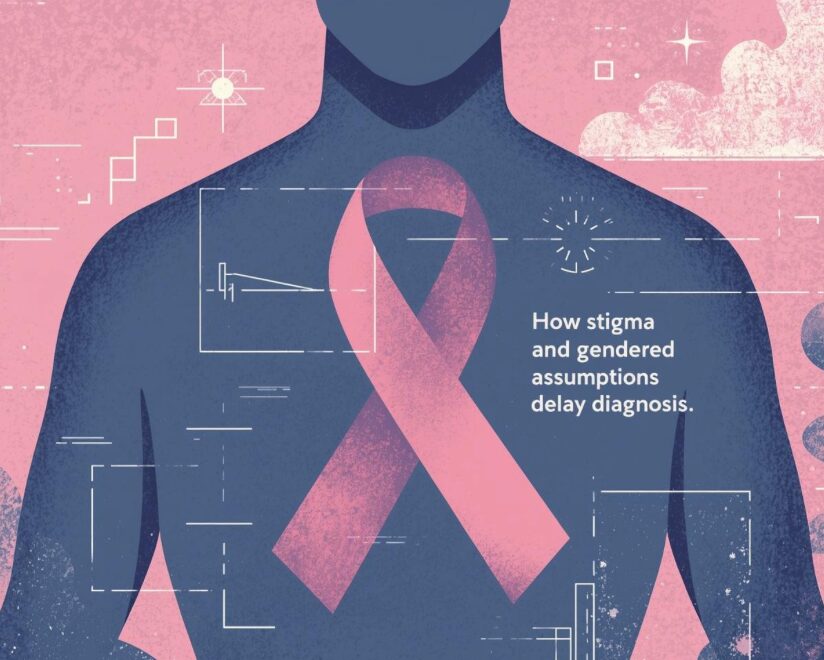
Breast cancer is often discussed as a condition that affects women, and that focus has helped save countless lives through awareness, advocacy, and early detection. At the same time, a small but important group remains overlooked. Approximately 1 percent of breast cancer cases occur in men, a condition known as male breast cancer, or MBC. Although rare, MBC is frequently underdiagnosed, and this delay is closely tied to deeply rooted gendered assumptions about who breast cancer affects and how it should be discussed.
Recognizing male breast cancer does not detract from women’s health. Instead, it highlights how rigid ideas about sex and gender can limit care for everyone. Breast cancer has long been framed as a “women’s disease,” and while this framing has increased awareness among women, it has also unintentionally created barriers for men. Many men report feelings of shame, embarrassment, or emasculation when confronted with an MBC diagnosis, reactions that are often reinforced by the way breast cancer awareness has been publicly represented (Co et al., 2020). Addressing these barriers supports a more inclusive approach to sex- and gender-related health, one that benefits all patients by challenging assumptions that delay diagnosis and treatment.
The rise of pink ribbon culture in the early 1990s successfully elevated breast cancer awareness and normalized conversations about women’s breast health. However, the strong association between femininity, the color pink, and the term “breasts” has unintentionally reinforced the idea that breast cancer is exclusively a women’s issue. As a result, women are often referred promptly for evaluation of breast changes, while men may dismiss similar symptoms or delay seeking care due to lack of awareness (Co et al., 2020). Expanding breast cancer education to acknowledge how symptoms can present in different bodies is a key step toward reducing stigma, improving early detection, and strengthening health equity.
Evidence shows that male breast cancer is more likely to be diagnosed at a later stage than female breast cancer. Nearly half of men are diagnosed at advanced stages compared to about one third of women, contributing to poorer prognoses (Abboah-Offei et al., 2024). This disparity is largely attributed to delayed presentation, absence of screening programs for men, limited provider awareness, and low public knowledge of MBC. Education that includes men in breast cancer messaging encourages earlier recognition of symptoms such as painless retroareolar masses or nipple changes and supports timely medical evaluation. The most common subtype of MBC is invasive hormone receptor positive, ERBB2 negative breast cancer, with major risk factors including BRCA mutations, radiation exposure, and elevated estrogen levels due to conditions such as Klinefelter syndrome, chronic liver disease, or obesity (Khan et al., 2021).
Importantly, improving recognition of MBC also exposes broader gaps in sex- and gender-based medical research. Because male breast cancer is rare, most diagnostic and treatment guidelines are extrapolated from data on female breast cancer. While this approach has been necessary, it can leave male specific clinical and psychosocial needs insufficiently addressed. Strengthening sex inclusive research benefits women as well by promoting more precise, individualized care rather than a one size fits all approach.
Men diagnosed with breast cancer often encounter unique challenges shaped by societal expectations of masculinity. Lack of awareness, embarrassment, and limited social support are consistently cited as major contributors to delayed care seeking (Co et al., 2020). Gendered stigma not only affects patients emotionally but also influences health systems, resulting in educational materials, advocacy campaigns, and clinical resources that rarely include male representation. This exclusion reinforces silence, delays diagnosis, and increases psychological distress. The absence of screening recommendations, self examination guidelines, or routine clinical evaluation for asymptomatic men further compounds these challenges (Giordano et al., 2004).
Normalizing male breast cancer within public discourse is an opportunity to advance inclusive, gender responsive healthcare. Awareness campaigns that use inclusive language and imagery, along with educational materials that reflect diverse bodies and experiences, help dismantle stigma while affirming that breast health is relevant across the gender spectrum. Peer support programs that connect men with others who have experienced breast cancer have been shown to reduce isolation and improve mental health outcomes (Abboah-Offei et al., 2024). Training healthcare professionals to recognize MBC symptoms and address the psychosocial needs of male patients is equally critical for delivering person centered care.
Ultimately, supporting men with breast cancer strengthens the broader movement for sex and gender equity in health. When healthcare systems acknowledge how gendered assumptions shape diagnosis, treatment, and research, they become better equipped to serve everyone. Addressing stigma, expanding education, and promoting inclusive advocacy not only improve outcomes for men with breast cancer but also reinforce the principle that no patient should be overlooked because their experience does not match traditional expectations.
As current and future healthcare professionals, educators, and advocates, we have an opportunity to lead this change. Collaboration with mental health providers, genetic counselors, and gender inclusive support networks can help dismantle stigma and improve care across populations. Early detection saves lives, and equitable care requires recognizing that health conditions do not belong to one gender alone. Breast cancer does not discriminate, and neither should our healthcare systems.
References:
- Abboah-Offei, Mary et al. “Experiences and perceptions of men following breast cancer diagnosis: a mixed method systematic review.” BMC cancer vol. 24,1 179. 6 Feb. 2024, doi:10.1186/s12885-024-11911-9
- Co, Michael et al. “Delayed presentation, diagnosis, and psychosocial aspects of male breast cancer.” Cancer medicine vol. 9,10 (2020): 3305-3309. doi:10.1002/cam4.2953
- Giordano, Sharon H et al. “Breast carcinoma in men: a population-based study.” Cancer vol. 101,1 (2004): 51-7. doi:10.1002/cncr.2031
- Khan, N.A.J., Tirona, M. “An updated review of epidemiology, risk factors, and management of male breast cancer.” Med Oncol 38, 39 (2021). doi:10.1007/s12032-021-01486-x
About the Authors

Jacqueline Ugwuneri, MS3
Jacqueline Ugwuneri is a third-year medical student at St. George’s University School of Medicine. She earned her Bachelor of Arts in Cognitive Science with a concentration in Cognitive Neuroscience from Rutgers University in New Brunswick, NJ. She served as President of the St. George’s University chapter of the Student National Medical Association (SNMA), where she organized mentorship programs, health fairs, and professional development events that fostered community engagement and empowered minority medical students to thrive both academically and personally. Before medical school, she worked as a medical assistant and care coordinator across several specialties, including Family Medicine, Minimally Invasive Gynecologic Surgery (MIGS OB/GYN), Infectious Disease, and Breast Surgical Oncology. When she isn’t caring for patients on the wards or studying, she enjoys vlogging her medical journey, working out, spending time with friends and family, and mentoring aspiring minorities in medicine. She hopes to continue inspiring others by bridging her passion for storytelling, leadership, and advocacy in the pursuit of a more equitable future in healthcare.
Meghan Etsey, MS4

Meghan Etsey is a fourth year medical student from St. George’s University. She has a Bachelors of Arts in Biology and a Bachelors of Arts in Nutrition and Dietetics from Bluffton University in Bluffton, Ohio. She served as the President of the St. George’s University’s Women in Medicine chapter in St. George, Grenada where she expanded relationships with the community and worked towards educating women and helping the youth. She is also a member of the Gender Equity Task Force and Sex and Gender Health Collaborative Committees within the American Medical Women’s Association. When she is not pursuing medicine, you can find her with her friends and family on different road trips and adventures exploring the world.

Teresa Lazar, MD MSEd is the clerkship director of the Advanced Clinical Experience in Obstetrics and Gynecology and Assistant Professor at the Donald and Barbara Zucker School of Medicine at Hofstra Northwell (ZSOM). She obtained her medical degree and completed her residency in obstetrics and gynecology from the State University of New York Health Science Center in Brooklyn and graduated with a Master of Science in Education degree in health professions from Hofstra University. Dr. Lazar was recognized with the APGO Excellence in Teaching Award and is a member of the Academy of Medical Educators and Alpha Omega Alpha Honor Medical Society at the ZSOM. Currently, a member of the American Medical Women’s Association Gender Equity Task Force and the Education Committee. Dr. Lazar is board certified by the American Board of Obstetrics and Gynecology, areas of clinical interest include general obstetrical care, gynecologic care and pelvic ultrasounds. Additionally, she is passionate about medical education, faculty development, communication, and leadership. She is fluent in both English and Spanish.
Formatting, publication management, and editorial support for the AMWA GETF Blog by Vaishnavi J. Patel, DO