
Authors: Mallory Johnson, Mackenzie Ostlie, Meghan Etsey, Dr. Vaishnavi Patel on behalf of the Gender Equity Task Force
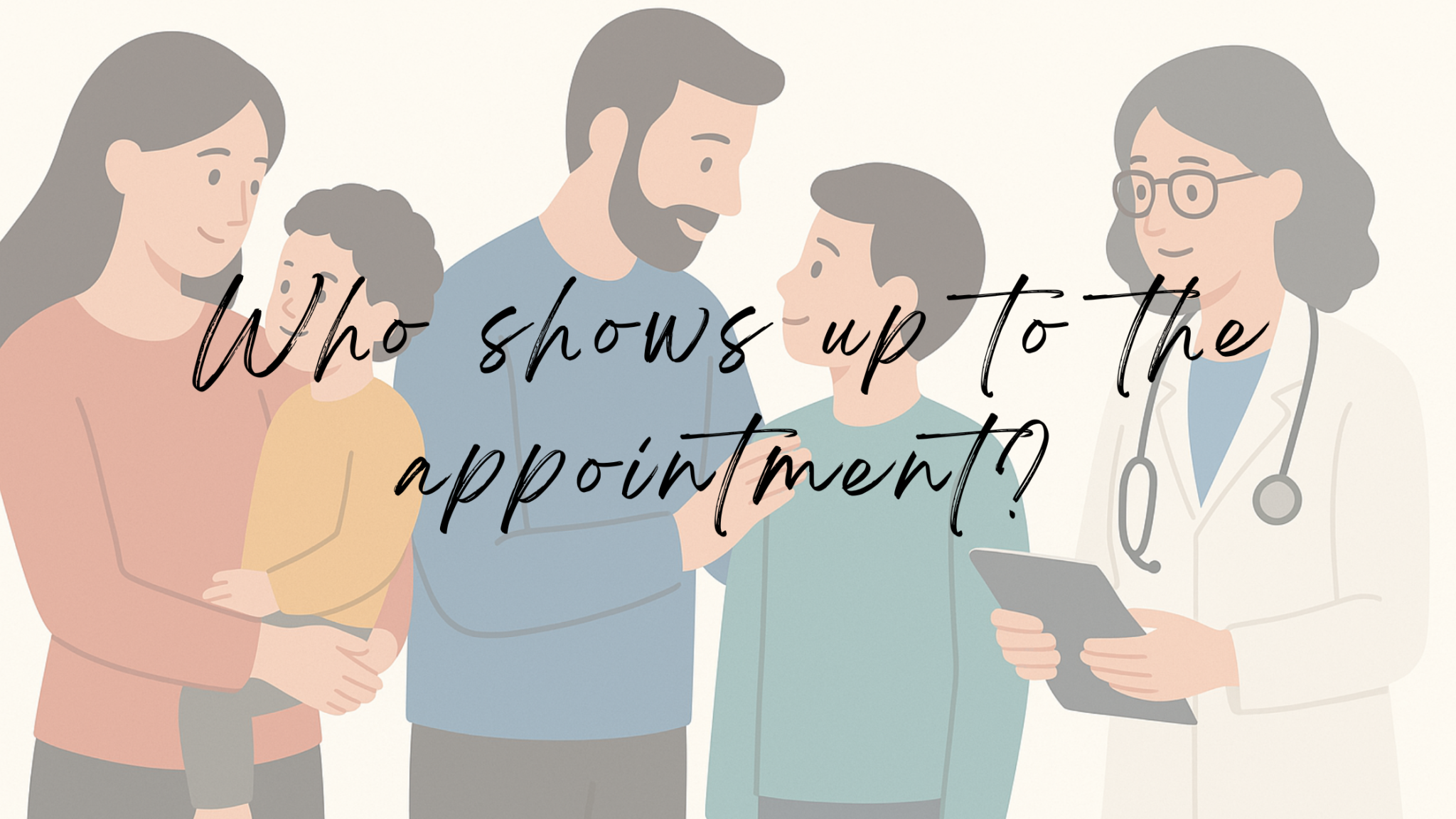
In a pediatric waiting room, toys scatter the floor, colorful posters line the walls, and the hum of conversation fills the air, but one detail stands out: most of the adults present are mothers, juggling paperwork, smartphones, and restless children. This reflects the “default parent” phenomenon, where mothers are expected to manage caregiving responsibilities and make health-related decisions, a pattern rooted in traditional gender roles that dictate who accompanies children to appointments, organizes care, and navigates healthcare systems. Even as family structures evolve and dual-income households become the norm, these expectations persist, shaping pediatric care and reinforcing inequities in both family dynamics and health outcomes. While this discussion often centers on mothers and fathers, reflecting the way most research is framed, we recognize that families come in many forms, and all caregivers– parents, grandparents, partners, or others– play vital roles in children’s health; our aim is to highlight these imbalances in caregiving expectations while affirming the importance of every caretaker who supports a child’s wellbeing.
Even in nations leading in gender equality policies, mothers continue to take on a larger share of child-rearing responsibilities compared to fathers (Mark et al., 2025). One key opportunity for promoting paternal involvement is during well-child visits, which offer fathers a chance to become actively engaged in their child’s healthcare and gain important insights into their child’s growth and development; however, participation remains low, with only about 53% of fathers attending these appointments (Garfield et al., 2006). This disparity becomes even more apparent in specialty pediatric outpatient clinics, where 74% of mothers are present compared to just 44% of fathers (Mark et al., 2025). Although video visits were introduced to reduce barriers to access, the gender gap in attendance persists (Mark et al., 2025), suggesting that deeper structural or cultural factors may be at play. Healthcare providers have a duty to foster environments that support active participation from all caregivers despite potential technical, structural, or financial obstacles (Mark et al., 2025), and they must ensure that they do not reinforce existing inequalities by directing questions, instructions, or follow-up information primarily to mothers, thereby excluding fathers from the communication loop (Mark et al., 2025). Care coordination is also affected: when fathers are present during medical visits, physicians tend to share less information, potentially because mothers more commonly accompany sick children to appointments and are more likely to manage scheduling, insurance, and follow-up care (Cox et al., 2007). This pattern may result either from physicians naturally offering more details to mothers or from mothers, being more accustomed to managing sick care, not feeling the need to request as much information (Cox et al., 2007).
Fathers face multiple challenges that limit their involvement in their child’s healthcare, such as work-related time constraints, uncertainty about their parenting role, and systemic obstacles within the healthcare system. Recognizing that many fathers may have flexibility in scheduling should prompt providers to more actively invite and encourage paternal attendance (Garfield et al., 2006). These individual-level barriers are further compounded by broader societal issues. Deep-rooted gender expectations and wage gaps continue to hinder fathers from sharing childcare responsibilities equally (Mark et al., 2025). Moreover, health systems reflect and perpetuate these societal gender biases, undermining their effectiveness and negatively impacting the safety of healthcare providers and community health outcomes (Hay et al., 2020). Encouragingly, research shows that when fathers are supported in parental leave, they have long-term engagement in a child’s life and report higher satisfaction in father-child interactions (Mark et al., 2025). Structural enablers, such as paid family leave policies, flexible clinic hours, and inclusive scheduling systems play a critical role in facilitating fathers’ ability to balance employment and caregiving responsibilities, thereby reducing the tradeoff between work income generation and active caregiving. To advance health equity and improve child and family outcomes, it is imperative that healthcare systems implement innovative strategies to increase paternal involvement in structured healthcare settings (Garfield et al., 2006).
Mothers are often automatically designated as the primary point of contact for their child’s healthcare, significantly increasing their stress levels by adding to the burden of “invisible labor”—the unpaid and often unrecognized work involved in managing family health and well-being—which can hinder parenting abilities and negatively affect a child’s physical and mental health (Brown et al., 2008). Fathers’ attempts to support their child’s well-being can be limited by a tendency to suppress emotions in order to appear “strong,” leading them to receive only indirect or second-hand information (Swallow et al., 2011). This emotional restraint can create barriers to open communication with providers, reducing fathers’ ability to fully understand and engage in their child’s care, and causing them to miss critical opportunities to bond, participate in decision-making, and contribute meaningfully to their child’s development and emotional well-being. For children, parents frequently report that communication between different areas of care is often disjointed and lacking coordination, which places their health and overall well-being at risk (Cady et al., 2017).
Healthcare providers have a responsibility to update records to include both parents’ contact details equally and to create a thorough, up-to-date, and easily accessible care plan that anticipates needs while involving both mother and father in the child’s care (Cady et al., 2017). Historically, encouraging fathers’ participation was not a central focus in workplace, healthcare, or childcare policies; however, there is now a growing shift toward supporting flexible work options for both fathers and mothers, and employers have a responsibility to create equitable opportunities that enable all parents to be physically present and actively engaged in their child’s health and well-being (Swallow et al., 2011). When fathers are actively involved, children tend to demonstrate better health, developmental, social, and emotional outcomes, including enhanced mental well-being and academic performance (Gears et al., 2024). To support these outcomes, the healthcare system must move beyond outdated stereotypes that position fathers solely as breadwinners and mothers as the primary caregivers. Clear and consistent communication with parents during pediatric visits is essential, as they play a central role in managing their child’s health and making informed decisions about care; providers should center the child and family in the care process by actively including them in all decisions to support self-management and advocacy, while fostering effective teamwork, collaboration, and communication across all care environments to benefit the child’s care (Cady et al., 2017).
Addressing these disparities requires intentional action from healthcare providers, starting with education and training that challenge assumptions about who the “primary caregiver” is. Provider curricula and continuing education can emphasize strategies for engaging all caregivers equally—for example, making eye contact with both parents during discussions, directing questions to fathers as well as mothers, and explicitly inviting fathers to participate in decision-making and follow-up care. Training can also include awareness of implicit biases and role-playing scenarios that highlight how communication patterns may unintentionally exclude one caregiver. Simple adjustments, such as ensuring both parents are added to electronic health records for messaging, scheduling, and updates, can further reinforce shared responsibility. By cultivating a culture of inclusion in clinical encounters, providers not only empower fathers to be active participants but also model to families that caregiving is a shared responsibility, ultimately strengthening child health outcomes.
Pediatric healthcare is designed to support the health and development of children- yet paradoxically, the way it is structured and delivered often mirrors the very adult gender inequities it should help dismantle. Despite growing awareness and policies aimed at gender equality, mothers continue to bear the brunt of child-rearing and healthcare responsibilities. This imbalance is evident in appointment attendance, provider communication, and care coordination. Fathers face multiple barriers to participation and, even when present, often receive less information from providers- limiting their involvement and reinforcing the burden on mothers. To advance equity, healthcare systems should make intentional efforts to include both parents: updating records, training providers to engage fathers, and ensure that communication is balanced. Children who have both parents involved in their lives are often seen to have positive developmental, emotional, social, and health outcomes. Having both parents present in the healthcare setting gives providers the full picture of the child’s health. Each parent has a unique perspective to share, not to mention the genetic factor playing a role in risk for disease development. Involvement of both parents also ensures better support for the child’s health and wellbeing, as they can use information shared in the appointment to come to a unified decision regarding care. Both parents being present and receiving the same information, rather than information being relayed from one parent to another, contributes to the implementation and adherence to a care plan. This improves the quality and safety of care. Workplaces must promote flexibility to enable the attendance of both parents during medical appointments, while cultural norms must evolve to view paternal involvement as essential. Families, too, benefit from intentionally sharing healthcare duties. Ultimately, true equity in healthcare starts not only with the patient, but also with who gets to show up.
References
Brown JD, Wissow LS. Discussion of maternal stress during pediatric primary care visits. Ambul Pediatr. 2008;8(6):368-374. doi:10.1016/j.ambp.2008.08.004
Cady RG, Belew JL. Parent Perspective on Care Coordination Services for Their Child with Medical Complexity. Children (Basel). 2017;4(6):45. Published 2017 Jun 6. doi:10.3390/children4060045
Cox ED, Smith MA, Brown RL, Fitzpatrick MA. Effect of gender and visit length on participation in pediatric visits. Patient Educ Couns. 2007;65(3):320-328. doi:10.1016/j.pec.2006.08.013
Craig F. Garfield, Anthony Isacco; Fathers and the Well-Child Visit. Pediatrics April 2006; 117 (4): e637–e645. 10.1542/peds.2005-1612
Gears H, Mendoza L. Partnering with Dads to Enhance Pediatric Care. Center for Health Care Strategies; May 2024. https://www.chcs.org/resource/partnering-with-dads-to-enhance-pediatric-care/
Hay K, McDougal L, Percival V, et al. Disrupting gender norms in health systems: making the case for change. Lancet. 2019;393(10190):2535-2549. doi:10.1016/S0140-6736(19)30648-8
Mark L, Mellqvist V, Michelsen J, et al. Gender equality in caregiver attendance for children with chronic diseases: a Swedish longitudinal observational study. BMJ Public Health. 2025;3(1):e001584. Published 2025 Apr 2. doi:10.1136/bmjph-2024-001584
Swallow V, Macfadyen A, Santacroce SJ, Lambert H. Fathers’ contributions to the management of their child’s long-term medical condition: a narrative review of the literature. Health Expect. 2012;15(2):157-175. doi:10.1111/j.1369-7625.2011.00674.
About the Authors
 Mallory Johnson, MS4
Mallory Johnson is a fourth-year medical student from St. George’s University. She holds a Bachelor of Science in Forensic Science and a Bachelor of Science in Chemistry from Tiffin University. She worked as an Analytical Chemist at P&G and KAO before medical school. She is passionate about giving back to vulnerable communities and providing equal access and opportunity to medical care. She is a member of the Domestic Violence and Music in Medicine Committees within the American Medical Women’s Association. When she’s not doing schoolwork, you can find her playing her cello, reading cozy mysteries, and playing with her poodles, Gertie and Maple.
 Meghan Etsey, MS4
Meghan Etsey is a fourth year medical student from St. George’s University. She has a Bachelors of Arts in Biology and a Bachelors of Arts in Nutrition and Dietetics from Bluffton University in Bluffton, Ohio. She served as the President of the St. George’s University’s Women in Medicine chapter in St. George, Grenada where she expanded relationships with the community and worked towards educating women and helping the youth. She is also a member of the Gender Equity Task Force and Sex and Gender Health Collaborative Committees within the American Medical Women’s Association. When she is not pursuing medicine, you can find her with her friends and family on different road trips and adventures exploring the world.
 Mackenzie Ostlie, MS4
Mackenzie Ostlie is a fourth-year medical student at St. George’s University. She holds a Bachelor of Science in Electrical Engineering from North Dakota State University in Fargo, ND. She served as Executive Director of Grenada Give Back; a student-led volunteer organization based in St. George’s, Grenada, that served to bridge gaps and meet needs in the community. Growing up in rural Minnesota, she is passionate about reaching the underserved and providing equal access to healthcare for all communities. Beyond her academic and clinical training, Mackenzie enjoys spending time with family and friends, especially when it involves being outdoors on her mountain bike or on the lake.
 Vaishnavi J. Patel, DO is an early career family medicine physician. She is passionate about Women’s Health and advocacy, serving on the Executive Board of the American Medical Women’s Association GETF and playing a crucial role in their initiatives to support women in medicine. Her research expertise includes scientific computation, data sciences, and analyzing methods to improve patient outcomes and women’s health. She is a dedicated volunteer for local free clinics and a speaker at various programs focused on patient education and advocacy. She serves as an ambassador of the Gold Humanism Honor Society and is a recipient of the Lifetime Presidential Volunteer Service Award and the Eliza Lo Chin Unsung Hero Award. In her spare time, she enjoys archery, reading, spending time with her family, and spoiling her pets. Her patients describe her as compassionate, thorough, and knowledgeable. Her classmates, coworkers, and mentors describe her as a genuine leader, hard-worker, and a valuable asset to the future of medicine.