
Authors: Rhea Manohar, MPH; Chelsea Oppong, MS; Jacqueline Ugwuneri; Casey Gunn, Brianna Clark, DO on behalf of the AMWA Gender Equity Task Force
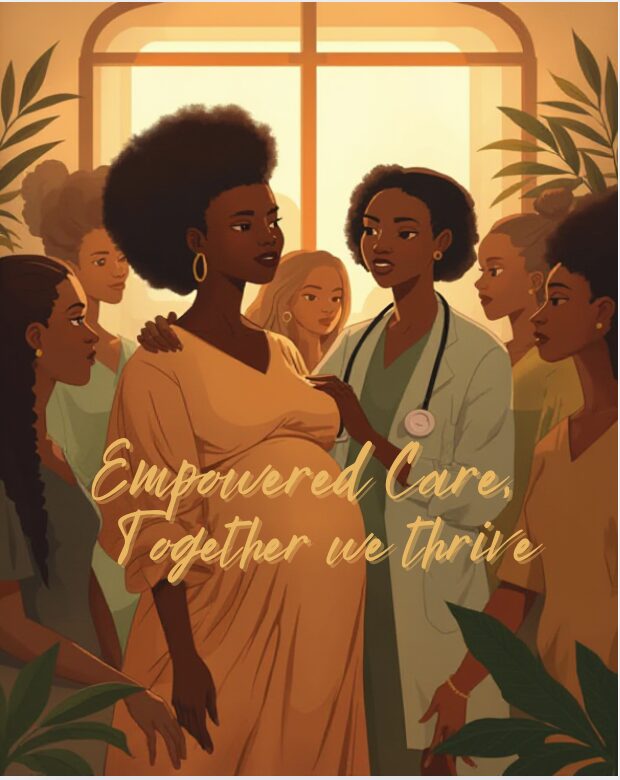
Maternal mortality in the United States remains a profound public health failure, with Black and African American women experiencing disproportionately high rates of pregnancy-related complications and deaths. These inequities are not the result of biological difference, but rather the cumulative impact of structural racism, implicit bias in clinical care, and longstanding gaps in culturally competent reproductive health services. As healthcare systems strive to improve maternal outcomes, it is essential to examine how cultural understanding, patient-centered communication, and trust influence the safety and quality of reproductive care. Addressing these barriers is not only a matter of clinical excellence but a moral imperative to ensure equitable, respectful, and evidence-based care for Black women across all perinatal settings.
Today, the effects of historical medical harms persist. Not as distant memories but as lived realities that continue to shape patient experiences.Contemporary research shows that the enduring effects of racism and sexism shape patient–provider interactions, limit care quality, and directly contribute to adverse reproductive health outcomes. Addressing these inequities is not merely a matter of clinical improvement, but a moral imperative to dismantle the structures that place Black women at disproportionate risk across all perinatal settings (Saluja & Bryant, 2021; Society for Maternal-Fetal Medicine, 2022; Segovia et al., 2025).
Structural contributors to maternal inequity operate across multiple levels. Systemic racism embedded in healthcare institutions affects clinical decision-making, treatment quality, and access to high-resource perinatal services (Society for Maternal-Fetal Medicine et al., 2022). Socioeconomic barriers such as underinsurance, housing insecurity, and limited access to culturally responsive prenatal care heighten vulnerability by constraining preventive and early pregnancy care access (Segovia et al., 2025). As systemic racism intersects with sexism, Black women experience compounded disadvantages that hinder access to timely, culturally responsive prenatal care, which ultimately intensifies these socioeconomic barriers. The cumulative burden of navigating racism and sexism simultaneously, similar to fighting a multifront war, requires a heavy physiologic toll. Increasing the chronic exposure to structural stressors, including racism, discrimination, and socioeconomic disadvantage, has been associated with increased risk of preterm birth, low birth weight, and other adverse perinatal outcomes among Black women. (Beldon MA et al., 2025).
Historical medical perceptions continue to shape how Black women are viewed and treated in reproductive care settings, where they have long been portrayed as “poor,” “uneducated,” “noncompliant,” or “undeserving” of high-quality medical attention (Saluja & Bryant, 2021). These stereotypes directly influence clinician assumptions and communication patterns, often resulting in shorter visits, less patient engagement, and fewer opportunities for shared decision-making. Research shows that Black women are more likely to have their symptoms dismissed or minimized, even when reporting classic warning signs such as severe headaches, swelling, shortness of breath, or reduced fetal movement (Davis, 2019; Greenwood et al., 2020). This pattern of dismissal undermines patient trust and reduces the likelihood that serious clinical concerns will be addressed promptly.
Ultimately, when early warning signs of conditions such as hypertension or preeclampsia are overlooked or underestimated, Black women face avoidable delays in diagnosis and treatment. These delays contribute directly to the disproportionately high rates of maternal morbidity and mortality observed across perinatal care settings (Bryant et al., 2021; Society for Maternal-Fetal Medicine, 2022).
Improving outcomes for Black and African American women requires expanding culturally competent, patient-centered reproductive care that values patient autonomy, lived experience, and cultural context. Culturally competent care recognizes how racism, past healthcare interactions, and community-specific histories shape comfort, trust, and decision making during pregnancy (Segovia et al., 2025). Evidence shows that respectful, patient-centered maternity care is strongly associated with better birth experiences and can mitigate the impact of racism within obstetric systems (Society for Maternal-Fetal Medicine et al., 2022). Shared decision-making, where patients participate actively in shaping their reproductive care plans enhances safety by ensuring that interventions align with patient preferences and values (Saluja & Bryant, 2021). Tailoring reproductive care to support patient-defined priorities such as communication preferences, support persons, birth plans, or pain management fosters a sense of dignity and safety throughout pregnancy and childbirth.
Beyond dismantling historical biases, it is critical to create a maternal health clinician workforce that mirrors the patient population. This representative diversification has been shown to increase trust, improve communication, and reduce perceived discrimination in clinical encounters, especially in reproductive settings (Ndugga & Artiga, 2021). This can lead to earlier engagement in prenatal care and higher adherence to recommended interventions (Like, 2011). In addition, expanding community-based maternal support, such as doulas, community health workers, and peer navigators, has been associated with reduced rates of cesarean delivery, improved breastfeeding outcomes, and greater patient satisfaction (Kozhimannil et al., 2013). These community-based programs bridge gaps in traditional healthcare settings by providing culturally grounded support, advocacy during labor, and continuity of care beyond clinical appointments (Sakala & Romano, 2016).
Reducing maternal mortality among Black and African American women requires more than procedural improvements; it demands a fundamental transformation in how reproductive care is delivered and valued. Culturally competent care offers a pathway to rebuilding trust, improving communication, and ensuring that Black women’s concerns are heard and addressed with urgency. By investing in culturally informed clinical practices, community partnerships, and structural reforms, healthcare systems can move toward a future where all women experience safe, dignified, and equitable maternity care. Additionally, organizations, such as the American Medical Women’s Association, can further support these efforts by highlighting inequities and fostering meaningful discussion on the need for systemic change. The work ahead is complex but essential and the potential impact for families, communities, and future generations is profound.
References:
- Geronimus, A. T., Hicken, M., Keene, D., & Bound, J. (2006). “Weathering” and age patterns of allostatic load scores among Blacks and Whites in the United States. American Journal of Public Health, 96(5), 826–833. https://doi.org/10.2105/AJPH.2004.060749
- Glover, K. (2021). Can you hear me?: How implicit bias creates a disparate impact in maternal healthcare for Black women. Campbell Law Review, 43(2), 243–269.
- Hunte, R., Klawetter, S., & Paul, S. (2022). “Black Nurses in the Home is Working”: Advocacy, Naming, and Processing Racism to Improve Black Maternal and Infant Health. Maternal and child health journal, 26(4), 933–940. https://doi.org/10.1007/s10995-021-03283-4
- Knight, M., Bunch, K., Vousden, N., Banerjee, A., Cox, P., Cross-Sudworth, F., Dhanjal, M. K., Douglas, J., Girling, J., Kenyon, S., Kotnis, R., Patel, R., Shakespeare, J., Tuffnell, D., Wilkinson, M., Kurinczuk, J. J., & MBRRACE-UK (2021). A national cohort study and confidential enquiry to investigate ethnic disparities in maternal mortality. EClinicalMedicine, 43, 101237. https://doi.org/10.1016/j.eclinm.2021.101237
- Kozhimannil, K. B., Attanasio, L. B., Hardeman, R. R., & O’Brien, M. (2013). Doula care supports near-universal breastfeeding initiation among diverse, low-income women. Journal of Midwifery & Women’s Health, 58(4), 378–382. https://doi.org/10.1111/jmwh.12065.
- Like, R. C. (2011). Educating clinicians about cultural competence and disparities in health and health care.Journal of Continuing Education in the Health Professions, 31(3), 196–206. https://doi.org/10.1002/chp.20127
- Mehta, L. S., Sharma, G., Creanga, A. A., Hameed, A. B., Hollier, L. M., Johnson, J. C., & Leffert, L. (2021, September 8). Call to Action: Maternal Health and Saving Mothers: A Policy Statement From the American Heart Association. American Heart Association. https://www.ahajournals.org/doi/full/10.1161/CIR.0000000000001000?rfr_dat=cr_pub++0pubmed&url_ver=Z39.88-2003&rfr_id=ori%3Arid%3Acrossref.org
- Ndugga, N., & Artiga, S. (2021, May 11). Disparities in health and health care: 5 key questions and answers.Kaiser Family Foundation. https://www.kff.org/racial-equity-and-health-policy/issue-brief/disparities-in-health-and-health-care-5-key-questions-and-answers/
- Sakala, C., & Romano, A. M. (2016). Hormonal physiology of childbearing: An essential framework for maternal–newborn nursing. Journal of Obstetric, Gynecologic & Neonatal Nursing, 45(2), 264–275. https://doi.org/10.1016/j.jogn.2015.12.006.
- Saluja, B., & Bryant, Z. (2021). How implicit bias contributes to racial disparities in maternal morbidity and mortality in the United States. Journal of Women’s Health, 30(2), 270–278. https://doi.org/10.1089/jwh.2020.8874
- Saha, S., Beach, M. C., & Cooper, L. A. (2008). Patient centeredness, cultural competence, and healthcare quality.Journal of the National Medical Association, 100(11), 1275–1285. https://doi.org/10.1016/S0027-9684(15)31505-4.
- Segovia, L. M., Neiman, E., Gillespie, S. L., Jancsura, M. K., & Anderson, C. M. (2025). Prenatal and Postpartum Care Experiences Among Black Birthing People in the United States: An Integrative Review. Journal of midwifery & women’s health, 70(2), 235–246. https://doi.org/10.1111/jmwh.13705
- Society for Maternal-Fetal Medicine , Greenberg, M. B., Gandh, M., Davidson, C., & Carter, E. B. (2022, August). Society for Maternal-Fetal Medicine Consult Series #62: Best practices in equitable care delivery–Addressing systemic racism and other social determinants of health as causes of obstetrical disparities. American Journal of Obstetrics & Gynecology. https://www.ajog.org/article/S0002-9378(22)00266-6/fulltext
- Beldon MA, Clay SL, Uhr SD, Woolfolk CL, Canton IJ. Exposure to Racism and Adverse Pregnancy Outcomes for Black Women: A Systematic Review and Meta-Analysis. J Immigr Minor Health. 2025 Feb;27(1):149-170. doi: 10.1007/s10903-024-01641-2. Epub 2024 Oct 31. PMID: 39480598.
About the Authors
Rhea Manohar, MPH, MS3

Rhea Manohar is a third year medical student from St. George’s University. She has a Masters in Public Health with a concentration in Maternal and Child Health from George Washington University Milken Institute of Public Health and a Bachelors of Science in Microbiology & Immunology, and Public Health from the University of Miami. She served as Co-VP of OB/GYN Education for St. George’s University’s Women in Medicine chapter in St. George, Grenada where she developed hands-on workshops to further reproductive health issues and navigating challenging physician-patient communication scenarios. Prior to medical school, she was a Research Associate for Fors Marsh Group, where she led qualitative and quantitative public health research and campaign development for federal agencies (e.g., CDC, NIH, DHHS, CPSC). She is also a member of the Gender Equity Task Force of the American Medical Women’s Association. When she is not pursuing medicine, you can find her reading, exploring artistic passions, and spending time connecting with friends and family.
Chelsea Oppong, MS, MS3

Chelsea Oppong is a third year medical student at St. George’s University School of Medicine. She earned her Master’s degree in Medical Physiology from Case Western Reserve University and her Bachelor of Science in Biology from Georgia State University. She served as Vice President of the Program for Adolescent Mothers (PAM) under the Women in Medicine chapter at St. George’s, where she developed and led initiatives to promote the health and well-being of adolescent mothers in Grenada. She also serves on the Gender Equity Task Force and the Sex and Gender Health Collaborative Committees within the American Medical Women’s Association. Beyond medicine, Chelsea is passionate about mentoring aspiring minority students and enjoys spending her free time with family and friends, exploring new experiences, or relaxing with a favorite reality show or classic sitcom.
Jacqueline Ugwuneri, MS3

Jacqueline Ugwuneri is a third-year medical student at St. George’s University School of Medicine. She earned her Bachelor of Arts in Cognitive Science with a concentration in Cognitive Neuroscience from Rutgers University in New Brunswick, NJ. She served as President of the St. George’s University chapter of the Student National Medical Association (SNMA), where she organized mentorship programs, health fairs, and professional development events that fostered community engagement and empowered minority medical students to thrive both academically and personally. Before medical school, she worked as a medical assistant and care coordinator across several specialties, including Family Medicine, Minimally Invasive Gynecologic Surgery (MIGS OB/GYN), Infectious Disease, and Breast Surgical Oncology. When she isn’t caring for patients on the wards or studying, she enjoys vlogging her medical journey, working out, spending time with friends and family, and mentoring aspiring minorities in medicine. She hopes to continue inspiring others by bridging her passion for storytelling, leadership, and advocacy in the pursuit of a more equitable future in healthcare.
Casey Gunn, MS3

Casey Gunn is a third-year medical student at St. George’s University School of Medicine. She earned her Bachelor of Arts in Spanish from the University of Georgia. At St. George’s University, Casey is an active member of Women in Medicine and the Student National Medical Association. She also serves as a member of the Gender Equity Task Force Committee within the American Medical Women’s Association, contributing to efforts that promote equity and inclusion in medicine. Casey is passionate about advancing health equity and supporting underserved and historically underrepresented communities through mentorship, advocacy, education, and community-centered initiatives.
Brianna Clark, DO

Dr. Brianna Clark is a proud osteopathic physician. She has completed fellowships in Breastfeeding Medicine at the University of Rochester Lessons in Lactation Advanced Curriculum ( LILAC) and Climate Health Equity Fellowship ( CHEF) through the National Medical Association ( NMA). She spends her spare time thinking about innovative ways to provide equitable health care to all and create sustainable advocacy.