
Authors: Rhea Manohar, MPH; Chelsea Oppong, MS; Leila Metellus, MS; Ariela Marshall, MD on behalf of the AMWA Gender Equity Task Force
Henrietta Lacks. Her story, one that could fill the pages of science textbooks everywhere, is often relegated to a historical anecdote. The woman behind HeLa cells, the first immortal human cell line, is frequently mentioned only in passing despite the enormous scientific impact of her cells. Since their collection in 1951, HeLa cells have contributed to major advances in vaccine development, cancer research, infertility treatments, and HIV studies (Matza, 2026; Skloot, 2010). For many years, however, the recognition of Lacks’ role in these breakthroughs rarely extended beyond that brief mention. Over the past few decades, her life and her family’s fight for acknowledgement has revealed a deeper narrative, one that highlights the historical absence of patient autonomy and the importance of informed consent in medical procedures.
The story of HeLa cells represents not only a scientific breakthrough, but also a reflection of medicine’s historical relationship with marginalized communities. Henrietta Lacks was a Virginia native raised by her grandfather on a tobacco farm. She was married at 21 and became a mother to 5 young children. Even at this young age she was passionate about improving her family’s conditions, and moved her family north to Maryland for better opportunities. One day when experiencing heavy vaginal bleeding, Henrietta sought help from the only hospital available which provided care for Black patients. She was unfortunately diagnosed with aggressive cervical cancer and died at the young age of 31. While she was receiving treatment at Johns Hopkins Hospital, her tumor cells were collected and used for research – entirely without her knowledge or consent. (Skloot, 2010).
At the time, such practices were not uncommon. Medical ethics had not yet evolved to value patient autonomy in the way modern medicine strives to today. However, the legacy of this event continues to shape ongoing conversations about research transparency and the ethical responsibilities of clinicians and scientists.
HeLa cells themselves are remarkable in their scientific contributions. These were the first immortalized human cell lines grown successfully in vitro, meaning they could divide indefinitely under laboratory conditions. Their durability transformed biomedical research. HeLa cells helped advance polio vaccine development, cancer biology, gene mapping, and HIV research, among countless other discoveries (Matza, 2026; NIH, 2025a; Skloot, 2010). Yet as with many discoveries in the field, the scientific celebration of this breakthrough often occurred without parallel recognition of the woman whose biological material made it possible.
The ethical concerns surrounding HeLa cells lie not in their scientific value, but in the circumstances of their acquisition. Henrietta Lacks and her family were not informed that her cells would be used for research or commercialized in laboratories around the world. For decades, her family had limited knowledge of how extensively her cells were distributed and used and they were denied the share of the fame and profits that came from the discoveries made through the HeLa cell line (Matza, 2026). In 2025, in conjunction with the Lacks’ family, the National Institutes of Health released the NIH-Lacks Family Agreement, which stipulates a formal contract on the acknowledgement and proposed continued use of the HeLa cell line for research (NIH, 2025b). While this agreement represents an important step toward greater respect for patient autonomy and consent in research, its delayed implementation highlights broader patterns of inequity in healthcare and biomedical research, particularly for minority populations who have historically experienced structural bias within medical systems.
The legacy of Henrietta Lacks extends far beyond cell biology and into the broader conversation about reproductive justice especially in minority communities. Reproductive justice emphasizes the right to make informed decisions about one’s body, healthcare, and biological data. For historically marginalized communities, particularly Black women in the United States, true autonomy in medical decision-making has not always been guaranteed. The story of HeLa cells serves as a powerful reminder that scientific advancement must never come at the expense of human dignity. It is important as physicians to remember that we have a duty to people over science.
Healthcare disparities remain a persistent challenge. Black women in the United States experience disproportionately higher rates of maternal morbidity and mortality compared to nearly all racial and ethnic groups, even after accounting for certain socioeconomic factors. Structural inequities, differences in access to preventive care, and implicit bias within clinical environments all contribute to these outcomes (CDC, 2023). Addressing these disparities requires more than clinical innovation alone. It requires the intentional design of healthcare systems that prioritize equity, cultural responsiveness, and trust-building within communities.
The conversation surrounding HeLa cells has become even more relevant as biomedical research increasingly relies on genetic and cellular information. Modern medicine now operates on the principle that patients should maintain agency over how their biological material is used. Institutional review boards, informed consent requirements, and privacy protections were developed partly in response to historical ethical failures. These safeguards are especially important for communities that have historically faced medical exploitation or exclusion from equitable care. Recent legal recognition and settlement discussions involving the Lacks family represent more than financial or legal resolution. They reflect a broader societal shift toward acknowledging historical injustice in biomedical research (Matza, 2026). While no settlement can fully restore what was lost, public acknowledgment serves as an important step toward accountability and ethical reform. More importantly, these developments reinforce the expectation that scientific progress should be accompanied by responsibility to the individuals and communities that make it possible.
As biomedical technology advances, questions surrounding ownership of biological data will only grow more complex. Genomic medicine, biobanking, and personalized therapeutics hold tremendous promise, but they also demand careful ethical consideration. Who controls biological samples? How should communities that contribute biological material be recognized? And how can research innovation coexist with respect for individual rights? The story of Henrietta Lacks ultimately reminds healthcare professionals that scientific discovery begins with people. Every tissue sample represents a life story, a family history, and a community context. The future of medicine depends not only on technological advancement but also on the trust that patients place in healthcare systems.
Honoring Henrietta Lacks means ensuring that the scientific achievements derived from HeLa cells are accompanied by meaningful ethical progress. Recognizing her contribution symbolizes a commitment to patient autonomy, minority health equity, and responsible research practices. Science should illuminate life without overshadowing the people behind it. Henrietta Lacks’ legacy invites the continued reflection on medicine’s past while challenging the healthcare community to confront its historical injustices and build a more equitable patient centered future.
References
- Skloot, R. (2010). The immortal life of Henrietta Lacks. Crown Publishing.
- Centers for Disease Control and Prevention [CDC]. (2023). Racial and ethnic disparities in maternal mortality. https://www.cdc.gov/
- Matza, M. (2026, February 28). Henrietta lacks: Family of “stolen cells” woman settle second lawsuit. BBC News. https://www.bbc.com/news/articles/czj1pw0rmmgo
- National Institutes of Health [NIH] (2025a, May). Significant Research Advances Enabled by HeLa Cells. https://osp.od.nih.gov/hela-cells/significant-research-advances-enabled-by-hela-cells/
- National Institutes of Health. (2025b, August 5). The NIH-Lacks Family Agreement. https://grants.nih.gov/policy-and-compliance/policy-topics/sharing-policies/dms/privacy/nih-lacks-family-agreement
About the Authors
Rhea Manohar, MPH, MS3
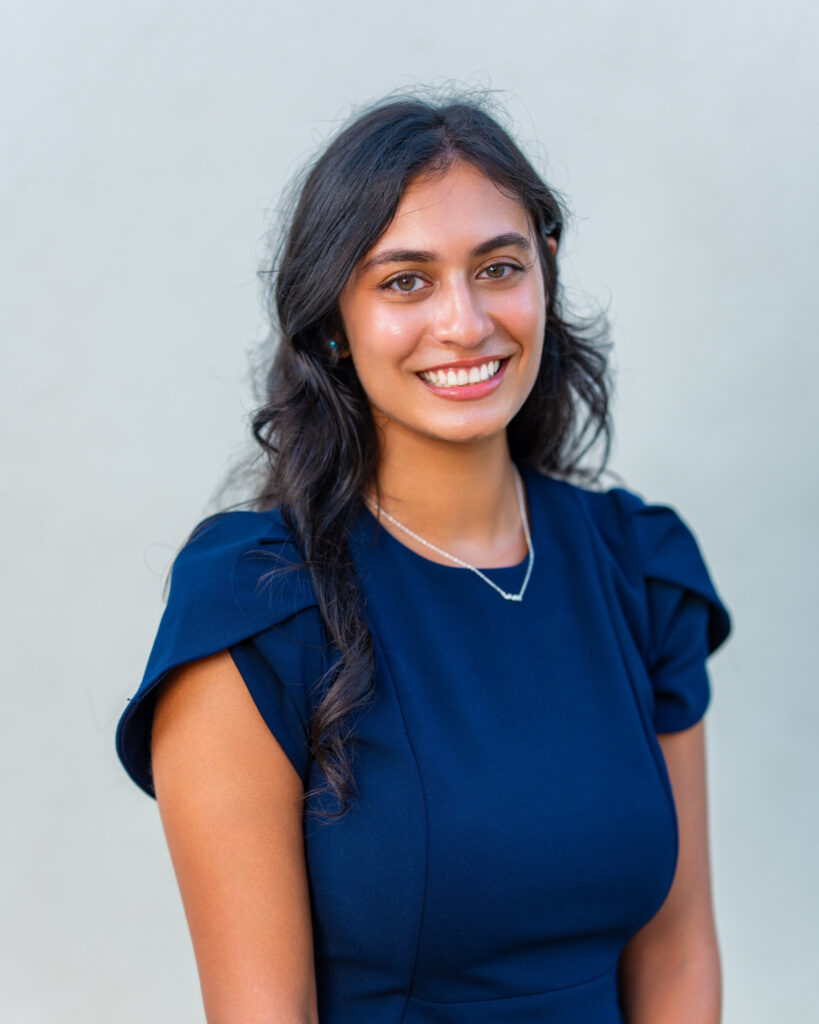
Rhea Manohar is a third year medical student from St. George’s University. She has a Masters in Public Health with a concentration in Maternal and Child Health from George Washington University Milken Institute of Public Health and a Bachelors of Science in Microbiology & Immunology, and Public Health from the University of Miami. She served as Co-VP of OB/GYN Education for St. George’s University’s Women in Medicine chapter in St. George, Grenada where she developed hands-on workshops to further reproductive health issues and navigating challenging physician-patient communication scenarios. Prior to medical school, she was a Research Associate for Fors Marsh Group, where she led qualitative and quantitative public health research and campaign development for federal agencies (e.g., CDC, NIH, DHHS, CPSC). She is also a member of the Gender Equity Task Force of the American Medical Women’s Association. When she is not pursuing medicine, you can find her reading, exploring artistic passions, and spending time connecting with friends and family.
Chelsea Oppong, MS, MS3
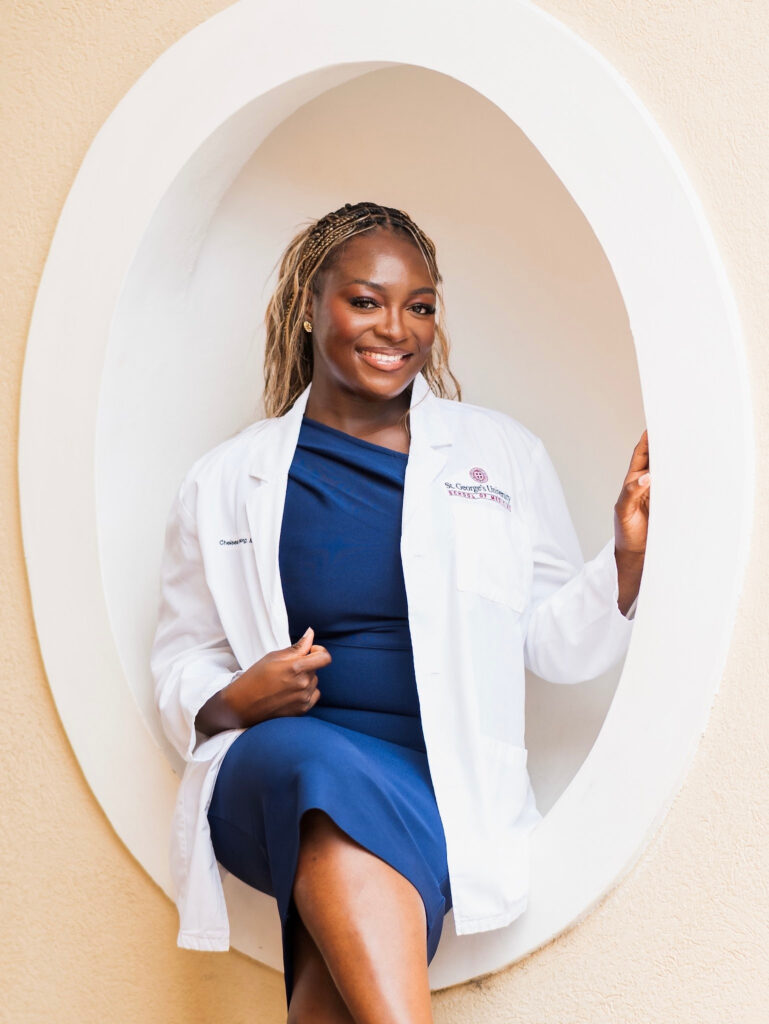
Chelsea Oppong is a third year medical student at St. George’s University School of Medicine. She earned her Master’s degree in Medical Physiology from Case Western Reserve University and her Bachelor of Science in Biology from Georgia State University. She served as Vice President of the Program for Adolescent Mothers (PAM) under the Women in Medicine chapter at St. George’s, where she developed and led initiatives to promote the health and well-being of adolescent mothers in Grenada. She also serves on the Gender Equity Task Force Committee within the American Medical Women’s Association. Beyond medicine, Chelsea is passionate about mentoring aspiring minority students and enjoys spending her free time with family and friends, exploring new experiences, or relaxing with a favorite reality show or classic sitcom.
Leila Metellus, MS3

Leïla is a 3rd year medical student at St. Georges University. She has served as Community Liaison & VP for the Student National Medical Association. She has also dedicated her efforts to supporting the social media team for the Christian Student Association. She completed her Bachelor’s degree at the University of Miami where she double majored in Sociology along with Community & Applied Psychological Studies. She has been working in the healthcare field since she graduated high school as a licensed practical nurse. She hopes to pull from her experience and education to truly provide holistic care to her future patients. She’s affiliated with many community organizations over the years, her most prominent being with Zeta Phi Beta Sorority, Inc. and Ayïti Community Trust. Her work with them has inspired her to create a community service based organization of her own called Baked Blessings. For fun Leïla likes to watch movies, especially a good rom-com, and travel the world!
Ariela Marshall, MD

Dr. Ariela Marshall is a Harvard-trained physician and an internationally renowned advocate, career development advisor, and mentor. Dr. Marshall specializes in bleeding and clotting disorders, especially as they relate to women’s health. She has worked at Mayo Clinic and the University of Pennsylvania and currently practices as a consultative hematologist at the University of Minnesota (UMN) and the Program Director of the UMN Hematology-Oncology Fellowship. In addition to her clinical work, Dr. Marshall is a highly respected leader, mentor, and speaker. She is an active leader with the American Society of Hematology (where she led efforts to found the Women in Hematology Working Group and currently holds seats on the Women in Heme Working Group, Committee on Communications and Media Experts Subcommittee) and American Medical Women’s Association (leading the Infertility Working Group and holding seats on the Gender Equity Task Force). She speaks regularly on a national and international scope to discuss her efforts to advance career development and mentorship for physicians, gender equity, fertility/infertility awareness, parental health and wellbeing, reproductive health and rights, and work-life integration.