
Authors: Rhea Manohar, MPH; Meghan Etsey, MD; Yun Weisholtz, MD-PhD on behalf of AMWA’s Gender Equity Task Force and American Women’s Hospitals Service
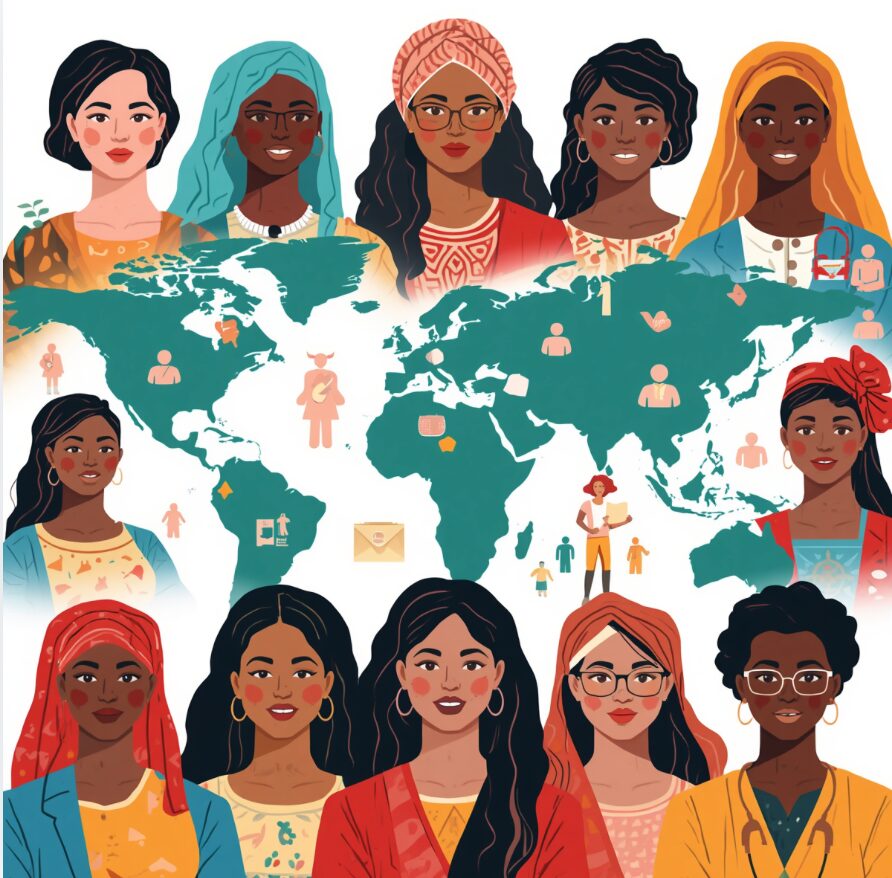
In one country, a woman can schedule a same-day abortion with minimal barriers. In another, she may travel across regions or borders to access the same care, often at significant personal risk. Elsewhere, her ability to use contraception may depend not on her own preferences, but on the consent of a partner, family member, or governing authority. These differences are not incidental. Instead, they reflect deeply embedded systems of power that shape who is allowed to make reproductive decisions, and under what conditions.
Globally, reproductive healthcare is profoundly shaped by intersecting structural barriers, power imbalances, and violations of autonomy that disproportionately affect marginalized populations. Over half of women in Sub-Saharan Africa face significant barriers to healthcare access, while nearly one in three women worldwide experiences sexual and gender-based violence. Both of these factors directly influence reproductive health outcomes (Mayer et al., 2025; Zeleke et al., 2026). Reproductive health, therefore, is not solely a clinical issue. It is a measure of autonomy, policy, and power. Control over reproductive healthcare at individual, community, and governmental levels drives inequities in access, outcomes, and fundamental rights worldwide.
Reproductive health encompasses access to contraception, safe and respectful pregnancy care, abortion services, and fertility support. It reflects not only the absence of disease, but a state of complete physical, mental, and social well-being in all aspects of reproduction. At the center of this framework is reproductive autonomy, specifically the ability to make informed, voluntary decisions about one’s reproductive life free from coercion, discrimination, or violence. Increasingly recognized within global health and human rights frameworks, reproductive autonomy is foundational to equitable care. Without it, access becomes conditional and mediated by systems of power rather than individual need.
Reproductive decision-making is rarely individual. It is shaped by layered power dynamics across households, communities, healthcare systems, and governments, with gender inequity being a central driver. In countries such as Jordan, husbands often retain final authority over family-planning decisions, requiring women to navigate these conversations carefully to maintain relational stability (Al-Sheyab et al., 2021). Among adolescent girls and young women in urban African settings, relationship power imbalances, including age disparities, transactional relationships, and intimate partner violence, are both prevalent and overlapping, with more than half reporting partner-related fear (Decker et al., 2021).
Reproductive coercion is defined as behaviors that interfere with contraceptive or pregnancy decision-making, and it affects nearly one in four recently pregnant individuals (Grace et al., 2025). Its consequences extend beyond autonomy, contributing to unintended pregnancy, sexually transmitted infections, low birth weight, postpartum depression, and increased suicidality (Grace et al., 2025; Saldanha et al., 2025). This power can also be exercised within clinical encounters. Notably, women of color report that providers often control and selectively present information, effectively “packaging” choices in ways that limit patient agency (Altman et al., 2019). This dynamic underscores how systemic inequities are reproduced not only through policy but through everyday interactions within healthcare systems.
Laws and policies represent some of the most explicit mechanisms of control over reproductive healthcare. Across global contexts, legal frameworks governing abortion, contraception, and maternal healthcare vary widely, often reflecting political ideology rather than public health evidence. Restrictive policies, such as bans on contraceptive sales, requirements for spousal or parental consent, and limitations on abortion services, create significant barriers to care (Mayer et al., 2025). Even where services are legally permitted, regulatory burdens and resource constraints can render access functionally unattainable. Importantly, structural determinants such as immigration status further shape access. Undocumented individuals face reduced eligibility for insurance programs, limited access to employer-sponsored coverage, and fear of deportation that deters care-seeking (ACOG, 2026). In this way, legal systems extend beyond formal healthcare policy, functioning as gatekeepers to reproductive autonomy.
Structural barriers, including cost, geographic isolation, and health system limitations, remain among the most pervasive obstacles to reproductive care. In Sub-Saharan Africa, wealth, education, insurance status, and rural residence significantly influence access, with poverty and geography compounding disadvantage (Zeleke et al., 2025). Healthcare system constraints further exacerbate inequities. This care is undermined by a lack of contraceptive availability, inadequate provider training, and high out-of-pocket costs (Ooms et al., 2022). In fragile and conflict-affected settings, these challenges are intensified, with 16 countries categorized as high alert on the Fragile States Index (Kobilinsky et al., 2016).
Additionally, cultural and social norms also play a defining role. Stigma surrounding contraception, abortion, and infertility can prevent individuals from seeking care, while religious and community expectations may limit acceptable reproductive choices. These barriers disproportionately impact marginalized populations, reinforcing cycles of inequity.
The consequences of restricted reproductive autonomy are both immediate and far-reaching. Barriers to contraception contribute to unintended pregnancies, while limited access to safe abortion services increases reliance on unsafe procedures, which drive preventable maternal morbidity and mortality. Globally, progress has stalled, with maternal mortality rates plateauing since 2015. Approximately 260,000 women died during pregnancy and childbirth in 2023 alone (Mayer et al., 2025). Meanwhile, the unmet need for modern contraception has declined by less than 1% over nearly a decade (Mayer et al., 2025). The impacts extend beyond health. Limited control over reproductive timing and decision-making disrupts educational attainment, reduces workforce participation, and perpetuates economic instability. Reproductive autonomy is not only a determinant of health, but also a cornerstone of social and economic equity.
Expanding reproductive autonomy requires coordinated, multi-level strategies that integrate legal reform, accountability, and community engagement. Rights-based frameworks have driven measurable progress, including abortion law liberalization in over 60 countries, yet 73% of countries still criminalize abortion-seekers. Inevitably, this pushes care toward unsafe practices and preventable maternal mortality (Amouzou et al., 2025). Recent reversals, such as the Dobbs decision in the United States, further highlight how fragile these gains remain (Amouzou et al., 2025; Tinkle et al., 2026). Accountability initiatives like Every Woman Every Child and regional scorecards in sub-Saharan Africa demonstrate that legal change alone is insufficient. For global reproductive health care, sustained progress depends on implementation. Particularly, this required ensuring trained providers, reliable supply chains, and care grounded in informed consent and non-discrimination (Grulich et al., 2025; Koblinsky et al., 2016).
At the community and systems levels, evidence-based interventions show clear impact. Participatory women’s groups in India reduced maternal mortality by 37% and neonatal mortality by 23%, while Malawi’s Community Score Card model improved prenatal and postnatal care through local engagement (Gullo et al., 2017). Combined with comprehensive sexuality education and mass media campaigns that shift social norms, these approaches have contributed to a 40% reduction in maternal mortality from contraceptive use alone (Rogers et al., 2021). Together, these examples underscore that lasting progress depends on sustained, multi-sector efforts that expand access while centering autonomy.
Advancing reproductive health globally requires a deliberate shift toward centering autonomy within policy, systems, and care delivery. Policymakers must prioritize evidence-based reforms that expand access to comprehensive reproductive services while dismantling restrictive legal barriers. Healthcare systems must invest in culturally competent, person-centered care that respects informed decision-making. At the same time, global health organizations must address structural determinants, including poverty, gender-based violence, and systemic discrimination, that continue to limit access. Critically, these efforts must be grounded in a rights-based, equity-focused framework that recognizes reproductive autonomy as fundamental rather than conditional.
Across global contexts, reproductive health is shaped not only by clinical need, but by systems of power and control that determine who has access to care and who does not. Structural barriers, policy environments, and interpersonal dynamics converge to either enable or constrain reproductive autonomy. Ensuring equitable access to reproductive healthcare, therefore, requires more than expanding services. It demands confronting the underlying systems that govern control, which extends to redistributing power in ways that center autonomy, dignity, and rights. Only then can reproductive care function not as a privilege but as a universal standard, essential to advancing health equity, human rights, and global development.
References
- American College of Obstetricians and Gynecologists (ACOG). (2026, April). Advocating for safe and equitable obstetric and gynecologic care for immigrants. American College of Obstetricians and Gynecologists . https://www.acog.org/clinical/clinical-guidance/committee-statement/articles/2026/02/advocating-for-safe-and-equitable-obstetric-and-gynecologic-care-for-immigrants
- Al-Sheyab, N. A., Al Nsour, M., Khader, Y. S., Yousif, H., Alyahya, M. S., Taha, H., Bardus, M., Al Kattan, M., & Amiri, M. (2021). Midwives and women’s perspectives on family planning in Jordan: human rights, gender equity, decision-making and power dynamics. Heliyon, 7(8), e07810. https://doi.org/10.1016/j.heliyon.2021.e07810
- Altman, M. R., Oseguera, T., McLemore, M. R., Kantrowitz-Gordon, I., Franck, L. S., & Lyndon, A. (2019). Information and power: Women of color’s experiences interacting with health care providers in pregnancy and birth. Social science & medicine (1982), 238, 112491. https://doi.org/10.1016/j.socscimed.2019.112491
- Decker, M. R., Wood, S. N., Byrne, M. E., Yao-N’dry, N., Thiongo, M., Gichangi, P., M OlaOlorun, F., Koffi, A. K., Radloff, S., Ahmed, S., & O Tsui, A. (2021). Gendered power dynamics and threats to sexual and reproductive autonomy among adolescent girls and young adult women: A cross-sectional survey in three urban settings. PloS one, 16(11), e0257009. https://doi.org/10.1371/journal.pone.0257009
- Grace, K. T., Gupta, J., Fay, K., Altay, T., Kanselaar, S., & Miller, E. (2025). Pregnancy, Birth, and Mental Health Outcomes Associated With Recent Reproductive Coercion and Intimate Partner Violence in a Crowd-Sourced National Sample. Journal of midwifery & women’s health, 70(5), 695–706. https://doi.org/10.1111/jmwh.13758
- Koblinsky, M., Moyer, C. A., Calvert, C., Campbell, J., Campbell, O. M., Feigl, A. B., Graham, W. J., Hatt, L., Hodgins, S., Matthews, Z., McDougall, L., Moran, A. C., Nandakumar, A. K., & Langer, A. (2016). Quality maternity care for every woman, everywhere: a call to action. Lancet (London, England), 388(10057), 2307–2320. https://doi.org/10.1016/S0140-6736(16)31333-2
- Mayer, K. H., Beyrer, C., Cohen, M. S., El-Sadr, W. M., Grinsztejn, B., Head, J. M., Keuroghlian, A. S., Miller, V., Phanuphak, N., Rees, H., Reid, M., Starrs, A., Warren, M., & Bekker, L. G. (2025). Challenges and opportunities in developing integrated sexual and reproductive health programmes. Lancet (London, England), 406(10515), 2168–2190. https://doi.org/10.1016/S0140-6736(25)01246-2
- Ooms, G. I., van Oirschot, J., Okemo, D., Reed, T., van den Ham, H. A., & Mantel-Teeuwisse, A. K. (2022). Healthcare workers’ perspectives on access to sexual and reproductive health services in the public, private and private not-for-profit sectors: insights from Kenya, Tanzania, Uganda and Zambia. BMC health services research, 22(1), 873. https://doi.org/10.1186/s12913-022-08249-y
- Rogers, D., Snyder, L. B., & Rego, M. (2021). The Impact of Mass Media-Delivered Family Planning Campaigns in Low- and Middle-Income Countries: A Meta-Analysis of Advertising and Entertainment-Education Format Effects. Studies in family planning, 52(4), 439–465. https://doi.org/10.1111/sifp.12175
- Saldanha, S., Botfield, J. R., LaGrappe, D., Moradi, M., & Mazza, D. (2025). Reproductive Coercion and Associated Health Consequences: A Scoping Review. Trauma, violence & abuse, 15248380251383931. Advance online publication. https://doi.org/10.1177/15248380251383931
- Tinkle, M. B., Edwardson, N., Krashin, J. W., & Schluter, W. (2026). The Shifting Policy Landscape in Reproductive Health. Journal of obstetric, gynecologic, and neonatal nursing : JOGNN, S0884-2175(26)00041-9. Advance online publication. https://doi.org/10.1016/j.jogn.2026.03.001
- Zeleke, G. A., Mekonen, E. G., Terefe, B., Wassie, M., Aemro, A., Zegeye, A. F., Ali, M. S., Tekeba, B., Tamir, T. T., & Workneh, B. S. (2026). Barriers to healthcare access among women in sub-Saharan Africa: A pooled analysis of multi-country DHS data (2019-2023). PloS one, 21(2), e0331328. https://doi.org/10.1371/journal.pone.0331328
The American Women’s Hospitals Service (AWHS), a program of the American Medical Women’s Association, has been advancing women’s health and global medical equity for over a century. Founded in 1917, AWHS supports underserved communities worldwide through medical aid, grants, and public health initiatives focused on women and children, reflecting a longstanding commitment to improving healthcare access and empowering women within the medical profession and beyond. Those interested in getting involved or learning more can connect through email at [email protected]. Opportunities to engage include volunteering, joining committees, applying for grants, donating, or connecting through social media platforms, making it accessible for professionals and advocates alike to contribute to advancing health equity and supporting women’s health initiatives worldwide.
About the Authors
Rhea Manohar, MPH, MS3

Rhea Manohar is a third year medical student from St. George’s University. She has a Masters in Public Health with a concentration in Maternal and Child Health from George Washington University Milken Institute of Public Health and a Bachelors of Science in Microbiology & Immunology, and Public Health from the University of Miami. She served as Co-VP of OB/GYN Education for St. George’s University’s Women in Medicine chapter in St. George, Grenada where she developed hands-on workshops to further reproductive health issues and navigating challenging physician-patient communication scenarios. Prior to medical school, she was a Research Associate for Fors Marsh Group, where she led qualitative and quantitative public health research and campaign development for federal agencies (e.g., CDC, NIH, DHHS, CPSC). She is also a member of the Gender Equity Task Force of the American Medical Women’s Association. When she is not pursuing medicine, you can find her reading, exploring artistic passions, and spending time connecting with friends and family.
Meghan Etsey, MD

Meghan Etsey is a PGY1 resident in Internal Medicine who earned her medical degree from St. George’s University. She holds a Bachelor of Arts in Biology and a Bachelor of Arts in Nutrition and Dietetics from Bluffton University in Bluffton, Ohio. During medical school, she served as President of the St. George’s University Women in Medicine chapter in St. George, Grenada, where she expanded community partnerships and worked to educate and empower women and youth. She also contributed as a member of the Gender Equity Task Force and the Sex and Gender Health Collaborative Committees within the American Medical Women’s Association. Outside of medicine, Meghan enjoys spending time with friends and family, often going on road trips and exploring new places.
Yun Weisholtz, MD-PhD

Dr. Yun Weisholtz is a physician-scientist and advisor with a deep commitment to mentorship and advancing equity in medicine. She completed her undergraduate studies at Stanford University, where she double-majored in Biological Sciences and Chemistry, and spent a year in Germany as a Fulbright Scholar. She went on to enter the MD-PhD program in Neuroscience at Harvard Medical School and MIT, where she developed her passion for research, teaching, and mentoring. Dr. Weisholtz is a Physician Advisor with MedSchoolCoach and the founder of MD-PhD Advising, a consulting practice dedicated to helping students navigate the medical school and residency application process. Outside of work, she enjoys collecting Delft pottery from the Netherlands and spending time with her family and pets.