
Authors: Rhea Manohar, MPH; Meghan Etsey, Ariela Marshall, MD, on behalf of AMWA Gender Equity Task Force

Walk into almost any hospital in the United States today and you will see women physicians everywhere: on rounds, in clinics, in operating rooms, leading patient care teams. Women now comprise over half of U.S. medical students, a milestone reached within the last decade after generations of exclusion from formal medical training (Morris et al., 2021).
And yet, many women physicians still hear the same question that is sometimes whispered, sometimes shouted, always assumed: “Are you the nurse?” Or, the patient is on the phone, “wait, the nurse just came in”… white coat, physician badge, and all.
This persistent misidentification is not a trivial annoyance. In the U.S. medical system, it reflects a deeper disconnect between progress and perception, one that continues to shape the experiences of trainees, the expectations of patients, and the structure of the healthcare workforce itself.
While women are represented equally with men upon starting medical school, parity at the point of entry has not translated into parity across all levels of training and in leadership. Women represent approximately 41–45% of residents in ACGME-accredited programs, with striking variation by specialty (Menezes et al., 2025). Obstetrics and gynecology is now over 80% female, while orthopedic surgery remains under 15% female (Aguwa et al., 2022). In cardiology, female fellowship representation has increased from 20% in 2013, but only to 29% as of 2022 (Menezes et al., 2025; Dandamuti et al., 2025).
These distributions are not accidental. They mirror long-standing U.S. cultural narratives about who is seen as a “curer” versus a “caregiver,” and whose labor is perceived as technical, authoritative, and worthy of leadership (Hay et al., 2019). For women training in the United States, being mistaken for a nurse or other non-physician professional is almost a rite of passage, one we never asked for. In national and multi-institutional studies, 92% of female medical students reported being mistaken for non-physicians, compared with just 3% of male students (Edmunds et al., 2016). Nearly one-third of women reported feeling they had to be “twice as good” to be treated equally.
Gender-based discrimination is not rare or episodic within U.S. training programs; it is pervasive. 96% of women trainees report experiencing or witnessing gender-based discrimination during training, most often from patients and nursing staff (McKinley et al., 2019). Over time, repeated exposure leads to what qualitative studies describe as “resignation,” or the quiet acceptance that this mistreatment is simply part of becoming a doctor (Babaria et al., 2012).
This early acculturation matters. Medical school and residency are critical periods for professional identity formation in the U.S. training pipeline, and repeated signals about who “looks like” a doctor shape confidence, belonging, and career aspiration (Blalock et al., 2022). When women are persistently framed as helpers rather than leaders, it narrows the range of futures they can realistically imagine.
Gendered perceptions do not stop at hurt feelings, rather they alter career trajectories within the American healthcare system. Women remain underrepresented in U.S. specialties associated with high procedural intensity, prestige, and compensation, while clustering in fields aligned with caregiving roles such as pediatrics and family medicine (Hay et al., 2019). Female medical students in the U.S. are less likely to enter surgical specialties outside of obstetrics and gynecology, with odds roughly half those of their male peers (Lorello et al., 2020).
Patients are not immune to the consequences of these stereotypes. When women physicians are less visible in U.S. leadership roles and high-acuity specialties, patients can internalize skewed expectations about authority and expertise. These perceptions influence trust, communication, and clinical interactions, which in turn directly affect care quality.
At the broader system level, the United States risks losing talent. Gender bias is associated with burnout, depression, decreased self-confidence, and higher attrition among trainees. With women now making up the majority of incoming U.S. physicians, the sustainability of the American physician workforce itself is at risk.
Changing these perceptions begins at the level of medical training, and should occur in the form of programs that focus on dismantling the structures that produce these biases rather than purely teaching female trainees how to navigate them (Lydon et al., 2022). Confidence workshops, leadership seminars, and resilience training have value but they cannot compensate for systems that continue to reward outdated norms. Evidence increasingly points toward institutional strategies within U.S. academic medical centers that shift culture rather than individual behavior. Transparent family leave policies, meaningful support for work–life integration, and formal mentorship and sponsorship programs are associated with improved retention and advancement of women physicians. Accountability matters: institutions that measure and publicly report gender disparities in recruitment, promotion, and leadership create the conditions for real change.
Equally critical is addressing everyday interactions. This can be implemented through clear policies empowering trainees to correct misidentification and encouraging their peers – especially male peers with positions of power – to make these corrections via bystander intervention when seeing their colleagues and trainees misgendered.
The question in U.S. medicine is no longer whether women belong, but whether our institutions, cultures, and imaginations are willing to evolve at the same pace as our demographics. Until women physicians in the United States are no longer routinely mistaken for someone else, progress remains incomplete. Changing that reality requires more than representation. It requires confronting the assumptions we carry into exam rooms, training spaces, and leadership tables and deciding, collectively, to do better.
References:
- Aguwa, U. T., Menard, M., Srikumaran, D., et al. (2022). Sex diversity within U.S. residencies: A cross-sectional study of trends from 2011 to 2019. BMC Medical Education, 22, 1–10. https://link.springer.com/article/10.1186/s12909-022-03565-7
- Babaria, P., Abedin, S., Berg, D., & Nunez-Smith, M. (2012). “I’m too used to it”: a longitudinal qualitative study of third year female medical students’ experiences of gendered encounters in medical education. Social science & medicine (1982), 74(7), 1013–1020. https://doi.org/10.1016/j.socscimed.2011.11.043
- Blalock, A. E., Smith, M. C., Patterson, B. R., et al. (2022). “I might not fit that doctor image”: Ideal worker norms and women medical students. Medical Education, 56(6), 631–642. https://asmepublications.onlinelibrary.wiley.com/doi/full/10.1111/medu.14709
- Dandamudi, K., Lawson, B. D., Barrett, J. C., & Trankle, C. R. (2025). Trends of women in cardiovascular disease fellowships 2013–2022. American Heart Journal, 286, 111–115. https://doi.org/10.1016/j.ahj.2025.02.015
- Edmunds, L. D., Ovseiko, P. V., Shepperd, S., Greenhalgh, T., Frith, P., Roberts, N. W., Pololi, L. H., & Buchan, A. M. (2016). Why do women choose or reject careers in academic medicine? A narrative review of empirical evidence. Lancet (London, England), 388(10062), 2948–2958. https://doi.org/10.1016/S0140-6736(15)01091-0
- Hay, K., McDougal, L., Percival, V., Henry, S., Klugman, J., Wurie, H., Raven, J., Shabalala, F., Fielding-Miller, R., Dey, A., Dehingia, N., Morgan, R., Atmavilas, Y., Saggurti, N., Yore, J., Blokhina, E., Huque, R., Barasa, E., Bhan, N., Kharel, C., … Gender Equality, Norms, and Health Steering Committee (2019). Disrupting gender norms in health systems: making the case for change. Lancet (London, England), 393(10190), 2535–2549. https://doi.org/10.1016/S0140-6736(19)30648-8
- Lydon, S., O’Dowd, E., Walsh, C., O’Dea, A., Byrne, D., Murphy, A. W., & O’Connor, P. (2022). Systematic review of interventions to improve gender equity in graduate medicine. Postgraduate medical journal, 98(1158), 300–307. https://doi.org/10.1136/postgradmedj-2020-138864
- McKinley, S. K., Wang, L. J., Gartland, R. M., Westfal, M. L., Costantino, C. L., Schwartz, D., Merrill, A. L., Petrusa, E., Lillemoe, K., Phitayakorn, R., & Massachusetts General Hospital Gender Equity Task Force (2019). “Yes, I’m the Doctor”: One Department’s Approach to Assessing and Addressing Gender-Based Discrimination in the Modern Medical Training Era. Academic medicine : journal of the Association of American Medical Colleges, 94(11), 1691–1698. https://doi.org/10.1097/ACM.0000000000002845
- Menezes, S. B., Shenton, A. N., Hays, A. G., & Taub, C. C. (2025). Trends of Representation of Women in Professional Medical Societal Leadership in the United States and Europe. JACC. Advances, 4(2), 101522. https://doi.org/10.1016/j.jacadv.2024.101522
- Morris, D. B., Gruppuso, P. A., McGee, H. A., Murillo, A. L., Grover, A., & Adashi, E. Y. (2021). Diversity of the National Medical Student Body – Four Decades of Inequities. The New England journal of medicine, 384(17), 1661–1668. https://doi.org/10.1056/NEJMsr2028487
About the Authors
Rhea Manohar, MPH, MS3

Rhea Manohar is a third year medical student from St. George’s University. She has a Masters in Public Health with a concentration in Maternal and Child Health from George Washington University Milken Institute of Public Health and a Bachelors of Science in Microbiology & Immunology, and Public Health from the University of Miami. She served as Co-VP of OB/GYN Education for St. George’s University’s Women in Medicine chapter in St. George, Grenada where she developed hands-on workshops to further reproductive health issues and navigating challenging physician-patient communication scenarios. Prior to medical school, she was a Research Associate for Fors Marsh Group, where she led qualitative and quantitative public health research and campaign development for federal agencies (e.g., CDC, NIH, DHHS, CPSC). She is also a member of the Gender Equity Task Force of the American Medical Women’s Association. When she is not pursuing medicine, you can find her reading, exploring artistic passions, and spending time connecting with friends and family.
Meghan Etsey, MS4

Meghan Etsey is a fourth year medical student from St. George’s University. She has a Bachelors of Arts in Biology and a Bachelors of Arts in Nutrition and Dietetics from Bluffton University in Bluffton, Ohio. She served as the President of the St. George’s University’s Women in Medicine chapter in St. George, Grenada where she expanded relationships with the community and worked towards educating women and helping the youth. She is also a member of the Gender Equity Task Force and Sex and Gender Health Collaborative Committees within the American Medical Women’s Association. When she is not pursuing medicine, you can find her with her friends and family on different road trips and adventures exploring the world.
Dr. Ariela Marshall, MD
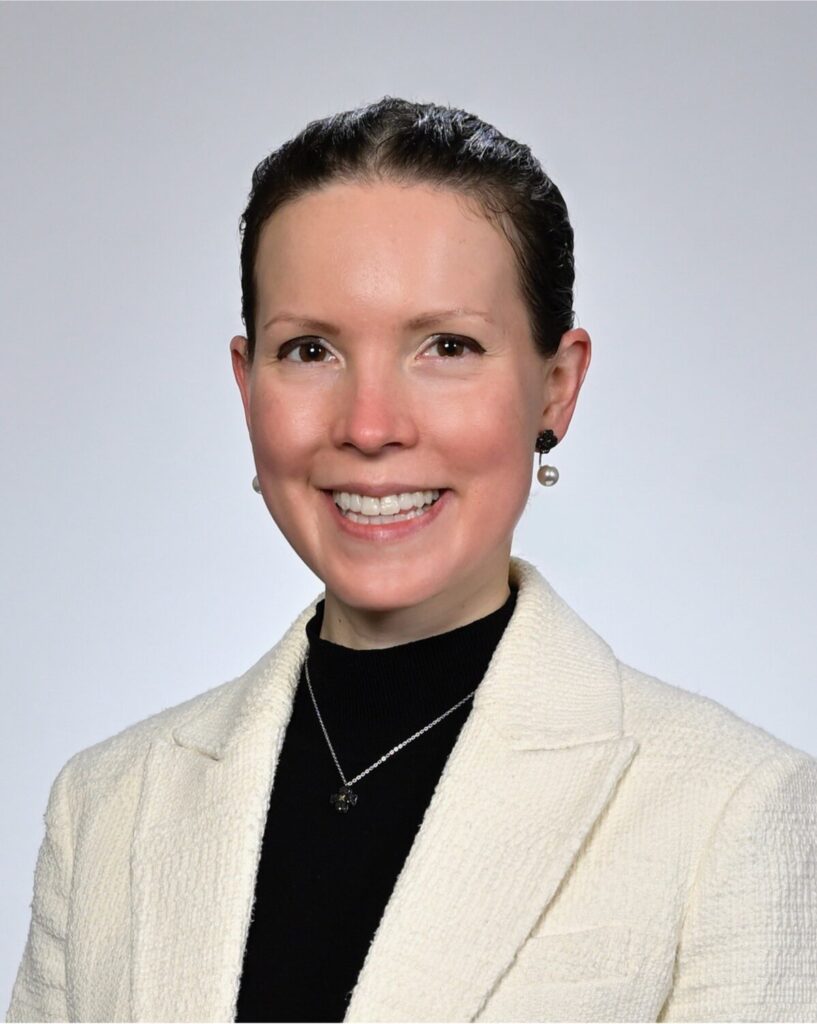
Dr. Ariela Marshall is a Harvard-trained physician and an internationally renowned advocate, career development advisor, and mentor. Dr. Marshall specializes in bleeding and clotting disorders, especially as they relate to women’s health. She has worked at Mayo Clinic and the University of Pennsylvania and currently practices as a consultative hematologist at the University of Minnesota (UMN) and the Program Director of the UMN Hematology-Oncology Fellowship. In addition to her clinical work, Dr. Marshall is a highly respected leader, mentor, and speaker. She is an active leader with the American Society of Hematology (where she led efforts to found the Women in Hematology Working Group and currently holds seats on the Women in Heme Working Group, Committee on Communications and Media Experts Subcommittee) and American Medical Women’s Association (leading the Infertility Working Group and holding seats on the Gender Equity Task Force). She speaks regularly on a national and international scope to discuss her efforts to advance career development and mentorship for physicians, gender equity, fertility/infertility awareness, parental health and wellbeing, reproductive health and rights, and work-life integration.