
Authors: Rhea Manohar, MPH; Sarv Raafati, Rosy Thachil, MD, FACC on behalf of AMWA Gender Equity Task Force
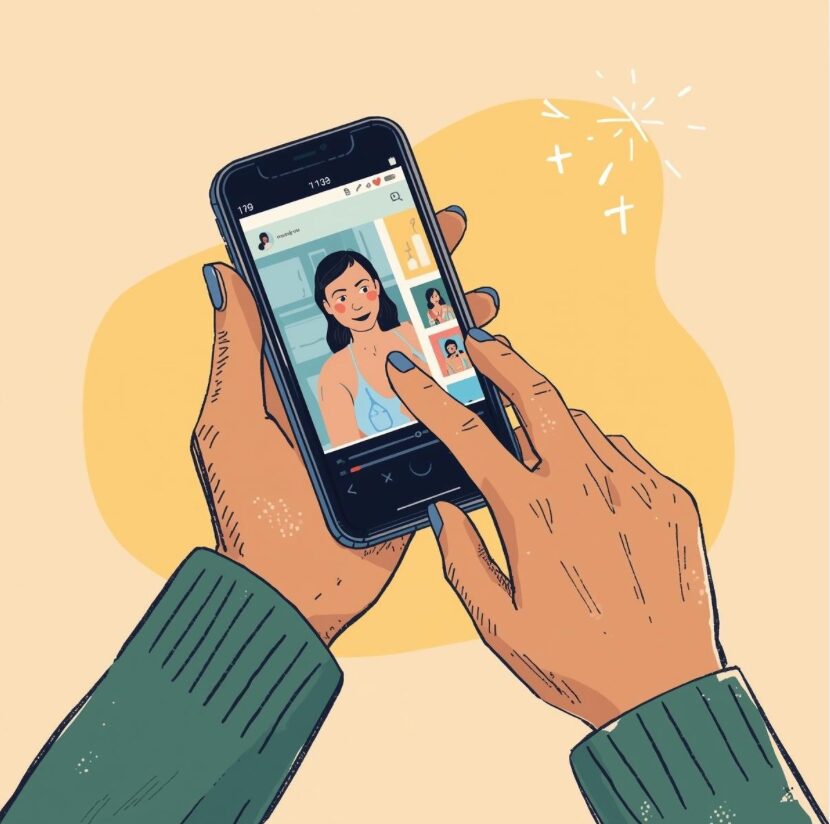
As social media has become deeply embedded in daily life, it has also become an increasingly influential space for public healthcare engagement, particularly for women. Across the lifespan, women turn to platforms such as Instagram, TikTok, YouTube, and online forums to search for explanations for symptoms, learn about conditions, treatments, and find peer support from others with shared health experiences (Bringley et al., 2023; Sridhar & King, 2025). While women are more likely to turn to online health information, the gap between men and women narrowed over the COVID-19 pandemic in this area (Ye et al., 2023). This trend is especially pronounced in reproductive and gynecologic health, where gaps in clinical education, delayed diagnoses, and historically minimized symptoms have driven many women to seek information beyond traditional healthcare settings (Osborne & Sillence, 2025).
Social media can serve as a powerful tool for self-advocacy and awareness in women’s health, offering access to information, community, and language to articulate lived experiences (Sridhar & King, 2025). At the same time, it is an unregulated environment where misinformation, anecdotal narratives, and commercially motivated content can shape perceptions of disease and care (Gunter, 2025). As women increasingly incorporate social media into health decision-making, understanding its dual role as both a catalyst for empowerment and a potential source of misinformation or harm is essential to advancing health equity in a digital era.
Evidence consistently shows that women use social media for health information at high rates across a range of conditions, including gynecologic care, menopause, infertility, and cancer (Bringley et al., 2023; Johnson et al., 2025). In a U.S. study of gynecologic patients, more than half of respondents reported using social media for women’s health information, with notable differences by age (Bringley et al., 2023). While younger women often encounter health content passively through short-form videos and curated feeds, women aged 50 years and older are more likely to actively seek health information online, particularly related to menopause and chronic disease management (Bringley et al., 2023; Osborne & Sillence, 2025).
For many women, this engagement reflects and strives to fill the unmet needs within the healthcare system. Menopause, endometriosis, and chronic pelvic pain are frequently underdiagnosed or inadequately addressed in clinical encounters. This could be due to many factors including lack of comfort in discussing these topics with providers, “safety” in the anonymity of exploring information online, or lack of time in the clinical encounter for patients to ask all of their questions. This leaves patients feeling dismissed or unheard (Osborne & Sillence, 2025). Social media may attempt to fill this gap by providing narratives that resonate with lived experience and normalize symptoms that women may have previously been told to ignore or were diminished by their providers. In cancer care, women report using social media not only for information, but also to contextualize treatment options, anticipate side effects, and inform decision-making in ways that shape trust and engagement with clinicians (Johnson et al., 2025). It’s also not uncommon to hear stories of women being pushed to the doctor to confirm a diagnosis suspected by online communities due to viewers having similar experiences and symptoms.
This is one of the most powerful aspects of social media in women’s health: its role in validation and self-advocacy. Engagement or exposure to others describing similar symptoms can prompt women to recognize patterns, seek second opinions, or pursue diagnostic evaluation they may have otherwise delayed or foregone (Sridhar & King, 2025). In gynecology, social media has been shown to shape patient expectations and empower women to ask more informed questions during clinical encounters, potentially strengthening shared decision-making (Sridhar & King, 2025).
This effect is particularly visible in conditions such as endometriosis, where diagnostic delays often span years. Seeing shared experiences online can help women contextualize their symptoms and advocate for further evaluation (Goel et al., 2023). Similarly, in menopause care, digital platforms have increased visibility around vasomotor symptoms, cognitive changes, and quality-of-life impacts that have historically received limited attention in medical education and clinical training (Osborne & Sillence, 2025).
At the same time, the unregulated nature of social media presents clear risks. Much of the health content circulating on platforms such as TikTok and Instagram is anecdotal, lacks scientific validation, does not come from licensed healthcare professionals, or is influenced by commercial interests (Gunter, 2025). In menopause care, misleading claims about unregulated supplements, compounded hormones, and alternative therapies are widespread, often outpacing evidence-based medical guidance and contributing to patient confusion and mistrust as these recommendations go “viral” (Gunter, 2025).
Analyses of social media discourse also reveal how disproportionately negative narratives can shape perceptions of disease. In studies examining endometriosis-related content, online discussions were dominated by themes of frustration, pain, and negative healthcare experiences (Goel et al., 2023). While these narratives reflect real systemic failures, their prominence may inadvertently discourage care-seeking or reinforce hopelessness among both the newly diagnosed and established patients. When negative experiences are amplified without clinical context, social media can distort expectations of treatment effectiveness and long-term outcomes (Goel et al., 2023).
As social media continues to influence how women engage with healthcare, clinicians have a critical role to play not as gatekeepers of information, but as partners in interpretation and guidance. Professional societies emphasize the importance of acknowledging patients’ online experiences, addressing misconceptions without judgment, and directing patients toward credible digital resources (The Practice Committee of the American Society for Reproductive Medicine [ASRM], 2021).
Rather than dismissing social media outright, clinicians can use it as a starting point for dialogue by asking what patients have seen, what concerns they have, and how online information has shaped their expectations of care (Sridhar & King, 2025). Sharing evidence-based resources and clinician-led educational content can help counter misinformation while respecting patients’ desire to be informed. There is also growing opportunity and responsibility for clinicians to engage directly in digital spaces, helping elevate accurate information and model nuanced discussions of risk, uncertainty, and individualized care (ASRM, 2021).
Social media is neither inherently beneficial nor inherently harmful; rather, its usage may reflect the structural gaps and inequities that already exist in healthcare. For women, its increasing popularity may underscore persistent deficiencies in research, education, and clinical care, particularly in reproductive health and menopause (Osborne & Sillence, 2025; Gunter, 2025). Addressing the influence of social media on women’s health decision-making therefore requires more than content moderation, but needs to include improved clinical education, stronger patient-clinician partnerships, and equitable access to evidence-based care.
Finding balance in this digital landscape is essential to advancing health equity. When clinicians acknowledge women’s lived experiences, engage thoughtfully with the realities of online health information, and provide clear, compassionate guidance, social media can be a tool for empowerment rather than a driver of misinformation. In a healthcare system increasingly shaped by digital platforms, centering women’s voices and grounding care in evidence remains critical to fostering trust, autonomy, and better health outcomes.
References:
- Bringley, J., Sundaram, P., Avis, E., & Flink-Bochacki, R. (2023). Effect of age on U.S. gynecologic patients’ use of social media for women’s health information. Patient Education and Counseling, 114, 107809. https://doi.org/10.1016/j.pec.2023.107809
- Goel, R., Modhukur, V., Täär, K., et al. (2023). Users’ concerns about endometriosis on social media: Sentiment analysis and topic modeling study. Journal of Medical Internet Research, 25, e45381. https://doi.org/10.2196/45381
- Gunter, J. (2025). Addressing the challenges of online misinformation and unregulated products in the clinical management of menopause. Obstetrics and Gynecology, Advance online publication. https://doi.org/10.1097/AOG.0000000000005989
- Johnson, A. R., Longfellow, G. A., Lee, C. N., et al. (2025). Social media as a platform for cancer care decision-making among women: Internet survey-based study on trust, engagement, and preferences. JMIR Cancer, 11, e64724. https://doi.org/10.2196/64724
- Osborne, A. K., & Sillence, E. (2025). Accessing information on menopause transition and the role of digital health technologies: A narrative review. Women & Health, 1–14. https://doi.org/10.1080/03630242.2025.2523258
- Sridhar, S., & King, C. (2025). Impact of social media on patient expectations and decision-making in gynecology. Current Opinion in Obstetrics & Gynecology, 37(4), 261–267. https://doi.org/10.1097/GCO.0000000000001030
- The Practice Committee of the American Society for Reproductive Medicine [ASRM]. (2021). Guidance on the use of social media in reproductive medicine practice. Fertility and Sterility, 115(5), 1151–1155. https://doi.org/10.1016/j.fertnstert.2021.01.048
- Ye, L., Chen, Y., Cai, Y., Kao, Y. W., Wang, Y., Chen, M., Shia, B. C., & Qin, L. (2023). Gender Differences in the Nonspecific and Health-Specific Use of Social Media Before and During the COVID-19 Pandemic: Trend Analysis Using HINTS 2017-2020 Data. Journal of health communication, 28(4), 231–240. https://doi.org/10.1080/10810730.2023.2193151
About the Authors
Rhea Manohar, MPH, MS3

Rhea Manohar is a third year medical student from St. George’s University. She has a Masters in Public Health with a concentration in Maternal and Child Health from George Washington University Milken Institute of Public Health and a Bachelors of Science in Microbiology, Immunology, and Public Health from the University of Miami. She served as Co-VP of OB/GYN Education for St. George’s University’s Women in Medicine chapter in St. George, Grenada where she developed and implemented hands-on workshops to further reproductive health issues and bolstered medical students abilities to navigate physician-patient communication. Prior to medical school, she was a Research Associate for Fors Marsh Group, where she led qualitative and quantitative public health research and campaign development for federal agencies (e.g., CDC, NIH, DHHS, CPSC). She is also a member of the Gender Equity Task Force and Reproductive Health Coalition within the American Medical Women’s Association. When she is not pursuing medicine, you can find her reading, exploring artistic passions, and spending time connecting with friends and family.
Sarv Raafati, MS3

Sarv Raafati is a third year medical student at St. George’s University. She completed her undergraduate at the University of Utah with a Bachelor of Science in Biomedical Engineering and a minor in Middle East Studies. She also holds a Bachelor of Medical Science from Northumbria University in England. During her time at SGU she was the lesson coordinator in STEMM, an organization committed to providing lessons to local classrooms in Science, Technology, Engineering, Math, and Medicine. When not focusing on medicine she can be found at your local rock climbing gym, reading, skiing, or just randomly exploring to find the best coffee shop to study at.
Rosy Thachil, MD, FACC

Rosy Thachil, MD, MBA, FACC, FAMWA, FACVC, co-chair of AMWA’s Gender Equity Task Force, is a quadruple board-certified cardiologist, serving as Director of the Cardiac Intensive Care Unit at Elmhurst Hospital Center, and Assistant Professor at Mount Sinai College of Medicine in New York. Dr. Thachil’s clinical interests include critical care cardiology/acute cardiovascular care and health disparities. In addition to addressing cardiovascular disease, she is passionate about advancing womens’ roles in medicine/leadership. She also serves on the American College of Cardiology’s Critical Care Cardiology SectionLeadership Council, and holds an MBA from Wharton and certificates in physician leadership and bioethics.