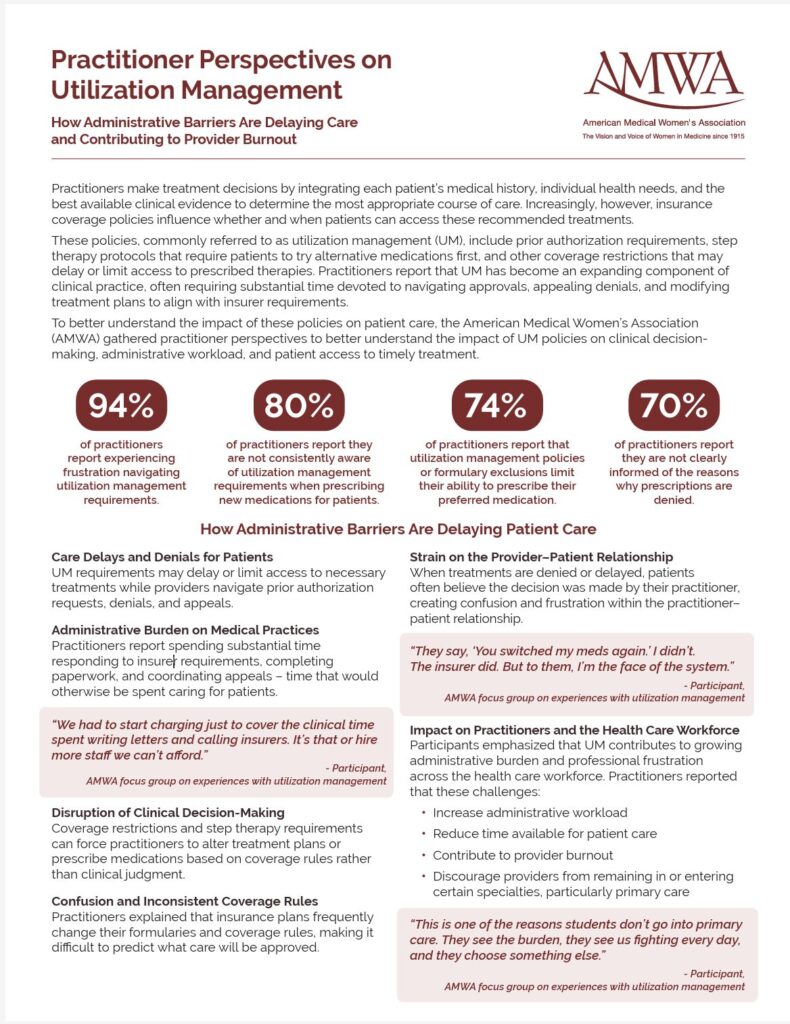
Utilization management (UM) covers a broad set of insurance practices that are used to limit healthcare costs and determine whether services, treatments, or medications will be covered.
Common utilization management tools include:
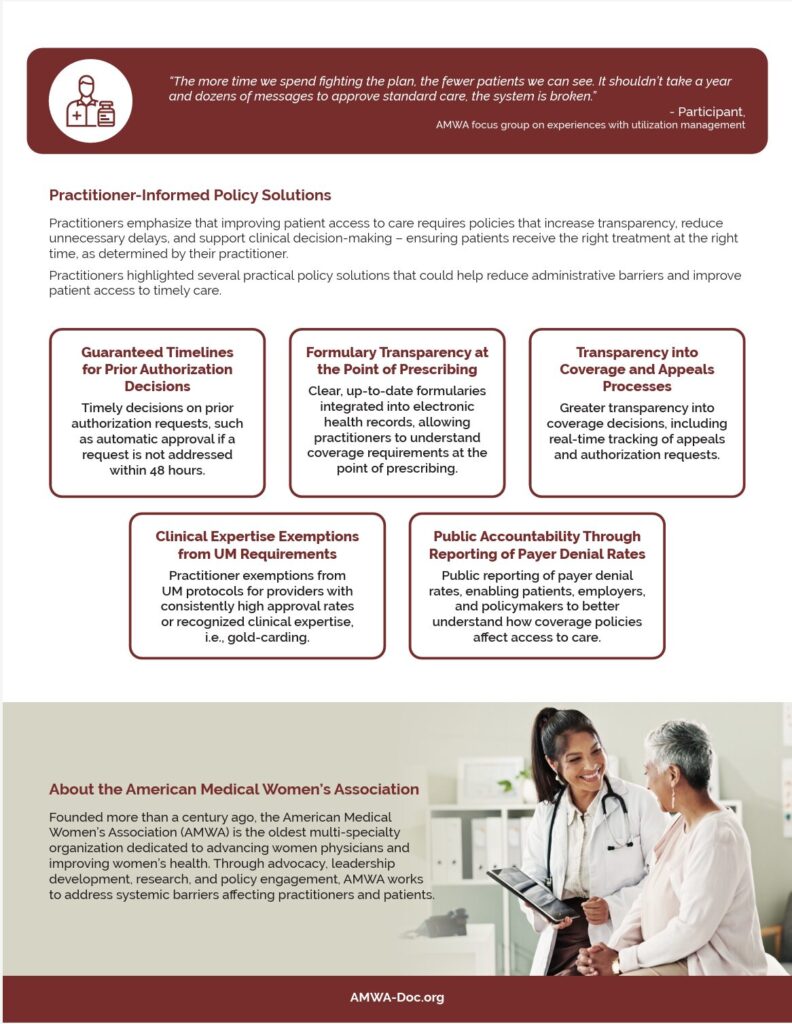
While intended to save costs, unfortunately many of these utilization management requirements place a significant administrative burden on physicians and healthcare teams. Prior authorizations, step therapy appeals, and other coverage reviews require clinicians and staff to spend substantial time completing paperwork, submitting documentation, and communicating with insurers rather than caring for patients. These processes can delay treatment, increase practice costs, and contribute to professional burnout — and shift valuable healthcare resources away from direct patient services.
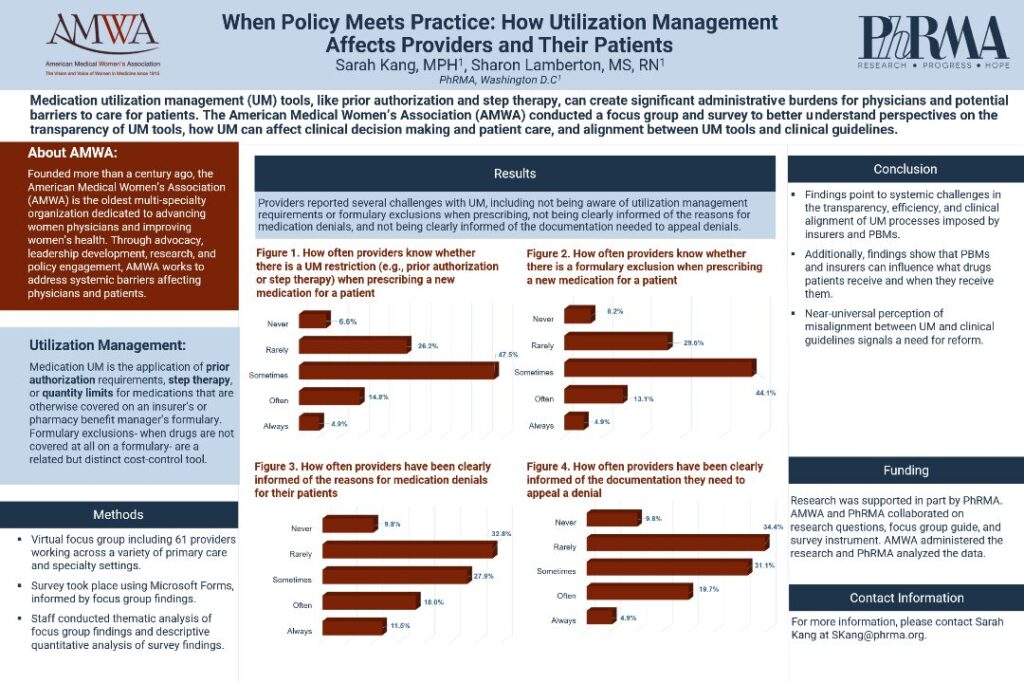
In 2025, AMWA held a roundtable on utilization management during the AMWA Interim Meeting where AMWA leaders shared first-hand experiences of the impact of utilization management. One outcome of the roundtable was AMWA’s participation in the UM Practitioner Project (along with the American Association of Nurse Practitioners (AANP), National Association of Hispanic Nurses (NAHN), and National Association of Black Nurses (NABN). With funding from PhRMA, a survey was developed to gather additional physician perspectives, and the results were presented at the AMWA 2026 Annual Meeting. The findings reinforced concerns that prior authorization, step therapy, and other utilization management requirements contribute to delays in patient care, increase administrative workload, diverting valuable clinical time away from direct patient care.
AMWA Delegates at the American Medical Association have reported on the AMA’s continued advocacy in this area which is supported by AMWA.
In 2026, the AMA:
AMWA has advocated for step therapy reform through support of the Safe Step Act (H.R. 5509 / S. 2903), participating in coalition sign-on letters and engaging lawmakers during Capitol Hill visits. The legislation seeks to establish a clear and timely exceptions process, helping ensure that patients can access medically appropriate treatments without unnecessary delays.
At the state level, there has been legislation to curb step therapy with some states enacting more protections than others. It’s important to know what is happening at each state so that practitioners and patients know about opportunities for appeal. View this interactive state map from the National Psoriasis Foundation to learn about your your state’s policies on step therapy.
American College of Physicians Position Paper on Mitigating the Impact of Step Therapy