Are counterfeit drugs a problem in the U.S.?
- Although estimates indicate that less than 1% of prescription medication sold in the U.S. are counterfeit, U.S. patients may purchase medicines from fraudulent online pharmacies
- Counterfeit products may also enter the supply chain when legitimate suppliers of a high-demand, expensive medication cannot meet market demand, forcing pharmacists to seek alternative suppliers (for eg, Tamiflu during influenza season)
How do tainted drugs enter the U.S. supply chain?
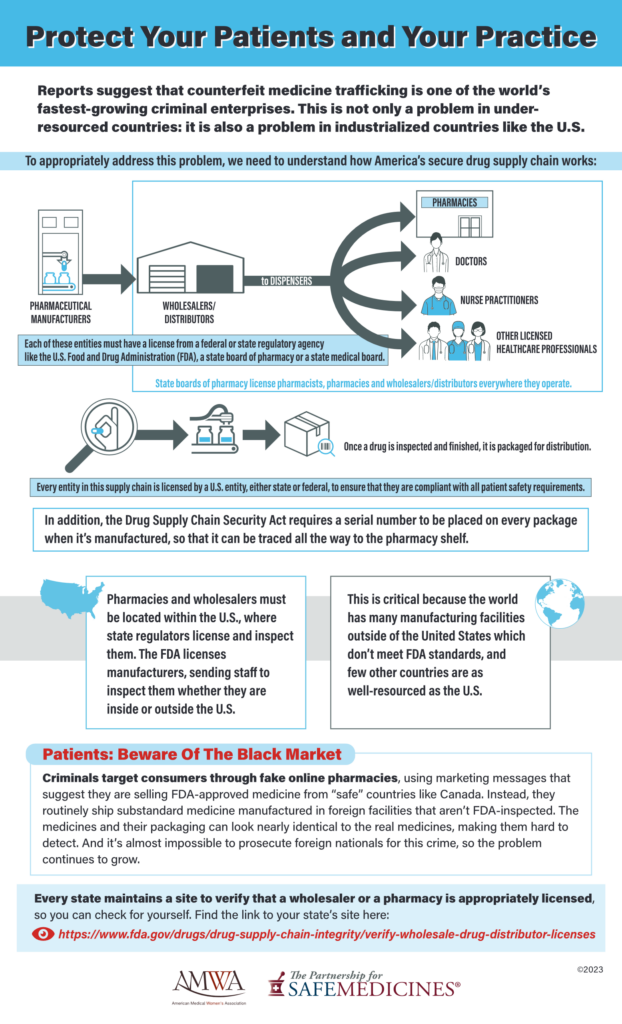
- Pharmaceutical companies typically sell their drugs directly to major authorized distributors who supply pharmacies and hospitals, however, drugs may also move from authorized distributors to middlemen or secondary wholesalers
Who is most likely to be impacted?
- Younger patients of higher income levels who commonly purchase goods online are more likely to utilize online pharmacies for purchasing medicine
What kinds of drugs are most likely to be counterfeit?
- Expensive prescription drugs including AIDS, cancer therapy, cardiovascular or psychiatric medications, as well as “lifestyle” medications including hormonal therapies or erectile dysfunction treatments
What do I do if a medicine looks suspicious?
- Immediately report any suspicious drugs to the FDA
Are any online pharmacies safe?
- Purchasing pharmaceuticals online is never as safe as purchasing directly from a state-licensed pharmacy due to scammers’ sophistication in their online representation as legitimate pharmacies
How do I verify online pharmacy safety if I must purchase online?
- Check a pharmacy vendor’s license with a state board of pharmacy
- Confirm the U.S. address and telephone number
- Confirm that a U.S. state-licensed pharmacist is on staff to answer questions
- Ensure that a valid prescription from a doctor or another licensed healthcare provider is required
- Look for the National Association of Boards of Pharmacy’s (NABP) Verified Internet Pharmacy Practice Sites (VIPPS™) Seal, ensuring satisfaction of state licensure requirements (these sites have a “.pharmacy” domain)
- Double check that the site of purchase is not included on the National Association of Boards of Pharmacy’s “List of Not Recommended Websites”, although this list is continually growing so omission does not guarantee safety
What are the red flags for a fake medicine?
- The medicine has a different name than what was ordered
- A foreign language is used on the label
- The dosing recommendations differ from what is normally seen
- The route of administration is different
- The packaging looks different from what is usually received
- The product fails to display a National Drug Code (NDC) number
Is it ever safe to purchase drugs from a pharmacy outside the U.S.?
- Drugs purchased outside the U.S. may not be subject to the same rigorous standards and their authenticity cannot be guaranteed
- The governments of numerous countries, including Canada, have said they cannot guarantee the safety of exported products
What is being done to protect the U.S. drug supply?
- the FDA’s Counterfeit Alert Network alerts its health profession and consumer groups to specific counterfeit incidents in the United States; in the event of a confirmed counterfeit case in the U.S., the FDA will send an alert to these partners, including:
- American Medical Association
- American Academy of Family Physicians
- Partnership for Safe Medicines
- Physicians Coalition for Injectable Safety
- the FDA has issued guidance on using standardized numeric identifiers to create a unique “license plate” to track individual drug packages in the supply chain
- Pharmacists are encouraged to report suspected counterfeit medications through Medwatch
- Pharmaceutical companies including Pfizer have called for more intense oversight of secondary wholesalers and repackagers as well as tougher penalties for those who fail to comply with measures of prevention
How do I report adverse events related to the use of suspect medicines?
- Complete and submit the report online: fda.gov/MedWatch/report.htm
- Download form or call 1-800-332-1088 to request a reporting form, then complete and return to the address on the pre-addressed form, or submit by fax to 1-800-FDA-0178