
Authors: Meenu Immaneni, Sarv Raafati, Meghan Etsey, Dr. Jessica Gray

“Our Voices, Our Future” is a podcast by the Gender Equity Task Force of the American Medical Women’s Association that explores the challenges, stories, and successes of those working to advance gender equity in medicine. Through candid conversations with changemakers, advocates, and leaders, each episode dives into issues like pay gaps, leadership disparities, and inclusive workplace culture. Tune in to be inspired, informed, and empowered to take action. Full episode listening links are available below the transcription.
Meenu Immaneni: Welcome to Our Voices, Our Future, the podcast where we amplify the voices driving change and equity within medicine and beyond. Brought to you by the Gender Equity Task Force, a committee of the American Medical Women’s Association. We’re here to challenge norms, break barriers, and ignite conversations that matter. I’m Meenu Immaneni, and each episode we bring you candid discussions with leaders, change makers, and advocates working to create a more inclusive and just world. No more silence, no more waiting. You’re listening to Our Voices, Our Future. Let’s get into it.
Today we’re welcoming Dr. Jessica Gray, who is a board-certified family medicine physician and a clinical assistant professor at Texas Tech University Health Sciences Center. She serves as the vice chair of the UMC Physicians Board of Directors and is the team physician for Texas Tech University women’s basketball. Dr. Gray is deeply involved in advancing physician well-being, leadership development, and community health across West Texas. She’s the co-founder and host of the MedEdit podcast, a CME-accredited show that merges medicine, media, and mentorship. She also leads Talks with Docs, a community education and outreach initiative connecting healthcare professionals with the public through evidence-based discussion. Passionate about mentoring women in medicine, Dr. Gray’s work focuses on building sustainable careers, and promoting joy in practice, and empowering the next generation of female physicians to lead with authenticity and purpose. Welcome, Dr. Gray. It’s really great to have you here today.
Dr. Jessica Gray: Yes, thank you so much for having me. Excited to be here to talk to you.
Meenu Immaneni: To start off, can you share a little bit about your journey in medicine, what inspired you to become a physician, and how your experience as a woman has shaped you along the way?
Dr. Jessica Gray: Absolutely. So I feel like this is a question most physicians get asked quite a bit. It’s always like “start at the beginning, what inspired you to become a physician?” And I think for most people, that wasn’t something that happened overnight. But It’s a long journey of shaping who you are, and maybe going back as far as childhood. And so for me, I’ve always been interested in things in the medical field. My mother is still a registered nurse, so being around medicine just even from a young age was always intriguing to me. I really like things like puzzles, I like to solve problems, I like to see how everything fits into a bigger picture. So when you look for careers that are solving problems and solving puzzles and trying to figure out the mystery, medicine does start to come into play. Especially when you want to add in that you want to help people.
So really for medicine it kind of became this really emerging puzzle that you kind of get these pieces put together step by step over time. I did a lot of shadowing, and volunteering, and just working in the hospital and medical field just as much as I possibly could when at young ages. And All of that volunteerism showed me that being in medicine and being a physician in medicine is really what I wanted to do. I wanted to lead the team, solve that puzzle and that mystery, and really help people who are in the absolute most desperate times of their lives that just really need somebody to not only try and help them with the experience they’re going through. But also do it in a loving and compassionate way.
And so I think my experiences as a woman throughout that time really have helped quite a bit as well. Going back to I’m a first-generation college student, and just kind of figuring out how college worked, and then trying to figure out how to pay for college, then I want to go to medical school. How I’m gonna pay for that, how I’m gonna figure this out along my way. It’s really hard when you are the first one to kind of try to trailblaze this and you may do it alone, and not with a whole lot of support. And so there have definitely been some roadblocks and some hurdles that I’ve had to face along the way, through this long journey to get where I am today.
Meenu Immaneni: Thank you for sharing that. You know sometimes the path to medicine is very hard to understand, especially if you don’t have others who’ve gone before you. I definitely relate to that a lot, and I have friends that are all first-generation as well in medicine especially and higher education. Some even go to college, they’re the first in their families to graduate college. So I think that definitely, my husband is too in his family, so I think it is very speaks to I think navigating that path by yourself. Like learning some of those lessons that maybe our children don’t have to, cause we have now learned and can guide them for. Even siblings, and I feel like because my brother’s like “You kind of make the path for me now” Is how my brother is.
Dr. Jessica Gray: Yes, Exactly, no I feel the same way. I’m the oldest of four, and so all my siblings, being below me, ended up going to college afterwards. But I do feel like it was really hard because I was like “oh what are student loans, how do you apply for that” You know you have to have a job but also in college and trying to figure that out. Or how do you pick your major, and so it’s just definitely interesting, and it is helpful so that maybe we learn these things for we can pass it down to our siblings, and my own two kids. Hopefully I can help them along that way too.
Meenu Immaneni: Many women in medicine experience gender bias and even harassment sometimes but often feel that they aren’t unable to speak up. What have you observed or personally faced in terms of these issues that show up in medicine, and how have you navigated those moments?
Dr. Jessica Gray: So I think this question, you know, we’ll be honest for our listeners. You’ve provided me these questions ahead of time and so I kind of had thought about this one. And thought ok how honest do I want to be. And I think this is the opportunity that we can share some of our stories so that people with hope, especially women, young women, or women in medicine, can really know that maybe they’re not alone, with some of these things that may happen. So it’s been awhile now, so I feel it’s pretty fair to be able to pull this one out and talk about it. But I was harassed when I was in medical school. I had a sexual harassment incident. There was a, I was on a rotation, and I was a, I can’t remember what year. No, I was a third year medical student. And I was on a rotation, there was a night shift rotation and so I was there, and I was with a male, who was a resident at the time. And you know a couple years ahead of me. And he decided that he could make an advance on me. And he told me that, you know, if I was gonna go to his residency program or where he worked. He told me that he might not be able to control himself around me. And then he put his hand on my leg. And I was alone, you know. It was night shift, it was probably 2 am in a hospital. There were no other residents around us, there was no other medical students. And I was able to strongly in that moment, say “Buddy you’re gonna have to get over that.”
Which I think was pretty awesome, the fact that, that I don’t-
Meenu Immaneni: That was pretty awesome.
Dr. Jessica Gray: Say that response you know. Now, I can’t believe that I just had something come over me, that was like that. I stood up, pushed him away, was just like “You’re gonna have to get over that” and honestly we were able to continue working, the rest of that evening. And it didn’t end up you know, I didn’t go home, but I was just really stern and really strong. But then I went home after that night shift, and I came home, and I was just in tears. I was really just upset cause I felt like not only was somebody trying to take advantage of me, who was in an authoritative position but then, this was a residency program I was interested in. And I was then scared because okay, what if I get in? And he had mentioned that he might become the chief resident. And I thought there’s all this power dynamic.
And so I was really scared. And so I took a couple days to try and figure out what to do. Do I go report this? But what if it’s the program I want to go to. Will I be, will I not get into my residency program of my dreams anymore. What’s gonna happen? So it was a really hard couple days sitting there.
And I ended up going to my medical school student affairs office. And there was a lady who worked there, and she was one of the coordinators. And I remember I took a moment to go talk to her, cause I remember she’d just always been so kind and open and warm And I thought “okay, this is my chance” and so I told her what happened and she immediately took me to another room and she got you know an assistant dean involved. She did it in such a supportive and caring way that it felt that I had an advocate on my side.
And that experience just really rocked me. And not to go into further details along the line, but there were some things that came out of that, that were kind of hard. That I ended up having to pay some backlash for when it came out. There were some people, even some faculty, that I found out what happened, and they said “Oh well, she, she should probably just get over it. You know she’s probably being dramatic.”
And I think that’s just something really difficult, and it’s weighed on me for over, well over a decade at this point. And it shapes me as I work with medical students or residents. I feel really passionately that this should not happen. And I sure, that much much worse has happened in other, maybe programs, and maybe other women, have not felt like they could speak out. And they didn’t have somebody like that really kind coordinator. And they sat there and they said I’m just so scared. I’m not going to get the residency program or something might happen. Or someone may not believe me. Or maybe something much worse happened to them.
So I think sometimes there is a moment that we do need to share these stories. We do need to talk about it. We need to make people aware that yes our residency programs, our medical school curriculum and our ACGME things, are safeguards that are supposed to protect us. They have evolved over the last 20 years or so and they have become much much more supportive. Title IX. All these other things that are created to help make us feel supported. But there are things that can still get lost along the way. And we really just want to make sure that we are showing up for other women. And sometimes it does take other women to talk about their stories so that somebody else may come to the forefront and say “hey that happened to me too” or if that does happen how will I respond? And it may not just be women, you know there can be some male colleagues that had these experiences as well.
But I ended up having to work with this resident, around this same person for a few years. And so it was a really difficult situation for several years. And although i felt really like I handled it the best I possibly could. And everything, you know, everything in my life I feel like has turned out well, it’s still something that weighs on me a decade later. And I’m hoping I can turn that around to be something I can help others with during their medical career journey.
Meenu Immaneni: Thanks first of all for being really brave of you, I think to be able to speak up and advocate for yourself. I think taking that first step even to like reaching out to someone who’s kind and I think that’s something people struggle with and the other parts of it. Like you were there and the systems at your school were there, but the systems like in society and bigger than that were not caught up to where they needed to be able to support you and help you and fix the situation. Not create a situation where this could happen again. But I think that you take that step to speak up, speak, like it’s very vulnerable and brave. And I think… and also thank you for sharing that. Like even after some, of course that weighs on you.
Like it’s a very, like it’s an incident that happened in your training, especially early in your training. And if it’s a program you wanted to be at too, like that, that’s something like, even without an incident, you’re always thinking about are you doing everything correctly. When you’re on a rotation. Am I being judged for how I am? And like, so this is like something bigger than just everyday like constant like, like the thoughts that go through a medical student’s brain.
Dr. Jessica Gray: Ya it’s not fair like, we have enough on our minds we, especially as women, all these other things we think about every single day or trying, especially at some male dominated, you know field. As well as rotations where you’re sitting there and you know, I know a very tall person and I can tell you half the time they looked right past me or said, or thought I was maybe one of the nurses or something. So you know you’re trying to speak up, you’re struggling to be louder, trying to be you know have a good commanding presence without being overbearing. There’s all these things we have to think about. And you know, just adding something like this in is pretty frustrating. Right. I felt like it was just frustrating that you know, it was scary, it was frustrating, and then it was just unfortunate.
And then of course, I don’t necessarily think that it was probably handled all the best ways afterward as well. I mean. At one point afterward I got offered the residency position, they’re like would you like to move to a different city. Like you don’t have to do it in this city, you can do it in a different city. Like we could transfer programs. I’m like, no! I didn’t do anything wrong.
So I think that it’s one of those things ya, the systems are there, but they still may need people to speak up and be strong. Help set the right and create a better system for people that come after me.I hope that you know, somebody later on, would have a better experience if they did have to report it or something like that. I mean one of the awesome things is that, a really nice coordinator ended up becoming really high level up in the medical school. And so I just know people like that, they are the women making changes, they are the ones going to be looking out for others if this incident were to happen again. So I’m proud to know she is one of those change makers that is there.
Meenu Immaneni: You know that really is like, I think. We make the change happen. We have to be part of the conversations and we have to, its hard. But I think sometimes having women that have done it before and having allies in your space, male or female or gender neutral. I think having people that can support you and be advocates alongside you is really important.
Meenu Immaneni: My next question is kind of gonna go on a whole other problem deep and a different side of things in terms of like, what women face. I think the next question I was gonna ask you about was about infertility and how deeply personal that struggle is sometimes and I think women we kind of are in, we have children during training a lot of times as well. And we aren’t able to openly discuss how infertility and things like that affect us. Has your experience shaped your understanding and empathy and resilience the way, and how do you support women who are gonna experience this kind of thing, especially within our profession?
Dr. Jessica Gray:Yeah, I’m pretty open about the fact that I’ve had a definitely difficult time with my fertility journey in life. And I’m very lucky right now that I have two beautiful babies in this life, but that was a very, very, very difficult journey to get to that took almost a decade worth of assistance and medical things. So you’re right though, like what you said is that women, especially in medicine, we’re taught not to talk about these things at all at first even before we go into medicine. A lot of we’re discouraged from going into medicine because we’re told you can’t have a family. You can’t be a wife. It’s just not possible to be a doctor and all things are just broad statements. And so you know you might meet somebody who is a doctor and she also has maybe a family, married to all these things and so I have to this day, a lot of people come and ask me these questions about how you do it?
Do you feel like you can be a mom and be a physician? I say absolutely I do feel like you can do it and I think, like you said, we have to have people that show, not just talk about, show them making this choice.
And a lot of women are having babies during medical school or before or you know during residency. And so in having residency programs that are also helpful and designed to know what to do if a resident has to go take maternity leave, and delay their graduation. Like I have several of my friends who had a baby during residency and that worked out, they’re great because they have great supportive programs that are able to help with it.
So I think that definitely showing people that it’s possible is a huge, huge gift to women who are young and are thinking about, okay, am I giving something up by choosing a career like this? And I don’t think that is the case at all. Or they say oh, I want to go become something this or that because I’m worried about not being able to have kids. And I think that’s just not how the two can go together very very well.
The statistics are there though. One in eight female physicians struggle with infertility. That was me. And we actually had to go through different fertility specialists. I had to actually fly and leave where I work and fly hundreds and hundreds of miles to a different city to get treatments done and ended up having to IVF for both my babies and I had a miscarriage and failed rounds of IVF. I mean it was definitely a long, long struggle and I definitely think it has changed the conversations that I have with my women in my clinic, even my men too. Actually sometimes, my men will come in and they’ll tell me about their struggles with infertility issues as far as maybe their wife is going through this or that. And I will be able to actually provide the men with some great resources because I don’t feel like people even focus on that. Even for my husband. It would be nice if somebody had been like hey here’s a great book that even he could read and then that would help show how he could support her.
So I do provide those things to my men or sometimes my female patients, who maybe trying to get pregnant and they haven’t and it’s been over a year. I’ll tell my male patients, you need to go talk to your doctor about XYZ issues that could be related to your own fertility because a lot of times we blame it all on the woman. A lot of times we blame it all on the woman, we don’t think about male factoring fertility so having those conversations is definitely there. I talked to my patients quite often about what their goals are if they are interested in fertility treatments, that they have a lot of options, seeking out fertility centers, they can even travel, and just showing them the different ways they can be done really helping them stay away from the crazy stuff online
Social media just absolutely pours down your throat and makes you terrified that if you’re not buying this supplement or doing this or that or that it’s your fault if this doesn’t happen. So just guiding them away from that into more evidence-based resources in a world that’s just overflowing with misinformation.
I think that that also is good because even as a physician I was overwhelmed with even the medical side of it. I cannot imagine not being a medical experienced medical provider and going through all of this stuff but it’s definitely expanded my empathy for my patients. I definitely think resiliency is there.
You know I had a patient just this past week who had a first trimester miscarriage and it broke my heart because she’s in a very highly competitive career and she’s got to show up. She does not really get much of a choice, she’s got to show up basically the next day. I was trying to help her to rest and take the time she needed for her, but I could just empathize quite a bit with her. Where it really it’s awful but you’re going to be back at work within 24-48 hours and keep on going and have to pretend everything’s okay.
Having that ability to have those conversations on a really deeply personal level is a gift that infertility gave me that I was not expecting that’s for sure.
Meenu Immaneni: I think that’s really a hard thing to go through and I feel like many women do go through it especially like that we hear about. I think especially women like you said, have demanding careers they can’t just take a pause to give themselves the time and space to heal and I think that makes it even harder.
And that’s already really hard to navigate emotionally, physically, and having to show up, especially because we have to show up 100% for our patients the next day no matter what news we get personally might be about our fertility or something else going on in our personal lives. I can understand how hard that is. And this is another thing on top of that.
But I’m glad you were able to take this really hard thing and find some a little bit of positive and empathy that you can help now connect with your patients that are going through similar things. And you can’t take it away but you can be there in support and camaraderie with them and I think that’s something that’s really beautiful about the role we play in medicine as physicians.
Meenu Immaneni: Now on the other side of it my next question is going to be being a mom, while practicing medicine, I’m sure brings you joy, especially with having such a hard time conceiving and having your kids. How do you kind of balance the two, you have your professional identity and motherhood? and what’s the journey so far taught you?
Dr. Jessica Gray: My two babies are my absolute greatest gifts in my entire life and so I can tell you and I know that many of my physician colleagues have said this too, that we are better doctors because we are moms. Like something happens after you become a mom. Then also you’re like, ha, i get it now. So I actually will ask different questions to a lot of my patients, my women who come in to see me. I have a lot of women in my practice. I see a lot of women’s health and so they may start talking about things like perimenopause.
A lot of them think they’re going to perimenopause and they’re like 32 years old and we’re like, okay well that’s a little early but let’s talk about these things. Talk about things like insomnia.they start talking about irritability and it kind of just you know all these things that maybe the internet has taught you it must be your hormones. And so they’re just convinced that it’s their hormones and they’re doing whatever remedies some influencers told them to do or buying whatever else to balance their hormones and they’ve been doing this so they finally come in to see me. They’re like I just don’t feel right.
You know honestly, we’ll start going through things. And if I hadn’t already, if I’m not a mom and sleep deprived myself and you know, maybe I’m stressed or worried about something with my kid or I just learned you know what it really means back to school time and actually how that actually is kind of a really stressful time for women. Sounds like a cute time. They take cute little pictures but you realize oh my goodness there’s class parties it’s just overwhelming. And I’m a very type A person so everything is on the calendar and everything’s color-coded. I have 16 different calendars everywhere.
But you can see how all of a sudden these symptoms that sound like they should be what the Internet says should be perimenopause and you’re like no this is just the demands we put on women as being a mom. You are not able to have a full night sleep generally. You know if you have little ones, or let’s say your breast-feeding or pumping you know postpartum that we never sleep. If that happens, you’re balancing things like Mom guilt and school demands.
And if you have a great supportive partner, that’s amazing but some people don’t have that. I have an extremely supportive partner, but my partner also works full-time, and he even has to travel sometimes and he has a very very demanding career as well. So it also means that I have to figure out how to be able to ask for help and set boundaries and I’m not going to be able to do everything perfectly all the time.
It kind of helps me ask questions a little bit differently for my patients instead of saying, well you need to exercise more and go to sleep earlier and all this. Maybe she can’t go to sleep earlier because she’s waking up to pump or breast-feed or her child is co-sleeping and they’re waking her up kicking her. There’s all these different ways that sometimes having that own personal experience just opens that door so you can say: hey so tell me what your relationship with sleep is like. Tell me who’s all in the home and how those relationships have been recently.
It just helps me open up conversations in a different way and think about things with less, let’s order this lab or write this drug. It’s more like let’s see how we can be supportive because sometimes my patient just kind of needs to hear that some of this is natural and she’s nothing’s wrong with her. She doesn’t have to be taking a supplement and her ovaries have not failed her. Being a mom has made me have a different perspective on having opening conversations with patients
Meenu Immaneni: I love that it’s kind of opened up a less rigid way of thinking. If we see this to more: yes we will still do that, but like let’s also explore like what else could be causing this? Let’s talk to the social factors a bit more and give them the space to talk about it too because I’m sure they don’t have the space to talk to someone about it too in their busy lives, being a mom, probably working or not or whatever other demands they have. I love all of that.
Meenu Immaneni: You mentioned “mom guilt,” which resonates with so many women in demanding careers. How have you experienced that personally and how do you experience it, and what can we do as a profession to better support physician mothers in finding that kind of balance and grace?
Dr. Jessica Gray: Do I have mom guilt? Every single day, even on the days that I’m doing it right, there’s still mom guilt. Could this be done better? I think that I have gotten to this stage of my career, approaching 10 years now as an attending physician. I do think at this point in time I have gotten to a space where I have really crafted my career choices and the pathway into a way that helps me have as much balance as you probably can get. And some weeks that the balance feels way off and that I feel like I am doing pretty good here, but mom guilt is there for basically everyone.
I think I’ve realized even if you’re a stay at home mom, I noticed that I have friends that are doing this, and they still have some kind of mom guilt. I know that when I’m on maternity leave and I’m at home with my baby, just snuggling and loving. I still have guilt. It’s like mom guilt that I’m not at work doing my job providing for my baby, at the same time my guilt for my career. I guess you called that one career guilt. There’s just a constant feeling that you’re just never doing enough either way whether you’re balancing or not.
I think that there are some really amazing examples around us of women that are doing it right. I know there’s one that I look up to. I think she’s pretty cool. She is a department chair for our mental health sciences for her specific department and there’s not very many females and department chair positions as you know just in general, but she also has kids and she’s everything for them. I feel I see her at all of these things. She’s one of the busiest people I’ve ever seen. But I see her at their sporting events. I see her at their art things like she’s just there and she just takes time for herself at the same time. So it’s really inspiring
But I figured out that she figures out these other little ways and these little tricks and some of them are just being able to take your laptop with you on the go or having things installed on your phone so you can answer messages away from the office, setting boundaries in some areas but be willing to work a little bit extra in others.
It’s just really interesting to see, especially in this day and age where there are a lot of changes and depending on what specific residency, what area you’re practicing in, there are more and more difficult and not different ways to make it work. I have friends that have done more shift work ways that they do it. I have friends that do more like they work 75% and then they do more admin volunteerism aspects on the other side.
All I can say is that look for the women who you feel like have it together in your field because they’re going to tell you they don’t but they may have some tips that really can be positive for you.
She talks about this one about plastic balls and glass balls, and I had never heard that expression before.
Meenu Immaneni: Recently, actually, with a different podcast, someone mentioned these balls, some are glass and can break, and others can bounce back so it’s figuring out which ones are exactly glass for you.
Dr. Jessica Gray: That is the best thing for you as a student, everything in residency stuff because once you choose to have your family, for most people a lot of things with family become glass balls and they are afraid to let break. Not everything related to your family is also a glass ball and that you have to realize.
If I accidentally threw out my kids drawing he brought because it was in a pile of 50 other ones he brought home from school. The world did not shatter. I can fix this. I’m not a terrible mom. This happens. You know there’s a little thing if you have to miss something small but you make sure that there is a play, there’s some kind of event that you need to be at, there’s mom and son dance, or grandparents day, you’re gonna make sure that is on the calendar. You have coverage that is a priority. That’s a glass ball that will not drop but you can’t do everything.
Finding which ones are plastic and which ones are glass as a mom is extremely helpful and I now use that analogy with my patience. I had one come the other day and she was like well, my husband and I were talking because he knows about the glass ball plastic ball thing now he’s trying to tell me the things I think that our glass are actually plastic like getting a Christmas tree decorated before Thanksgiving.
That’s a great example and so I think especially when you’re talking about Mom guilt just kind of figuring out where your boundaries are your non-negotiable and then what is plastic balls and what is glass balls?
Meenu Immaneni: No I love that this is something I’ve talked to my husband about because I’ve heard the juggling analogy before when I was an undergrad. But the fact that the more nuanced version of what the balls are that we’re juggling I think was really especially impactful. Like if cleaning the house that’s not necessarily a glass ball, that can be made into a plastic ball or we can figure out a fix it doesn’t have to be me or my husband. If we have the space it can be a robot vacuum we have a schedule. If for example we have money in the future maybe we can have someone come help us out once in a while. I think that’s the point of thinking through creative solutions for things as well. It’s something I’ve heard “think outside the box.”
Dr. Jessica Gray: It’s the same thing I tell people, it’s the same thing you do in medicine. So it’s really about triage right? And so like for me right now, we’re sitting here. This is a conversation we’re having right now. One of my kiddos needs to go to sleep and so my husband and I are okay. He’s gonna put my baby to sleep tonight for that and then when I’m done, I get to go put the older one who goes to bed a little later to sleep. I don’t have to feel guilty that I didn’t put the little one down tonight. I’ll make sure I’m putting him down tomorrow, you know cause I need my snuggles too.
But then I’m also okay, tonight I still have to get their laundry done and I got a lot of laundry piled up. I need my laundry done too, but you know what that’s a plastic ball cause I got some extra scrubs I could wear tomorrow the glass ball. My kids have to have their uniform ready for school so we’ll get that one tonight. Just understand it’s not like a thing it can be, we can bring it down to these tiny glass marble and plastic marble. There’s teeny tiny things but being able to put one and say that’s okay that could be done tomorrow is so empowering.
I’m still a good mom. I’m still a good physician. I’m still a good whatever if I just be able to set this one aside and plan for this one at the moment so it’s just triage. We have to do it in the ER.
Meenu Immaneni: We do it as students all the time too. I think it’s just applying it to a different aspect of life.
Dr. Jessica Gray: Yes, and I think taking all the skills you’re learning now and applying them into a non-medical world is really really beneficial. Just take practice and you won’t win them all. It’s OK.
Meenu Immaneni: No it’s definitely practice, maybe we’ll hit Perfection but Sometimes there’s no Perfection it’s just what we’re content with for the day.
Dr. Jessica Gray: Yes, that’s a very accurate, very good statement there. I feel that most days it’s all right. It’s not going to be perfect, it’s just going to be what we feel good about today.
Meenu Immaneni: You wear many hats and my next question is going to be about that, women in leadership. We’re really likely to navigate expectation stereotypes that differ from our male parts. How do you feel like how do you lead authentically but also create that space for one really honesty within your teams and your institution?
Dr. Jessica Gray: So I definitely think it is difficult in some cases and even in institutions that are designed to support and understand that women in leadership do have different roles, not always necessarily more difficult. I wouldn’t say compare every single little bit of it, but there are different roles. I think that being a woman and being a younger woman in some of my areas of leadership has been an interesting learning curve.
I think I’ve had to learn some things not the traditional things like people think of. Oh you need to dress differently you need to dress like this or that, I think it’s more like I need to learn that when I walk into a room and it’s an important meeting that I need to go walk up and shake hands with people as I walk in. You know, even if they’re sitting there and they don’t stand up to shake hands.
I can give this as an example cause there’s meetings I’ve been in several times with a lot of leadership, but I noticed that some of my male superior stand up and they give handshakes to all the men that walk in, but when I walk in is one of the only females in the room, nobody stands up and shakes my hand. Well, then I need to walk over there and I need to go shake their hand. When I walk in there and make sure we make it clear that I am a leader in this room as well. Little tiny things like that are learning curves.
A more interesting one was that I was just feeling really burnt out recently at work and in my office and I have a really cute office space. It’s a nice size and everything. It’s a private office to myself with a big window, but all I have in there is the very dark wood furniture and everything. Run-of-the-mill. Everybody has it. I just kind of decided you know what I do not care what anyone says. I’m changing this all.
I bought myself a white sanding desk cause I do like to run back-and-forth in my office so I bought this white L shaped standing desk that had brown wicker on it too which I thought was kind of cool. Then I was like, I’m gonna buy a colored keyboard and I was like you know what it’s gonna be pink color. Then I bought artwork and I put pink tulips in there. I put my name on the wall and I bought a couch and a white marble table. I mean, you walk in my office now and it’s really cool for me and then I have my eucalyptus essential oils going and it feels really like a relaxing calm space for me.
But if I had done this years back, I would’ve said well when my bosses walk in they’re going to think that I’m 16-year-old girl having a meeting in here but it’s kind of funny now I’m glad they can come in if they think I’m some 16-year-old girl having a meeting that’s great, but I feel good about this space it is a bright fun pop area it’s calming. It’s inviting. It’s authentically me and this is the space that they’re coming into to have a conversation with me. I want them to feel that too. I can tell you I have male superiors that are my bosses and they’ve come in and they’ve always been very complementary about the office. I think it’s just kind of fun and it’s very authentic and it’s very feminine. It’s very me and I just think it’s a wait. It’s a fun form of expression.
Meenu Immaneni: Something me and one of my friends were talking about is like taking space. I think for things done like we should just take space for it but we didn’t in the past so we’re like no that’s going to be a goal we’re not going to eat hurriedly because someone else is done we’re going to take the time to enjoy your food and be present. It’s not going to take more than 5 minutes max so take the space hold the space because you deserve the space so I think that’s an example of that.
So I’m so glad because I love that. I think some of my favorite faculty offices are the ones that are cozy and I’m like, can I come in and sit here for a bit? Can I chat with you?
Dr. Jessica Gray: My Med students like it. All my Med students come in like, oh, Dr Gray, your office.This is cool and I’m like thank you. It’s just kind of a fun space. And if I have to be here everyday I want to be something that feels authentically me and my space and uplifting. And it’s a good conversation starter as well. So I think that it, that is nice. I don’t think anyone can be offended by pink and glitter and you know all the fun stuff so I think it’s kind of nice you know I don’t think anyone should be doing something that makes them uncomfortable but I think it is fun.
I think it’s a space that yeah, like you said, does it take away from anything? No, I’m at this point. I feel like I have established myself as a leader. I feel like I have the things on my résumé to say that if I want my space to be pink and girly that does not mean that I cannot do my job to the highest degree possible.
Meenu Immaneni: And the pink and girly part reminds me of Elle Woods, like legally blonde when she made her resume in pink and it’s scented and he goes ‘it’s scented.’
Dr. Jessica Gray: Yeah, And I think I might be channeling that fully into my office at the moment. It’s 100% Elle Woods. And I think it’s just kind of like, you know what, go for it. Why Not?
Meenu Immaneni: Ya why not? Like it doesn’t make you like your credentials and what you do any less. It’s just you expressing yourself. And I think that’s important. Sometimes it’s a creative outlet.
Meenu Immaneni: And lastly, I wanted to give you a little space and give us some advice as well. You’ve lived through and learned a lot, and I feel like some parts have been really challenging, especially being a woman in medicine. What advice do you have to give younger female physicians in training? We’re kind of just beginning in their journey and especially someone who might be struggling in silence.
Dr. Jessica Gray: I think that is a big thought right? You know if there are women that are struggling in silence with their journeys towards becoming a female physician, there are so many things that they could be struggling with, right? And there’s so many ways to approach it. But I think the first thing we need to do is make sure that they feel like they’re not alone.
It’s really easy for medical schools or systems and institutions to say “oh you need to find yourself a mentor and have them mentor you.” I was never a person that was able to find a mentor, especially like a female mentor. I’ve had some great advocates that have been great examples and I’ve had some even male mentor leaders that have been really great at giving me advice along the way. Telling them you just gotta go find a female Mentor. I don’t think that’s a great piece of advice.
I think more that things like what you guys are doing, where you’re having conversations that are open and honest and something that they can consume even privately. A podcast is something you can listen to privately. You can watch something, there’s so much more available information from hopefully more authentic people on even social media. Now, granted, there are definitely people showing you all the positive, fluffy sides of things on social media, but trying to just see that you’re not alone. If you’re struggling, reach out to somebody. It can be somebody within your institution. If you are a trainee or a student.
It can be somebody that you just think ‘hey they seem to have it together.’ Kind of like where I was like man that department chair seems like she’s just really got it together and she’ll tell you no I don’t. And here are the reasons I don’t have it together, but here are the ways that I feel like I am right.
Just having a conversation, we just can’t be silent. I think that’s the problem, the keyword is there, silence. I have had a resident that I worked with. He was a year below me that ended up committing suicide actually during the COVID pandemic and stuff. That was just shocking you know, thinking about people suffering in silence and we can’t let people suffer in silence. Things like the sexual harassment I experience could have been so much worse. I’m sure there are people who have had way, way, way worse and they are struggling in silence.
I think there are people that are struggling in silence with infertility and they don’t have spaces where they can have these conversations and know they’re not alone.
I think there’s women that are in rooms of all men and they’re a woman in leadership and they sit there and they’re like ‘what can I do so that when I walk in to a room, the men stand up for me and shake my hand just like they do for my colleagues that are male.’
We need to have these conversations. Every single thing I just mentioned, each one of those points in my life there’s been another woman who has been some kind of support or just somebody that I could talk to. They didn’t fix the problem. There’s someone that I could talk to at each of those spaces. And so people I’m hoping people like me can be that for other women that are in that training still in the beginning of their journey or maybe there’s already halfway through it who knows.
You still can have an impact. If you’ve had your own struggles being vulnerable and having these conversations and having them more publicly and authentically, I think it really will help people in the long-term. The rule is we just can’t do it in silence anymore. We need to speak up and do it together.
Meenu Immaneni: I love that. I love the last part especially where you said like people that have been around you. Just continue to do that and I think that’s something that’s really important especially for trainees even if they’re a year younger, even the med student. I think you can continue, you can start now and be that person and let your authenticity kind of guide that.
And also find those people. Maybe they’re around you, maybe they are a nurse that you’ve become friends with, maybe it’s someone outside the little pocket of people you’re always around. I think if you approach things with authenticity, I think the world can become a little bigger.
Even though we may make our world a little smaller ourselves, especially when we’re hurt and we’re dealing with something as heavy in our own brain. I think we tend to make our world smaller, but I think that asking for that help, as hard as it is, it’s that first step. I love the way you phrased it.
Dr. Jessica Gray: Absolutely, I 100% agree with you.
Meenu Immaneni: Well thank you so much Dr. Gray. It’s been really nice chatting with you today. Thank you for sharing all that you have and all the advice you’ve given me and other people who are listening to this. We really appreciate it all.
Dr. Jessica Gray: Thank you so much for having me. I hope it helps.
Meenu Immaneni: And that’s a wrap on this episode of Our Voices, Our Future. We hope today’s conversation inspired you, challenged you, and reminded you of the power of raising your voice. The fight for equity doesn’t stop here. Subscribe wherever you get your podcasts, and share this episode with someone who needs to hear it. Until next time, stay bold, stay vocal, and keep the conversation going. This is Our Voices, Our Future.
Links to our podcast:
RSS https://rss.com/podcasts/our-voices-our-future/
Apple Podcast https://podcasts.apple.com/podcast/id1805991643
Spotify https://open.spotify.com/show/5E59jvuFQOjSXfLrjQiy0P
Podcast Index https://podcastindex.org/podcast/7278557
Fountain https://fountain.fm/show/7278557
True Fans https://truefans.fm/82727577-2b37-5929-aa2e-1574d478b177
About the Authors
Lakshmi Meenakshi Immaneni, OMS4
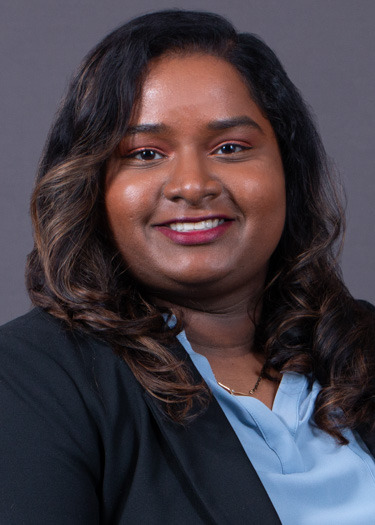
Meenu Immaneni is a fourth-year medical student at the Burrell College of Osteopathic Medicine. She has a Bachelor of Science in Public Health with a focus in Nutrition from the University of North Carolina at Chapel Hill. Passionate about patient advocacy and advancing equity in healthcare, Meenu is a dedicated member of the American Medical Women’s Association, where she serves on the Gender Equity Task Force. She is particularly interested in promoting mentorship, and championing women’s leadership in medicine. When she is not studying, Meenu enjoys spending time with her husband and their cat, playing board games, reading, and traveling to explore new places.
Sarv Raafati MS3

Sarv Raafati is a third year medical student at St. George’s University. She completed her undergraduate at the University of Utah with a Bachelor of Science in Biomedical Engineering and a minor in Middle East Studies. She also holds a Bachelor of Medical Science from Northumbria University in England. During her time at SGU she was the lesson coordinator in STEMM, an organization committed to providing lessons to local classrooms in Science, Technology, Engineering, Math, and Medicine. When not focusing on medicine she can be found at your local rock climbing gym, reading, skiing, or just randomly exploring to find the best coffee shop to study.
Meghan Etsey, MD

Meghan Etsey is a PGY1 resident in Internal Medicine who earned her medical degree from St. George’s University. She holds a Bachelor of Arts in Biology and a Bachelor of Arts in Nutrition and Dietetics from Bluffton University in Bluffton, Ohio. During medical school, she served as President of the St. George’s University Women in Medicine chapter in St. George, Grenada, where she expanded community partnerships and worked to educate and empower women and youth. She also contributed as a member of the Gender Equity Task Force and the Sex and Gender Health Collaborative Committees within the American Medical Women’s Association. Outside of medicine, Meghan enjoys spending time with friends and family, often going on road trips and exploring new places.