
Authors: Rhea Manohar, Leah Liszak, Meghan Etsey, Dr. Kate Rubey
“Our Voices, Our Future” is a podcast by the Gender Equity Task Force of the American Medical Women’s Association that explores the challenges, stories, and successes of those working to advance gender equity in medicine. Through candid conversations with changemakers, advocates, and leaders, each episode dives into issues like pay gaps, leadership disparities, and inclusive workplace culture. Tune in to be inspired, informed, and empowered to take action. Full episode listening links are available below the transcription.
Rhea Manohar: Welcome to Our Voices, Our Future, the podcast where we amplify the voices driving change in equity within medicine and beyond. Brought to you by the Gender Equity Task Force, a committee of the American Medical Women’s Association. We’re here to challenge norms, break barriers, and ignite conversations that matter. I’m Rhea Manohar, and in each episode, we’ll bring you candid discussions with leaders, change makers, and advocates working to create a more inclusive and just world. No more silence, no more waiting. You’re listening to Our Voices, Our Future. Let’s get into it.
Today, we’re welcoming Dr. Kate, who is a board-certified neonatologist and digital creator whose work focuses on reshaping how we see women in medicine. In her clinical work and on social media, she advocates for authenticity, representation, and gender equity. Grouping physicians can be brilliant and deeply human without dimming their individuality. Her content blends education, humor, and honesty to amplify the voices of women physicians and inspire the next generation to show up as their full selves. Well, thank you so much for being here with us today.
Dr. Kate: Thanks for inviting me. I’m excited to chat.
Rhea Manohar: Of course. So to get us started, can you share your journey to becoming a neonatologist? What initially inspired your passion for this field? And were there any significant challenges you faced along the way?
Dr. Kate: Yeah, so I had gone to medical school to go into pediatrics. I kind of always knew that that was going to be my journey. But I actually originally was thinking about Heme/onc as my subspecialty and kind of went full force into that. Thinking about how important mentorship is now, one of the early mentors I found really changed my trajectory because we were having a pretty frank conversation about her experience going into Heme/onc and her family life. What she was saying to me gave me a little bit of pause about what I envisioned for my future.
At that time, she said to me, “I bet every Peds Heme/onc doctor you’ve talked to before me is a man.” And that was true. Her family experience was vastly different from what I was hearing from these other Heme/onc doctors. That was kind of a pivot point for me to start thinking about were there other things I was interested in and were there other ways that I could align my future life based on what I wanted to do in terms of medicine. So then that took me on a long journey. I thought about all sorts of specialties. At the end of my third year of medical school, I was doing an OB/GYN rotation, which I originally thought would never be for me. I fell in love with it. I loved being in the delivery room, but I had a moment where they’re all like we have to deliver the placenta and i’m like but there’s a baby over here. Then I realized there’s a whole subspecialty that gets to go to deliveries and only worries about medicine for the baby. That brought me to neonatology. So that’s kind of how I ended up there.
Rhea Manohar: That’s awesome. Well, thank you for kind of walking us through that journey. Can you kind of share any significant challenges that you faced along that path? Obviously, neonatology is more specialized than a general pediatrics residency.
Dr. Kate: Yeah. So, you know, I think when you look at the amount of people that are pediatricians and then even neonatologists, there is a wide number. There are a lot of women that go into pediatrics, that go into neonatology. But on the whole, I think when you look at the numbers, leadership is still vastly male. And I think that is what I have noticed the most as I’m progressing along, is that there is still this discrepancy between who is considered a leader and who is considered, you know, bossy. That has been well shown in literature that these qualities that are the same, technically, are given different sorts of labels based on what the gender is. And then at the end of the day, the people who are making the decisions about who is hired, who is promoted, it’s still not, you know, equitable. And so that’s what I have found with when I was going through everything and trying to think about where my position was going to be, that there was a lot of grace given to some people and a lot of constructive feedback given to other people. And it seemed to fall along gender lines.
And, you know, outside of even like the career portion of it, I’ve seen a lot that in terms of patient interactions, one that like still sticks out to me today is that when I was a third year pediatrics resident, I was supervising a male intern and we were in a room, we were on the Well Baby Nursery, actually. So we were there to see the baby, and there was the mom and the grandma in the room. And they both were only making eye contact with my intern and asking him questions. And so he answered the ones that he knew. And then when he got to a question that he didn’t have an answer for, he was like, “Oh, well, you know, Dr. Kate,” and the grandma said, “I don’t want to hear what she has to say. I only trust male doctors because they are smarter than women.” And he said, “She is supervising me. She’s done three more years,” and she said, “I don’t care.” It was shocking to me to think about that, you know, I feel like we’ve progressed so far. But there’s still that bias that exists for a lot of people that they just feel like there’s something about, you know, men must be smarter. So that was, that was one day that I was like, I really need to be more vocal because we have to start changing, you know, what the image is of who is a physician and, and what they’re capable of.
Rhea Manohar: Definitely. Well, thank you so much for sharing that. I kind of want to separate two of the things that you talked about and dive into a little bit more. You noted that a majority of the leadership positions, specifically in neonatology, but also kind of broadly across medicine, are predominantly held by men. What do you think really contributes to this disparity, even as women are progressing into these fields?
Dr. Kate: I think there are a few things. And so, you know, there’s been research and people have started to show the biases involved. So, right, if, if the person that gets to make the decisions at the end of the day, doesn’t realize that they, you know, hold some accomplishments to one standard versus, you know, some qualities to a different standard, then that just pervasively continues on because they’re the one who at the end of the day picks, you know, who, who’s going to be hired, who’s going to be promoted. And then it just becomes a cycle of, you know, people promoting more people that are similar to them. Um, I think, you know, we also have talked about, like, there is a pipeline in medicine, uh, which is a leaky pipeline for many different types of people who are not, who are underrepresented in medicine. And so as you go along, if you can’t align with a mentor, that’s going to show up and also be a sponsor because, you know, there’s one thing as mentorship where you’re learning, that person’s teaching you, but the sponsorship is really important because that person has to be in the room. They have to be respected by the other people in the room, and they have to be able to advocate for you when you’re not there because there’s only so much that you can personally do. Um, and so, right, the leaky pipeline is like we try to bring people in, and then they can’t find the sponsor, they can’t find the mentor. And so they end up falling by the wayside because they get passed over for the promotion, they get passed over for, you know, the fellowship spot for them, it starts so early when the pipeline starts leaking.
You know, the point in training when you really need to start producing things if you’re going to get a promotion, is when people are in early family life. There is kind of still a lot of expectations that women take on a lot of responsibilities within their family life. There are even, you know, internal biases about the people in charge who assume you must have these responsibilities, so you aren’t available for these things. That contributes to then when it’s time for promotion, they just say, oh, they haven’t reached this checkbox. They haven’t reached that checkbox because people are just assuming that, like, oh, you’re too busy to be, you know, on that committee, so you don’t get offered the committee. And then you weren’t on the committee, so you can’t get the promotion. It just becomes this, like, self-fulfilling prophecy.
Rhea Manohar: Yeah. I love what you said, kind of, differentiating the need between passive versus activo support for support-type mentorship. I want to dive into that a little bit deeper. So, can you kind of share with us the mentors that have helped you along the way and maybe how you found them for those of us who are more early on in our medical career?
Dr. Kate: Yeah, I mean, I think mentorship is such a difficult thing because I feel like it’s a new concept when you get sort of into medical school. Like before that, it’s just like you have teachers, you do your thing, you take your tests. But once you’re in medical school, you need these other opportunities and those other opportunities come through, you know, other people. And so it’s about, I always thought about it, like finding some combination between a friend and a parent, because I feel like the best mentorships, you can have very open and frank conversations with, but you don’t want just a blind cheerleader because you’re still in training. So you do need someone who is gonna, you know, tell you it the way it is sometimes. I’ve had friends who have these mentors that they’re scared of, you know, and then they’re not growing with them because they’re not willing to ask them the questions or get the frank feedback that they need. And so it is a little bit about, it’s almost like dating, like you wanna meet, you wanna see, like what are their interests? What were their experiences? You know, I always recommend looking at someone who you feel like their career is a career that you hope for, you would, you know, would bring you fulfillment and then that’s the person that you wanna start by talking to. Then you see if it’s a fit when you’re talking to them. And it’s also a lot about a reciprocal relationship. So I think as a student, I didn’t recognize that as much. So that’s what I always recommend for people, is like, you’re gonna get something from them, but you also need to be giving them something, which is pretty easy. It’s just, you know, respecting people’s time, you know, when you’re sending an email, you don’t wanna just say like, hey, like you seem interesting, can we meet? Like send it very short, like these are times I’m available. Are you available any of these times? And if not, like I can send you more because, you know, when you’re the student, I feel like it’s easier to capture the person if you’re very upfront with them, they can just send you like one email back.
It’s like once it turns into the back and forth, that’s where you get lost on the email, in the email shuffle. So that is one good way to grab people, just give them all the information upfront and then they only have to send you back like, that sounds good this time.
Rhea Manohar: No, that’s really helpful. I think a lot of the time, people put out this, like, ‘oh, you should reach out to people, you should find a mentor,’ but nobody really tells you how to do it or what that looks like.
Dr. Kate: Totally. And I remember when I was, I always felt so silly, like, oh, this person’s so important, like, why are they going to talk to me? But then that became like this deferential like, oh, hi, you know, all of these things about you make me want to talk to you. Like, let me know if you have any time. And then that’s like too vague because when you look at, you know, like a full professor, when you look at their schedule, it’s crazy. There’s like, oh, maybe 15 minutes here. So if you make it easy for them, like, here’s all these times, then they’ll probably say, like, sure, I can do that one. But if it’s like, oh, now I need to check my schedule and then I have to email and then we’re going to email again, then that’s when every extra email you send is just an opportunity for it to be lost in the inbox. So if you make it like one and done, then the success rate is much higher.
Rhea Manohar: No, that’s helpful. Before, you shared an experience you had had with a male intern in residency. How do you think gender has impacted your career structure?
Dr. Kate: I think it in a lot of ways it has because it is still true that I think that female physicians are expected to do a lot, a lot more in order to be given the same respect that their male counterparts are getting. And that comes from all directions.
Another story that comes to mind is, I remember there was one time that one of the nurses had raised a concern about something that I had said. The person who was a man was giving me the feedback and was like, yeah, I know that’s a joke, but you cannot make that joke. And I was like, that’s interesting. And he was like, you know, the nurse culture is that male attendings can do that, but female attendings can’t. It really was this eye-opening moment of like, so we’re not going to talk about the culture, we’re just going to say, there’s a different expectation for female physician behavior that is not, male physicians are not held to. And so there is, like it’s good that there’s awareness of these differences now, but there’s still not a lot of action being taken about. Because for me, I’m like, if it’s unprofessional, it’s unprofessional for everybody. Or if it’s okay, then it should be okay for everyone. But like, that was like a real-world example that women are still getting feedback that are not being given to men. They get a pass for some things. And so then it becomes a thing where you have to say to yourself, like, well, you know, do I want to fit this mold that doesn’t feel like it was made for me? Or do I feel like I am doing the right thing? And being myself, and I think that, you know, patients appreciate doctors who are humans. So I am a firm believer that it’s not about changing yourself, but the system has not changed yet either. So it becomes a little bit complicated.
Rhea Manohar: So what would you say to like early career physicians or even students who are going into these experiences and getting that feedback? It can probably be a little bit daunting and often discouraging when you’re either in these experiences or hearing about these experiences where you’re being pushed back in a sense.
Dr. Kate: Yeah, I think the toughest time is when you are in training because you do feel a little bit, you know, trapped by, you’re getting graded. Like these are the people, right? They decide what your grade is. They decide what your file says, you know, about your rotation and all that. And I think, you know, that part of why I ended up sharing so much more about myself and my life on my platform is that I think that you end up in the microcosm of wherever you are. And so having the opportunity to find other, you know, mentors, other resources to really be able to get, you know, more information about what is something that is just like it is going to have to change, versus like, you know, feeling like you need to change your personality. I think being yourself and being authentic is the biggest strength. You know, I don’t think people really thrive in their career unless they are aligned with who they authentically are. And so it’s finding that fine line of you have to, you know, there are some things that I don’t want to do in medicine and it’s just part of the job. And that’s fine. So learning what is this is part of the job versus learning what is like, this is me, and I’m not going to change my personality because, you know, you’re saying like this is a doctor and that’s different than me because what is a doctor? It’s someone who’s caring, someone who’s compassionate, someone who understands a lot about science, and who wants to take care of patients. So that doesn’t say anything about are they goofy? Do they like, you know, do they like fashion on the side? Do they like all these things that sometimes come into people’s perception of who you are at the end of the day? If you’re doing what you should do to take care of patients and do it really well, some of those things don’t matter as much. And so that’s why I think trying to find people who can help you, you know, blossom within that structure, it may include going outside of where you’re learning, where you’re doing your residency. And so I think that’s great that there are so many physicians who are putting themselves out there now because the more that we’re exposed to, the more people can find what really does align with them.
Rhea Manohar: So I actually want to talk a little bit more about the platform that you’ve designed. You have used social media to foster an environment for women to flourish within medicine and beyond. So talk to us a little bit about that.
Dr. Kate: Yeah, I think when I was in high school, I remember one of my science teachers said to me like, well, you’re really small and you’re really blonde and you’re a woman. So if you really think you want to be a doctor, just know probably no one’s going to take you seriously, and you’re going to have to work harder. I hated that advice at the time. I unfortunately think that is true. I was a little bit naïve in thinking we were past; we’ve moved past that as a thing. But I felt lucky that I was kind of stubborn and was like, oh, whatever, this is what I want to do. I want to do it. And I came from a bigger city, so I had more opportunities to see more things. And so then I was thinking, what if I was from a smaller city? What if I was someone who wasn’t so stubborn? And that was my only experience. And so that kind of is what inspired me to put myself out there in case there were other people who are getting this kind of like, well, you don’t look like a doctor, which, what truly, what does a doctor look like?
Rhea Manohar: Yeah.
Dr. Kate: It’s a silly thing to say. You know, you don’t act like a doctor. Like those things that we tell people who are 15, that’s silly. And so then I was like, well, if I was someone who was findable, then I could be someone that someone needs, and they are in a spot where they’re not going to run into that person. And, you know, it’s evolved over time too, because then I’m like, you also don’t have to be like me to be a doctor. I think, you know, my point is that we kind of give this doctor thing an image, a personality. At the end of the day, what we really want is a physician and a full health care force that, you know, looks like patients. And our patients are not all one specific thing. Everyone is different and that’s what is beneficial, is the more diversity we have, you get better ideas, people do smarter things. And so that is why I was like, I’m going to show that this is outdated, that there is a specific stereotype. And it’s just whoever you are, if you show up as yourself, then you’re able to give good care.
Rhea Manohar: Well, that was really inspiring. And I know, specifically on the task force, we talk about this a lot: how there is no one subset of doctors, what a doctor looks like, and how they are sharing with the world has really evolved, specifically as social media has evolved. We are kind of figuring out different ways to connect with people who may not have had that information or may not have those kinds of mentors. So along those lines, I want to close us off with kind of an advice question. For young women aspiring to enter the field of neonatology or medicine in general, what advice would you offer them to navigate and succeed in a field where they may face gender related challenges?
Dr. Kate: Yeah, I think, to sum up what we’ve probably already said through all of these other chats we’ve had is just, I think my biggest thing is you have to be yourself unapologetically. You are who you are. And I think I spent too much time probably trying to tweak myself to be part of this mold. I had to be, and I really don’t think I felt like I was really thriving in my career until I just said, like, this is the person I am and I like all of these things. I like all of these interests. I think they make me more complete. And so I think being able to say, like, this is me and showing up fully as yourself, like that, authenticity is something that no one can take away from you. So that is the biggest strength that you have. You know, the second piece would definitely be to find your people, which we’ve talked about. They may, you may be lucky. Those people may be at your school, at your program. They may be somewhere else. So look, you know, don’t feel like you’re stuck in your bubble that you’ve been put in. And, you know, if you really can’t find them anywhere, then you build the community, which is kind of the option that I took is like, I’m going to make a platform, and I’m going to build the people, and I will put myself out there and I will connect with the people. And so that is another way that you can do it if you can’t find, you know, within wherever you’ve been planted. The third thing is, it’s a long career. So it’s possible that, you know, in medical school, you don’t find the right fit, but then there’s residency, then there’s, for some people like me, there’s fellowship.
So kind of thinking along the long game of if it’s, you’re not in the right spot right now, how do you, what are the next steps? How do you get to that spot? And I think what a lot of women struggle with because of the way that qualities are described about women is like, like advocating for yourself can feel really weird, can feel icky, you know, standing up and saying like, oh, me, I, you know, but there are lots of people who will tout all of their accomplishments. They will remind everyone every day. You know, I’ve seen people quote their own articles, which I was in the beginning, like, I would never be like, I’m the expert in, but it’s you have to do it because if you’re not like, I’m the expert, I did this, no one else is going to do it for you. So, you know, trying to advocate for yourself for opportunities that you feel like, oh, you know, I’ve said to myself, oh, that person, maybe they deserve it more. Then it’s like, well, if you don’t put yourself up for it, then you’re never going to get it. So kind of becoming comfortable with the discomfort of being your biggest advocate is the way that you’re going to get the furthest.
Rhea Manohar: Well, thank you so much for sharing your experience of this and talking with me today. This is a wrap on this episode of Our Voices, Our Future. We hope today’s conversation inspired you, challenged you, and reminded you of the power of raising your voice. The fight for equity doesn’t stop here. Join us in the movement. Subscribe wherever you get your podcasts. If you loved this episode, share it with someone who needs to hear it. Until next time, stay bold, stay vocal, and keep the conversation going. This is Our Voices, Our Future.
Links to our podcast:
RSS https://rss.com/podcasts/our-voices-our-future/
Apple Podcast https://podcasts.apple.com/podcast/id1805991643
Spotify https://open.spotify.com/show/5E59jvuFQOjSXfLrjQiy0P
Podcast Index https://podcastindex.org/podcast/7278557
Fountain https://fountain.fm/show/7278557
True Fans https://truefans.fm/82727577-2b37-5929-aa2e-1574d478b177
About the Authors
Rhea Manohar, MPH, MS3
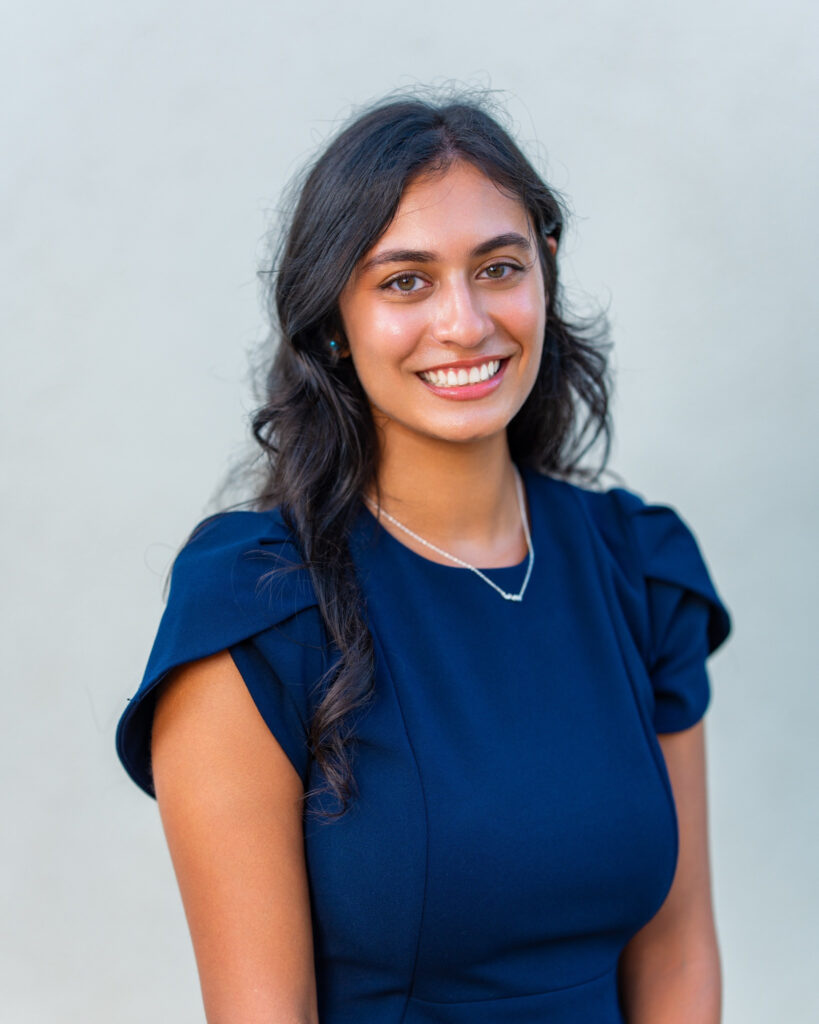
Rhea Manohar is a third year medical student from St. George’s University. She has a Masters in Public Health with a concentration in Maternal and Child Health from George Washington University Milken Institute of Public Health and a Bachelors of Science in Microbiology & Immunology, and Public Health from the University of Miami. She served as Co-VP of OB/GYN Education for St. George’s University’s Women in Medicine chapter in St. George, Grenada where she developed hands-on workshops to further reproductive health issues and navigating challenging physician-patient communication scenarios. Prior to medical school, she was a Research Associate for Fors Marsh Group, where she led qualitative and quantitative public health research and campaign development for federal agencies (e.g., CDC, NIH, DHHS, CPSC). She is also a member of the Gender Equity Task Force of the American Medical Women’s Association. When she is not pursuing medicine, you can find her reading, exploring artistic passions, and spending time connecting with friends and family.
Leah Liszak, MS3

Leah Liszak is a third-year M.D. candidate at St. George’s University. Originally from the northern suburbs of Detroit, she graduated cum laude from Oakland University in 2023, where she studied Biomedical Sciences. She served as the SMILEs Orphanage Home Coordinator for the St. George’s University Humanism Service Organization in St. George, Grenada, where she fostered impactful relationships with at-risk female youth and developed seminars to support their personal growth. She is also a member of the Gender Equity Task Force with the American Medical Women’s Association. Through both her extracurricular involvement and academic pursuits, she is passionate about building a career in Obstetrics and Gynecology that advances equitable reproductive health care.
Meghan Etsey, MS4

Meghan Etsey is a fourth year medical student from St. George’s University. She has a Bachelors of Arts in Biology and a Bachelors of Arts in Nutrition and Dietetics from Bluffton University in Bluffton, Ohio. She served as the President of the St. George’s University’s Women in Medicine chapter in St. George, Grenada where she expanded relationships with the community and worked towards educating women and helping the youth. She is also a member of the Gender Equity Task Force and Sex and Gender Health Collaborative Committees within the American Medical Women’s Association. When she is not pursuing medicine, you can find her with her friends and family on different road trips and adventures exploring the world.