
Authors: Meghan Etsey, Leah Liszak, Dr. Roberta Gebhard
“Our Voices, Our Future” is a podcast by the Gender Equity Task Force of the American Medical Women’s Association that explores the challenges, stories, and successes of those working to advance gender equity in medicine. Through candid conversations with changemakers, advocates, and leaders, each episode dives into issues like pay gaps, leadership disparities, and inclusive workplace culture. Tune in to be inspired, informed, and empowered to take action. Full episode listening links are available below the transcription.
Meghan Etsey: Welcome to Our Voices Our Future, the pop apps where we amplify the voices driving change in gender equity, medicine, and beyond. Brought to you by the Gender Equity Task Force, a committee of the American Medical Women’s Association, we’re here to challenge norms, break barriers, and ignite conversations that matter. I’m Meghan Etsey, and in each episode, we’ll bring you candid discussions with leaders, change makers, and advocates, working to create a more inclusive and just world. No more silence, no more waiting. Let’s get to it.
Meghan Etsey: Today we’re welcoming Dr. Roberta Gebhard, who is an inspiring leader, mentor, and lifelong advocate for gender equity in medicine. A family practice physician based in western New York, she founded the AMWA Gender Equity Task Force in 2010, paving the way for systemic change across the profession. As the past president of the American Medical Women’s Association, as representative of the AMA Women’s Physicians Section Governing Council from 2020 to 2024, and current AMWA Alternate Delegate to the AMA House of Delegates, Dr. Roberta Gebhard has championed the voices of more than 100,000 women physicians nationwide. She serves on the Board of Directors for Physician Just Equity, providing compassionate peer support for physicians facing workplace inequities, and has been a dedicated member of the UB Jacobs School of Medicine Admissions Committee for over two decades. Dr. Gebhard’s unwavering commitment, mentorship, and leadership continue to inspire generations of women physicians to advocate boldly and lead with purpose. Thanks for being here, Dr. Roberta Gebhard.
Dr. Roberta Gebhard: Thank you for the introduction.
Meghan Etsey: Yeah, so can you just kind of start by sharing a bit about your journey, what inspired you to pursue not only medicine but eventually to become such a strong advocate for gender equity in the field?
Dr. Roberta Gebhard: Sure. When I was really young, like kindergarten, I wanted to be a medical mission sister. So basically, a doctor who sings also. So that was my goal when I first thought of kindergarten. Then I found out about boys, and that kind of blew that idea of becoming a physician. I always wanted to do that. And there’s nobody in my family. Actually, I’m the first person in my family to graduate from college. No one in my family was a doctor or had any professional training. But I just always wanted to be a doctor, and somehow I made it here. It was a lot of work. So I think what inspired me is mostly there, well, first of all, my mother, because she always told me that I could be whatever I wanted to be. And secondly, just going to doctors in our community, most of the doctors were foreign medical grads, so a lot of them did not speak English very well, as they were not originally from that country. When they would come here because they were here under a visa and work in rural areas. Most of the doctors in my community were foreign medical graduates and didn’t speak English very well. It was very difficult to communicate with them, and then I just thought that I could help along those lines for sure. Yeah, so I made it to medical school. I ended up applying, and the third time was when I got in. I applied to osteopathic as well, and I got into an osteopathic medical school as well. Managed to graduate and do my residency, get done, and practiced family medicine.
Meghan Etsey: Can you tell us a little bit about what then had led you to become a strong advocate more in the gender equity part once you got into medicine and practicing?
Dr. Roberta Gebhard: I just noticed that when I was working with other doctors, even as a medical student, that I was working with a doctor who shared an office with two male doctors. And she would, at the end of the day, she’d have a huge pile of messages to get back to, but the nursing staff would take care of it for the guys. So they would be able to finish their office and be able to go home, but she had to answer all these questions. I just didn’t think that was very fair. That they were helping the guys out and not her. That was just that one example. Generally, there were not a lot of women mentors when I was going through school, very few actually in the osteopathic medical schools at the time, and I trained at an allopathic program; there just wasn’t a whole lot of mentors that could help you out. There were things that I experienced when I was training, you know, where the guys were always chosen, and the women were not. Just sexual harassment was a thing. I remember when I was pregnant with my first child, I was working with the orthopedic team as a medical student, and literally, they would all walk by and pat my belly on their way by. Things I didn’t think were appropriate. I just made a decision that I wanted to change things.
Meghan Etsey: So moving forward a little bit, can you kind of tell us what motivated you to found the Gender Equity Task Force back in 2010 and what were some of the early challenges that you faced in getting all this started?
Dr. Roberta Gebhard: AMWA used to have a gender equity task force. I just knew that it had existed. I didn’t really know anything about it at all, except. The only thing that I knew about it was that it had a dedicated line, so they advertised that someone could call and get help; that’s all I knew about it. I decided that I wanted to get that restarted. It had been years since they’d been doing it. Actually, I had belonged to AMWA for 20 years and don’t believe they had done it in the 20 years I was involved; I had just heard about it. So I had a friend Joyce Brock who had encouraged me and supported me in doing that, and another woman I can not remember her last name, I’m sorry but her first name was Margaret. So we were the three attendings that you know got together and helped start it. Basically, they just kinda supported me, and I went to the board and asked to get it started. They allowed me to do it, and then we added Linda Brodsky, who was actually my co-chair, so there were 4 physicians and then I think there was one medical student at the time. Basically, we just got started and were meeting every week in the beginning and then every other week as we got to know each other. Then we were meeting once a month after that. Some of the challenges were, sometimes Linda and I would be the only ones that would show up for the meeting. Linda would take notes, and then I would run the meeting even though there were only two of us. We were very productive, even though there were only two of us. But it was hard to get people to come to the meetings but they always wanted to change it to a different day. Every time we tried to change it to a different day, for an individual person who said I would definitely come, but I can only come on Tuesdays. They would never show up. So we just kind of kept going back to Fridays at five because that’s what worked out best for Linda and I. We tried to change it one more time, and then we went back to Fridays at five. So we ended up changing it now to the first Tuesday of the month because the co-chair at that time could make it at that time. And again, the same sort of thing if you just didn’t come most of the time. But anyways, we just continue to meet. So that was one barrier, one challenge that we faced was getting people to come and getting time that people could make it. But that was probably the main thing, and just getting people to get involved and actually do things, which is not a problem at all right now, but it was like this is 15 years into it. So it’s taken a while to get it so that there are people that are involved and other people have ideas. I think it’s very functional right now, but it took a long time to get there.
Meghan Etsey: Yeah, I think that’s kind of cool to hear that story of it coming up, because now just being here for the past year, I see the Task Force does a lot. So those early years of only hearing about two people showing up is crazy to me, because it’s so not that now, which is very cool.
Dr. Roberta Gebhard: Yeah, well, the other challenge was, like, I kind of had to do everything. So like I had to set up the meetings and set up the, actually at the beginning, we just met on the phone. So I had to set up the meeting, the calls and the meetings and things like that. That was a hassle and then at least Linda did the notes. So that’s like my least favorite thing to do. So that worked out. But, you know, having the challenge of having to set up the meetings myself and, you know, that was the challenge as well.
Meghan Etsey: Can we kind of talk a little bit about how it’s evolved over the years and what are some of the accomplishments of the Gender Equity Task Force that you’ve been most proud of, in terms of its impact on policy or culture within medicine? Like what are the kinds of the things that we have attacked that you’ve been very proud of?”
Dr. Roberta Gebhard: I think, you know, the research that we’ve done and the publications that we’ve done have been the things that I’ve most been most proud of because that, you know, affects other people, and they read it and they hear about it and they can take our ideas and move on with them in their institutions. So I think that’s been the most accomplishment that I’ve been most proud of. I was also involved with TIME’S UP Healthcare, and that was also, as this is a nationwide group that worked on, you know, and most of what we did that worked was publications. So when we started doing that, you know, we were kind of doing publications with both, and I thought that that was really helpful.
Meghan Etsey: Talking a little more about TIME’S UP Healthcare and the AMA work that you have done, what have those collaborations that you’ve kind of had throughout life taught you about driving change more at that institutional level?
Dr. Roberta Gebhard: So with the AMA, I was in the Women Physicians Section. So there were over 100,000 women physicians in the AMA, and there were eight of us that represented those folks. The things that we did were very much like what we do in AMWA. But because AMWA started the AMA Women Physicians Section, we are the only organization that has a seat at their table. So they have representatives from AMA, but they overall, and then they have some members at large, but we’re the only ones that actually have a representative to that group from AMWA. That was very helpful. TIME’S UP Healthcare was really exciting, and I’ve got some of my best friends that I’ve met through that organization. Unfortunately, it ended prematurely, but it was great to get. There were publications that we were involved in with people that we had never met before, and we just worked together and got some things published. That always changes things because people read it and they think, oh, this is a great idea. Let me move forward with doing that in my institution, or just even the awareness that it exists. I think driving change at the institutional level, you actually get the idea from reading things and reading about the work that we’ve done. I thought it was very helpful.
Meghan Etsey: Looking at yourself more holistically in just you and less the work that you’ve done with these different organizations, can you tell us a little bit how mentorship, this mentorship that you saw when you first started was not around and present and community that you’ve built with these people that you talk about from these different places have helped shape not only your own career, but the role that we get from these people playing advancing in gender equity for future and future and future generations of these women that we have in medicine.
Dr. Roberta Gebhard: I think that people like Linda Brodsky, who was a very strong mentor of mine, she was my co-chair. She found out when she was sitting on the search committee for the medical school, they were searching for the chair of the department, and she was told that she was not chair. She was not the right person to be chair, but when she opened the booklets on each person in the department, like a file, she found out that she was making 20% of what the men were making. Not 20% less, but 20% of what the men were making.
Meghan Etsey: Oh.
Dr. Roberta Gebhard: So she went about it, and I actually believe it or not, I’ve actually heard of people in other programs that did the same thing. There was a woman urologist that had mentored a man all the way through his training, and she was a full professor at her institution. When he came to join after finishing his residency and his fellowship, when he came to join, he asked, hey, would you mind looking at my contract? She found out that he was being offered, and that’s not even negotiated. This is like right off the bat, so you always start a negotiation part, and then you start at a certain point, then you negotiate up to a higher point. He was being offered $175,000 a year, more than she was making.
Meghan Etsey: Oh my gosh.
Dr. Roberta Gebhard: I mean, it’s not uncommon, it happens. So just knowing that that exists, it helps me a lot in being able to talk to people about negotiation because people don’t like to negotiate, especially women don’t like to negotiate, and just talking to them about negotiation, showing them, like with me, one of my positions, they offered $50,000. When my friend stayed on with them negotiating, she got them up to $130,000. So if they can afford to pay you $130,000, but they’re only offering you $50,000, it just seems kind of useless. So she ended up not going there either, but there is wiggle room there, and they always start with a low number, hoping that you’ll take it. There are some people that actually believe that’s why women actually get paid less, because they don’t negotiate. But in my experience, I don’t think that’s the whole thing because in one of my positions, I was trying to negotiate with the service unit director at the VA, and he said there’s absolutely no wiggle room with regards to salary. I guess I took him at face value because I didn’t think he’d be lying to me, and then I found out when I got there that there was a male who had much less experience than I did. He had only graduated a year ago. I had been doing hospital work for like 13 years. At that point, he was getting paid 10,000 a year more than I was making. And I just found out because I asked him. I said, hey, I just wanted to know if one of my students or one of my residents wants to come here and apply for a job. Can you tell me what you’re making so I can tell him where to start with negotiations? And he said, when he gave me what he was making was 10,000 a year more than I was making. And I was shocked. I really was, but I ended up leaving that program because I just didn’t think that was right. I think that just the whole idea about negotiating, women have to get over that. But I don’t think that’s all there is. I think there are other things that affect what they’re worth. I mean, during my training, it didn’t happen to me, but other people were being told, well, your husband’s a doctor, we can afford to pay you less because he can support you, and those sorts of things, which are really ridiculous.
Mehan Etsey: Have you heard of the book– It’s called Women Don’t Ask, Negotiation and the Gender Divide?
Dr. Roberta Gebhard: Yes, actually, our students, we had Sarah Lashover speak at one of our meetings years back. So I’ve actually used the same skills that they’ve used, because what they were doing is getting insurance companies to pay for it. So I got our malpractice insurance company to bring Sarah Lashover here to Buffalo to do a talk. She is absolutely amazing. They’re both amazing. So the first part is women don’t ask and the second part of the book is ask for it. The second part of the book is really good, because they have a bootcamp. And the whole idea is that you start asking for things that aren’t important. So, for example, you know, when I read that, I brought some roses for the folks on my committee, and I stopped at the place where I got the roses. And I said, Hey, can you give me some water bottles to put them in? And they were like $2 a piece. And they gave me, you know, how many water bottles to go with the number of roses that I had just for free. But if I didn’t ask, I wouldn’t have known that, right?
Meghan Etsey: Yeah.
Dr. Roberta Gebhard: I negotiated for a vehicle when we were visiting down in Florida and I got them talked down to $1,300. It took me a while. It was almost two hours that I did the negotiations. My family was going crazy. But I said, Well, look, guys, we got an extra $1,300 to spend on vacation now. You know, so negotiating on things that aren’t important so that you feel comfortable with it when it comes to talking about your job, your salary. There are other things to negotiate as well. It’s not just salary. It could be your hours. There’s only one person in our department when I was at the university that had every Friday off. He negotiated. He said, hey, how about if I work Wednesday night? Can I take Friday off? Because you get a half a day for administrative time. And all of us were required to actually come to the office for our administrative time but because he negotiated out of time, he didn’t have to come in the office on Fridays. So even though he was paid full time, we had to come in during our administrative time, but he never did. So it’s all about negotiation, and you just have to, you can negotiate for more time off, you can negotiate for extra staff if you’re doing research. You can negotiate for space to do your research. There are all kinds of things you can negotiate for, and you just have to have your eyes open to it and be able to think about what it is that you want and what’s going to make you happy. It’s helpful sometimes to have somebody, even if they’re not negotiating for you, to bounce things off of. Twice I’ve had somebody negotiate for me. There were different people, and one of them was able to negotiate. They offered me 80,000, and they negotiated up to 100,000 for me. I was supposed to be doing a five-day work week. They got me to a four-day work week, and instead of four weeks of vacation, I got six, including my CME. They got all that negotiation, and it only cost me $200 to hire them to help me. There’s lots of different ways to do it, but you have to negotiate. I mean, it’s not all about negotiation with regards to the inequities, but that’s part of it for sure.
Meghan Etsey: I feel like even having this knowledge is power until this conversation right now. I’ve talked to people about negotiating things, and I didn’t even know until right now that you can hire people to help you negotiate. I feel like just knowing these things is so powerful, and that’s why things like these podcasts are so important, because how are we supposed to know about these things otherwise, unless we have these mentors like you in our lives telling us that this is how the world goes.
Dr. Roberta Gebhard: There’s a group in Montana that works with young people to help them with their initial negotiations for their jobs. I can’t remember the name of it right now, but it’s Girl Boss or something like that. They actually teach you the skills, and then you can go over it with them, but they teach you how to do it. You can do the negotiation, but they’ll train you to do that, which is really good, but it helps you open your eyes to the things that are available to you. I had a friend who was in private practice, so basically she put her kids on the bus in the morning. She drove to her office, she saw patients from nine until three. It wasn’t three, whatever time it was, she had to get her kids off the bus, but she saw them straight through. She didn’t stop for lunch from nine until 2:30, and then she got home in time to get her kids off the bus. She stayed one day late, so she was out by 2.30 every day except Wednesdays. She stayed until 4:30 on Wednesdays, and that was her late day. But it was her own private practice, and she could do what she wanted, and it worked out well for her. Her husband, you know, was an oral surgeon, and so he made a good salary, and so between the two of them, they were able to do what they needed to do. She had the luxury of being able to do that. People that are part of one-salary families don’t always have that luxury, but she did, and it was also a room in practice. So there are lots of things you can negotiate for, and lots of things that you can build your own practice and your own mind of what you want to do.
Meghan Etsey: Absolutely. So, can you tell us you’ve been doing this work for a while, right? How have you continued to be inspired, especially as you see not only new generations of physicians stepping into the advocacy and the good things that are happening, but even as you’re still seeing these things you’ve been fighting for for years have remained persistent, and maybe you have not seen as much change as you want. How have you kind of kept this motivation and inspiration?
Dr. Roberta Gebhard: I just, my daughter is 28, and I just don’t want her to see her going through what I’m going through. And so I just feel that it’s really important to change, to change the world if we can. And it’s very difficult with our current administration to make any headway. But, you know, like, I mean, we finally got Biden to, you know, to ratify the ERA. Unfortunately, we couldn’t get the librarian to sign off on it. But, you know, I think that, you know, my daughter, just knowing her and what I’d like to see her life to be different, I just keep fighting to make things equal. And my, the students and residents on the Gender Equity Task Force are very inspiring, and they, you know, keep me enjoying what I’m doing.
Meghan Etsey: I love that. That’s awesome. So, finally, can you just give us some advice? What advice would you give to medical students and early career physicians who want to be part of this lasting, meaningful change we need to eventually succeed in gender equity one day?
Dr. Roberta Gebhard: I think that standing up for yourself is important, but you have to pick your battles so you don’t want to be seen as the person that’s always fighting over things. So you just have to pick the important things to fight about and not everything. It’s really important that you learn to negotiate and that you negotiate. It’s not all about the negotiation, but if you do not negotiate, you will be leaving money at the table because anytime anyone makes an offer to you there’s money there that they have, they don’t tell you the top number they just tell you that this is what they are offering you, but there’s always money there to go up. So if you don’t know that you won’t negotiate, and if you don’t negotiate, you definitely will be making less money. Men are definitely more likely to negotiate; that is just a difference between men and women. Women don’t want to make it seem like, like with me, when I had them negotiating for me in Ohio. The program I was in, I was going into. I was the only woman practicing in that county. They couldn’t get my name right, they couldn’t get anything right, they put Dr. Rebecca Gebhardt, they put MD instead of DO, they put Misses, it was just crazy. I just figured if I had a guy negotiating, they wouldn’t do that to him, and I was able to walk in, so I couldn’t be the bad guy with negotiations, so I could just walk in and start working and not have that over my head. So I just think that knowing that there are people that can do the negotiations for you is important. I think knowing that physician equity is there to help if you do get into problems in your work. There are lots of times women will have something bad happen to them at work. One of our fellows got pushed by and attended, and the fellow got fired because she complained that this attending pushed her. Just knowing that physicians are there to help you when you’re having problems in your career, usually the people that come to them are usually women, very often women of color. There have been some men that have come. But mostly women have a lot to do with being discriminated against, and you, you bring up something, and they decide, well, who does she think she is doing it this way, and they get rid of you or just make your life really miserable, so just knowing that there’s support out there for you.
Meghan Etsey: Thank you, I love it, it just comes to knowing what you need to know to get through right and then choosing your battle. I love how you said that you have to choose what you fight for and I’ve learned from being on the committee. That we have a long way to go before we reach gender equity, but if everyone chooses a battle, then together we can, we can take them all down one at a time.
Dr. Roberta Gebhard: Yeah, I was the 11th of 13 women fired in my department when I was at the university, 11 of 13 for no reason. There was no reason required. The chair of the department when he was forced. So what I did was hire a private investigator. The reason they let me go was because I was complaining. One of the program directors was sleeping with one of the residents and he was married with children and she was married as well. And I basically said to one person, I didn’t say it to a large group, only I said it to one person. I said I think it’s ridiculous we are hiring because of the affair, we have 3 other residents that would make much better faculty. And they fired me and hired her with my salary. One of the women that I was talking to still in the department, said I just wanted to let you know that I support you, but I have to stay under the radar. I’m raising children on my own, and I can’t not be working. Don’t say I said anything to you. But I want you to know that I’m supporting you. Some people are more likely to speak up than others. I did actually get my job back. I hired a private investigator who followed this couple from a restaurant to a liquor store to a hotel, complete with videotape, so that I was able to share that with the university, so they basically told the chair that he had to hire me back. So I did get my job back.
Meghan Etsey: You fought your battle.
Dr. Roberta Gebhard: I fought my battle, and yes, that was important to me. The reason I went back was because I didn’t want people to think I did anything wrong. I didn’t do anything wrong.
Meghan Etsey: Yeah, absolutely. Well, thank you Dr. Gebhard this has been a great conversation. I think you have so many stories that were going to have to have you on so many episodes but this has been a nice little intro to your life and just knowing who you are, and getting to know you a little more on the podcast.
Dr. Roberta Gebhard: The other thing I would encourage people to do is join AMWA and stay members of AMWA throughout their career. You can actually just get a lifetime membership, and then you never have to pay again after that. Just encourage people to stay as members of AMWA because what you’re doing, if you don’t have time to attend meetings and things like that, you’re supporting the organization. The oldest women’s physician organization in the world, we actually started the Medical Women’s International 106 years ago, and so you know we were older than them because we started them. It’s just good to support this group if you don’t have time to mentor. We do the mentoring, it helps the students with scholarships and things like that. As students, to join, but what happens as students is that they fall off after they’ve gotten all of this mentoring. I encourage everyone to stay in for the long run because that will help change the world mostly.
Megha Etsey: Well, alright, thank you so much!
Dr. Roberta Gebhard: You’re welcome.
Meghan Etsey: That’s a wrap on this episode of Our Voices, Our Future. We hope today’s conversation inspired you, challenged you, and reminded you of the power of raising your voice. The fight for equity doesn’t stop here. Join us in the movement. Subscribe wherever you get your podcasts. If you loved this episode, share it with someone who needs to hear it. Until next time, stay bold, stay vocal, and keep the conversation going. This is Our Voices, Our Future.
Links to our podcast:
RSS https://rss.com/podcasts/our-voices-our-future/
Apple Podcast https://podcasts.apple.com/podcast/id1805991643
Spotify https://open.spotify.com/show/5E59jvuFQOjSXfLrjQiy0P
Podcast Index https://podcastindex.org/podcast/7278557
Fountain https://fountain.fm/show/7278557
True Fans https://truefans.fm/82727577-2b37-5929-aa2e-1574d478b177
About the Authors
Meghan Etsey, MS4
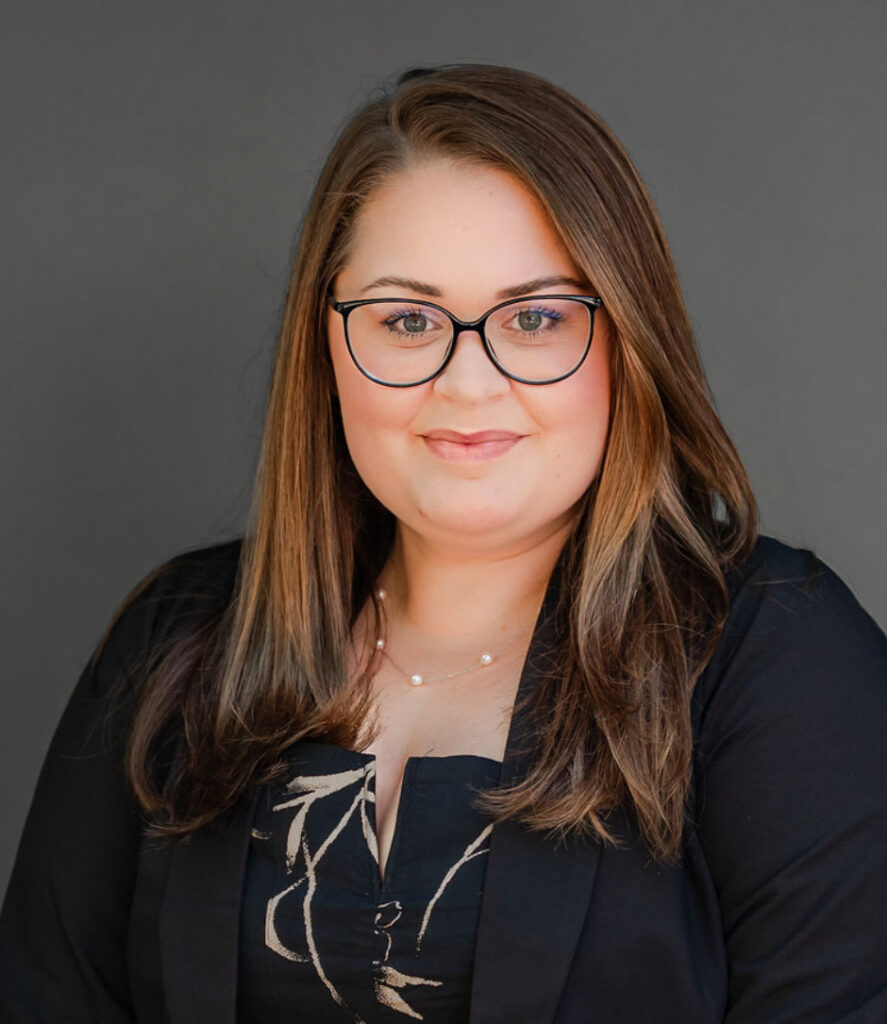
Meghan Etsey is a fourth year medical student from St. George’s University. She has a Bachelors of Arts in Biology and a Bachelors of Arts in Nutrition and Dietetics from Bluffton University in Bluffton, Ohio. She served as the President of the St. George’s University’s Women in Medicine chapter in St. George, Grenada where she expanded relationships with the community and worked towards educating women and helping the youth. She is also a member of the Gender Equity Task Force and Sex and Gender Health Collaborative Committees within the American Medical Women’s Association. When she is not pursuing medicine, you can find her with her friends and family on different road trips and adventures exploring the world.
Leah Liszak, MS3
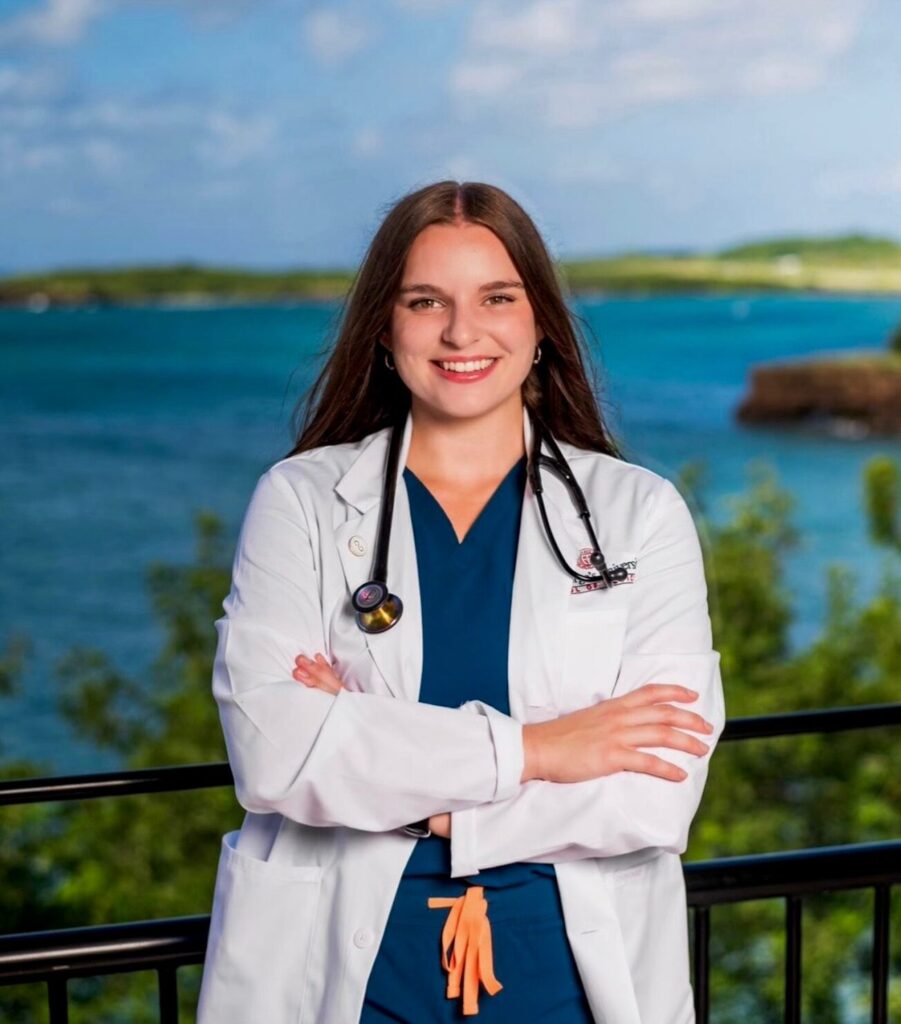
Leah Liszak is a third-year M.D. candidate at St. George’s University. Having roots in the northern suburbs of Detroit, she graduated cum laude from Oakland University in 2023, where she studied Biomedical Sciences. She served as the SMILEs Orphanage Home Coordinator for the St. George’s University Humanism Service Organization in St. George, Grenada, where she fostered impactful relationships with at-risk female youth and developed seminars to support their personal growth. She is also a member of the Gender Equity Task Force with the American Medical Women’s Association. Through both her extracurricular involvement and academic pursuits, she is passionate about building a career in Obstetrics and Gynecology that advances equitable reproductive health care.