
Authors: Meenu Immaneni, Jacqueline Ugwuneri, Meghan Etsey, Dr. Himani Divatia, Dr. Vali Kondos
“Our Voices, Our Future” is a podcast by the Gender Equity Task Force of the American Medical Women’s Association that explores the challenges, stories, and successes of those working to advance gender equity in medicine. Through candid conversations with changemakers, advocates, and leaders, each episode dives into issues like pay gaps, leadership disparities, and inclusive workplace culture. Tune in to be inspired, informed, and empowered to take action. Full episode listening links are available below the transcription.
Meenu Immaneni: Welcome to our voices our future, the podcast where we amplify voices driving change in equity within medicine and beyond. Brought to you by the Gender Equity Task Force, a committee of the American Medical Women’s Association. We’re here to challenge norms, break barriers, and ignite conversations that matter. I’m Meenu Immaneni and each episode will bring you candid discussions with leaders, change makers, and advocates working to create a more inclusive and just world. No more silence, no more waiting. You’re listening to Our Voices Our Future. Let’s get into it.
Today, we’re welcoming two incredible physician leaders who are deeply engaged in advancing gender equity and helping reshape how we define leadership in medicine today.
First, we’re honored to welcome Dr. Himani Divatia, a duly trained internal medicine and pediatrics physician and the associate designated institutional official at Christiana Care, a leading academic medical center in Delaware. Dr. Divatia is a champion of medical education, leadership development, and community advocacy. She has held multiple leadership roles in residency training and patient experience and currently oversees accreditation, curriculum development, and physician training at the graduate medical level. She is a graduate of Leadership Delaware and the Health Management Academy at Academy’s Physician Leadership Program, and she also serves as the clinical assistant professor at Sidney Kimmel Medical College and Philadelphia College of Osteopathic Medicine.
Joining her, we have Dr. Vali Kondos, also a duly trained internal medicine and pediatrics physician who also serves as the co-chair of Delaware’s ACP Chapter’s Women in Medicine Committee alongside Dr. Divatia. Since completing her year as chief resident, clinically, Dr. Kondos serves as an academic med-peds hospitalist at Christiana Care and Nemours Children’s Hospital. During and beyond residency, she has been passionate about physician well-being and currently serves as the well-being lead for the Division of Pediatrics at Nemours. She is also a clinical assistant professor at Philadelphia College of Osteopathic Medicine and Sidney Kimmel Medical College. In her role as the associate program director for the MedPeds residency at Christiana Care, as well as the director of the SUB-I program, she is passionate about leadership, mentorship, and medical education.
Dr. Divatia and Dr. Kondos, both of you, thank you for joining us today. To start us off, I would love for you to begin by hearing from each of you how you define leadership in your own life right now, and how has that journey evolved over the years, and how has your idea of what makes a good leader changed over time.
Dr. Himani Devatia: Thank you so much Meenu Immaneni for having us. This is such an honor and really an incredible experience to be able to share our voices as we all shape our futures together. You know the first time that I actually began to define leadership really formally was during my first leadership development experience as a third-year resident. And prior to that, a leader to me was somebody that you always looked up to, somebody who had these values and behaviors that you aspired to emulate. But honestly, over the last 15 years, personally, I’ve sought multiple leadership development experiences only to really refine that initial idealism.
Leadership is an art and a science. It comprises very specific behaviors and skills that require practice, and it’s founded in continual reflection and growth. Ultimately, I believe that it’s about driving others to believe in a vision, their own capabilities, and motivating them to achieve those common goals. And it’s funny. I define myself as a leader and I’m fortunate to be a leader in a workplace. I also see myself as a leader in the home, in my peer circles, in my community at times. And certainly I don’t have formal roles in all those spaces.
Would you consider a mother a leader? Well, we do, but really it’s because we’re using our values. My personal values are grit, grace, and interconnectedness. We’re using certain specific skills like emotional intelligence, like integrity, like communication, strategy, and ultimately we’re trying to bring people towards a common goal.
Dr. Vali Kondos: Dr. Divatia, that was so well said. You can’t see my face, but I’ve been nodding along on every line of that statement. And just to further elaborate, my initial definition of leadership is so far from where it is today because initially, it just seemed like I was looking up to those that seemed so far out of reach that just were in their field for years and years and got promoted and just led with authority and with confidence.
And as I progressed through residency and through attending-hood, a couple key experiences really helped transform that definition for me. And actually, one of those was similar, the exact course that Dr. Divatia is talking about called LEADR, Leadership Excellence Education for Residents and Fellows, that actually our program director here at Christiana Care, Dr. Friedland, created. And that was the most impactful because I was able to see and hear the leadership journeys of those that I felt I would never be able to talk to, such as those who are in the C-suite, CEOs, for example, and those stories really helped bring it to ground level for me, really helped validate that there is nothing extra special that those individuals have necessarily done to get there, but they were seen by somebody else.
The opportunities presented themselves. They worked really hard and they are very passionate about what they do and they want others to see that vision and they want to be those aspirational role models to those around them and that was fabulous. So as I had those experiences with LEADR, with our ACP Women in Medicine annual retreats and being able to connect on a human level with those individuals and those leaders, it really helped me redefine leadership as one who is present, humble, able to create a shared vision, inspire those around them and under them to reach that vision, and really empowers all of their team members. And that is absolutely seen in the workplace. That is, again, seen in the home and really seen in every aspect. So just because there isn’t a formal leadership title does not mean you are not a leader.
Meenu Immaneni: I really love that. I really like that reflection and appreciate that from both of you because I think you define leadership as more how we show up for others and often in ways that might not be immediately visible. But I think that’s really cool, especially for me to hear this early in my journey, because you are people that I aspire to be like. So being able to talk to you like this and things like that, that’s been really impactful and I really appreciate that.
Can you share a moment of where you’ve witnessed different types of leadership, especially the quiet, like the power of the quiet leadership, either in yourself or something else and how that’s kind of influenced the culture that you have around you?
Dr. Vali Kondos: Absolutely. I can take this one. So quiet leadership is truly powerful because I think it speaks to that leadership without a title. And so when I think of quiet leadership, I think of specific colleagues or residents that speak louder with their actions than with their words.
So those that really are putting in the work, those that are helping out their colleagues without being asked, going the extra mile and naturally just aligning and realigning a group during times of conflict as we experience day in and day out, whether it’s as big as COVID or as small as just disagreeing on a patient case. And so that individual that is bringing us together and serving the group, that type of servant leadership is truly strengthening the culture of camaraderie and joy and fulfillment of that group as a whole.
Dr. Himani Devatia: I think quiet leadership is really walking the walk, not just talking the talk, as Dr. Kondos mentioned. And we see that quiet leadership does get noted, does get appreciated, and does get rewarded.
Meenu Immaneni: I really love the term servant leader. I feel like that’s something that’s a very good mindset to have in medicine but also just in general of leadership. My next question is kind of about how I feel like many women don’t see themselves as leaders until they have that formal title.
So how do we shift this narrative that we have been talking about of that servant leadership, especially for those who are already developing or demonstrating those quiet everyday leadership skills? Because part of it is narrative, part of it’s how you speak to yourself about it. Any advice on that and how you kind of help navigate yourself and what you tell residents?
Dr. Himani Devatia: I think it is important to recognize that there is formal leadership and there is informal leadership and both are extremely important. Oftentimes informal leadership can lead to formal leadership, although it is upon the choice of the individual, whether you want to remain in that informal leader capacity or if you want to aspire towards one of those formal leadership roles. Ultimately, leadership is a mindset. It does not have to have titles, but it requires this practice of consistent behaviors.
Those behaviors that Dr. Kondos mentioned, that I mentioned, it’s about listening actively. It’s about having creative ideas and speaking up towards those. And it’s really being that team player, recognizing that we are motivated towards that same ultimate goal. I really think that we as women have a tendency to build a narrative internally and structurally and societally there are narratives built around us as well. It’s thinking about how, whether you’re a quiet leader or a more voiced leader, whether you’re a formal leader or informal leader, it’s ultimately about figuring out who you are, what you want, and how you can work together with others to get there.
Meenu Immaneni: You guys co-lead a committee focused on gender equity. What barriers do you consistently see that prevent women from stepping into those leadership roles? And how do you think we can begin to dismantle them?
Dr. Himani Divatia: That is a great question. And we are so grateful, through the American College of Physicians, for about the last decade, we’ve had this opportunity to build our Women in Medicine Committee together. What we’ve noted in those conversations that we’ve had with a diverse array of humans is that barriers do exist.
Unless we talk about them as we are in this moment, we won’t necessarily be able to advance our own internal leadership and our collective leadership as a group. I like to bucket them in maybe three core domains: power, perception, and pragmatism. And we’ll each expand on that a little bit and what some of these barriers are.
You know power as we think about it, historically medicine has been a male dominated profession and while we do know that medical school admissions are showing a higher rate of female matriculants, almost up to 60% and now a female predominance, there are still decades of expectations and experiences that speak differently due to formal power and authority roles. So, for example, about 25% of deans of medical schools and universities are females, about 30% of healthcare physician executives are females, and we also see that in general, there is about a 15 to 20% pay gap between the highest paid specialties in medicine as well between male and female.
Now it’s not that we want to continue to focus on the divide, right. But it’s really now, how do we understand these power differentials, understand why they exist, and begin to talk about them, begin to ask the questions and begin to arm ourselves with information so that we can have more informed discussions and choices. And lastly, I’ll say that power, you know is is really about understanding that sometimes we have to dance the dance, but really it’s about working together with our allies, with our sponsors, often that are men in leaders of all backgrounds in order to break some of these traditional mentalities and balance that power imbalance.
Meenu Immaneni: Absolutely
Dr. Vali Kondos: Just like Dr. Divatia said just being able to bring those to light or recognize them is already half the battle so that we can address them and so you know a couple of things that come to mind for me thinking about power dynamics, is as a woman maybe really pursuing her aspirational goals of of her next promotion for example she may be seen as too power hungry or really a little bit too harsh right. As she’s leading with authority, as opposed to a male in that same position that would really be recognized for how poised, and how confident, how well he’s leading the team. And on the other end of that is you know women may be a little too soft or seen as she’s more so leading with stories and not necessarily data and numbers for example and so some of those biases are a lot deeper than we think just our intertwined in our day-to-day lives.
And then one other one I’ll bring up is you know just being in a meeting right and a leader or not and and a woman brings up a specific suggestion or a change for example and there’s it’s kind of not recognized and bring up the same topic and then people engage or say it’s a great idea and this is still happening like this year. Like, I don’t think people are necessarily intentionally trying to grow that divide again, but it happens so, just bringing that to light with the power dynamics.
So if that was, that was kind of the first bucket of power, and next we want to shift a little bit more into perception. And perception is challenging because I think there’s two areas of perception that we will touch on. One is self-perception, and the other is external perception right and or internal perception, or personal perception self self-perception. And one of the biggest struggles I think that women have, including myself very much, is imposter syndrome right. It’s widespread in our communities, and I think that you know, in a group of driven individuals that are physicians that want to be leaders, that want to continue to aspire, we get this feeling where we’re just not meeting the mark, right? Constantly not meeting the mark, and should we be here, and can I handle that next leadership opportunity that’s presenting itself, and am I good enough, and to question ourselves a lot about that,t and feeling like we are not as capable.
You know what I have found is helpful to combat that a little bit is really to stop again and notice in the moment why am I comparing right, why I feel like I’m not capable and notice that you don’t necessarily have to answer it first no no comparing. Why am I doing it and why am I negatively seeing myself, and is that true? Is it reality? Or is it a false narrative that I’m telling myself? Is it a story and really try to look at the facts there? Analyze the situation and see and if you can’t figure out why you think you’re capable, maybe the best thing is to have a colleague, a loved one ,who can tell your elevator speech to you. And tell you, actually you are accomplished and all these amazing things, and can rattle off your CV in a minute. That self-perception, I think we can really unravel ourselves and get pretty low and I think we need to really separate out fact from fiction in narratives that we are telling ourselves.
Dr. Himani Divatia: I would have to agree and say that you know I’ve had to do a significant amount of coaching work and thought belief work to change that mental narrative. And the more that we speak about the mental narrative that exists both internally and externally, the more we are able to empower each other to break those narratives down.
And you know when I work with a coach for example, a lot of what we talk about is really thinking about what is It that I bring, What is it that I want, What is it that I need to do To get from here to there.
Moving into that third piece, which is that pragmatism. The pragmatism is just that. It’s identifying facts, figures, feelings as well, very important that we’re not alone and sort of forecasting and predicting, you know what you need to do to achieve success in a situation for example. Actually, women who receive training and being able to advocate effectively communicate lead from that practical standpoint, carry their voice in larger circles with more effectiveness. It does take, however, planning and preparation and it takes support, and you know both Dr. Kondos and I are very lucky that we have extremely supportive home environments, we have extremely supportive work environments, our colleagues that we work with are diverse teams, and that is ultimately what drives that work life sustainability.
Meenu Immaneni: I really love how both of you touched on support and how crucial that is In terms of breaking that narrative in our brain, And sometimes we need that reminder of things that we know are true but in that moment we’re not remembering them. I think that’s such an important crucial thing. While we’re navigating those Internal and external barriers like imposter syndrome, the demands that are competing, I feel like having that space is really helpful.
My next question is about: How have spaces like AMWA or lean in circles helped you grow not just professionally, but also as people?
Dr. Vali Kondos: Great question, and I do think those are really crucial pillars to growth right. Growth in your career, growth in your home life, growth in all areas. So I think there are specific types of support that you need right. We need mentors, mentors that are there, different types of mentors for different areas in your life, not necessarily one mentor for all, although some people may have that. We also need sponsors right sponsors that are going to see you that are going to help you get to that next step that next opportunity to get you out there whether it’s nationally, whether it’s locally, regionally, Etc and all those individuals, different supports in your lives are going to help you grow personally and professionally and will help you network and get you out of your comfort zone.
Dr. Himani Divatia: I think we’ve been really fortunate through AMWA, through the ACP forum, through lean-in circles, we’ve had some homegrown women in medicine organizations as well, that we’ve had the opportunity to create a forum for dialogue. Very much like we’re dialoguing today. We’ve had an opportunity to discuss shared experiences, and most importantly, Tangible tools. What are some evidence-based tools that we can use to help ourselves promote each other and move towards reducing that inequity and that gender gap. And so, for example, at some of our women in medicine retreats we’ve been able to bring in experts on negotiation. And then understand you know, how do you negotiate, and how do you know what to ask for. Where do you identify data around salary differentials, and how do you go back into that conversation more prepared and pragmatic.
We’ve had individuals come in and work with us on improv and we’ve done some acting experiences because we know that as a profession we have to be thinking on our feet pivoting at any time and really be able to bring that confidence which is a practice skill set and move into that action. And certainly you know the more we get to share our voices together we learn from each other that is probably the most important thing because no two experiences are identical. Similarities that bring us together but it’s those differences that allow us to leverage even stronger.
Meenu Immaneni: I love that.
In contrast to mentorship, someone going through is like a resident. How do you find those mentors? How do you ask people to be a mentor? Or I don’t know if sponsorship works the same way but any advice on that for people who are on my stage of our career?
Dr. Vali Kondos: That’s a great question. I think coming from somebody personally who does not have the skill of just walking into the room and networking, maybe there are days that I can do that but, but most days I can’t, so I think taking small bites is where I started. In my groups, I could notice okay what my interests are and who is somebody that either has gotten there or has the skills to get there that I’d be able to chat with and pick their brain. And that’s how it kind of came up with my first mentor second mentor and as I chatted with them a little more informally and had a connection I don’t know that I ever asked them to formally be my mentor you know one thing led to another that connection and as we had conversations and realized something else was an interest of mine they would be able to point someone else out for me to touch base with them etc. for those different goals and aspirations. That’s how I started.
Dr. Himni Divatia: I think that you know it does take work. And the work is important to put in because the return on that investment is huge. I remember when I was probably at one of my first national conferences as a medical student, actually the American Academy of Pediatrics, and our first MedsPeds resident association and conference. I thought okay, these are all incredible people. I want them all to be my mentors and I don’t know how to ask them that. Exactly. It’s so natural it’s so common you are not alone for thinking that. Over time I kind of learn to strategize and say I would love to have a mentor really for the personal aspects of life. And who is that female MedPeds physician program director that is really focusing on how she balances her personal life with her professional life. We want that mentor who is that core academic mentor, the one who’s written a lot of papers to say how do I build a writing circle, how do I submit my first proposal for a conference. I also think it’s very important to have a distance mentor. A distance mentor is an individual who is not at your institution. Maybe you’re even seeing an interesting specialty. But somebody who could sort of be that neutral perspective because you are going to be familiar and comfortable with the things in people you are familiar and comfortable with. Your distance mentor sort of sees things from a distance you reflect in a different way maybe challenge some of your suppositions and brings new insights and perspectives and distance mentors are really found by doing something like we’re doing now individual is serendipitously me, but then you can you just stay in your circle because you actively build that relationship.
Dr. Vali Kondos: And just to piggy back on that, those individuals that you’ll have in different areas of mentorship and the distance mentors. They don’t have to all be strong female leaders right. you made a different perspective of a strong male leader that is great at research because you want to grow it right, and so different individuals, whether it’s different genders, different roles, different specialties, different locations. Also a really great purpose.
Dr. Himani Divatia: I do want to make a quick comment on sponsorship, and you know there’s a lot of literature that has been written around mentorship, coaching, and sponsorship and actually the American Medical Association has a really great toolkit on coaching and mentorship and sponsorship as well, which you know individuals can should feel free to access. The key piece about sponsorship is that at any point in time that you are in some type of semi-formal or formal position, we have that pay-it-forward mentality, and that’s what sponsorship is. We all do that seamlessly on the wards when we become fourth year medical students and we see that third year medical student who might be on that in-patient experience for the first time right.
We offer those insights, we help them identify how to write that first soap note, we talk about “hey are you applying I’m in the application process now let me tell you what it’s like.” Take that model and transfer it at every stage of your life, and when you get to that point of saying you know what I have a position that’s vacant, I want to sponsor the person that I believe is best qualified. And really deserves that opportunity that maybe somebody else won’t see her, but I do.
Meenu Immaneni: I really love that. I love that it feels like it’s a little bit about intentionality and self-reflection and introspection. But it’s also about being genuine and just trying to connect with people and I think letting that guide it a little bit and letting your inner like reflection guide that a little bit as well. But, it’s about trying, I think. It’s about showing up and trying a little bit is my summary of this wonderful advice I’ve just gotten.
Meenu Immaneni: Today we’ve covered a lot already. My next question is kind of trying to pivot a little bit more about being a little more personal and we kind of mentioned it already about work life integration and boundaries.
The term work-life balance gets thrown around a lot but I feel like many of us feel like that’s an impossible standard especially as women in medicine I feel like that’s something we often struggle with even at earlier stages.
How do each of you approach that work-life integration, and what’s helped make it sustainable, if at all, or if you have a different way you approach it that also I feel like it would be cool to share.
Dr. Himani Divatia: Yeah I have navigated this question over and over again so I’m so glad we’re talking about it. Honestly I don’t think work-life balance exists. Now this is me, this is very personal. But I think you know what I strive now to do as a mother of two incredible boys, as a community leader, as a faith organization goer, as a physician, and as a leader in medical education. I strive for sustainability and you mentioned that word right. Exactly how do you look in your perspective you’re probably thinking how do we make this career sustainable. Yes and that’s what it is. Work-life balance, work-life integration, I think work-life 3.0 is work-life sustainability. And when I think about that, I ask myself the question, can I listen in on a meeting while making dinner and feeding my children? Yes yes, I can do it. And is that the best way for me to be mentally present in either domain? So I’ve had to make some calculated decisions, I’ve had to set boundaries and I’ve had to really think about what it means to bring my full self to each effort. Sometimes that looks like asking you to know that my administrative team will block my schedule at 4 p.m. because you know I don’t have a babysitter for the next couple of weeks and that means that I can’t take in person meetings. And then you get home and I will show up at home and my presence is needed at home and everybody around me knows that expectation. Sometimes it’s saying that I have an opportunity to co partner with my esteemed colleague Dr. Kondos with an incredible podcasting joy today and that’s me telling my home life dinners on you guys I’m going to be out for the next 4 hours and ultimately you know what I’m what I’m getting at here is that it’s the intentionality we spoke about earlier. It’s not feeling guilty and it’s really being tactical about looking at your priorities and what matters in that moment and then really focusing on building that experience to maximize that.
Dr. Vali Kondos: I also really love that we’re talking about this because it truly is a question that I don’t know that I’ll ever be able to fully answer get the perfect answer for, but as we’re juggling these multiple different aspects in our life, different title of who we are necessarily or who we want to be. It brings up an Instagram reel that multiple people have actually shared with me in different places and spaces, so I thought it really illustrated this well, and what it showed is that we’re always juggling multiple balls at life right. And it is You know the key is to discern which balls are rubber and will bounce back and which ones are glass and will shatter if you drop them. and that is in that moment, in that hour, in that week in that month, but the key there is being able to discern right because your goal in life is not to be perfect and carry all the balls at once. It is to be present and carry those that will shatter if you drop them. and knowing that you can implement multiple tools to try to figure out which ones are glass. You and some are just intuitively glass, and you know you cannot drop them, and others you really need to think strategically about which you have to commit to at that moment, like Dr. Divatia I was explaining. But that shift in mindset will really give you the freedom to stop chasing perfection and start choosing presence.
Meenu Immaneni: I really love that analogy. I feel like I’ve heard the ball juggling analogy, but not taking the time to decide which one is rubber and which one is glass. I feel like that’s a big perspective shift of how you can view it. So I really appreciate that analogy and the reel that came into your life. And then we kind of mentioned boundaries in terms of boundaries professionally, boundaries personally, and I feel like boundaries are essential, especially in leadership, but they’re often hard to set especially in medicine, especially in different aspects of medical training.
What boundaries have you learned to protect over time and how has that kind of changed your relationship with work and leadership?
Dr. Vali Kondos: That’s a great question. Also one of those million dollar questions and boundaries is something that has always been difficult for me because I am still working and I think will forever be working on creating and upholding boundaries without guilt, which is the key. One thing that’s been helpful for me is having clear bidirectional communication between myself and the other party, and setting a boundary with right. And not assuming their expectations of me or vice versa and really reminding myself that time is our most valuable asset and needs to be protected. And so how I want to use that time needs to be determined by me and not externally by someone else and their external factors should not dictate how my time is spent. Now in reality right that is that is the goal. So how do you actually make that happen? I think it is based on analyzing almost every situation. So I have found that very exhausting, and actually, as I was listening to an audio book recently I loved a different framework that I would like to share. This framework is actually built around figuring out the emphatic yes, so it’s a lot easier for you to say no. This author was speaking about setting big hairy audacious goals something called BHAGS which is a term that was coined by Jim Collins and Jerry Porras in their book “Built to Last” and the idea is if you set these big hairy audacious goals right, your goals in the next like five years or ten years that we actually tend to underestimate ourselves on. Then you will have this sharp vision and this commitment to get to that goal, and so it’s a lot easier for you to see all these other things as distractions from that goal. It’s a lot easier for you to say no, not today. Today I need to commit to writing that next chapter because I am going to write my book by April of 2026, and in order to do so I need to write a chapter a month. And I need to refine it.
Whereas if someone comes in and says oh but can you please help me you know how to mow my lawn. But something that you would naturally want to say yes to because you’re kind human being and you want to help others you know saying no is not that you are a mean individual or you don’t care about that person, but you really do have your large goals in mind and you are like emphatically saying yes to those and you are saturated so other things are much easier to say no to and that boundary is a lot easier to set
Dr. Himani Divatia: You know, Dr. Kondos, I love that concept and I personally haven’t heard of that term until you’re defining it here today so I’m definitely going to take a moment to get the book built to last so that we know we keep on lasting. I love what one of my coaches Dr. Camille Upchurch shared with me. She’s a physician who does wealth coaching for women and she asked me the question. She said who is Himani 14.0? And I think we spend so much time thinking of who we were in the past, a decent amount of time thinking and maybe even worrying about who will be in the future. I don’t have enough time thinking about who is the us 14.0 and what are our BHAGS but if we do think about those goals we set them as ones that are bold. And be able to then define our boundaries again out of strength and confidence and forward progress rather than guilt and feeling like we’re letting ourselves and others down.
Meenu Immaneni: I love that I love the framework I love the intentionality of it all I really appreciate your thoughts on that setting those kind of like boundaries and I feel like it is hard especially the guilt part and so I thank you for that and I feel like you both are navigating still demanding careers and meaningful leadership positions and opportunities.
If you had to mentor your younger self, what’s one truth, one lesson you wish you would have known earlier?
Dr. Himani Divatia: This one does evoke a little bit of emotion because there are a lot of things I would have said to my younger self. The great part is we get to say those here and now to individuals, to women who are a decade or maybe even more in this journey where we were maybe a decade ago. And I would just say be courageous, be confident, and be coached. You know I personally spent way too many years inside my own head. I wish I would have been able to speak up in forums where I was a minority. I wish I might have been a little less afraid of failure so that I could see what possibilities exist. And I wish I could have been guided actively by certain professionals. We are certainly guided in that medical space by our attendings and in really learning the clinical realm, but I think it’s important to be guided by other professionals to really understand and work through scenarios, maybe do some visioning exercises. And think strategically about who we are, what our values are, what we bring to each experience, and what we intend to get out of every experience. So be courageous, be confident, I know that’s like the worst feedback I used to get on my evaluations like be more confident but it is true right but how do you be more confident it’s to take that active step of being coached or being in these circles. Like the lean in circles and ACP, women in medicine, and AMWA so that we can really coach each other into that next 14.0 version of each of us.
Dr. Vali Kondos: Absolutely, and really like you said earlier, get those practical tools on how to do that knowing that we show more confidence, how to show more confidence, how to show more courage and get that insight from your coaches and so on. I think from my standpoint tactically that means giving yourself time to reflect and be intentional. Get clear about what your values are, what your priorities are. Who you are, which is a very difficult question to answer as I try to coach who you are– not as defined by your rules but just who you are. And who you want to be because if you don’t allow yourself time to think about that and be intentional about that you will just keep going, going, going and then years will pass by right and you have these I wish I would have I wish I could have etc, and I think every experience is as important and timely etc. But if I were to go back, I would like to create that time, that intentional time of reflection, getting clear and really making the space to get courageous, confident, and coached.
Meenu Immaneni: I think that’s really important for us to hear where we are now especially is like fourth year medical students or residents as I feel like we’re I think there are moments of our of like our chosen career where there is time to think and reflect and have those things but sometimes it’s a go go go. I feel like I think before medical school is one of those points like where do you want to be. I think right now planning a residency for me is one of those points, what do I want to be, but I feel like in between it’s go go go. And I feel like I feel like what you guys have said or like taking that time even in that go, go, go, to give build space for yourself I think it’s really important. And I think it’s something again like intentional you have to build space for and time for so I think it will be really useful for people like me who are listening to this podcast or in this stage of life to hear that.
Dr. Himani Divatia: You know I just want to add a quick insight piece into that the ACGME offers the opportunity for residents to give feedback both around kind of core programmatic issues annually once a year’s the ACGME program survey. But they also have a well being survey where you really have the opportunity to think about how do we structurally create these environments where you have time to reflect, and what the data is showing. And we’ve actually seen that the data shows that the number one question in need of real improvement is whether I have enough time to think and reflect during my work experience. And ultimately, that is a contributor towards emotional exhaustion, which is one of the three facets that leads to burnout. As you know, leaders as educators, as physicians, as women, together we should really think about how we create that intentional time, certainly do it on your own time and space when you can. But, structurally, systemically, how do we also work together to create time for example during your clinic sessions you know, do you create a little bit of admin time for the team to just have some time to journal and reflect. We have a forum here for narrative medicine, and so do we create that time to reflect and think through a form of narrative medicine. It’s really important, and we know that the data says that we have less and less time to think and reflect, but the time to do that even more so than ever, is now.
Meenu Immaneni: I really love that I think that perspective like structurally I think is also good for us to hear because I think like we have less control of that as students and as residents and I feel like thinking about that and seeking that out I think is also something that we that we can do. We can’t create it right now but we can seek it out so I think that’s really good for people to hear.
My last question for our time today is: What’s one hope you carry for the next generation of women and medicine, and what role do you see yourself playing in helping that hope become reality?
Dr. Vali Kondos: That’s a great question. I will try to be succinct about this as I think we did address a lot of there’s so many hopes that we have, but I do think overall my hope is that we continue to see one another and to build each other up and not feel threatened by one another’s successes. And by we I mean the collective we right, as like women leaders, as physicians and also our very diverse work group, right. Our colleagues that are not women, that maybe are not leaders, I think we find that support in each area and that mentorship that we talked about earlier in each area, and really being able to bring to light those issues that continue to feed into gender inequity right. And noticing them, talking about them, finding ways to normalize and not stigmatize that divide, and maybe the larger mental load that we carry, as a barrier for us excelling in our careers.
Dr. Himani Divatia: I absolutely agree it’s to not live in silos and fear but to live in a space of collaboration, courageous conversations, and critical changes. I really hope that we can together, you know with all of our colleagues, advocate for things such as paid parental leave, workplace accommodations that enable individuals to choose to breastfeed if they want. For example, really talk about going into practice with your counterparts who may not be female and saying hey you know what does your contract say and are we similar benefits, and how do we help each other maximize our potential, because we each are valued based on our skills and our experiences and not necessarily you know these gender definitions. And so really it’s thinking about how we can come together, as Dr. Kondos said, use spaces as this forum and others to create sounding boards and ultimately have a place where we feel free of judgment and shame, but one that we can empower each other towards mutual acclaim.
Meenu Immaneni: Thank you both for being here today. I think this conversation is very enlightening for me, and I hope for many of our leaders as well. And I hope for many of our listeners as well, and leaders.
And that’s a wrap on this episode of our voices, our future. We hope today’s conversation inspired you, challenged you, and reminded you of the power of raising your voice. The fight for equity doesn’t stop here. Join us in the movement. Subscribe wherever your podcasts are and if you love this episode, share it with someone who needs to hear today’s story. Remind us that leadership takes many forms, and we hope this episode sparks reflection and action. Until next time, stay bold, stay vocal, and keep the conversation going. This is our voice, our future.
Links to our podcast:
RSS https://rss.com/podcasts/our-voices-our-future/
Apple Podcast https://podcasts.apple.com/podcast/id1805991643
Spotify https://open.spotify.com/show/5E59jvuFQOjSXfLrjQiy0P
Podcast Index https://podcastindex.org/podcast/7278557
Fountain https://fountain.fm/show/7278557
True Fans https://truefans.fm/82727577-2b37-5929-aa2e-1574d478b177
About the Authors
Lakshmi Meenakshi Immaneni, OMS4
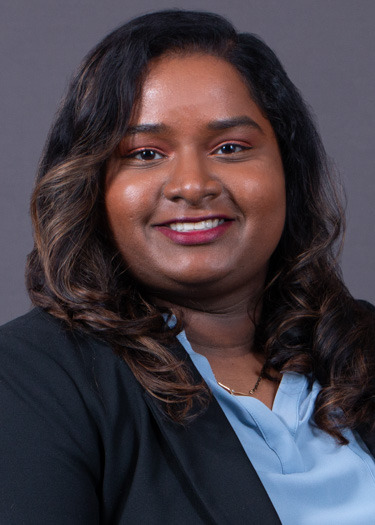
Meenu Immaneni is a fourth-year medical student at the Burrell College of Osteopathic Medicine. She has a Bachelor of Science in Public Health with a focus in Nutrition from the University of North Carolina at Chapel Hill. Passionate about patient advocacy and advancing equity in healthcare, Meenu is a dedicated member of the American Medical Women’s Association, where she serves on the Gender Equity Task Force. She is particularly interested in promoting mentorship, and championing women’s leadership in medicine. When she is not studying, Meenu enjoys spending time with her husband and their cat, playing board games, reading, and traveling to explore new places.
Jacqueline Ugwuneri, MS3
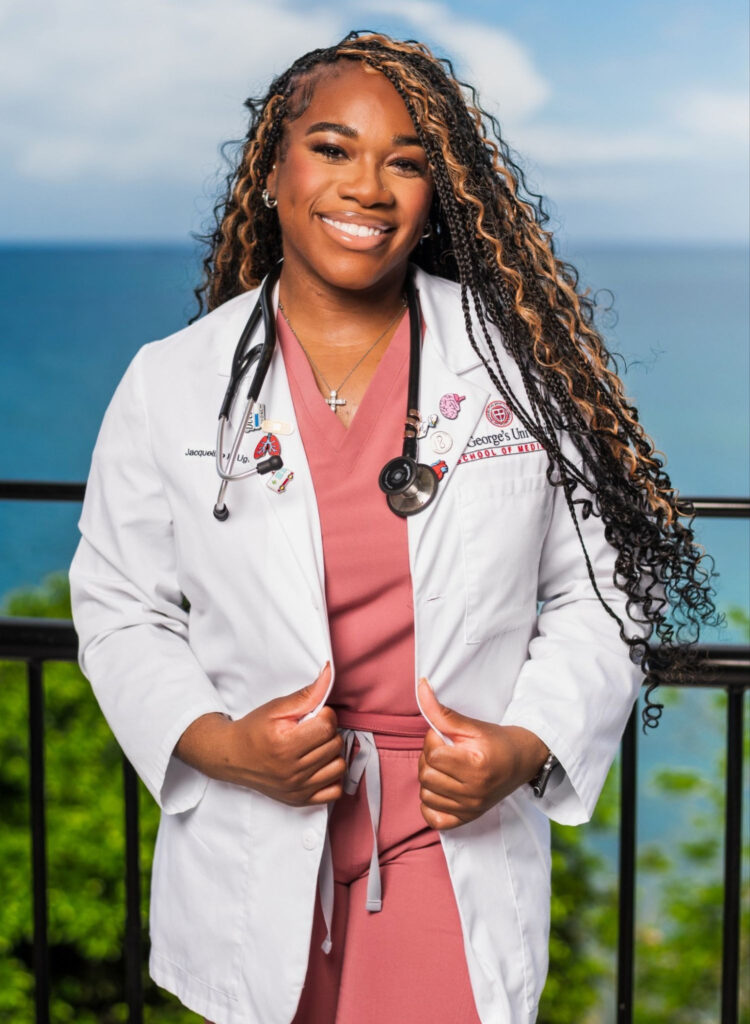
Jacqueline Ugwuneri is a third-year medical student at St. George’s University School of Medicine. She earned her Bachelor of Arts in Cognitive Science with a concentration in Cognitive Neuroscience from Rutgers University in New Brunswick, NJ. She served as President of the St. George’s University chapter of the Student National Medical Association (SNMA), where she organized mentorship programs, health fairs, and professional development events that fostered community engagement and empowered minority medical students to thrive both academically and personally. Before medical school, she worked as a medical assistant and care coordinator across several specialties, including Family Medicine, Minimally Invasive Gynecologic Surgery (MIGS OB/GYN), Infectious Disease, and Breast Surgical Oncology. When she isn’t caring for patients on the wards or studying, she enjoys vlogging her medical journey, working out, spending time with friends and family, and mentoring aspiring minorities in medicine. She hopes to continue inspiring others by bridging her passion for storytelling, leadership, and advocacy in the pursuit of a more equitable future in healthcare.
Meghan Etsey, MS4

Meghan Etsey is a fourth year medical student from St. George’s University. She has a Bachelors of Arts in Biology and a Bachelors of Arts in Nutrition and Dietetics from Bluffton University in Bluffton, Ohio. She served as the President of the St. George’s University’s Women in Medicine chapter in St. George, Grenada where she expanded relationships with the community and worked towards educating women and helping the youth. She is also a member of the Gender Equity Task Force and Sex and Gender Health Collaborative Committees within the American Medical Women’s Association. When she is not pursuing medicine, you can find her with her friends and family on different road trips and adventures exploring the world.