
Authors: Laura Urichoechea, Vashti Price, MS, MHS, Meghan Etsey, Dr. Omnia Haboura
“Our Voices, Our Future” is a podcast by the Gender Equity Task Force of the American Medical Women’s Association that explores the challenges, stories, and successes of those working to advance gender equity in medicine. Through candid conversations with changemakers, advocates, and leaders, each episode dives into issues like pay gaps, leadership disparities, and inclusive workplace culture. Tune in to be inspired, informed, and empowered to take action. Full episode listening links are available below the transcription.
Laura: Welcome to Our Voices, Our Future, the podcast where we amplify the voices driving change and equity within medicine and beyond. Brought to you by the Gender Equity Task Force, a committee of the American Medical Women’s Association. We’re here to challenge norms, break barriers, and ignite conversations that matter.
I’m Laura Uricoechea, and in each episode, we’ll bring candid discussions with leaders, changemakers, and advocates working to create a more inclusive and just world. No more silence. No more waiting. You’re listening to Our Voices, Our Future. Let’s get into it.
Today, we’re welcoming Dr. Omnia Haboura. Dr. Haboura currently serves as the course director of Principles of Clinical Medicine and as a lecturer in the Department of Pathology at St. George’s University School of Medicine. Before taking these academic roles, she served as a clinical instructor at the same institution.
Prior to joining St. George’s, Dr. Haboura practiced as a general practitioner in Sudan, working in the Emergency Department at the University of Khartoum Medical and Health Services University Hospital, as well as at Haj Al Safi Teaching Hospital, and in the Obstetrics and Gynecology Department at Al Mualim Medical City.
Welcome, Dr. Haboura. It’s so nice to have you here with us today.
Dr. Haboura: Thank you, Laura. It’s my pleasure to be with you today.
Laura: All right, so to get us started, can you tell us a little bit about your path to becoming a physician? Are you the first to become a physician in your family?
Dr. Haboura: I can say there was a pivotal moment that made me decide to study medicine. It came from what I saw growing up. In Sudan, I witnessed how difficult it could be for people to get medical help, even for simple things, and how much of a difference a caring doctor can make in someone’s life. That left a very strong impression on me and made me want to be part of that change.
I was born and raised in Sudan, a very beautiful and very large country with incredible people and rich resources. Like many other developing nations, the health system struggled to keep pace. What always stayed with me was how generous and respectful the people were back home. They treasure small acts of kindness, and I saw how simple gestures of care could completely change someone else’s life. That experience shaped me and shaped how I see medicine. I see medicine as something deeply human, not just clinical.
I am also the youngest in my family and the only daughter. My brothers went into different fields, including engineering, accounting, and marine science, but none went into medicine. I had to carve my own path. My family was very supportive, but we were all figuring it out together.
I graduated from the University of Khartoum, one of the largest and oldest universities in Africa. It is known for admitting the very top students in the country. Studying there was an incredible experience, but it also came with a lot of pressure. Everyone around me was exceptionally talented, and to succeed in that environment, I had to work extremely hard. That intensity taught me discipline and resilience, qualities that still shape how I approach teaching and my life today.
Laura: So you already touched on some of the challenges of being the first in your family to go into medicine.
Could you share more about those challenges and which ones might not have existed if you had a family member in medicine to guide you?
Dr. Haboura: Definitely. There were many challenges throughout my journey. One of the main challenges was the English language. English, as you can see, is not my first language. Coming straight from high school, where English is just a subject, I suddenly started studying everything in English. On top of that, medicine is full of Latin terms.
It was really tough at the beginning. I still remember the first day of school. I went back home with a very big textbook of community medicine. I spent hours and hours trying to go through my medical dictionary just to finish one page. It took so much time and effort just to understand the terminology. But as you can see, I refused to give up.
It was also hard because I didn’t have anyone in my family who had gone through medicine. I had to figure things out on my own, how to study, how to manage the stress, and what to expect from exams. Looking back, I believe those early struggles taught me resilience. They also made me patient with myself, and that’s what has made me patient with my students today. I always try to remind them that it’s okay to take your time when you are learning or studying.
Laura: I cannot imagine starting medical school while learning English. English is not my first language either, but I learned it when I was younger. I was going into ninth grade, and I remember coming into school when nobody else spoke Spanish. Spanish is my first language, and it was tough. I can’t imagine stepping into that while also going through medical school, so I am amazed.
Dr. Haboura: Thank you so much.
Laura: How did you find support or mentorship when you did not have someone in your immediate circle who understood the process?
Dr. Haboura: In the beginning, the main support came from my friends, my peers, and the upper-term students. We had a very strong senior-junior relationship. Usually, our seniors were very genuinely supportive of one another. They shared notes and guided us through exams.
They always made time whenever we needed help. At the same time, our professors were also very supportive. They allowed us to volunteer in their free clinics, and we spent a lot of time with them. They taught us how to approach patients, how to take a proper history, and how to perform a physical exam.
All of those experiences built our confidence, to be honest, and helped us understand the real meaning of patient care.
Laura: Having those upperclassmen help and guide you along the way must have been invaluable.
Was there anybody else who was there to support you, or was it mostly the seniors at your school?
Dr. Haboura: Yes, mostly the seniors from my school.
Laura: You practiced as a general practitioner in Sudan. Can you tell us about your transition to becoming faculty at St. George’s University School of Medicine? Was it a difficult process? And who guided you?
Dr. Haboura: To be honest, the transition was quite a big step. Working as a general practitioner back in Sudan, I used to have hands-on experience. I used to see patients, make decisions, and manage emergencies. Moving to pure academia meant shifting from direct patient care to focusing on future doctors, how they think, and how they learn.
At the beginning, it definitely was not an easy process. Everything was new for me. I was far away from my family, adjusting to island life, and learning the education system, the logistics of each session, and how the courses were designed.
I was very fortunate to have an excellent training system at SGU and very supportive colleagues who guided me through that process. I started as a clinical instructor and gradually took on more responsibilities, but it was not easy at all.
Laura: How long have you been at SGU?
Dr. Haboura: Almost three years now.
Laura: Okay, so that is quite recent. From what you have shared so far, I can really see how valuable good mentorship and guidance can be for success, especially when overcoming challenges like moving away from home, family, friends, and everything familiar. I am very impressed by your story. You have accomplished a lot thus far.
Dr. Haboura: Thank you very much.
Laura: In what ways has your own path in medicine influenced how you teach and mentor your students?
Dr. Haboura: My clinical experience, I feel, helped me a lot. It allowed me to bring real clinical context into teaching, to help students understand what to learn and how to connect theory to what they will actually see in practice. That balance between science and patient care became the core of my teaching philosophy.
Because I went through many challenges myself, I try to make learning less intimidating for my students. I encourage them to think, to ask questions, and to see the patient behind the case. I also remind them that it is okay not to know everything. What matters is being curious and committed to improving every day.
At SGU, we have a very large and very diverse group of students, and I feel that each of them has their own story to tell. I keep reminding them that medicine is not an easy pathway to take. It is hard, and it will get harder. However, with time, you will adapt, grow, and learn from every hiccup along the way.
I always tell them that we are here to support them. We are here to guide them. We are here to give them the help that they need. We have all been in their shoes before, feeling lost and unsure of how to study or where to start. I want them to know that those feelings are normal and that they are not alone in this journey.
Laura: Your students are so lucky to have faculty like you.
Dr. Haboura: Thank you very much, Laura. You are making me blush today.
Laura: No, seriously. I think sometimes people who are already further in their careers, and even I, now as a fourth-year medical student, sometimes we might forget how hard it was to get where we are. When we forget, it is a little harder to empathize with others who are in the earlier stages of their careers. I think it is very important to keep that in mind. It shows that you clearly remember and work hard to make it easier for students and to enhance their learning by remembering how hard it was for you at the beginning of the process.
So the AAMC defines first-generation medical students as those whose parents did not complete college and/or did not attend medical school. In the 2023–2024 cycle, about 11% of U.S. medical school matriculants fell into this category.
From your perspective, what are some of the unique challenges these students face, maybe ones we have not touched on yet, as we talked about your own journey?
Dr. Haboura: I think it is very important to make the distinction between being a first-generation college student and being a first-generation medical student. A first-generation college student is often the first in their family to attend or complete higher education at all. From the beginning, they are trying to learn what the academic world looks like, how to study, and how to manage their time. This often happens with very little guidance or a family experience to actually rely on.
When you say first-generation medical student, on the other hand, imagine that you are coming from a family that may or may not have a college graduate, but there was no one to guide you through medicine. This creates another burden. It will create an extra gap. They might understand the academic life in general if their family has someone who graduated from college, but they will not understand the culture of medicine.
This is something that you could relate to as well, Laura. The long training, the emotional demand, the unspoken expectations that usually come with becoming a doctor, how to approach clinical learning, how to find your mentor, and how to balance your personal life with such a demanding pathway.
The first challenge would be simply how to navigate the system. Many first-generation students will come in without someone at home who can actually understand what medical school really involves. They are trying to figure out everything by themselves, starting from study strategies to exams, even how to handle feedback on their own. It can be very overwhelming, especially at the beginning.
Because there is no one to guide them through those small and yet very important details, we cannot forget the big elephant in the room, the emotional pressure. Many of those students carry the weight of expectations. This is something I experienced personally. You do not want to let down your family. You want to make them proud.
This pressure can be very heavy at times, but it can also become the source of motivation that keeps you moving forward.
——
Laura: Yeah, I can relate to a lot of what you are saying right now. I am the first in my family to go to medical school. My parents did graduate from college, but they did not graduate from an institution here in the U.S., so it works differently. You have to get a bachelor’s degree first, then you can go to medical school, and then apply to residency.
So there are also all the expectations and demands. Even though they are very supportive, I do not think they will ever fully understand what it is like and what I have gone through, since they did not go through it themselves.
Dr. Haboura: Exactly.
Laura: Yeah, in my case, I have been fortunate enough that my partner is also going to medical school, so we have kind of had each other. But he is also the first to go into medicine in his family. His parents actually did not even attend college.
So it has been even more challenging for him to explain to his family how it all works. Luckily, we have had each other. I cannot imagine if it were just me, because I love my parents and they support me so much.
But when I tell them the things that I go through during school and at the hospital, and everything you experience as you progress in medicine, there is no real understanding. As much as they try to understand, it is not the same since they have not gone through it.
Dr. Haboura: That is true. That is true. I was very lucky to have a very supportive family. My father is a higher-court judge, and my mother is a principal. But as you mentioned, neither of them went through medicine.
These things, you have to go through them because it’s very difficult to explain. You have to live through this so you can actually bring the actual experience to someone else.
Laura: So I think that for students whose parents did not even attend college, they face even more challenges. But do you think that students whose parents did attend college, and we kind of already touched on this, however, they are not physicians, maybe they are accountants, engineers, professors, or teachers, do you think they face similar challenges?
Dr. Haboura: Yes, definitely. Definitely. Even students whose parents were college graduates but not from a medical background will face their own version of that challenge, to be honest. Medicine, as I told you, has its own language. It has its own culture. It has its own rhythm. It is not like any other field.
Even if a student’s family understands higher education, they may not fully grasp what medical training demands, both academically and emotionally. Sometimes those students will feel caught between the cracks. They are not first-generation in the traditional sense, but still, they do not have an insider understanding of how medicine works, the long hours, the emotional ups and downs, and the clinical expectations.
That is why these things are very hard to explain unless you actually live through them.
—-
Laura: So, first-generation medical students are more likely to come from lower-income households and be underrepresented in medicine. Therefore, helping this cohort of students overcome the many barriers that exist could help diversify the pool of physicians we see in the U.S.
How do you think institutions or mentors could better support this group of students?
Dr. Haboura: I think that support needs to start early on, from the moment the student actually joins medical school. An institution can do a lot by creating clear orientation programs that explain not only the academic expectations but also the culture of medicine, what professionalism looks like, how to seek mentorship, and how to use the available resources. All of these are very important.
Mentorship is another key part. Pairing first-generation students with approachable faculty or with other senior students can make a huge difference. Sometimes these students need nothing more than someone to speak to, someone who can understand the stress, someone who can tell them, “You are doing fine. Just keep going.”
I feel that at SGU, we have an excellent mentor-mentee program that really helps. In this case, it connects junior students with senior students and faculty members, especially for the USMLE programs and exams. This kind of structured support helps students feel less isolated and more confident in navigating their journey.
It is not just about academic help. Emotional support, as I mentioned, is very important. Medical school can be very overwhelming. Having a sense of community makes a big difference.
Laura: I agree. I think mentorship can be so valuable. I see that a lot of schools have first-generation clubs for students whose parents did not attend college. But I feel that we should also start including students who are the first in their family to enter a career in medicine, even if their parents did attend college, so they can find the support they need along the way.
What do you think about the future of medicine? Do you think we will start to see more first-generation students matriculating into and graduating from medical school?
Dr. Haboura: I am very optimistic. I am very optimistic about the future of medicine. There is much more awareness about equity and the value of diversity. Medical schools are starting to realize that students from different backgrounds bring perspectives that truly enhance patient care.
I do believe that we will continue to see more first-generation medical students entering and succeeding in medicine. This pathway is demanding and remains demanding, but we are seeing growing support, better mentorship programs, more accessible resources, and a real effort to make the system more fair.
To be honest, what gives me the most hope is the mindset of this new generation. This conversation we are having right now is a great example. Your generation is more open, more collaborative, and genuinely cares about making a difference. If we keep building supportive environments and giving students the tools they need, the future of medicine will be more diverse, more empathetic, and more patient-centered.
Laura: Yeah. Let’s hope that in the future we have more patients who can see themselves in the physicians caring for them, and that we see groups of physicians who are more diverse and, as you said, bring different perspectives to the table to improve patient care.
What advice would you give to students who are the first in their families to pursue medicine, those who may be walking a similar path and learning to navigate without a roadmap?
Dr. Haboura: My biggest advice would be, do not be afraid. Do not be afraid to ask for help. No one is expected to know everything. Medicine is a long journey, and none of us needs to walk it alone. Be patient with yourself. Always be patient with yourself.
There will be moments when things feel very unclear and overwhelming, but this is part of the process. This is completely normal. You will learn to adapt, and you will grow stronger with every challenge.
I also tell my students to celebrate the small wins. Passing a tough term or a difficult exam, understanding a concept you struggled with, or even just making it through a demanding week. Those moments build resilience.
And most important, always, always remember your why. The reason you chose medicine will carry you through the hard days. You belong here. Your perspective matters.
Every step you take is not just for you. It is also for those who will come after you and follow this path one day.
Laura: Thank you so much. That piece of advice you just gave, I feel like I also needed to hear it. Many of us as students, residents, and even practicing physicians, need to remember to celebrate the small wins in our daily lives and remember why we are here and why we chose this career and this path. That sense of purpose helps keep us going. Thank you again for all your wise words.
Dr. Haboura: Thank you, Laura, for having me today as well.
Laura: Of course. I think we had a great conversation, and I believe it will resonate with many of our listeners.
That’s a wrap on this episode of Our Voices, Our Future. We hope today’s conversation inspired you, challenged you, and reminded you of the power of raising your voice. Midlife women deserve informed, compassionate care, and that starts with naming the gaps and demanding better. Conversations like this move us forward. The fight for equity doesn’t stop here.
Join us in the movement. Subscribe wherever you get your podcast. If you love this episode, share it with someone who needs to hear it. Until next time, stay bold, stay vocal, and keep the conversation going. This is Our Voices, Our Future.
Links to our podcast:
RSS https://rss.com/podcasts/our-voices-our-future/
Apple Podcast https://podcasts.apple.com/podcast/id1805991643
Spotify https://open.spotify.com/show/5E59jvuFQOjSXfLrjQiy0P
Podcast Index https://podcastindex.org/podcast/7278557
Fountain https://fountain.fm/show/7278557
True Fans https://truefans.fm/82727577-2b37-5929-aa2e-1574d478b177
About the Authors
Laura Uricoechea, MS4
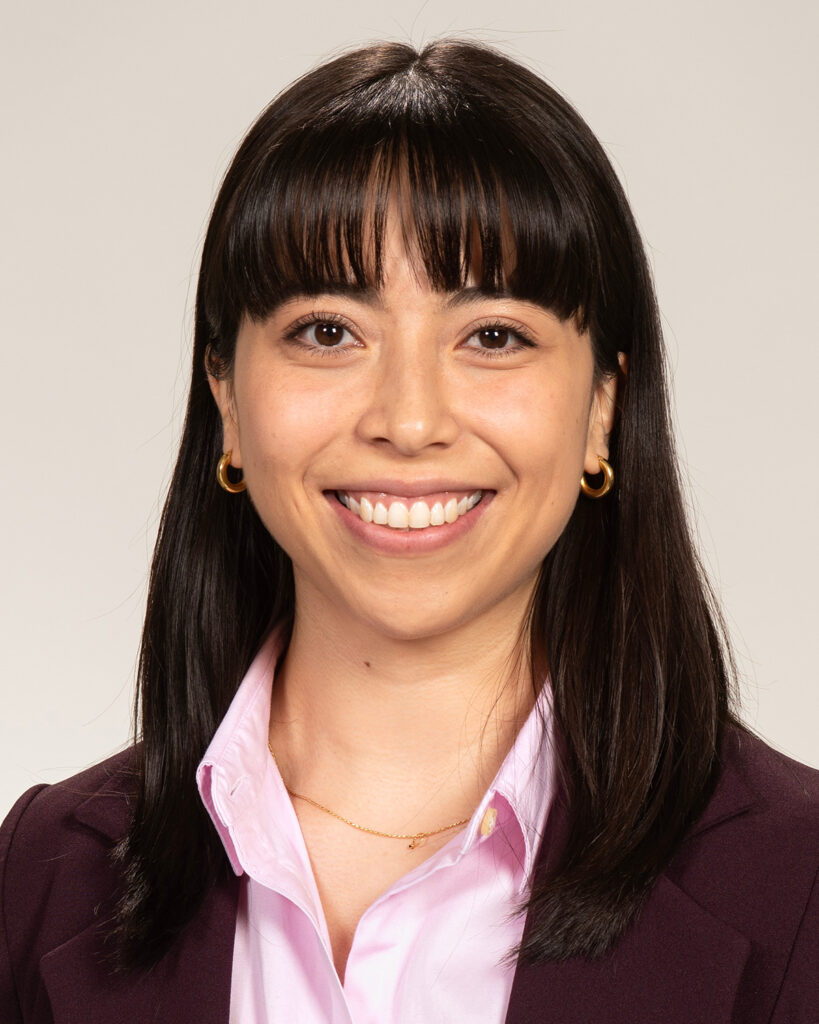
Laura Uricoechea is a fourth-year medical student at the Philadelphia College of Osteopathic Medicine. She is currently completing a Master of Public Health at Thomas Jefferson University between her third and fourth years of medical school. Laura is applying to OB/GYN residency and is passionate about women’s health, particularly reproductive healthcare. She is an active member of the Gender Equity Task Force within the American Medical Women’s Association. Outside of medicine, Laura enjoys spending time outdoors—she loves hiking, paddleboarding, swimming, and playing tennis.
Vashti Price, MS, MHS, MS4
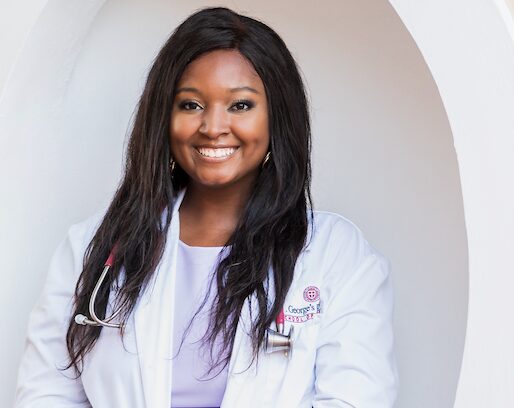
Vashti Price is a fourth-year medical student at St. George’s University. She holds a Bachelor of Science in Biology from the University of Louisiana at Lafayette, a Master’s in Biological Sciences from Alcorn State University, and a Master’s in Health Sciences from Meharry Medical College. With a strong passion for public health and health equity, Vashti has dedicated much of her time over the years to volunteering with underserved populations, including individuals experiencing homelessness and children in need. Her commitment to service continues through her involvement with the American Medical Women’s Association, where she serves on the Gender Equity Task Force and the Sex & Gender Health Collaborative Committees. Vashti is particularly interested in the intersection of medicine, public health, and community outreach. Outside of her academic and clinical pursuits, she enjoys spending time with friends and family, attending festivals, exploring new cities, and winding down with a good Netflix series.
Meghan Etsey, MS4
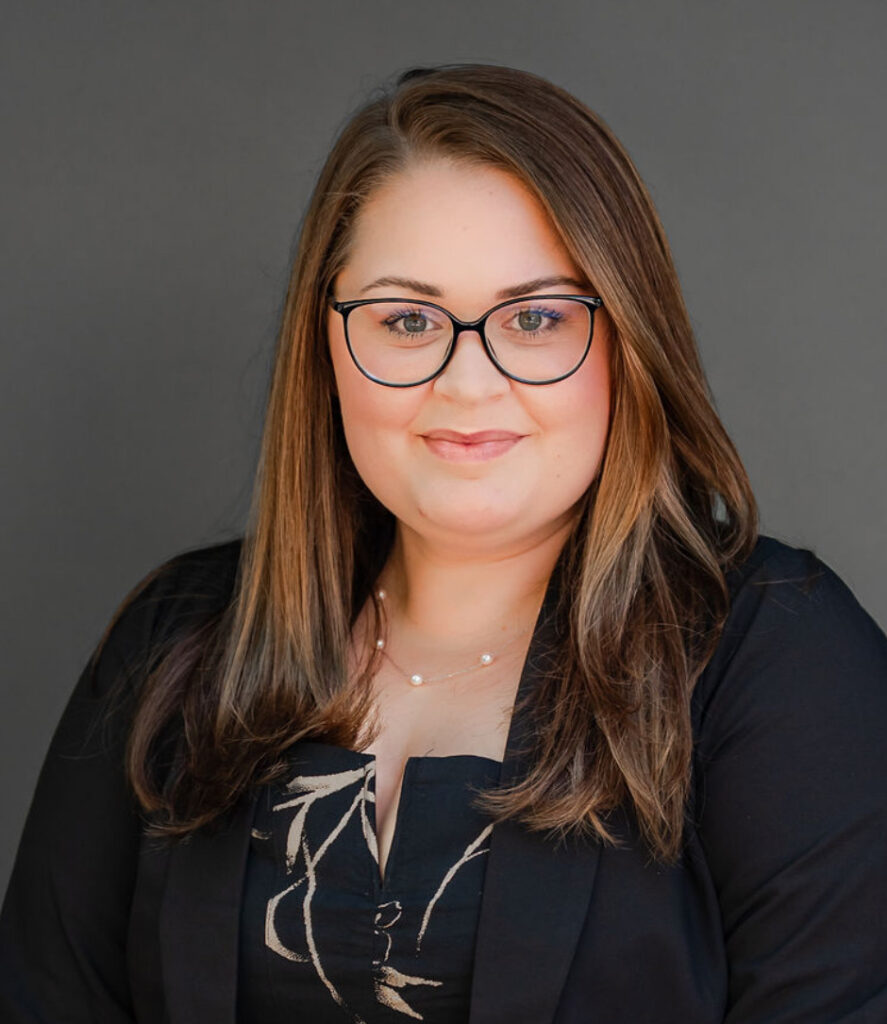
Meghan Etsey is a fourth year medical student from St. George’s University. She has a Bachelors of Arts in Biology and a Bachelors of Arts in Nutrition and Dietetics from Bluffton University in Bluffton, Ohio. She served as the President of the St. George’s University’s Women in Medicine chapter in St. George, Grenada where she expanded relationships with the community and worked towards educating women and helping the youth. She is also a member of the Gender Equity Task Force and Sex and Gender Health Collaborative Committees within the American Medical Women’s Association. When she is not pursuing medicine, you can find her with her friends and family on different road trips and adventures exploring the world.
Formatting, publication management, and editorial support for the AMWA GETF Blog by Vaishnavi J. Patel, DO