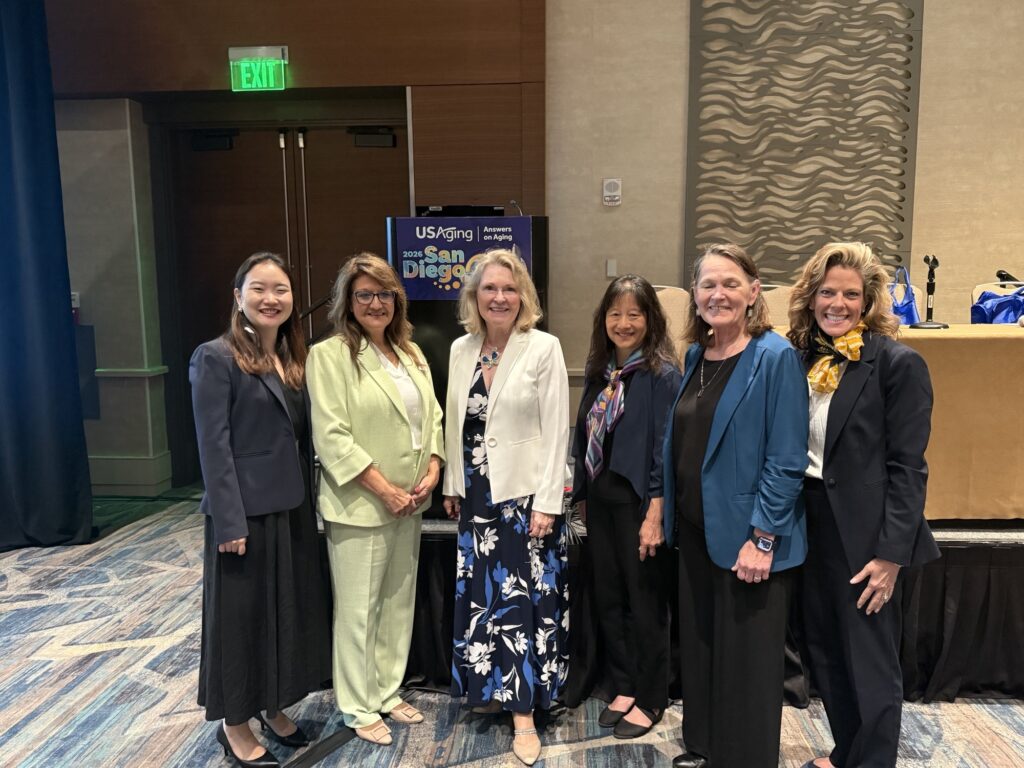
The American Medical Women’s Association (AMWA) was represented at the 51st Annual U.S. Aging Conference, held this month in San Diego, California. The conference brings together leaders from the nation’s network of Area Agencies on Aging (AAA), aging and disability organizations, and community partners dedicated to improving the health and well-being of older adults, caregivers, and individuals with differing abilities.
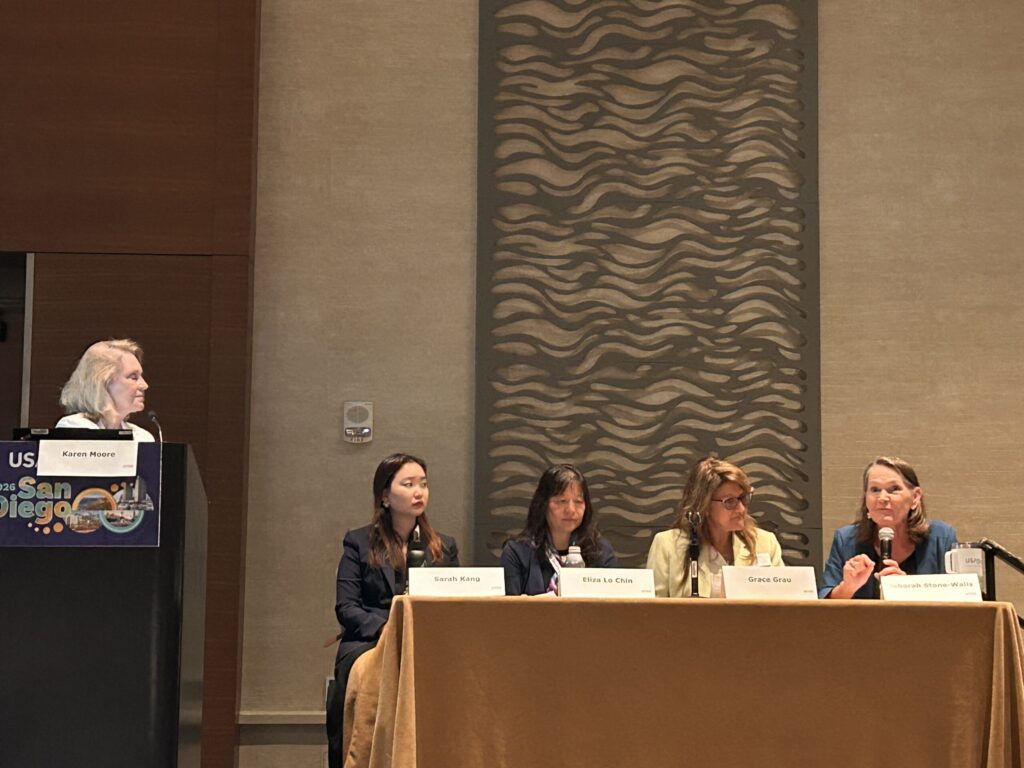
As part of a featured “Hot Topics” session, AMWA participated in a panel discussion examining the growing impact of utilization management on patients, clinicians, and the healthcare system.
Drawing on discussions from AMWA’s 2025 Interim Meeting utilization management roundtable, Executive Director Dr. Eliza Chin shared firsthand perspectives on how prior authorization, step therapy, and other utilization management requirements contribute to barriers impacting patient care, physician burnout, and delays for medically appropriate treatment and create unnecessary administrative burdens that may ultimately affect patient outcomes. She shared recent actions taken by the American Medical Association House of Delegates to address this issue as well as a Congressional bill to improve the utilization management process, especially.
Sarah Kang, Director, Policy and Research, PhRMA presented findings from a national survey of AMWA physicians that highlighted the widespread challenges clinicians face when navigating utilization management requirements. The survey demonstrated the significant administrative burden placed on physicians and their staff, the resulting delays in treatment, and the barriers these policies create in coordinating timely, evidence-based care for patients.
Dr. Grace Gao, newly elected President of the National Association of Hispanic Nurses, discussed the disproportionate impact that delays in care can have on Hispanic communities and emphasized the importance of ensuring equitable access to medically necessary treatments.
Deborah Stone, Chief of Programs and Services at USAging, brought the perspective of older adults and caregivers, highlighting the real-world consequences that delays, denials, and complex coverage requirements have on individuals attempting to access essential medications and treatments. She emphasized the critical role that aging service organizations play in helping older adults navigate an increasingly complicated healthcare system.
The discussion reinforced the importance of collaboration among physicians, nurses, aging services organizations, patient advocates, and policymakers to reduce unnecessary barriers to care while preserving appropriate stewardship of healthcare resources.
AMWA remains committed to advancing policy solutions that reduce administrative burden on clinicians, improve timely access to medically appropriate care, and ensure that patients—particularly older adults and other vulnerable populations—receive the treatments they need without unnecessary delay.