
Authors: Lauren Wallace; Isabella Ouellette; Jade Ransohoff; Meghan Etsey, MD; Yun Weisholtz, MD-PhD on behalf of the Gender Equity Task Force in Collaboration with the Domestic Violence Prevention Working Group
The impact of abuse does not end when the abuse ends. For many survivors of intimate partner violence (IPV), that is when the hardest work begins. Healing after IPV can feel like trying to rebuild a life while still standing in the rubble, because abuse whether physical violence, emotional manipulation, sexual coercion, or psychological control disrupts safety, trust, health, and identity (World Health Organization [WHO], 2024). Globally, nearly one in three women has experienced physical or sexual violence from an intimate partner during her lifetime, making IPV a pervasive public health crisis (WHO, 2025). These numbers do not reflect isolated experiences, but a global pattern of harm that is often hidden, normalized, or unspoken. Recovery is highly individualized and often non-linear, with progress that includes growth, setbacks, and reflection (Carman, D’Amore, & Flasch, 2023). Healing involves both medical and psychosocial processes to address trauma’s effects on physical health, emotional regulation, relationships, and identity (Carman et al., 2023).
Approaches grounded in trauma-informed care recognize the pervasive impact of abuse, prioritize safety, support survivor choice and empowerment, and aim to avoid re-traumatization by centering the survivor’s experience (Davies et al., 2025). Understanding healing as a layered and ongoing process is essential for providing survivors with appropriate care and reducing long-term harm (World Health Organization [WHO], 2024).
The effects of abuse are multifactorial, extending beyond immediate injuries to involve interconnected biological, psychological, and social consequences. Trauma can alter stress response systems, influence behavior and coping patterns, and shape how survivors interact with their environments long after the abuse has ended. Recognizing this complexity helps frame recovery not as a single issue to address, but as a layered process that touches multiple aspects of health and functioning.
Physical Health Effects
Abuse does not only hurt in the moment; it can change the body long after it ends. Survivors may experience acute physical trauma such as bruising, fractures, and chronic conditions linked to prolonged stress exposure (Centers for Disease Control and Prevention [CDC], 2023). Long-term effects can include cardiovascular strain, gastrointestinal disturbances, and persistent somatic symptoms driven by chronic activation of stress pathways (Cleveland Clinic, 2024). Importantly, the absence of visible injury does not mean the absence of harm.
Neurobiological Impact
Trauma reshapes the nervous system, not just memory. The brain’s threat-detection systems, including the amygdala, become overactive, causing the stress pathways to remain activated long after the threat has disappeared (Harvard Medical School, 2023). This leads to fight, flight, or freeze responses that are automatic, not intentional (American Psychiatric Association [APA], 2023). This means many trauma responses are not psychological “reactions” alone, but deeply embedded biological survival systems.
Mental and Emotional Health
Some of the most painful parts of healing come from what people get wrong about it. Many survivors struggle not only with the effects of abuse, but with misconceptions about how healing “should” look. These misunderstandings can add shame and isolation to an already complex recovery process. Understanding what healing is not is often as important as understanding what it is.
Many survivors describe feeling “stuck in survival mode,” where the nervous system continues to respond as though danger is still present even after safety has been restored. Survivors commonly experience PTSD, anxiety, depression, sleep disruption, hypervigilance, and emotional numbing (NIMH, 2024). These are not signs of weakness. They are signs of adaptation. The brain learns to survive danger, and sometimes it forgets how to turn that response off. (APA, 2023).
Establishing safety is typically the first and most essential step in healing, as ongoing exposure to threats can delay recovery (WHO, 2024). Recovery from abuse is not linear and often involves cycles of stabilization, distress, and gradual integration (Substance Abuse and Mental Health Services Administration [SAMHSA], 2023). Survivors progress at different rates depending on trauma severity, support systems, and access to care (UN Women, 2023). Over time, many survivors work toward rebuilding autonomy, identity, and emotional stability (National Institute of Mental Health [NIMH], 2024). Healing is not a return to who someone was before the abuse. It is the powerful process of becoming someone new in the aftermath of surviving it.
Myth 1: Time alone heals all wounds
Reality: Without support or intervention, trauma symptoms can persist or worsen over time (APA, 2023).
Myth 2: Survivors should “move on” quickly
Reality: Recovery timelines vary widely, and pressure to heal at a certain pace can increase distress and shame (WHO, 2024).
Myth 3: If there are no physical injuries, recovery is easier
Reality: Psychological abuse can have equally severe and long-lasting mental health consequences as physical abuse (NIMH, 2024).
Myth 4: Strong people recover on their own
Reality: Social support and trauma-informed care significantly improve recovery outcomes (, 2023).
Myth 5: Healing should look the same for everyone
Reality: There is no single “correct” way to heal; recovery is shaped by culture, identity, access to resources, and lived experience.
Core Pillars of Healing
Before focusing on specific steps, it is helpful to understand that several foundational elements support trauma recovery. These pillars create the conditions that allow survivors to move from immediate survival toward long-term healing. While each person’s journey is unique, these core components consistently appear in effective frameworks for trauma recovery.
1. Safety and Stabilization
Physical and emotional safety are foundational to recovery and may include safety planning, stable housing, and reduced exposure to ongoing harm (WHO, 2024). Without safety, healing cannot fully begin.
2. Medical and Mental Health Care
Trauma-informed care includes both physical health assessment and evidence-based therapies.Cognitive Behavioral Therapy (CBT) and Eye Movement Desensitization and Reprocessing (EMDR) are commonly used in trauma treatment (APA, 2023).
3. Emotional Processing and Coping Skills
Healing includes developing emotional regulation skills, such as grounding techniques and mindfulness, and identifying trauma triggers (NIMH, 2024). These skills help survivors reconnect with a sense of control over their internal world.
4. Rebuilding Identity and Self-Worth
Survivors often work to restore autonomy, rebuild self-esteem, and reconnect with personal values after being controlled, isolated, or emotionally manipulated in abusive relationships (UN Women, 2023).
5. Social Support and Community
Support networks, including peers, family, and advocacy organizations, reduce isolation and strengthen long-term recovery outcomes (CDC, 2023). Connection is often one of the strongest predictors of sustained healing.
Sometimes healing starts with a single conversation in which a survivor is finally believed. Healthcare providers play a critical role in identifying abuse and delivering trauma-informed care that prioritizes safety and avoids retraumatization (SAMHSA, 2023). Screening, appropriate referral, and coordinated care with mental health community services are key components of an effective response (APA, 2023). Survivor-centered communication improves trust and engagement in care (WHO, 2024). A single validating interaction can change whether someone seeks help again. Being believed is often the beginning of healing.
Leaving abuse is not one decision; it is a series of risks and calculations. Barriers to leaving include stigma, financial limitations, limited access to mental health services, children, and cultural or language obstacles (UN Women, 2023). Fear of retaliation or ongoing contact with an abuser can also significantly delay help-seeking and recovery engagement (WHO, 2024).
Certain populations and life contexts require additional attention during trauma recovery. Age, family dynamics, and work environments can all influence how survivors heal and what supports are most effective. Recognizing these factors can help tailor care to the survivor’s lived reality rather than applying a one-size-fits-all approach.
Children who witness abuse in the home may experience emotional, behavioral, and developmental effects. Growing up in an environment marked by IVP can disrupt a child’s sense of safety and stability. These children often benefit from early intervention and supportive caregiving environments (CDC, 2023). Similarly, returning to work after trauma may require accommodations and supportive workplace environments to support stability and functioning (APA, 2023). Workplaces that understand trauma can become spaces of restoration rather than additional stress.
Daily routines, consistent sleep, nutrition, and gentle movement can support stability and functioning (APA, 2023). Small, consistent actions often matter more than large, unsustainable changes in early recovery. Healing can include both recovery from harm and transformation beyond it. Some survivors experience post-traumatic growth, including resilience, stronger relationships, and new meaning after trauma (UN Women, 2023). Others may engage in advocacy or peer-supported roles, transforming lived experiences into empowerment and community impact (WHO, 2024). Growth does not erase pain, but it can exist alongside it.
Healing is possible with safety, support, and access to trauma-informed care systems (SAMHSA, 2023). Survivors are not defined by what happened to them but by their strength in surviving and rebuilding their lives (APA, 2023). We owe survivors more than recognition. We owe them care systems that respond, protect, and walk with them through recovery, because no one should have to rebuild their life alone (WHO, 2024). Healing is not an individual responsibility alone; it is a collective responsibility that requires systems, communities, and providers to respond with care and accountability.
Resources
The following resources provide confidential, accessible support for individuals experiencing violence, abuse, or crisis. Many services are available 24 hours a day and can connect survivors with local assistance.
National Domestic Violence Hotline
Phone: 1-800-799-SAFE (7233)
Text: START to 88788
Website: https://www.thehotline.org
Provides confidential crisis intervention, safety planning, and referrals to local shelters and services.
211 – Local Resource Navigation
Dial: 211
Website: https://www.211.org
Connects individuals to local resources, including housing assistance, food programs, healthcare services, and crisis support.
National Sexual Assault Hotline (RAINN)
Phone: 1-800-656-HOPE (4673)
Website: https://www.rainn.org
Offers confidential support, crisis counseling, and referrals for survivors of sexual violence.
National Teen Dating Abuse Helpline
Phone: 1-866-331-9474
Text: LOVEIS to 22522
Website: https://www.loveisrespect.org
Provides education, resources, and support specifically for adolescents and young adults.
Local Shelters and Advocacy Centers
Local domestic violence shelters and advocacy centers provide emergency housing, counseling, legal advocacy, and case management services. Many communities maintain confidential shelter locations and intake systems designed to prioritize survivor safety.
Healthcare Provider Referrals
Primary care providers, emergency departments, urgent care centers, and obstetrics/gynecology clinics can provide confidential medical care, document injuries, and refer patients to social workers, legal advocates, and mental health professionals.
References
- American Psychiatric Association. (2023). Trauma- and stressor-related disorders. https://www.psychiatry.org/
- American Psychological Association. (2023). Understanding trauma and PTSD. https://www.apa.org/topics/ptsd
- Carman, A., D’Amore, K., & Flasch, G. (2023). Recovery after domestic, family, and sexual violence: A multidimensional, non-linear journey. Journal of Trauma and Recovery Studies.
- Centers for Disease Control and Prevention. (2023). Intimate partner violence prevention. https://www.cdc.gov/violenceprevention/intimatepartnerviolence/
- Cleveland Clinic. (2024). Effects of chronic stress on the body. Cleveland Clinic. https://my.clevelandclinic.org/health
- Davies, M., Satyen, L., & Toumbourou, J. W. (2025). Trauma-and-violence-informed care for victim-survivors of intimate partner violence: A qualitative meta-synthesis. Trauma, Violence, & Abuse. Advance online publication. https://doi.org/10.1177/15248380251383933
- Harvard Medical School. (2023). The brain’s response to trauma and stress. Harvard Health Publishing. https://www.health.harvard.edu/
- National Institute of Mental Health. (2024). Post-traumatic stress disorder (PTSD). U.S. Department of Health and Human Services, National Institutes of Health. https://www.nimh.nih.gov/health/topics/post-traumatic-stress-disorder-ptsd
- Substance Abuse and Mental Health Services Administration. (2023). SAMHSA’s concept of trauma and guidance for a trauma-informed approach. U.S. Department of Health and Human Services. https://www.samhsa.gov/trauma-violence
- World Health Organization. (2025, November 19). Lifetime toll: 840 million women faced partner or sexual violence. World Health Organization. https://www.who.int/news/item/19-11-2025-lifetime-toll–840-million-women-faced-partner-or-sexual-violence
The Domestic Violence Prevention Working Group of the American Medical Women’s Association is dedicated to advancing awareness, education, and prevention of intimate partner violence as a critical public health issue. The working group brings together physicians, trainees, and advocates to develop educational resources, promote trauma-informed care, support research initiatives, and advocate for policies that improve screening, prevention, and survivor support within healthcare systems and communities. Through collaboration and outreach, the group works to empower healthcare professionals to recognize signs of violence, connect patients with resources, and contribute to safer, healthier communities.
Individuals interested in joining the Domestic Violence Prevention Working Group or learning more about its initiatives are encouraged to reach out via email to [email protected]. Participation is open to members who are passionate about advocacy, education, and improving care for survivors of violence.
About the Authors
Lauren Wallace, MS4
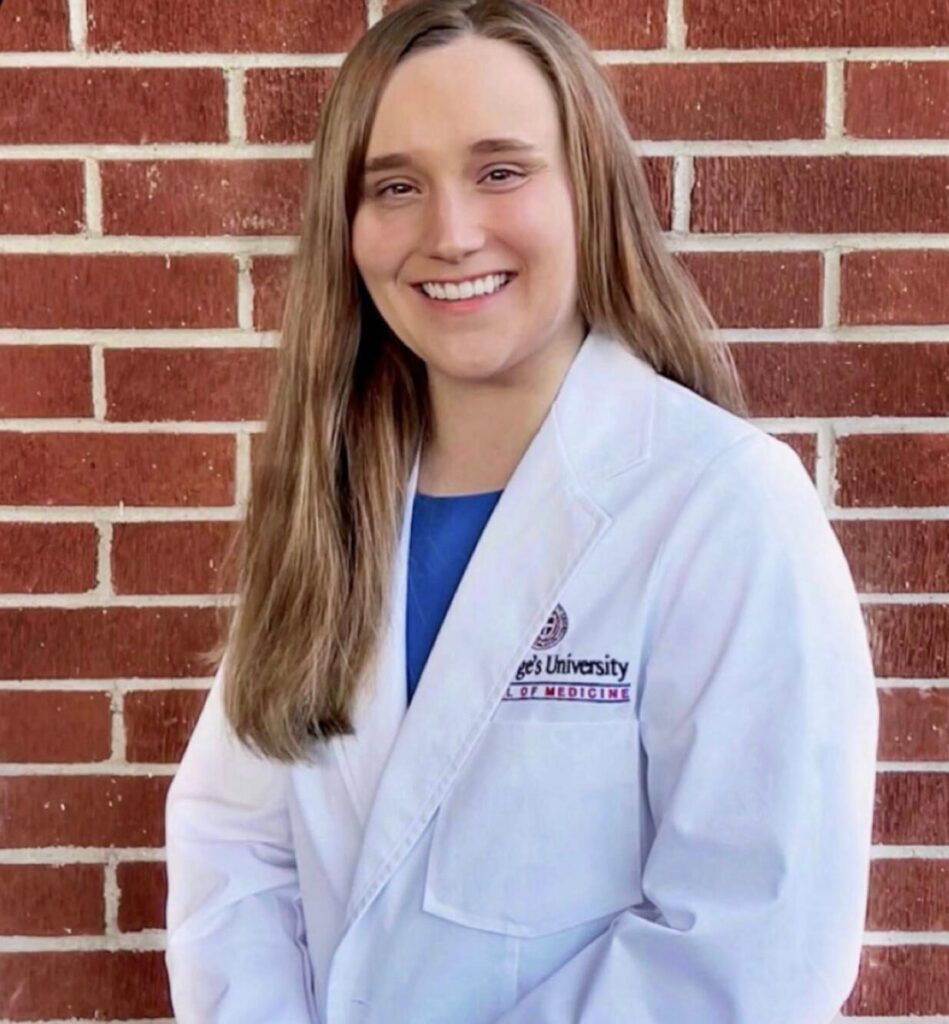
Lauren Wallace is a fourth-year medical student at St. George’s University School of Medicine and earned her Bachelor’s degree in Cell and Molecular Biology from the University of Tennessee at Martin. She has served as student lead for her Psychiatry and Obstetrics/Gynecology core rotations and is an active member of the Gender Equity Task Force, demonstrating her dedication to advancing equitable care. Passionate about Psychiatry, Lauren volunteers for the Crisis Text Line and focuses on improving access to mental health services in underserved rural communities, a commitment rooted in her upbringing in rural Tennessee. Outside of medicine, she enjoys staying active and scuba diving with her husband.
Isabella Ouellette, MS4

Isabella Ouellette is a fourth-year medical student at St. George’s University School of Medicine. She holds two bachelor’s degrees in Neuroscience and Psychology from Michigan State University, along with a minor in Bioethics. She is an active member of the Gender Equity Task Force through AMWA. Isabella has consistently pursued her passion for women’s health, first discovering her interest while working as a medical scribe for an OB-GYN physician after undergrad. She has continued this passion throughout medical school, where she is a member of Women in Medicine (WIM) at St. George’s and an active member of ACOG. Outside of her education, she enjoys traveling, aerial yoga, and spending time with her family in Michigan.
Meghan Etsey, MD

Meghan Etsey is a PGY1 resident in Internal Medicine who earned her medical degree from St. George’s University. She holds a Bachelor of Arts in Biology and a Bachelor of Arts in Nutrition and Dietetics from Bluffton University in Bluffton, Ohio. During medical school, she served as President of the St. George’s University Women in Medicine chapter in St. George, Grenada, where she expanded community partnerships and worked to educate and empower women and youth. She also contributed as a member of the Gender Equity Task Force and the Sex and Gender Health Collaborative Committees within the American Medical Women’s Association. Outside of medicine, Meghan enjoys spending time with friends and family, often going on road trips and exploring new places.
Yun Weisholtz, MD-PhD

Dr. Yun Weisholtz is a physician-scientist and advisor with a deep commitment to mentorship and advancing equity in medicine. She completed her undergraduate studies at Stanford University, where she double-majored in Biological Sciences and Chemistry, and spent a year in Germany as a Fulbright Scholar. She went on to enter the MD-PhD program in Neuroscience at Harvard Medical School and MIT, where she developed her passion for research, teaching, and mentoring. Dr. Weisholtz is a Physician Advisor with MedSchoolCoach and the founder of MD-PhD Advising, a consulting practice dedicated to helping students navigate the medical school and residency application process. Outside of work, she enjoys collecting Delft pottery from the Netherlands and spending time with her family and pets.