
Authors: Jacqueline Ugwuneri, Meghan Etsey, Rhea Manohar, MPH; Brianna Clark, DO on behalf of the AMWA Gender Equity Task Force

For many African American women, hair maintenance is not merely cosmetic; it is deeply tied to cultural identity, professionalism, and social perception. Yet beneath the visible financial and time investments lies a set of hidden medical costs that extend far beyond the salon chair. These costs include reduced physical activity, increased exposure to endocrine-disrupting chemicals, and a high burden of hair and scalp disorders that require medical care. Collectively, these factors shape long-term health outcomes and quality of life in ways that are often overlooked in mainstream health discussions.
Hair has long functioned as a site of cultural expression and resistance for African American women, shaped by histories of racialized beauty standards and workplace discrimination. As a result, maintaining hairstyles that are socially and professionally acceptable often requires significant time, money, and physical sacrifice. For many women, this means prioritizing hair preservation over behaviors, such as frequent exercise, that could disrupt styles and require costly or time-intensive restyling (Hall et al., 2013).
One of the most significant health costs of hair maintenance is chemical exposures with potential systemic effects. A 2020 quantitative analysis from the Study of Environment, Lifestyle, and Fibroids involving 1,558 African American women found that approximately 30% reported using chemical relaxers at least twice per year in adulthood, and these women were significantly less likely to engage in intense physical activity compared to those who reported rare or no relaxer use (Relative Risk = 0.90) (Gaston et al., 2020). Concurrently, the use of relaxers, straighteners, and leave-in products has been associated with significantly higher urinary concentrations of endocrine-disrupting chemicals, including phthalates, parabens, and phenols (Schildroth et al., 2024). These compounds have been linked to reproductive, metabolic, and hormonal disturbances, raising concerns about the long-term health implications of routine product use.
One of the most significant yet underrecognized health costs of hair maintenance is chemical exposure that intersects with structural barriers to physical activity. While some African American women may avoid the use of relaxers and straighteners and opt for protective styling with extensions, more specifically braiding hair, they are still met with harmful endocrine disruptors. Extensions are commonly made of human hair, other natural fibers, or synthetic fibers that may be treated with dyes, flame retardants, waterproofing agents, pesticides, antimicrobials, and conditioning agents with hazardous properties (Franklin et al., 2026). Recent chemical analyses of commercially available hair extensions detected 933 chemical signatures across 44 products, including organotins, halogenated compounds, phthalates, and nitroaromatics, many of which are listed under California’s Proposition 65 and other hazard frameworks. Nearly 10% of tested samples contained hazardous organotin compounds, which have endocrine-disrupting, reproductive, metabolic, and immunologic effects, raising concern about chronic dermal and inhalation exposure during routine use (Franklin et al., 2026). Women who limited exercise due to hair concerns were significantly less likely to meet recommended physical activity guidelines. When layered on top of chemical exposures from styling products and extensions, reduced physical activity meets cardiometabolic vulnerability.
In a landmark study, more than half of African American women reported exercising less than 75 minutes per week, and 26.2% reported no exercise at all, largely due to concerns about hair maintenance (Hall et al., 2013). Women who limited exercise because of hair concerns were 2.9 times less likely to meet the recommended 150 minutes of weekly physical activity. Participants described sweating, humidity, and post-exercise scalp irritation as major deterrents, noting that workouts often led to time-consuming and expensive restyling processes (Hall et al., 2013). For women who already spend more than 60 minutes per week on hair care, these additional burdens create powerful incentives to skip workouts altogether. Reduced physical activity has well-documented consequences for cardiometabolic health. Consistently exercising below recommended levels increases the risk of obesity, hypertension, and type 2 diabetes mellitus, conditions that already disproportionately affect African American women. When exercise avoidance is driven by hair maintenance demands, these disparities are further reinforced, transforming a cultural and aesthetic concern into a structural health risk (Hall et al., 2013).
Hair and scalp disorders represent another underrecognized medical cost. More than half of African American women report chronic scalp itching and hair breakage, while nearly one-third experience persistent scalp flaking (Hall et al., 2013). Certain styling practices, such as tight braids, sewn-in weaves, and high-tension hairstyles, are strongly associated with traction alopecia and central centrifugal cicatricial alopecia (CCCA), a scarring condition that can cause permanent hair loss, when placed incorrectly (Gathers et al., 2009; Haskin & Aguh, 2016). CCCA affects an estimated 2.7–5.6% of women of African ancestry and often requires ongoing dermatologic treatment, adding to healthcare utilization and emotional distress (Madu & Kundu, 2014; Malki et al., 2019). Beyond medical treatment, these conditions often carry psychosocial consequences that affect self-esteem, identity, and quality of life.
From a public health perspective, these interconnected issues illustrate how dominant Eurocentric norms, often treated as neutral or universal, are enforced through structural and institutional pressures. The privileging of straight hair over natural Black hairstyles functions as a chronic stressor and social determinant of health, contributing to persistent racial health inequities. Reduced physical activity directly elevates cardiovascular risk, and organizations such as the American Heart Association have identified hair-related concerns as meaningful barriers to meeting physical activity guidelines among African American women (Carnethon et al., 2017). When combined with chemical exposures and chronic dermatologic conditions, hair maintenance becomes a multidimensional health issue rather than a purely personal choice. Emerging research highlights the need for interventions that acknowledge hair care realities rather than dismiss them. While studies highlight culturally responsive strategies such as protective styling education and community-based fitness programs, the need for education extends beyond individuals to the institutions that shape health behaviors. Health systems, fitness industries, and public health professionals must be trained to recognize hair-related constraints as structural barriers, rather than personal preferences, if disparities in physical activity and health outcomes are to be meaningfully addressed (Hall et al., 2013; Madu & Kundu, 2014). Promoting physical activity among African American women requires more than individual knowledge; it requires culturally responsive programs, inclusive institutional policies, and environments that do not force a trade-off between health and identity. Hair should not be framed as a personal obstacle to overcome, but as a structural and cultural factor that must be intentionally integrated into health promotion efforts. When clinicians, public health practitioners, and communities acknowledge this reality, it becomes possible to support cardiovascular and overall health without forcing women to choose between their hair and their well-being.
At present, evidence on interventions specifically designed to reduce hair-related barriers to physical activity remains limited. No published studies have directly evaluated the cardiovascular health impact of such interventions. However, qualitative research and small-scale studies point to several promising directions that can inform future efforts.
- Hairstyle Management as a Practical Entry Point: One of the most commonly identified strategies involves hairstyle management. Qualitative studies suggest that certain styles, such as braids, locs, and natural hairstyles, may better accommodate exercise-related perspiration and reduce the disruption caused by physical activity (Joseph et al., 2018). While no single hairstyle is universally preferred, evidence suggests that women are already adapting: approximately 50% of African American women report modifying their hairstyle to accommodate exercise, indicating that practical styling solutions may meaningfully support physical activity engagement when structural barriers are addressed (Hall et al., 2013). However, this adaptation must be understood within a broader structural context. These same hairstyles, while more practical, have been stigmatized in professional and leadership spaces, raising concerns about career limitations, social acceptability, and, ultimately, economic mobility. The relative absence of women with braids, locs, and natural hairstyles among various leadership roles underscores that hairstyle choice is shaped by workplace norms rooted in Eurocentric standards of professionalism. Hairstyle management, although a practical entry point, is also a lens that examines how institutional expectations, rather than individual behaviors, constrain health-promoting choices.
- The Missed Opportunity in Clinical Counseling: Healthcare settings represent an underutilized intervention space. While most primary care clinicians report discussing physical activity with African American female patients, the majority do not assess hair maintenance as a potential barrier, and fewer than half feel comfortable addressing the topic (Tolliver et al., 2019). This gap represents a missed opportunity for culturally responsive counseling. Dermatologists, primary care clinicians, and allied health professionals could play a pivotal role by normalizing conversations about hair, offering guidance on exercise-compatible hair care strategies, and validating patients’ concerns as legitimate health considerations rather than cosmetic preferences (Hall et al., 2013).
However, culturally responsive counseling cannot be separated from institutional professionalism standards. Many healthcare systems maintain grooming and dress code policies that implicitly privilege Eurocentric hair norms, creating environments in which natural hairstyles or protective styles may be viewed as unprofessional. When clinicians encourage exercise strategies that may affect hair presentation without acknowledging these structural constraints, the guidance risks contradicting the realities patients face in academic and hospital systems. Misalignment between cultural expression and institutional norms has been noted as one pathway through which African American trainees experience disproportionate scrutiny and, in some cases, dismissal from training programs. Addressing individual behavior without interrogating institutional policy shifts responsibility onto the patient rather than confronting the structural forces that shape health behaviors in the first place.
- Community-Based and Culturally Tailored Approaches: Community-based interventions have demonstrated success in increasing physical activity among African American women, particularly when they are culturally tailored and behaviorally informed. For example, the Heart Healthy and Ethnically Relevant Lifestyle (HEART) trial used stage-based counseling and motivationally tailored telephone interventions, resulting in significant increases in leisure-time physical activity at six months (odds ratio = 3.82) (Laddu et al., 2021). However, these effects were not sustained at 12 months, and hair-related barriers were not directly addressed, highlighting an important area for intervention refinement.
Importantly, emerging research is beginning to examine whether African American women feel psychologically and physically safe in exercise environments. Hair maintenance decisions, including the use of relaxers or skin lightening products, are historically rooted in racist systems that have privileged Eurocentric aesthetics and marginalized natural Black features. If exercise environments reproduce the same aesthetic and cultural hierarchies present in broader society, the issue extends beyond individual behavior or hairstyle management. In that context, it is not the African American woman who requires modification but rather the systems, environments, and institutional cultures that must be transformed to promote safety, inclusion, and sustained health agreement.
Major research gaps remain. The American Heart Association has emphasized the need to address population-specific barriers to physical activity, including cultural norms that discourage or complicate exercise engagement (Jerome et al., 2023). Future interventions should employ community-based participatory research methods, leverage interdisciplinary teams, and use multilevel strategies that span individual, clinical, and community contexts.
Critically, no studies to date have tested interventions explicitly designed to overcome hair-related barriers or measured downstream cardiovascular outcomes such as blood pressure, lipid profiles, or cardiovascular events. Future research should evaluate practical, scalable solutions, such as education on exercise-compatible hairstyles, subsidies for hair maintenance costs, and the development of sweat-resistant styling products, while simultaneously tracking physical activity levels and cardiometabolic health indicators.
Hair-related barriers are not an individual problem; they are the result of structural inequities, discriminatory workplace and fitness policies, and Eurocentric beauty norms that penalize natural Black hairstyles. Reclaiming movement and health for African American women requires transforming these environments through inclusive program design, anti-discrimination policies, and culturally responsive interventions that respect identity, social safety, and lived experience, shifting the focus from adapting women to fixing the systems that constrain them.
References:
- Hall, R. R., Francis, S., Whitt-Glover, M., Loftin-Bell, K., Swett, K., McMichael, A. J., & Hair, E. (2013). Hair care practices as a barrier to physical activity in African American women. JAMA Dermatology, 149(3), 310–314. https://doi.org/10.1001/jamadermatol.2013.210
- Gaston, S. A., James-Todd, T., Riley, N. M., Gladney, M. N., Harmon, Q. E., Baird, D. D., & Jackson, C. L. (2020). Hair Maintenance and Chemical Hair Product Usage as Barriers to Physical Activity in Childhood and Adulthood among African American Women. International journal of environmental research and public health, 17(24), 9254. https://doi.org/10.3390/ijerph17249254
- Joseph, R. P., Coe, K., Ainsworth, B. E., Hooker, S. P., Mathis, L., & Keller, C. (2018). Hair As a Barrier to Physical Activity among African American Women: A Qualitative Exploration. Frontiers in public health, 5, 367. https://doi.org/10.3389/fpubh.2017.00367
- Huebschmann, A. G., Campbell, L. J., Brown, C. S., & Dunn, A. L. (2016). “My hair or my health:” Overcoming barriers to physical activity in African American women with a focus on hairstyle-related factors. Women & health, 56(4), 428–447. https://doi.org/10.1080/03630242.2015.1101743
- Callender, V. D., McMichael, A. J., & Cohen, G. F. (2004). Medical and surgical therapies for alopecias in Black women. Dermatologic Therapy, 17(2), 164–176. https://doi.org/10.1111/j.1396-0296.2004.04016.x
- Carnethon, M. R., Pu, J., Howard, G., Albert, M. A., Anderson, C. A. M., Bertoni, A. G., … Yancy, C. W. (2017). Cardiovascular health in African Americans: A scientific statement from the American Heart Association. Circulation, 136(21), e393–e423. https://doi.org/10.1161/CIR.0000000000000534
- Franklin, E. T., Favela, K., Spies, R., Ranger, J. M., & Rudel, R. A. (2026). Identifying chemicals of health concern in hair extensions using suspect screening and nontargeted analysis. Environment & Health. Advance online publication. https://doi.org/10.1021/envhealth.5c00549
- Gathers, R. C., Jankowski, M., Eide, M., & Lim, H. W. (2009). Hair grooming practices and central centrifugal cicatricial alopecia. Journal of the American Academy of Dermatology, 60(4), 574–578. https://doi.org/10.1016/j.jaad.2008.11.892
- Haskin, A., & Aguh, C. (2016). All hairstyles are not created equal: What the dermatologist needs to know about Black hairstyling practices and the risk of traction alopecia. Journal of the American Academy of Dermatology, 75(3), 606–611. https://doi.org/10.1016/j.jaad.2016.05.001
- Jerome, G. J., Boyer, W. R., Bustamante, E. E., Bennie, J. A., Reece, L. J., & Laddu, D. R. (2023). Increasing equity of physical activity promotion for optimal cardiovascular health in adults: A scientific statement from the American Heart Association. Circulation, 148(6), e257–e277. https://doi.org/10.1161/CIR.0000000000001159
- Joseph, R. P., Coe, K., Ainsworth, B. E., Hooker, S. P., Mathis, L., & Keller, C. (2018). Hair as a barrier to physical activity among African American women: A qualitative exploration. Frontiers in Public Health, 6, Article 367. https://doi.org/10.3389/fpubh.2018.00367
- Laddu, D. R., Ma, J., Kaar, J. L., et al. (2021). Health behavior change programs in primary care and community practices for cardiovascular disease prevention and risk factor management among midlife and older adults: A scientific statement from the American Heart Association. Circulation, 144(14), e533–e549. https://doi.org/10.1161/CIR.0000000000001018
- Madu, P., & Kundu, R. V. (2014). Follicular and scarring disorders in skin of color: Presentation and management. American Journal of Clinical Dermatology, 15(4), 307–321. https://doi.org/10.1007/s40257-014-0073-5
- Malki, L., Sarig, O., Romano, M. T., et al. (2019). Variant PADI3 in central centrifugal cicatricial alopecia. The New England Journal of Medicine, 380(9), 833–841. https://doi.org/10.1056/NEJMoa1816613
- Schildroth, S., Geller, R. J., Wesselink, A. K., et al. (2024). Hair product use and urinary biomarker concentrations of non-persistent endocrine-disrupting chemicals among reproductive-aged Black women. Chemosphere, 349, 140740. https://doi.org/10.1016/j.chemosphere.2023.140740
- Tolliver, S. O., Hefner, J. L., Tolliver, S. D., & McDougle, L. (2019). Primary care provider understanding of hair care maintenance as a barrier to physical activity in African American women. Journal of the American Board of Family Medicine, 32(4), 523–532. https://doi.org/10.3122/jabfm.2019.04.180366
About the Authors
Jacqueline Ugwuneri, MS3

Jacqueline Ugwuneri is a third-year medical student at St. George’s University School of Medicine. She earned her Bachelor of Arts in Cognitive Science with a concentration in Cognitive Neuroscience from Rutgers University in New Brunswick, NJ. She served as President of the St. George’s University chapter of the Student National Medical Association (SNMA), where she organized mentorship programs, health fairs, and professional development events that fostered community engagement and empowered minority medical students to thrive both academically and personally. Before medical school, she worked as a medical assistant and care coordinator across several specialties, including Family Medicine, Minimally Invasive Gynecologic Surgery (MIGS OB/GYN), Infectious Disease, and Breast Surgical Oncology. When she isn’t caring for patients on the wards or studying, she enjoys vlogging her medical journey, working out, spending time with friends and family, and mentoring aspiring minorities in medicine. She hopes to continue inspiring others by bridging her passion for storytelling, leadership, and advocacy in the pursuit of a more equitable future in healthcare.
Meghan Etsey, MS4

Meghan Etsey is a fourth year medical student from St. George’s University. She has a Bachelors of Arts in Biology and a Bachelors of Arts in Nutrition and Dietetics from Bluffton University in Bluffton, Ohio. She served as the President of the St. George’s University’s Women in Medicine chapter in St. George, Grenada where she expanded relationships with the community and worked towards educating women and helping the youth. She is also a member of the Gender Equity Task Force and Sex and Gender Health Collaborative Committees within the American Medical Women’s Association. When she is not pursuing medicine, you can find her with her friends and family on different road trips and adventures exploring the world.
Rhea Manohar, MPH, MS3

Rhea Manohar is a third year medical student from St. George’s University. She has a Masters in Public Health with a concentration in Maternal and Child Health from George Washington University Milken Institute of Public Health and a Bachelors of Science in Microbiology & Immunology, and Public Health from the University of Miami. She served as Co-VP of OB/GYN Education for St. George’s University’s Women in Medicine chapter in St. George, Grenada where she developed hands-on workshops to further reproductive health issues and navigating challenging physician-patient communication scenarios. Prior to medical school, she was a Research Associate for Fors Marsh Group, where she led qualitative and quantitative public health research and campaign development for federal agencies (e.g., CDC, NIH, DHHS, CPSC). She is also a member of the Gender Equity Task Force of the American Medical Women’s Association. When she is not pursuing medicine, you can find her reading, exploring artistic passions, and spending time connecting with friends and family.
Brianna Clark, DO
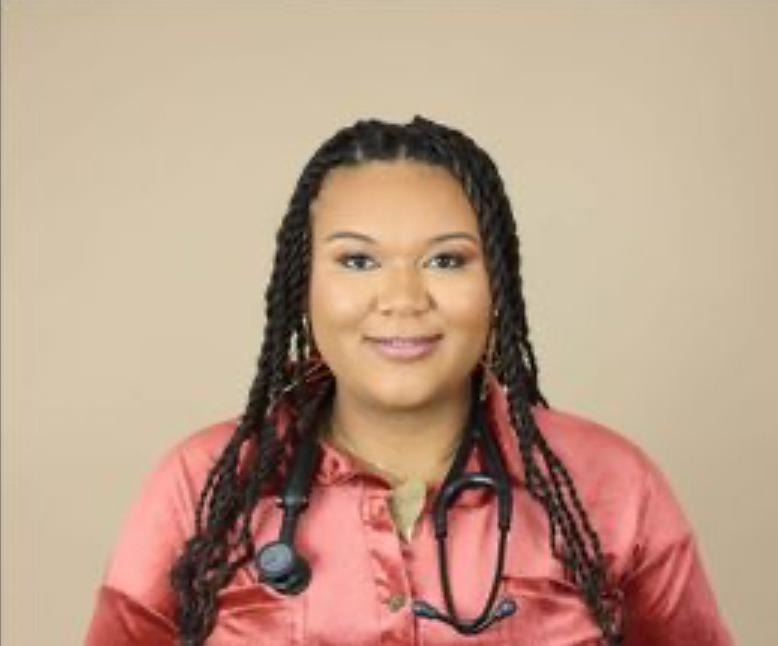
Dr. Brianna Clark is a proud osteopathic physician. She has completed fellowships in Breastfeeding Medicine at the University of Rochester Lessons in Lactation Advanced Curriculum ( LILAC) and Climate Health Equity Fellowship ( CHEF) through the National Medical Association ( NMA). She spends her spare time thinking about innovative ways to provide equitable health care to all and create sustainable advocacy.