
Authors: Lauren Wallace; Meghan Etsey; Sharon Griswold, MD on behalf of the AMWA Gender Equity Task Force
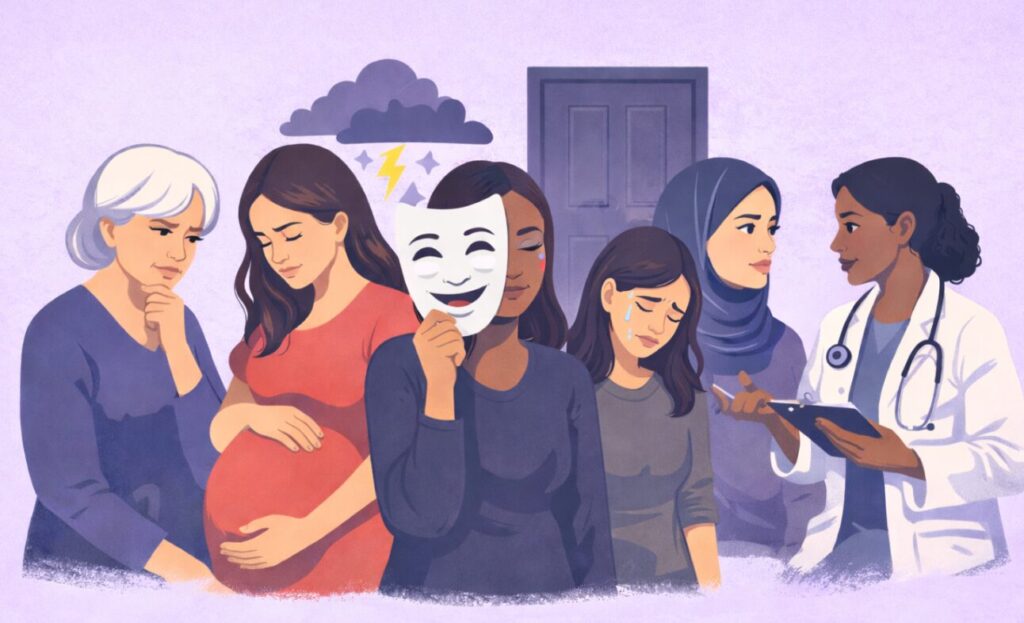
Mental health stigma remains a pervasive barrier to care worldwide, shaping symptom recognition, help-seeking behaviors, diagnosis, and treatment engagement. Although stigma affects people of all genders, its forms and consequences are often gendered. Women experience stigma not only related to mental illness but also linked to societal norms, caregiving expectations, reproductive roles, and social judgments about emotional expression. (Corrigan & Watson, 2007; World Health Organization, 2019). These intersecting pressures intensify fear of labeling, social repercussions, and perceived failure to meet expectations, disproportionately constraining women’s access to care.
Stigma operates across multiple stages of the care continuum. It influences help-seeking by discouraging disclosure, shapes diagnostic processes through gendered assumptions that normalize or dismiss women’s symptoms, and affects treatment outcomes by undermining engagement, adherence, and continuity of care (Clement et al., 2014; Hamberg, 2008; Corrigan et al., 2014). Systematic reviews identify stigma as a robust predictor of reduced help-seeking, with particularly pronounced effects among women, who anticipate greater social and relational costs from being identified as having a mental health condition (Clement et al., 2014; Moore et al., 2020).
Anticipated stigma reduces the likelihood of disclosing symptoms to family, primary care clinicians, or mental health professionals. Often, women feel ashamed of their mental struggles, leading to self-blame and sometimes even isolation (Schnyder et al., 2017; Sarkin et al., 2015). In maternal populations, stigma is intensified by concerns that disclosure could trigger scrutiny of parenting capacity or involvement of child welfare systems (Moore et al., 2020; Jones, 2022). These fears contribute to delayed presentation, shorter duration of care, and reliance on ineffective coping strategies. Population-based studies indicate that stigma-related concerns, such as embarrassment, fear of discrimination, and negative social consequences, are stronger predictors of reduced help-seeking than structural barriers such as cost (Clement et al., 2014).
Internalized stigma shapes women’s decisions about care. When women internalize societal messages that mental illness reflects personal failure, they may minimize symptoms or believe they should cope independently (Schnyder et al., 2017). High levels of self-stigma correlate with lower perceived need for care and decreased likelihood of initiating treatment (Schnyder et al., 2017; Sarkin et al., 2015). Treatment-related stigma, concerns about being seen entering clinics, disclosing medication use, or having diagnoses documented, further compounds avoidance, particularly in communities where women’s social standing, marital prospects, or employment are vulnerable to reputational harm (Dockery et al., 2015).
Men tend to endorse more stigmatizing beliefs at the population level, yet women experience more concrete stigma-related barriers when accessing care (Schnyder et al., 2017; Sarkin et al., 2015). This paradox highlights that stigma attitudes differ from stigma experiences, which include anticipated or actual consequences of seeking care. Gendered social expectations regarding emotional regulation, relational roles, and responsibility for others amplify women’s vulnerability to stigma, even when public stigma is declining (Schnyder et al., 2017; Sarkin et al., 2015).
To add to the persistent issues for women, there is a component of intersectionality for immigrant and ethnic minority women who face compounded cultural norms, language barriers, and fears related to immigration status (Nadeem et al., 2007). Collectivist cultural values, heightened concern for family reputation, and limited culturally responsive services exacerbate barriers, highlighting the need for culturally informed, gender-responsive interventions (Nadeem et al., 2007).
There are several different stigma barriers for women that compound their access to mental health care, including the following: disclosure concerns, identity and role conflict, as well as anticipated discrimination. Women often fear judgment, labeling, or social repercussions when disclosing mental health concerns. Maternal mental health contexts amplify these fears, which may be perceived as incompatible with societal expectations of motherhood, contributing to delayed help-seeking (Clement et al., 2014; Moore et al., 2020). Women may experience dual stigma from psychiatric diagnoses and motherhood expectations. Maternal mental health challenges threaten personal and social identity, reinforcing the “bad mother” stereotype and discouraging help-seeking (Moore et al., 2020). Anticipated discrimination, expectation of negative judgment or differential treatment, leads women to avoid mental health care. Attachment insecurity can compound this avoidance, as individuals with insecure attachment styles are more likely to distrust caregivers and perceive help-seeking as threatening (Fonseca et al., 2017).
Stigma delays help-seeking and contributes to postponed or missed diagnoses. Reduced disclosure during clinical encounters further impairs timely identification. For example, in perinatal populations, stigma prolongs untreated illness, worsening maternal and infant outcomes (Clement et al., 2014; Moore et al., 2020; Jones, 2022). This stigma also negatively affects treatment engagement. Fear of judgment and internalized stigma discourage help-seeking and treatment retention (Clement et al., 2014). Maternal and perinatal populations are especially vulnerable, as concerns about being labeled a “bad mother” deter consistent participation in therapy or pharmacological treatment (Clement et al., 2014). Compounding these issues, provider attitudes can compromise care quality through misdiagnosis, insufficient monitoring, or inappropriate recommendations. Such interactions erode trust, discourage follow-up care, and exacerbate maternal mental health risks (Clement et al., 2014).
Although there are several barriers for women for their mental health care, there are some helpful factors that play a role in helping with their outcomes including:mental health literacy, peer support, and online communities. Knowledge of mental health conditions improves help-seeking attitudes, symptom recognition, and timely engagement. Targeted education reduces fears of judgment and promotes early disclosure (Conceição et al., 2022; Thornicroft et al., 2016). Positive prior experiences with mental health care reduce perceived stigma, increase trust in providers, and encourage adherence to future treatment (Thornicroft et al., 2016). Peer support networks and online forums provide validation, shared understanding, and identity renegotiation.
For maternal populations, these platforms mitigate fears of being perceived as integrating stigma-informed strategies, which is essential to improve outcomes. Providers should implement routine screening for disclosure barriers and internalized stigma, foster safe environments for symptom discussion, and introduce clients to peer support. Multifaceted approaches, including provider training, culturally sensitive interventions, and gender-tailored programs, address systemic and interpersonal barriers (Thornicroft et al., 2016; Schnyder et al., 2017). Considering cultural, racial, and socioeconomic contexts enhances intervention effectiveness and supports timely diagnosis, treatment adherence, and overall care quality (Thornicroft et al., 2016; Schnyder et al., 2017).
Stigma exerts a profound, multidimensional impact on women’s mental healthcare.
Intersectional vulnerabilities, internalized stigma, and systemic discrimination intensify these challenges, particularly in maternal and perinatal populations (Nadeem et al., 2007; Moore et al., 2020). While protective factors, such as mental health literacy, prior positive treatment experiences, peer support, and targeted anti-stigma interventions, can buffer these effects, they are insufficient without coordinated action. Research, clinical practice, and policy must urgently implement gender-sensitive, culturally informed strategies that dismantle stigma at individual, interpersonal, and structural levels. Stakeholders across healthcare, government, and community systems must prioritize anti-stigma initiatives, integrate women-centered care models, and ensure equitable access to high-quality mental health services. Only through decisive, systemic action can we create a mental healthcare landscape where women’s needs are recognized, validated, and effectively addressed.
References:
- Clement, S., Schauman, O., Graham, T., Maggioni, F., Evans-Lacko, S., Bezborodovs, N., … Thornicroft, G. (2014). What is the impact of mental health-related stigma on help-seeking? A systematic review of quantitative and qualitative studies. Psychological Medicine, 45(1), 11–27. https://doi.org/10.1017/S0033291714000129
- Moore, D., Ayers, S., & Drey, N. (2020). A thematic analysis of stigma and disclosure for perinatal mental health on an online forum. JMIR Mental Health, 7(5), e13485. https://pubmed.ncbi.nlm.nih.gov/27197516/
- Thornicroft, G., Mehta, N., Clement, S., Evans-Lacko, S., Doherty, M., Rose, D., … Henderson, C. (2016). Evidence for effective interventions to reduce mental-health-related stigma and discrimination. The Lancet, 387(10023), 1123–1132. https://pubmed.ncbi.nlm.nih.gov/26410341/
- Sarkin, A., Lale, R., Sklar, M., & et al. (2015). Stigma experienced by people using mental health services in San Diego County. Social Psychiatry and Psychiatric Epidemiology, 50(5), 747–756. https://doi.org/10.1007/s00127-014-0974-1
- Conceição, V., Rodrigues, T., & Monteiro, S. (2022). Mental health literacy and help-seeking attitudes: A systematic review. Frontiers in Psychology, 13, 876543. https://doi.org/10.3389/fpsyg.2022.876543
- Dockery, L., Bourke, J., & Latham, J. (2015). Stigma and caregiving: The influence of race and caregiver status on mental health service utilization. Social Science & Medicine, 132, 97–104. https://doi.org/10.1016/j.socscimed.2015.03.024
- Nadeem, E., Lange, J. M., Edge, D., Fongwa, M., Belin, T., & Miranda, J. (2007). Does stigma keep poor young immigrant and U.S.-born Black and Latina women from seeking mental health care? Psychiatric Services, 58(12), 1547–1554. https://doi.org/10.1176/ps.2007.58.12.1547
- Fonseca, A., Ganho-Ávila, A., Lambregtse-van den Berg, M., & Brandão, T. (2017). Attachment and perceived social support in the transition to parenthood: Associations with maternal mental health and help-seeking behaviors. Journal of Affective Disorders, 219, 225–232. https://doi.org/10.1016/j.jad.2017.05.012
- Jones, I. (2022). Barriers to timely diagnosis of perinatal mental illness: A review of evidence. Journal of Perinatal Mental Health, 12(1), 45–58. https://doi.org/10.1016/j.jpmh.2022.01.003
- Schnyder, N., Panczak, R., Groth, N., & Signorell, A. (2017). Association between mental health-related stigma and active help-seeking: A systematic review and meta-analysis. European Psychiatry, 40, 16–28. https://doi.org/10.1016/j.eurpsy.2016.12.006
About the Authors
Lauren Wallace, MS3

Lauren Wallace is a third-year medical student at St. George’s University School of Medicine and earned her Bachelor’s degree in Cell and Molecular Biology from the University of Tennessee at Martin. She has served as student lead for her Psychiatry and Obstetrics/Gynecology core rotations and is an active member of the Gender Equity Task Force, demonstrating her dedication to advancing equitable care. Passionate about Psychiatry, Lauren volunteers for the Crisis Text Line and focuses on improving access to mental health services in underserved rural communities, a commitment rooted in her upbringing in rural Tennessee. Outside of medicine, she enjoys staying active and scuba diving with her husband.
Meghan Etsey, MS4

Meghan Etsey is a fourth year medical student from St. George’s University. She has a Bachelors of Arts in Biology and a Bachelors of Arts in Nutrition and Dietetics from Bluffton University in Bluffton, Ohio. She served as the President of the St. George’s University’s Women in Medicine chapter in St. George, Grenada where she expanded relationships with the community and worked towards educating women and helping the youth. She is also a member of the Gender Equity Task Force and Sex and Gender Health Collaborative Committees within the American Medical Women’s Association. When she is not pursuing medicine, you can find her with her friends and family on different road trips and adventures exploring the world.
Sharon Griswold, MD, MPH

Dr. Griswold is the Co-Director of Research & Development at Physician Just Equity, a Professor of Emergency Medicine at Penn State Health Center, and a Principal Scientist and Medical Consult Review Physician for Merck. She spent her entire career in academic medical centers, serving as a student clerkship director, program director, and Associate Dean for Graduate Medical Education, and founding a novel Master of Science in Simulation and Healthcare Program. In 2014, she became the first female full professor of the Department of Emergency Medicine, which had been in existence for nearly 40 years. Her last full-time emergency medicine role was in Philadelphia, where she worked as a Drexel employee caring for patients at the now bankrupt Hahnemann Hospital. In 2019, she volunteered as a Larry A. Green Visiting Scholar at the Robert Graham Center for Policy Studies in Family Medicine and Primary Care, where she sought to deepen her understanding of policy and advocacy.
All opinions expressed are her own and not of any past or present employer.