
Authors: Audrey Enerson, MPH and Meghan Etsey on behalf of Brodsky’s Interns of the AMWA Gender Equity Task Force (GETF)
https://www.amwa-doc.org/faces/linda-brodsky-md/
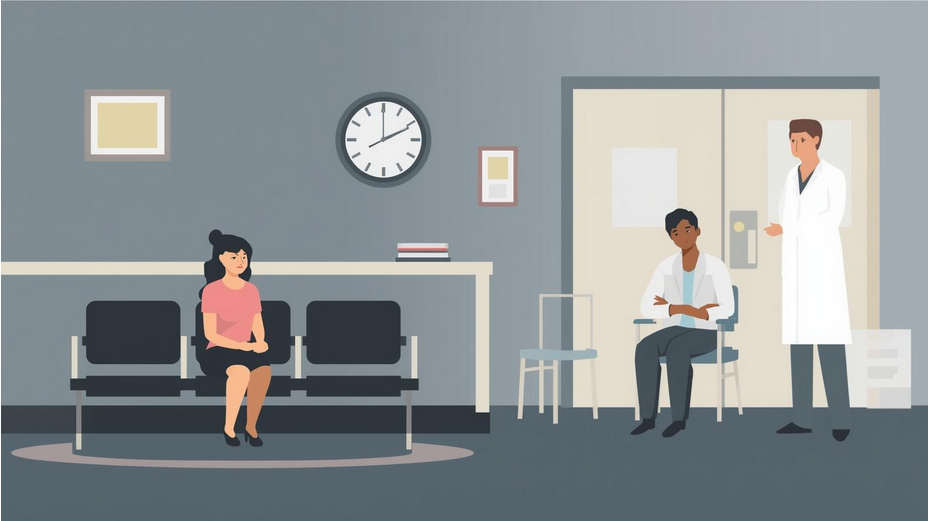
In the fast-paced world of the emergency department, every second counts, but not every patient is treated equally. Gender bias in healthcare quietly shapes how symptoms are interpreted, how treatments are prioritized, and how outcomes unfold. Women, in particular, often face disparities in care that go unnoticed yet have serious consequences. These inequities may stem from implicit bias, cultural assumptions about gender, and gaps in research and training. Tackling these challenges is essential, not just to improve outcomes for women but to build an emergency care system that is fair, effective, and truly inclusive for all patients.
One of the most consistent findings in the literature is that women are less likely than men to receive adequate analgesia for similar conditions. Graf et al. (2023) note that women’s pain is often underestimated or dismissed, resulting in under-treatment with analgesics, a discrepancy that persists regardless of the treating physician’s gender. While chronic pain is more prevalent in women (54.9%) than men (48.5%), women receive less intensive and effective pain management, yet are more frequently prescribed antidepressants and referred for mental health care (Graf et al., 2023).
Disparities extend beyond pain management into trauma care as well. Ingram et al. (2022) found that women experience longer delays in trauma assessment and intervention and are less likely than men with similar injury severity to be discharged directly home. Instead, women are more often sent to long-term care facilities, which is an independent predictor of hospital readmission. Women in the emergency department are also more likely to be “under-triaged,” meaning their conditions are less frequently classified as requiring high-priority care, leading to longer ED stays and poorer short-term outcomes (Ingram et al., 2022). Together, these findings underscore the pervasive impact of gender bias on both acute and chronic care in emergency medicine.
Several factors may contribute to gender bias in emergency medicine. Social and cultural expectations surrounding pain and its expression often shape how providers interpret patient symptoms, with women’s pain more likely to be perceived as emotional or exaggerated, while men’s pain is seen as physiologic and urgent (Graf et al., 2023). These stereotypes regarding pain can influence clinical decision-making, especially in the fast-paced environment of the emergency department.
Gaps in sex- and gender-specific research and training also play a role, as emergency medicine has historically lacked a systematic approach to studying how sex and gender affect disease presentation, diagnosis, and treatment (McGregor et al., 2014). This knowledge gap can lead providers to default to a “one-size-fits-all” approach that fails to address women’s specific health needs. Systemic issues further exacerbate disparities, as research and institutional agendas have historically underfunded gender-specific investigations in emergency care (Safdar & Greenberg, 2014). Without deliberate integration of gender-sensitive frameworks, these inequities are likely to persist at both the provider and system levels.
Several evidence-based strategies can help reduce gender bias in emergency medicine. First, incorporating gender-sensitive protocols and education into ED training and practice is essential. Graf et al. (2023) recommend integrating gender-specific considerations into pain management algorithms, triage processes, and discharge planning. Second, advancing research agendas that explicitly study sex and gender differences is critical. In 2014, Safdar and Greenberg (2014) highlighted the need for coordinated, multi-institutional research efforts, and a follow-up study in 2018 showed improvement in this area, with an increase in the percentage of EM publications utilizing sex and gender in study design (Safdar et al., 2019). Expanding knowledge of how sex and gender affect health will ensure that women’s unique healthcare needs are recognized and addressed. Third, addressing implicit bias through structured evaluation and feedback mechanisms can promote equity in the ED. See et al. (2022) provide evidence for the effectiveness of such interventions, finding no gender bias when attending physicians evaluated procedures performed by residents. They also note that EM has made significant progress in recent years, including the formation of committees dedicated to raising awareness of gender issues and promoting change. These efforts suggest that simulation-based training, reflective practice, and institutional policies used to reduce bias among colleagues may also be effective in improving gender equity in the physician-patient relationship.
Gender bias in emergency care is not merely a matter of perception; it has tangible consequences for women’s experiences and outcomes in the emergency department. Disparities in pain management, trauma care, triage, and discharge decisions are driven by implicit bias, systemic research gaps, and entrenched cultural stereotypes. The encouraging news is that these inequities are addressable. By implementing gender-sensitive protocols, expanding research on sex and gender differences, and actively confronting implicit bias, emergency medicine can move toward a more equitable future. As a specialty dedicated to delivering rapid, high-quality care for all patients, emergency medicine must prioritize gender equity as a core value, improving outcomes for women while enhancing the fairness, accuracy, and humanity of emergency care for everyone.
We have also written a blog on differences in the treatment of myocardial infarctions between men and women titled “Let’s Talk about It: Heart Disease Has Been the Leading Cause of Death for Women for More Than 40 Years.”
References
Graf, J., Simoes, E., Kranz, A., Weinert, K., & Abele, H. (2023). The Importance of Gender-Sensitive Health Care in the Context of Pain, Emergency and Vaccination: A Narrative Review. International journal of environmental research and public health, 21(1), 13. https://doi.org/10.3390/ijerph21010013
Ingram ME, Nagalla M, Shan Y, et al. Sex-Based Disparities in Timeliness of Trauma Care and Discharge Disposition. JAMA Surg. 2022;157(7):609–616. doi:10.1001/jamasurg.2022.1550
McGregor AJ, Madsen TE, Clyne B. Foundations for a novel emergency medicine subspecialty: sex, gender, and women’s health. Acad Emerg Med. 2014 Dec;21(12):1469-77. doi: 10.1111/acem.12544. Epub 2014 Nov 24. PMID: 25420966.
Safdar, B., & Greenberg, M. R. (2014). Organization, execution and evaluation of the 2014 Academic Emergency Medicine consensus conference on Gender-Specific Research in Emergency Care – an executive summary. Academic emergency medicine : official journal of the Society for Academic Emergency Medicine, 21(12), 1307–1317. https://doi.org/10.1111/acem.12530
Safdar, B., Ona Ayala, K. E., Ali, S. S., Seifer, B. J., Hong, M., Greenberg, M. R., Choo, E. K., & McGregor, A. J. (2019). Inclusion of Sex and Gender in Emergency Medicine Research-A 2018 Update. Academic emergency medicine : official journal of the Society for Academic Emergency Medicine, 26(3), 293–302. https://doi.org/10.1111/acem.13688
See A, Pallaci M, Aluisio AR, et al. Assessment of Implicit Gender Bias During Evaluation of Procedural Competency Among Emergency Medicine Residents. JAMA Netw Open. 2022;5(2):e2147351. doi:10.1001/jamanetworkopen.2021.47351
About the Authors
 Audrey Enerson, MPH, MS4
Audrey Enerson is a fourth year medical student at St. George’s University. She holds a Masters of Public Health in Epidemiology with a concentration in Global Public Health from the University of Minnesota and a Bachelor of Arts in Mathematics from Grinnell College. Prior to medical school she worked at the Minnesota Department of Health tracking antibiotic resistance for the CDC’s MuGSI study. Audrey was a board member of the Infectious Disease Society at SGU where she coordinated funding for STI testing and outreach at community health fairs. Outside of medicine, she enjoys going to spin classes and trying new foods.
 Meghan Etsey, MS4
Meghan Etsey is a fourth year medical student from St. George’s University. She has a Bachelors of Arts in Biology and a Bachelors of Arts in Nutrition and Dietetics from Bluffton University in Bluffton, Ohio. She served as the President of the St. George’s University’s Women in Medicine chapter in St. George, Grenada where she expanded relationships with the community and worked towards educating women and helping the youth. She is also a member of the Gender Equity Task Force and Sex and Gender Health Collaborative Committees within the American Medical Women’s Association. When she is not pursuing medicine, you can find her with her friends and family on different road trips and adventures exploring the world.