
Authors: Lauren Wallace; Meghan Etsey; Yun Weisholtz, MD-PhD on behalf of the AMWA Gender Equity Task Force

She was the organized one. The reliable one. The straight-A student who turned assignments in early and stayed up late to make sure nothing slipped. No one noticed the color-coded calendars hiding panic, the perfectionism masking paralysis, or the exhaustion of holding it all together. When she was finally diagnosed with Attention-deficit / hyperactivity disorder (ADHD) at 34, her first reaction wasn’t surprise; it was grief. For decades, ADHD has been framed as a disorder of disruptive boys. Nevertheless, for many women, it is a disorder of silent compensation. ADHD isn’t just about being “distracted” or “hyper”. Modern research paints a much more complex picture: it’s a disorder of brain network dysregulation, where circuits in the prefrontal cortex and striatum struggle to stay on task, while the brain’s default mode network constantly interrupts focus (Rubia, 2018). It’s not just attention that’s affected; dysregulation of dopamine and norepinephrine can make starting tasks, sustaining effort, and regulating emotions feel like climbing a steep hill every single day (Nussbaum & Dahlgren, 2020) .Furthermore for women, it gets even more complicated. Hormonal shifts across the menstrual cycle, postpartum period, and perimenopause can amplify symptoms; fluctuating estrogen levels appear to influence dopamine signaling and executive function in susceptible individuals. (Skoglund et al., 2023; Nussbaum & Dahlgren). For some women, ADHD may become clinically apparent during these hormonal transitions, sometimes surfacing for the very first time in adulthood (Skoglund et al., 2023).
ADHD is diagnosed nearly twice as often in boys as in girls during childhood, with prevalence around 2-3:1 (Sayal et al., 2018). For decades, ADHD has been taught as a childhood disorder that primarily affects hyperactive boys, and that outdated framing still continues to influence medical education and clinical practice (Sayal et al., 2018). Despite this, curricula continue to emphasize childhood onset with male-predominant, disruptive presentations, reinforcing a narrow clinical lens (Young & Asherson, 2020). But many women with ADHD do not fit that picture. They sit still. They achieve. They compensate. They mask. And because they mask so well, they are often missed. Girls are more likely to present with the inattentive subtype and experience internalizing comorbidities such as anxiety and depression (Sayal et al., 2018). As executive demands increase and external structure decreases in adolescence and adulthood, previously compensated symptoms often become more impairing (Faraone et al., 2021). Many women are therefore identified only later in life, expressing the need to update diagnostic frameworks to reflect better real-world female presentations of ADHD (Young & Asherson, 2020). ADHD in women doesn’t always disrupt classrooms; it often disrupts the self.
A central reason symptoms go undetected in high-achieving women is masking, defined as intentional or unconscious compensatory strategies used to maintain external functioning despite underlying executive dysfunction (Young et al., 2020). These strategies commonly include perfectionism, excessive preparation to compensate for working memory or attentional lapses, and procrastination cycles marked by crisis-driven productivity. Masking is especially prevalent in academically competitive environments such as healthcare training and medical practice, where high-performance standards reinforce overcompensation and normalize chronic overexertion (Sedgwick et al., 2019). Importantly, masking should not be mistaken for mild symptom severity; rather, it reflects the significant cognitive and emotional burden required to maintain adequacy. Sustained camouflaging behaviors have been associated with increased emotional exhaustion, heightened anxiety, and greater depressive symptoms, particularly among women diagnosed later in adulthood (Cook et al., 2022; Sedgwick et al., 2019; Young et al., 2020).
For many women, ADHD doesn’t get missed; it gets mislabeled. Symptoms are filtered through gendered psychiatric expectations, leading to years of incorrect diagnoses (Asherson et al., 2016; Kooij et al., 20119). Internal restlessness and racing thoughts are often labeled as anxiety, resulting in SSRI treatment that only partially addresses the problem (Kooij et al., 2019). Chronic disorganization and task paralysis may be mistaken for depression, even though mood symptoms are frequently secondary to untreated attentional impairment (Asherson et al., 2016; Rydell et al., 2021). Emotional dysregulation and rejection sensitivity may overlap with features seen in mood or personality disorders, but ADHD lacks the core disturbance that defines borderline pathology (Rydell et al., 2021). Without recognizing these patterns, clinicians risk diagnostic substitution instead of accurate identification (Kooij et al., 2019).
In high-functioning trainees and professionals, ADHD may present not as academic or occupational failure but as success sustained at disproportionate personal cost (Ramos Quiroga et al., 2021; Kessler et al., 2020). High-yield indicators include chronic disorganization despite strong performance, persistent emotional exhaustion, patterns of late-night, panic-driven productivity, and recurring burnout cycles across training stages (Ramos Quiroga et al., 2021; Kessler et al., 2020). Emotional features such as rejection sensitivity, dysphoria and rapid, disproportionate frustration responses are also common, frequently misattributed to personality traits or mood disorders (Ramos Quiroga et al., 2021). A useful clinical clue is partial mood improvement with SSRIs, while executive dysfunction, task initiation difficulty, and organizational impairment persist (Kessler et al., 2020). Validated tools, including the Adult ADHD Self-Report Scale (ASRS v1.1) developed by the World Health Organization and the DSM-5-aligned DIVA 5 structured diagnostic interview, can support systematic assessment in adult populations (Kessler et al., 2020; Ramos Quiroga et al., 2021).
The underrecognition of ADHD in high-achieving women is not merely a diagnostic oversight; it carries meaningful consequences for clinician well-being, workforce sustainability, and patient care. When symptoms are masked, mislabeled, or dismissed, the burden is absorbed privately while performance remains publicly intact. The following implications highlight how contemporary evidence on adult ADHD reframes burnout, diagnostic accuracy, and clinical training through a neurodevelopmental lens.
- Burnout May Reflect Neurobiological Strain.
Executive dysfunction and dysregulated frontostriatal and default mode networks can magnify the cognitive demands of medical practice, making some cases of “burnout” better understood as untreated ADHD-related overload (Rubia, 2018; Faraone et al., 2021).
- Masking Preserves Performance at Personal Cost.
Perfectionism, overpreparation, and crisis-driven productivity may sustain high achievement while accelerating emotional exhaustion and depressive symptoms, particularly in women diagnosed later in life (Young et al., 2020; Sedgwick et al., 2019; Cook et al., 2022). - Misdiagnosis Leads to Incomplete Care.
When ADHD in women is mislabeled as primary anxiety or depression, partial response to SSRIs may leave core executive impairments untreated, reflecting diagnostic substitution rather than accurate identification (Asherson et al., 2016; Kooij et al., 2019; Rydell et al., 2021). - Recognition Improves Patient Care.
In high-functioning professionals, untreated ADHD may present as persistent disorganization and difficulty with task initiation despite strong performance, while validated tools such as the ASRS v1.1 and DIVA 5 support systematic adult assessment and functional improvement (Kessler et al., 2020; Ramos Quiroga et al., 2021). - Medical Training Must Update Its Lens.
Persisting male-predominant, childhood-focused diagnostic models delay recognition in women, underscoring the need for curricula that reflect adult, inattentive, and hormonally influenced presentations (Sayal et al., 2018; Young & Asherson, 2020; Skoglund et al., 2023).
For many women, an ADHD diagnosis in adulthood is less a revelation than a reframing, transforming years of self-doubt, overcompensation, and quiet exhaustion into a coherent neurodevelopmental narrative. When ADHD remains unrecognized, the cost is borne internally through burnout, misdirected treatment, and chronic shame, even as external performance appears intact. Updating our clinical and cultural lens to reflect female, inattentive, and hormonally influenced presentations is not about lowering standards; it is about replacing stigma with accuracy, improving patient care, and ensuring that success no longer depends on silent, unsustainable effort.
References
- Faraone, S. V., Asherson, P., Banaschewski, T., Biederman, J., Buitelaar, J. K., Ramos Quiroga, J. A., Rohde, L. A., Sonuga Barke, E. J. S., Tannock, R., & Franke, B. (2021). The World Federation of ADHD International Consensus Statement: 208 evidence based conclusions about the disorder. Neuroscience and Biobehavioral Reviews, 128, 789–818. https://doi.org/10.1016/j.neubiorev.2021.05.011
- Sayal, K., Prasad, V., Daley, D., Ford, T., & Coghill, D. (2018). ADHD in children and young people: Prevalence, care pathways, and service provision. The Lancet Psychiatry, 5(2), 175–186. https://doi.org/10.1016/S2215-0366(17)30167-0
- Sedgwick, J. A., Merwood, A., & Asherson, P. (2019). “I was just coping”: Experiences of late diagnosed women with ADHD. Qualitative Health Research, 29(5), 670–682.
- Young, S., Adamo, N., Ásgeirsdóttir, B. B., Branney, P., Beckett, M., Colley, W., Cubbin, S., Deeley, Q., Farrag, E., Gudjonsson, G., Hill, P., Hollingdale, J., Kilic, O., Lloyd, T., Mason, P., Paliokosta, E., Pollard, E., Roy, A., Sedgwick, J., … Asherson, P. (2020). Females with ADHD: An expert consensus statement taking a lifespan approach providing guidance for identification and treatment. European Psychiatry, 63(1), e48.
- Asherson, P., Buitelaar, J., Faraone, S. V., & Rohde, L. A. (2016). Adult attention-deficit hyperactivity disorder: Key conceptual issues. The Lancet Psychiatry, 3(6), 568–578.
- Kooij, J. J. S., Bijlenga, D., Salerno, L., Jaeschke, R., Bitter, I., Balázs, J., Thome, J., Dom, G., Kasper, S., Nunes Filipe, C., Stes, S., Mohr, P., Leppämäki, S., Casas, M., Bobes, J., Mccarthy, J. M., Richarte, V., Kjems Philipsen, A., Pehlivanidis, A., … Asherson, P. (2019). Updated European Consensus Statement on diagnosis and treatment of adult ADHD. European Psychiatry, 56, 14–34.
- Rydell, M., Lundström, S., Gillberg, C., Lichtenstein, P., & Larsson, H. (2021). Attention-deficit/hyperactivity disorder and risk for psychiatric disorders in women: Diagnostic overlap and clinical implications. Acta Psychiatrica Scandinavica, 143(2), 146–157.
- Nussbaum, N. L., & Dahlgren, L. (2020). ADHD in women: Neurobiology and hormones. Current Psychiatry Reports, 22(12), 75.
- Rubia, K. (2018). Cognitive neuroscience of attention deficit hyperactivity disorder. Nature Reviews Neuroscience, 19(6), 335–348.
- Skoglund, C., et al. (2023). Hormonal effects on ADHD symptoms across the female lifespan. Frontiers in Psychiatry, 14, 1155746.
- Kessler, R. C., Adler, L. A., Gruber, M. J., Sarawate, C. A., Spencer, T., & Van Brunt, D. L. (2020). Updated validation of the Adult ADHD Self-Report Scale (ASRS) in adult populations. Psychological Medicine, 50(6), 987–997.
- Ramos-Quiroga, J. A., Nasillo, V., Richarte, V., & Corrales, M. (2021). Clinical practice guidelines for attention-deficit/hyperactivity disorder in adults. World Journal of Psychiatry, 11(3), 123–139.*
About the Authors
Lauren Wallace, MS3
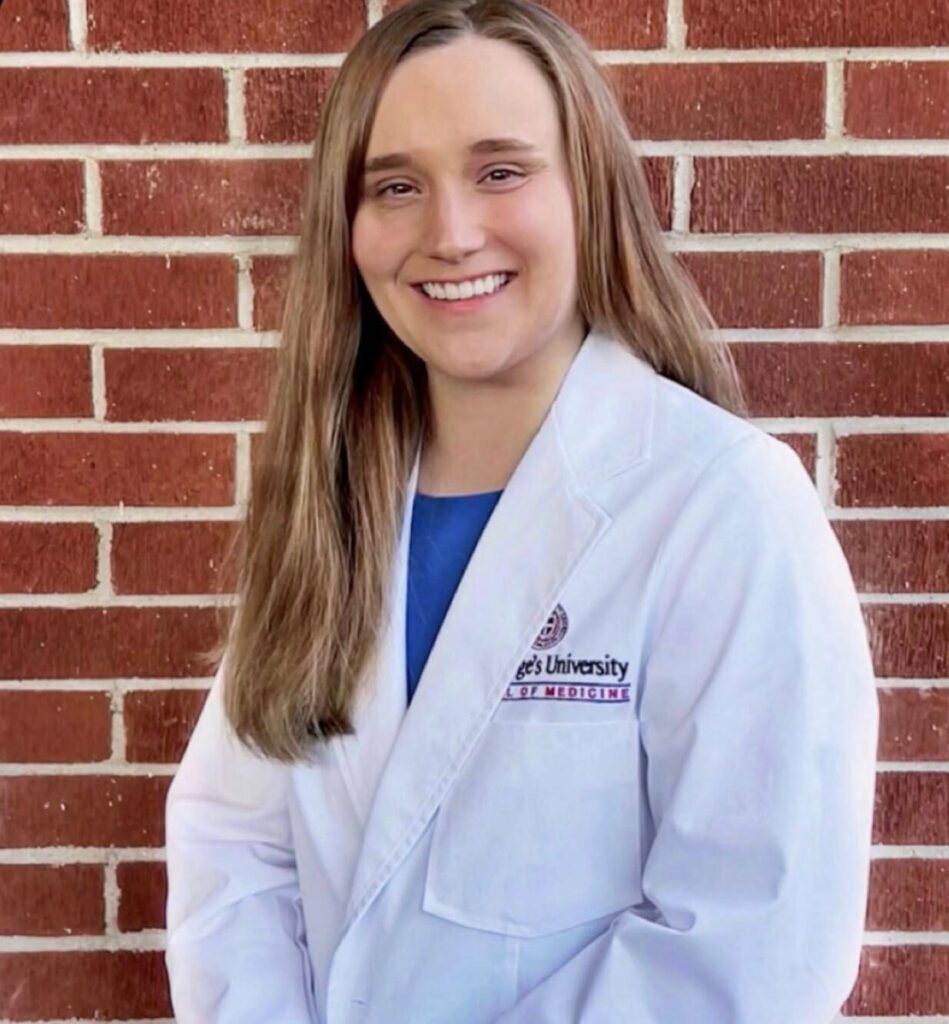
Lauren Wallace is a third-year medical student at St. George’s University School of Medicine and earned her Bachelor’s degree in Cell and Molecular Biology from the University of Tennessee at Martin. She has served as student lead for her Psychiatry and Obstetrics/Gynecology core rotations and is an active member of the Gender Equity Task Force, demonstrating her dedication to advancing equitable care. Passionate about Psychiatry, Lauren volunteers for the Crisis Text Line and focuses on improving access to mental health services in underserved rural communities, a commitment rooted in her upbringing in rural Tennessee. Outside of medicine, she enjoys staying active and scuba diving with her husband.
Meghan Etsey, MS4

Meghan Etsey is a fourth year medical student from St. George’s University. She has a Bachelors of Arts in Biology and a Bachelors of Arts in Nutrition and Dietetics from Bluffton University in Bluffton, Ohio. She served as the President of the St. George’s University’s Women in Medicine chapter in St. George, Grenada where she expanded relationships with the community and worked towards educating women and helping the youth. She is also a member of the Gender Equity Task Force and Sex and Gender Health Collaborative Committees within the American Medical Women’s Association. When she is not pursuing medicine, you can find her with her friends and family on different road trips and adventures exploring the world.
Yun Weisholtz, MD-PhD
Dr. Yun Weisholtz is a physician-scientist and advisor with a deep commitment to mentorship and advancing equity in medicine. She completed her undergraduate studies at Stanford University, where she double-majored in Biological Sciences and Chemistry, and spent a year in Germany as a Fulbright Scholar. She went on to enter the MD-PhD program in Neuroscience at Harvard Medical School and MIT, where she developed her passion for research, teaching, and mentoring. Dr. Weisholtz is a Physician Advisor with MedSchoolCoach and the founder of MD-PhD Advising, a consulting practice dedicated to helping students navigate the medical school and residency application process. Outside of work, she enjoys collecting Delft pottery from the Netherlands and spending time with her family and pets.