
Authors: Rhea Manohar, MPH; Vashti Price, MS, MSH; Brianna Clark DO on behalf of AMWA’s Gender Equity Task Force

For many women, heavy bleeding, pelvic pain, or exhaustion from anemia can become an accepted part of daily life before they finally seek help. However, for Black women, the road to diagnosis and treatment is often longer, more painful, and more complicated. Fibroids are benign uterine tumors medically known as leiomyomas. Leiomyomas are incredibly common, but the experience of living with them is not equally distributed that can cause heavy and abnormal uterine bleeding . By age 50, more than 80% of Black women and about 70% of white women will be diagnosed with fibroids, yet Black women tend to develop them earlier, experience more severe symptoms, and face greater barriers to care (Baird et al., 2003; Marsh et al., 2014).
Behind these numbers are stories of women navigating not only the physical toll of fibroids but also a healthcare system shaped by bias and inequity. When women of color describe their symptoms, they are too often told to “wait it out,” or their pain is minimized. By the time care is finally sought or offered, symptoms may have become debilitating, interfering with work, family life, and fertility (Katon et al., 2023).
Experiences of racism, whether in the form of dismissal during clinical encounters or the anticipation of being unheard, can delay women from seeking care until their symptoms are severe. Qualitative research shows that Black women frequently describe their fibroid pain and bleeding as being minimized or misattributed, leading to mistrust in providers and a reluctance to re-engage with the healthcare system (VanNoy et al., 2021). This erosion of trust has consequences: delays in care often result in more advanced disease and fewer available treatment options.
These systemic challenges are mirrored in personal experiences. Celebrities like Venus Williams and Lupita Nyong’o have shared their own fibroid journey stories marked by delayed diagnosis, silenced pain, and limited support. Their public voices highlight a reality many Black women already know intimately: suffering in silence is too often the norm (Self, 2025; People, 2024).
Beyond delayed diagnoses and silenced pain, structural inequities influence the type of care women receive, shaping treatment options and outcomes. Racial bias operates not only at the interpersonal level but also within the medical practice structures. Black women are disproportionately steered toward invasive procedures such as hysterectomy at higher rates than white women, even when less invasive options are clinically appropriate (Khan et al., 2019). A recent Cedars-Sinai study found that Black women were significantly less likely to undergo minimally invasive hysterectomies compared to white women, even after accounting for socioeconomic status and insurance type (Cedars-Sinai, 2022).
The consequences of this bias are profound. Invasive procedures require longer recovery times, increase the risk of complications, and, in the case of hysterectomy, permanently eliminate reproductive options. When these disparities are layered on top of a long history of reproductive injustices, from forced sterilization to medical neglect, the message to many Black women is clear: their reproductive autonomy is still constrained.
Fibroid inequities cannot be separated from broader structural determinants of health. Access to quality education, stable jobs, safe housing, nutritious food, and comprehensive insurance all shape whether women can seek care, afford time off for recovery, or even reach a clinic offering less invasive treatment options (Goosby et al., 2024; Evans & Jones, 2024).
Women working hourly or gig-economy jobs may find it impossible to attend multiple specialist appointments. Those living in rural or underserved areas may have no access to fibroid specialists. Furthermore, women without adequate insurance coverage often face thousands of dollars in out-of-pocket costs. In this way, fibroids are not just a medical condition but also a lens into how systemic inequities dictate whose health is prioritized and whose suffering is normalized.
Addressing inequities in fibroid care requires changes at every level of healthcare delivery:
- Build Trust Through Community Engagement: Partnering with trusted organizations and patient advocates can provide women with accurate information about symptoms and treatment options, reducing stigma and mistrust.
- Combat Bias in Care Delivery: Providers must be trained in cultural humility and implicit bias. Health systems should track treatment patterns by race to identify disparities.
- Expand Access to Minimally Invasive Options: Hospitals and insurers should ensure that all eligible patients, regardless of race or income, are offered less invasive treatments whenever clinically appropriate.
- Increases representation in medicine: Black patients often report feeling more heard, understood, and respected by physicians of similar backgrounds.
- Address Structural Barriers: Paid sick leave, affordable insurance coverage, and expanded access to specialists are critical to making equitable fibroid care possible.
- Prioritize Research Representation: More clinical trials must include women of color to ensure that treatment recommendations reflect the populations most affected.
These steps, together, can move us toward a healthcare system where fibroid care is guided by justice, equity, and compassion.
Fibroids may be benign, but the inequities surrounding their treatment are anything but. For Black women, the journey to diagnosis and treatment is often marked by dismissal, delay, and disparity. Changing this reality requires more than medical innovation; it requires dismantling systemic racism in healthcare and investing in policies that affirm reproductive justice. Every woman deserves timely, respectful, and equitable care for fibroids.
As readers, we can advocate for equitable healthcare policies, support organizations raising awareness about fibroids, and ensure that the voices of women of color are heard in conversations about reproductive health.
References:
- Baird, D. D., Dunson, D. B., Hill, M. C., Cousins, D., & Schectman, J. M. (2003). High cumulative incidence of uterine leiomyoma in Black and White women: Ultrasound evidence. American Journal of Obstetrics and Gynecology, 188(1), 100–107. https://doi.org/10.1067/mob.2003.99
- Cedars-Sinai. (2022, May 26). Racial disparities in minimally invasive surgery for fibroids. Cedars-Sinai Newsroom. https://www.cedars-sinai.org/newsroom/racial-disparities-in-minimally-invasive-surgery-for-fibroids
- Evans, J., & Jones, K. (2024). The role of socioeconomic status in uterine fibroid awareness and treatment: a narrative review. Therapeutic advances in reproductive health, 18, 26334941241297634. https://doi.org/10.1177/26334941241297634
- Goosby, B. J., Winkle-Wagner, R., & Zhang, A. (2024). The uterus keeps the score: Black women academics’ insights and coping with uterine fibroids. Journal of Health and Social Behavior, 65(2), 145–158. https://doi.org/10.1177/00221465241268434
- Katon, J. G., Plowden, T. C., & Marsh, E. E. (2023). Racial disparities in uterine fibroids and endometriosis: a systematic review and application of social, structural, and political context. Fertility and sterility, 119(3), 355–363. https://doi.org/10.1016/j.fertnstert.2023.01.022
- Khan, A. T., Shehmar, M., & Gupta, J. K. (2019). Uterine fibroids: Current perspectives. International Journal of Women’s Health, 6, 95–114. https://doi.org/10.2147/IJWH.S51083
- Marsh, E. E., Ekpo, G. E., Cardozo, E. R., Brocks, M., Dune, T., & Cohen, L. S. (2013). Racial differences in fibroid prevalence and ultrasound findings in asymptomatic young women (18-30 years old): a pilot study. Fertility and sterility, 99(7), 1951–1957. https://doi.org/10.1016/j.fertnstert.2013.02.017
- People. (2024, March 4). Lupita Nyong’o reveals fibroid research grant: “It’s a silent struggle.” People Magazine. https://people.com/lupita-nyongo-reveals-fibroids-research-grant-11772505
- Self. (2025, January 12). Venus Williams opens up about her decades-long fibroid journey. Self Magazine. https://www.self.com/story/venus-williams-fibroids-interview
- VanNoy, B. N., Bowleg, L., Marfori, C., Moawad, G., & Zota, A. R. (2021). Black Women’s Psychosocial Experiences with Seeking Surgical Treatment for Uterine Fibroids: Implications for Clinical Practice. Women’s health issues : official publication of the Jacobs Institute of Women’s Health, 31(3), 263–270. https://doi.org/10.1016/j.whi.2021.01.001
About the Authors
 Rhea Manohar, MPH, MS3
Rhea Manohar is a third year medical student from St. George’s University. She has a Masters in Public Health with a concentration in Maternal and Child Health from George Washington University Milken Institute of Public Health and a Bachelors of Science in Microbiology, Immunology, and Public Health from the University of Miami. She served as Co-VP of OB/GYN Education for St. George’s University’s Women in Medicine chapter in St. George, Grenada where she developed and implemented hands-on workshops to further reproductive health issues and bolstered medical students abilities to navigate physician-patient communication. Prior to medical school, she was a Research Associate for Fors Marsh Group, where she led qualitative and quantitative public health research and campaign development for federal agencies (e.g., CDC, NIH, DHHS, CPSC). She is also a member of the Gender Equity Task Force and Reproductive Health Coalition within the American Medical Women’s Association. When she is not pursuing medicine, you can find her reading, exploring artistic passions, and spending time connecting with friends and family.
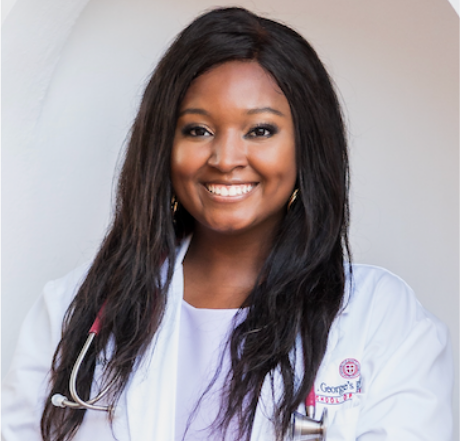 Vashti Price, MS, MHS, MS3
Vashti Price is a third-year medical student at St. George’s University. She holds a Bachelor of Science in Biology from the University of Louisiana at Lafayette, a Master’s in Biological Sciences from Alcorn State University, and a Master’s in Health Sciences from Meharry Medical College. With a strong passion for public health and health equity, Vashti has dedicated much of her time to volunteering with underserved populations, including individuals experiencing homelessness and children in need. Her commitment to service continues through her involvement with the American Medical Women’s Association, where she serves on the Gender Equity Task Force and the Sex & Gender Health Collaborative Committees. Vashti is particularly interested in the intersection of medicine, public health, and community outreach. Outside her academic and clinical pursuits, she enjoys spending time with friends and family, attending festivals, exploring new cities, and winding down with a good Netflix series.
 Dr. Brianna Clark is a proud osteopathic physician. She has completed fellowships in Breastfeeding Medicine at the University of Rochester Lessons in Lactation Advanced Curriculum ( LILAC) and Climate Health Equity Fellowship ( CHEF) through the National Medical Association ( NMA). She spends her spare time thinking about innovative ways to provide equitable health care to all and create sustainable advocacy.